XCOM 2 REVIEW – “I’M BACK, BABY!”

Consider, if you will, the surprise sequel to the beloved iconic series. A glorious franchise which everyone is permanently nostalgic about returns after a long period of absence to surprise the world, and then proceeds to surprise us all again by actually being good. There’s examples like Toy Story 3, The Force Awakens and Rayman Origins, but now we have another to add to the list – XCOM 2. That’s the eleventh XCOM game, but maths is pretty hard. Or maybe this is a reboot, in which case it should still be XCOM 3 after that boring shooter business and OH FINE I’LL SHUT UP.

The previous title, XCOM: Enemy Unknown, came out in the dark days of 2012, as a reinvention of the old alien-popping PC series of the 1990s. In Enemy Unknown, a batch of E.T.s invade the earth and you hold them off with a squad of six grunts in bulky flak jackets, which get swapped out for power armour as you pinch more Klingon technology and adapt it for yourself. It’s all turn-based, tactical, testicle-twistingly-tough good fun.
2016-02-07_00010

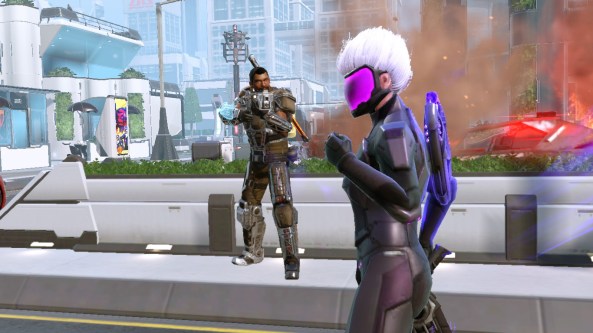
“You! Put your hands on your head and don’t even think about going Super-Saiyan!”

And it’s back for more, it seems. Turns out that all those player failures in the last game have been considered canonical, as we return to Earth twenty years later and it’s been completely conquered by the bastards we spent so much time trying to kick off the planet. They’re running a global sci-fi dystopia with soldiers on every street corner and enough government propaganda to fill a dozen copies of the Westport Independent every hour.

And the fragmented remains of the XCOM organisation aren’t going to stand for that. The rather exciting tutorial shows your white-bread sidekick from the first game breaking into an alien base to break you free, whereupon you’re brought back to their mobile spaceship base and told to do something about this cosmic menace before you’ve even pulled the disturbingly large microchip out of your brain.

So right away we see a reversal of fortunes. The combat boot is now very much on the other seven-toed foot, as before you had the backing of the world’s governments and just had to stop these little blighters at the door, shooting anything that came within a light year of the Earth’s orbit. But now they’re in power and you’re the invaders, struggling to build a scrappy resistance as you fly across the world to the various pockets of dissent, begging for money and resources like a hobo in a S.H.I.E.L.D. helicarrier.

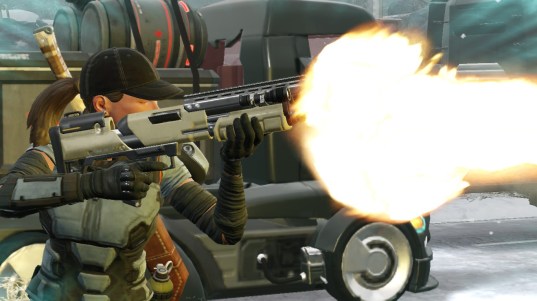
And I like it. It’s a good way to keep the same sort of mechanics whilst putting a new spin on them, as now everything’s gone a bit guerrilla warfare. Whilst stealth in the previous game was a far-fetched dream that died the second anybody entered your postcode, now sneaking is a central mechanic in which you navigate around the baddies’ sightlines before coming up for an explosive ambush, an experience so satisfying that most people are likely to walk away with erections like broomsticks. Yes, even the women.
2016-02-05_00039

Somewhere, an alien’s head has just burst like a balloon. Yay!

There’s also a bunch of new things you can do whilst fighting off the minions of ADVENT, all of which nicely fits the ragged “Band Of Brothers” theme. You can hack doors and devices around the battlefield for an advantage, grab any pieces of tech that you see dropped by your enemies, and if one of your soldiers gets knocked out, you’ll have to physically carry him back to the EVAC point. Otherwise the innumerable Turian forces will scoop him up and he’ll wake up in a tank filled with green fluid, probably with enough torture devices pointed at him to make the Spanish Inquisition feel queasy.

But the game isn’t perfect, as nothing is. First and foremost, the big problem is that the optimisation isn’t great. Actually, it’s pretty rubbish, especially considering the engine is given all the time in the world between turns to figure out what it needs to do next and how frame rates work. Characters would occasionally shoot through objects or get punched by a brute on the other side of a wall, and both before I’d unlocked psychic powers to justify it. And loading times were even worse – I saw my team sitting in the back of the transport ship for so long that I’m pretty sure I’m entitled to frequent flyer miles. Maybe that’ll be an irrelevant snipe six months from now, when patches have brought it up to snuff, but come on. How hard is it to just release a game when it’s actually finished? They already delayed it once, and might as well have just tacked an extra fortnight onto the end to bring it up to ship-shape condition.

Or – and here’s another thought – why not add a whole extra month to the release date and get some decent voice acting in there? Sidekick Bucky Barnes from the first game is perfectly fine, in a forgettable and inoffensive way, but the new heads of engineering and research are atrocious, reading their lines like they’re in a primary school play about plasma guns and the fun of autopsies. And though this is a pretty minor gripe about characters whose only real job is to have their head balance on the top of a drop-down box, there’s more of a narrative focus on social interaction with the player in this game than there was in the last one. Fair enough, but the end result is that I can’t help but wish that Firaxis would do a Destiny on us, and quietly hire Nolan North and a couple of other professionals to redo the lines properly.

2016-02-06_00009

As you can see, character customisation is generally fine. But with those kind of stats, the illusion of it being me is broken somewhat…

But thankfully X2 knows what it’s doing in all other forms of sound design, which is good. It’s an important part of atmospheric setting that’s frequently under-utilised in video games, but here we see it made the most of in order to keep immersion going. Enemies make satisfying thuds when they hit the ground, music keeps the tension high and the static-riddled communication between the troops as they creep around an alien platoon all adds to a sense of heightened drama.

There’s also more depth when it comes to soldier modelling, so I instantly did what I normally do when given character customisation and tried to recreate myself. The diversity of options isn’t great, especially when compared to something like Saints Row 4 or Fallout 4, but it doesn’t matter too much as I feel anybody who’s come to XCOM for Barbie doll dress-up is here for the wrong reason.

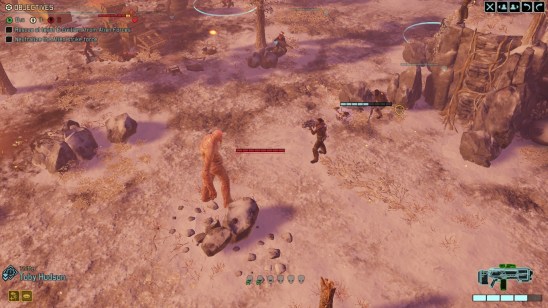
I also like the new steps in visual design, a lot more than the old ones. A team of folks in power armour in the old game looked like a group of action figures rather than human beings, but now there’s a real sense of care taken to how things look. This probably comes across most with entities like the new berserker, or the strangely scary sectoid, both of which look like they want to drag you into a dungeon with Buffalo Bill and see what the other side of your eyes look like. Or just hit you for half an hour, if it’s the former.
2016-02-06_00017

“Um… Guys? Anybody? I don’t want to fight Clayface on my own…”

I will say though that the game has lost some of the lethal difficulty of its predecessors. It’s not unchallenging by any means, but when I finally reached the end of the campaign after a thirty-hour stretch, I found myself strangely disappointed. Admittedly there are higher difficulty settings, but even on easy mode, an older game like Enemy Unknown would stick a gun in your mouth and tell you that it’d pull the trigger if you couldn’t whistle Flight Of The Bumblebee perfectly, and in C minor to boot. XCOM 2 does the same thing, but it’s not long before you realise that it’s actually holding a potato gun, and that it only wants to hear Baa Baa, Black Sheep in a tone of your choice. As a matter of fact, the difficulty tends to curve downwards, as your soldiers rank up and you start acquiring more lethal tech. The enemy threat does accelerate, but certainly not at the same rate if you know what you’re doing.

But like I said, there are difficulty options for this, and on the whole I find myself very enamoured by XCOM 2. It works hard to do something new whilst still holding the old game as a basic template, and almost manages to attain the same level of elegance in its design.

So should you get it? Yes, most definitely. It’s fun, it’s tense, and it’s willing to give you the freedom to run your whole campaign off a cliff. Oh, and it’s priced at thirty-five pounds, rather than fifty. That alone is reason to celebrate it.


9/10

Firaxis’ new game is the natural evolution of the previous one, and though in some ways it falls slightly short, Mo Farah is also slow if you compare him to Usain Bolt. On its own terms XCOM 2 is a real winner, and deserves to be treated as such.

DUKE NUKEM FOREVER REVIEW – “AS BAD AS YOU REMEMBER”

With the news that Duke Nukem 3D has just turned 20, it seems timely that I should be reviewing… The far later entry, Duke Nukem Forever. After all, what can be said about the former that isn’t enormously obvious from the first ten minutes of gameplay or the occasional glance at a screenshot? Monsters look like cardboard cut-outs on lazy susans, the game allows you to kick people like a can-can dancer and it’s so nineties gaming that it’s almost self-explanatory.

But the 2011 revival of the classic franchise provides an interesting talking point. Duke Nukem Forever was in on-and-off development for over a decade before it was finally released to the public, and promptly shat on by most of those who played it. But when I looked at it recently I couldn’t help but notice that the Steam reviews seemed a lot more generous than I remembered everybody being five years ago. Mostly positive, eh? Could it be that the sense of wounded betrayal and disappointment in the audience at the time had all gone to taint our perceptions of this game, to the point where we felt the need to judge it more harshly? It wouldn’t be the first time that hype and an epic legacy had pushed the audience to demand unrealistic standards from something.

So I booted up DNF for the first time the other day, and turned it back off several hours later, feeling slightly ill at what I’d experienced. No, we were right the first time. This is an appalling waste of matter that deserves only to be buried far beneath the earth.

The campaign starts with a re-tread of the final boss fight of the previous game, with our beefy, brainless hero Duke beating up a one-eyed monster with only his gigantic balls of steel, alien rocket launcher and space-hopper sharp wit. Well, that’s not entirely true. The game actually starts with a first-person look at Duke pissing in a urinal, which I now suspect to be a subtle warning from a noble developer who was trying to get people to stop then and there.

But regardless, Duke defeats Cyclops-Steve after a very boring fight where you basically do nothing but strafe and hold down the right trigger; before we then cut to Duke twelve years later, having failed to age a day or even change outfits, living in a personalised skyscraper filled with his various accolades and being given a blowjob (thankfully off-screen) by two squeaky-voiced blow-up dolls in schoolgirl outfits alleging to be human woman.

So right away we see several problems. The terrifyingly misogynistic attitude gets worse as the game goes on (more on that later), but Duke himself is fairly loathsome from the word go. He’s callous, arrogant, cocky, aggressive, stupid and one-dimensional, but frustratingly nobody seems to realise it because he’s just so inherently great at everything he does. His walls are covered in tacky gold statues of himself, giant awards he’s won for his ability to wear sunglasses indoors without bumping into things, and various framed newspaper covers of him being generally fantastic. Odd that nobody realised the errors in his character here. Aside from the fact that anybody who lives in a tower stylised around himself and wrote a book entitled “Why I’m So Great” is always going to be kind of revolting, it has to be said that Mister Nukem having no personality or human flaws besides “I rule, you suck” made me end up rooting for the aliens at first.

2016-02-01_00036

Duke’s enemies are almost as deformed and evil as he is. I wonder if there’s potential for a romantic sub-plot in the next game?

And the general story is no better. The aforementioned E.T.s show up and begin causing general havoc, so it’s up to Duke to save the day because… Actually, why is it only us? Fate, I suppose, or did Duke just threaten to flex to death anybody who stopped him being the main character?

The game also makes stabs at comedy every now and then, in the sense that it tries to stab the concept to death where it stands. Which was your least favourite joke? Was it Duke living on floor sixty-nine of the tower, or the fact that you can spend over-long animations punching an enemy in the testicles or slapping breasts growing out of a wall?

Perhaps the most awkward of these jokes were DNF’s pathetic attempts to undermine other shooter franchises. One bloke moans about having to help some whiner find his missing wife, just before Duke Nukem himself turns down the green Masterchief helmet with the phrase “power armour is for pussies.” Yeah, what moron would want developed character motivation or a hero that doesn’t spit bile with every line? I’m not saying Gears Of War or Halo were impeachable, but they were a damn site better than this pile of sputum, which makes mocking them even more embarrassing. At one point early on, an electronic door asks you to find a keycard, at which point Duke rolls his eyes and just wrenches it open with his freakishly-muscular hands, ho-ho-ho. But five minutes later we’re being made to find three power cells to open another door with no irony whatsoever. I feel this game is obeying the letter and not the spirit of the law, you know what I mean?

And of course there’s the sexist angle. Sure, watching all the women basically get reduced to cock-hungry bimbos is pretty miserable to see, but even from those depths the game finds a way to spiral downwards. Maybe I’m just becoming a crotchety old fool who can’t keep up with the drugs and rap music of today, but I doubt I’m alone on this – seeing the supposed “hero” quip about dozens of women getting raped by aliens and fatally exploding when the newly hatched larvae burst out of their bodies? That made me feel physically sick, and incredibly angry. It was like watching Ridley Scott’s Alien, if Scott had been an unhinged lunatic who found the body mutilation all very funny. And if that wasn’t all, the game encourages you to gun down other imprisoned, enemy-pregnant women before they can birth the monsters and put you in peril. So we literally have a game mechanic made out of shooting defenceless women put in the most hideous situation ever thought of. Fucking Christ.

I do wonder exactly what was going through the writers’ heads when they wrote this. The scribblings of a psychopath with a basement full of dead hookers would seem rational compared to that awful scene, which, by the way, was what caused me to turn it off for the first time. I couldn’t stomach any more in one playthrough, which is pretty noteworthy if nothing else.

2016-01-23_00010

There were some pictures to illustrate how horrific the scenes were, but I couldn’t quite bring myself to submit you all to them. Here’s a nice, colourful picture of the game Rocket League instead.

So Duke Nukem Forever’s story is a splatter of infected diarrhoea on the bathroom wall of modern culture, but what about the gameplay?

Well, it’s not as bad as the plot – mainly because nothing could be, besides mass genocide – but it’s boring at best and eye-rolling at worst. For twelve years of planning, it seems strange that they thought of sod-all that could make this game worth playing. Perhaps what made the finger-raising at other franchises so odd is the fact that Duke has almost nothing to throw in their faces. No equivalent of the Gravity Gun, the skyrail system or the Bulletstorm whip, no vehicles that I didn’t dread getting into, no superpowers, no interesting gadgets, nothing. Hell, if anything it feels like it’s been compromised to the games of today, with cover-shooting, two weapons slots, turrets that overheat and health that regenerates. Duke Nukem Forever, you can’t make fun of modern games, you BECAME one of them, and one of the worst games going at that.

Which isn’t to say that there’s no signs of life. Every now and then this dead horse twitches a little, though goes limp again straight after. I vaguely approved of the interactivity of the environment, and the fact that certain actions, like looking in the mirror, can increase your ego (read health) bar. It’s a clever little feature, though some of these actions take way too long and ruin the pacing. The snooker table was the worst one, because you have to knock every ball into the holes with a really unwieldy control system and no way to alter the power of your shots, and if you pot the white ball just once, you have to restart the whole thing.

2016-02-01_00004

Duke Nukem Forever’s reactive environment provides many opportunities to remind yourself of what you already know. Here’s something I made earlier.

There’s also the occasional puzzle, by which I mean a really obvious thing that you do to continue, with a solution that is clear the moment all the pieces are in place. It’s funny I mentioned the Gravity gun, because a lot of them do have the tinge of a cut-price Half-Life 2 to them, what with the use of physics and environmental objects. There’s also the occasional bit of precision platforming and sequences where Duke gets shrunk to the size of an action figure, but they don’t do anything worth mentioning and are forgotten about the second they’re over.

But whether you’re fighting charging pigmen or generic alien figures with lasers, you’ll notice the difficulty curve resembles a rollercoaster designed by Escher. For most of the game it’s insultingly easy, as all weapons seem equally overpowered and ammo is lying around everywhere like it’s a Texan Christmas. Most of the single-use power-ups I found I didn’t end up trying, as I was doing fine without them.

But every now and then you have to fight a boss, which is where the challenge spikes unpredictably and with no real reason. Not because it’s hard, just unfair design. The alien queen, encountered on my second session, was the most annoying example of this. You can’t hurt her with anything other than explosives, there’s no cover to take shelter and she has all the cheapest attacks going – summoning smaller enemies who hold you in place, attacks that knock you on your arse, and one of the game’s many technical faults means you can’t hurt her when she’s performing certain attack animations. It also didn’t help that the frame rate dropped whenever I tried to do anything more elaborate than shoot one bullet at a stationary enemy, but let it not be said that the NPCs aren’t trying to do their part. Many of them have gone without textures to help the less fortunate, presumably donating them to enemies in other, better games. Oh, and at one point I was meant to be trapped inside a small construction site shack for an exciting, claustrophobic experience, but glitched outside by just walking at the wall, watching with bemusement as the enemy smashed their way into an empty structure.

2016-02-01_00044

I’m not one to care about graphics much, and yet I still find myself fairly depressed by this.

I could go on with the list I made of the thousand annoyances and offensive ideas to be found here, like the overlong rail-shooter scene or the fact that the night-vision blinds you every time you turn it on, but I’m going to take a step back and try to see the overall problem, because suddenly it became very clear to me when I saw another game in my Steam library.

Do you remember in my Wolfenstein review when I said that The New Order feels like the best of both modern and old shooters combined? Well, Duke Nukem Forever feels the worst of them. From the old generation we have the horrible hero, plot and attitudes, whereas from the modern era we have dull, linear gameplay that’s either insultingly easy or unfair by design. And with this kind of cross-breeding you can only get something really misshapen at the end, kind of like Duke’s steroid-infused torso.

Thus what we have here is a game designed by a team with the apparent attitude of a badly-raised thirteen-year old boy, appealing to a diminished market from the 1990s and managing to be generally horrible to play on top of all that. So yes – we were right the first time. Kind of makes you wonder why the rights to the franchise have been so hotly contested recently, but whatever – I don’t think anybody will be going near the next game after this debacle.


1/10

It goes without saying that there’s nothing really praiseworthy about Duke Nukem Forever, but it’s rare that a game manages to go the other way and become actively loathsome. Failing on a technical, design and narrative level, the story of this detestable jock and his constant need to stand in the way of good taste makes me staggered that this was a game with any time put into it at all, let alone twelve years.

THE WESTPORT INDEPENDENT REVIEW – “STOP THE PRESSES, THIS ONE NEEDS EDITING”

Yes, dystopian censorship may be rotten, and sure, the erosion of civil liberties through constant societal reinforcement of broad, safe-sounding but ultimately problematic legislations based in well-meaning but ill-considered attempts to protect others from the ultimately negligible problem of offence might be a right pain in the arse, and alright, there may be some elements of restriction on our freedom of speech creeping unnoticed into Britain today, such as a certain 1986 Public Order Act or a frequently suggested proposal of banning religious criticism at the UN that both hang over our collective heads like the Twin Swords Of Damocles, always threatening to cut the ever vital cord between personal thought and public expression that enables true advancement and intellectual debate for the purposes of –

Hold on, I think my political views might be bleeding through into my work ever so slightly. Let me start again.

Whatever your opinion on the limits of censorship, I’m sure we’ve all had that slightly uncomfortable feeling of self-loathing when we’ve had to lie about something that’s important to us, or when we’ve not been brave enough to speak up when somebody needed to say something. Well, developers Double Zero One Zero have decided to digitise that emotion with The Westport Independent, a new game for mobiles that I promptly downloaded into my iPad to try out, though it is also floating around on Steam, apparently.

Those of you who know your recent indie games and have seen the screenshots may have made a connection with another notable title back from 2013. After all, The Westport Independent IS a muted colour, pixel-artwork, desk-viewing, paperwork-moving game about making tough choices with broad consequences, in which you work to either appease or undermine a fictional totalitarian government whilst trying to maintain both your own lifestyle and the lifestyles of the four people who rely on you. So yeah, a comparison to THAT game was kind of inevitable.

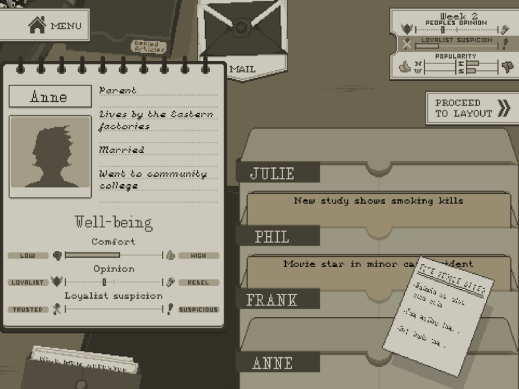
untitled

Anne, you happy to write about celebrity nipslips again? What do you mean you’re not being intellectually stimulated?

Basically, The Westport Independent might as well be called Newspapers, Please. You sit at a table picking up the stories your journalists have brought in, hacking bits out or rewording the headlines, all to keep the suspicious eye of the Westport Loyalist Government off your back and trying to make ends meet.

And I have to say, it’s an intriguing little idea, one I actually like more than Papers, Please’s passport inspection as ideas go. When a story comes in about the police force hassling the homeless, you could expose this horror in all its damning glory, letting the people know what their rulers have been doing to the more unfortunate among us. Or alternatively, you could decide you don’t want a truncheon in the face and write about how recent statistics now show that the number of people living on the streets are down since last year! Sure, it’s because they’re all buried in unmarked graves, but who needs to know a little detail like that?

Or, if you just want to fly under the radar, you could just print tabloid rubbish about how some celebrity has put on weight recently, and let the grown-ups deal with the actual news, you big wuss.

What I like about The Game With The Really Boring Name is that it’s good at reminding you of what you need to be scared of, good at constantly reminding you of the consequences you should be avoiding. Because when I started off, I was full of rebellious spirit. Yes, boo to Johnny government! Those bigwigs and bureaucrats have trodden on the freedom of the individual for too long! So every story I put out was completely condemning of the ruling forces, with no propaganda and just the bare facts that the public deserved.

And then one of my writers vanished. Just disappeared one day, into the blue. The only explanation I got was a typed letter from my faceless overlords saying that they’d taken my leading reporter into custody – and that they’d be watching to see what we put out for the next few weeks.

Needless to say, I never saw him again. And from that point on, all the stories I wrote became a great deal less fiery in tone. After all, there’s always two sides to every argument, isn’t there?

untitled

Oh, I love this show! I hope they have Wilhelm The Wacky Work Slave on this week!

There’s some other aspects that are worth mentioning. Your staff all have political leanings, some of them like the government and some don’t, and they can get quite upset if you force them to write a big exposition on how the President enjoys eating puppies, or the rebel movement is all for putting nuns in sweatshops. They may even quit (the staff, not the nuns), depending on how you pressure them, and between releasing editions they chatter in the break room, discussing how you, the big boss, have fucked up the news that week.

You can also advertise for different city districts (which the game is REALLY bad at explaining), all of which want to see different things from the news, like celebrity gossip or crime reports. One little feature I liked is that the slogan of the paper changes depending who you focus on, which shows a real sense of care about presentation and maintaining the illusion. Well done to whoever had the thankless job of making all those up – it’s the little things that matter.

However – and there is a big however – the game ends in about the biggest let-down it can, with a conclusion that arrives too fast and is over too quickly. A stream of text scrolls up past the screen, describing how the various districts have been effected by your actions and whether they’ve ended up sitting home watching the propaganda shows, or running through the streets hitting policeman with hammers and shouting about the rise of the worker. And considering this ending happened about an hour after starting the game, it’s hard not to feel a little put out. Maybe the intention is to prompt us to play over and over, but this isn’t a rogue-like. There’s no benefit granted to those trying it on subsequent playthroughs, there’s nothing more to it than that.

I suppose it’s a testament to the quality of the game that I wanted more from it, but for what it’s worth, “North Korean Media Simulator 2016” ends too soon, and not with a bang, but with a whimper. There’s none of the branching narrative and intrigue that Papers, Please had going for it, and I would’ve liked to have seen more happen as the story develops. What about the paper getting picked up as spin doctors for the Loyalist Oppressors, or stumbling on a big conspiracy that goes to the highest rank of the rebellion? This all seems kind of obvious as a means of progressing the game, and yet none of it comes to pass. It just sort of… Stops. A bit like this paragraph is about to do.

untitled

Sooner or later I expect to get this letter for real…

Oh, and it’s pretty damn buggy as games go. The app would often crash as I tried to start it up, it cut out during the ending scene, and I didn’t get any sound from my version of the game, despite going into the settings and moving volume sliders around like a bored DJ.

Don’t let any of this make you think that The Westport Independent isn’t worth at least a look, because on the whole I’d say it just about comes out on the positive side of things. It’s imaginative and poignant as concepts go, but it’s either not brave enough or imaginative enough (ironically) to make the most of a rather unique idea, and definitely could’ve used a few more refinements on both a design and a programming level to bring it up to snuff. What I’d love to see is some sort of sequel or big upgrade, one that pulls up the bootstraps of this small game that’s utterly brimming with potential to be something really good, but until that happens, I can’t say it’s anything more than basically OK. And that’s not just because there’s two men standing behind me with billy-clubs and Alsatians.


6/10

A game that could’ve been superb is let down by a lack of initiative, a shocking runtime and some rather glaring technical issues that need fixing fast. Some more material and a hearty patch could easily push this up to an eight, developers.

THE WITCHER 3: WILD HUNT REVIEW – “WHO DOESN’T LOVE SEX AND VIOLENCE?”

Right then – The Witcher 3: Wild Hunt. No preamble, no introduction, this is a sodding big game with a hell of a lot to discuss, so let’s get straight into it without any of the ethereal, “ooh, look at me do a big fancy set-up” malarkey. I’m not even going to do a joke about the fact that the subtitle sounds like rhyming slang, that’s how determined I am to get at this quickly.

So, Geralt Of Rivia is back in the third and final installment of the big-name adaptation of a polish fantasy series, growlier and grizzlier than ever. Gerry himself is the aforementioned witcher, a freelance monster hunter whose day job involves showing up in villages, asking if they need any bogeymen killing, then hunting the beastie down and stabbing it to death with one of two swords. Then he collects a paycheck and moves on to the next settlement. The reason he can do this so well is because he’s the best human being that ever lived, a combination of Aragorn and Wolverine by way of a hard-bitten private detective and a bucket of gravel.

I do really like this mission statement as a core concept though, and the monster hunting missions are probably the best part of the game. Geralt investigates the scene of the crime, identifies the monster from certain clues, then tracks it down and defeats it either with a bit of swordfighting, or finding the exploit needed to banish it to the afterlife. And all the uglies you’ve got to assassinate are quite imaginatively designed, in a grim and ghastly kind of way. Sure, there’s the staples of violent fantasy enemies, like werewolves, zombies and golems, but there’s also some really fascinating concepts being added to the formula. The one that stuck with me was a type of malevolent spirit that can only come from the body of a miscarried child. As dark and horrifying as it was, it was certainly more interesting than having to kill yet another silly necromancer with futile dreams of immortality. I think I’ve killed so many dark wizards in fantasy RPGs that the profession must be in dire need of a recruitment drive.

2016-01-03_00007

Who’s that Pokemon?

Oh yeah, Wild Hunt is an RPG, though not to any greatly important degree. You can power up certain spells and types of melee attack as you level, but generally the best strategy is to just decide which attack patterns you find most fun and then just start pumping all your points into that until you’re guaranteed to win. I found equipment to be much more important than Gerry’s personal stats, and that basically came to just swapping out gear every time I grabbed or crafted something that had green numbers instead of red ones. And when you buy the spell that causes enemies to fight for you then the game has very few challenges left, besides a few boss fights where they have the sense not to go shiving allies just because you asked nicely.

Fighting is a bit like a more maneuverable Assassin’s Creed, crossbred with the light-armour character build from Dark Souls. You slash your way across the battlefield, parrying when you can and rolling away when you can’t, occasionally throwing out spells and bombs if things start getting hairy. It’s just that there’s a few problems with it, the big one being that Geralt is strangely unwieldy, even out of combat. He always overshoots when he’s running somewhere and never seems to be facing the right enemy, instead locking on to some useless sidekick. And parrying is tricky enough to be essentially pointless against anything that isn’t a regular bandit with a sword, as it’s impossible to say when you should parry, whether it would work against that attack, and if doing so will leave your bearded arse stunned or not. I’d get used to rolling around like a wheel of cheese if I were you.

Of course, you could take time to prep for fights. Once you’ve fought a creature or read about it in a book somewhere, you can look it up in Geralt’s personal monster manual to see what it’s weak against. So if you fought a jam elemental last week and you know there’s one coming up, you can thumb through to its IMDB page and see that it would help beat it if you started putting butter on your sword, as well as using some spells created by the devious sorcerer Lord Warburton Hovis.

This research angle was an idea I found curiously satisfying, rewarding intelligence and forethought, not to mention reinforcing the concept that this is something our hero does for a living. The problem is that it doesn’t account for much, certainly not as much as I’d hoped. “Weakness” translates to a 10% damage increase from certain spells and single-use items, which was so insignificant as stats go that I usually didn’t bother. Every now and then you’d find an enemy that would need those exploits, like a ghoul that was invincible until you cast a certain enchantment on it, but these fights were a minority and I found myself wishing the Big Book O’ Bad Guys had been more important for survival.

But that assumes that you spend the whole game doing your Witcher day job, which probably isn’t true. The main story concerns Geralt searching for his adopted daughter Ciri, who has even better superpowers than his and for this reason is constantly being chased by a bunch of evil viking knights who want to harness her power. Along the way you’ll get dragged through a cavalcade of memorable locations and meet enough people to populate a large island, most of whom just happen to be busty women with strong personalities, magical abilities, low-cut tops and irrepressible libidos. What a strange coincidence.

2016-01-02_00008

I hope this creature has a nest that needs killing. That way I get time-and-a-half.

As mocking as that sounded, it’s not poorly written by any means. I actually really like the storytelling in Wild Hunt, as it blends a certain style of creativity with nuanced characters and ethical complexity, though admittedly there are a few aspects I’m unimpressed by. There’s a dark-haired love interest who was less fun to be around than a tapeworm, and I’m bored of seeing generic racism sub-plots with elves and dwarves in fantasy games; but on the whole Witcher 3 comes out very much on top when it comes to writing, using the rather generic, bog-standard setting as a springboard for more impactful ideas and the personal arcs achieved by its colourful cast.

Mind you, the good writing doesn’t mean it’s always simple to follow, as Wild Hunt assumes, perhaps reasonably, that you played the previous two games before it. I’d only ever played the first one and briefly at that, so I found myself having to frequently click out to the biographies menu just to know who I was trying to sleep with that day. I didn’t even find out what the mythical Wild Hunt actually was until about two thirds of the way through the game, as it clearly assumed I knew already. “What, can’t you keep up? Haven’t done your homework? Well, we are going to make damn sure you regret it.”

And whilst I’m complaining about the game not telling you stuff, Witcher 3 has a nasty habit of throwing the occasional choice in your face without telling you exactly what you’re choosing. I’ve nothing against consequence, but it’s a bit raw if you don’t tell me what exactly it is I’m picking, even in the short term.

The worst offender was monetary matters. Being a fantasy ghostbuster, Geralt gets paid by people pretty frequently, but for some reason dialogue trees won’t usually tell you how much money you’re getting offered. At one point I had to choose between taking a big cash reward whilst upsetting a friend, or turning it down on principle and keeping the relationship intact. I figured I’d take the gold, hoping that I wouldn’t need to do side quests for a while and could just focus on story missions with enough to coin to keep in the black. But it turned out after I made the choice that the money I was being given amounted to about a fifth of what I already owned, and the pasty girl still had the gall to whine at me over a transaction that probably wouldn’t have paid for a single visit to the armour shop. I would’ve gambled it to make more, but playing poker doesn’t seem to be a real thing in Temeria any more. Instead, everybody’s playing with Pokémon cards. Yes, I’m being completely serious.

2016-01-02_00003

OK, I know I sound like a broken record, but we can check the genitals a couple more times?

It’s called Gwent, and basically it’s a really boring card game that seems to have taken the land by storm for some reason. There’s a bunch of side quests and tournaments related to it, but I avoided all of them after my first attempt playing almost put me to sleep. I’ve nothing against card games, I like Hearthstone and Magic: The Gathering, but Gwent is rather shallow and dull by comparison. All I can say is that there’s an absurd humour to watching thieves and murderers in scary taverns arguing over attack power and trading little pieces of paper with no irony whatsoever.

To conclude with, Witcher 3 is an odd duck, as it’s a classic example of the whole being greater than the sum of its parts. What do I mean by that? Well, Wild Hunt should be a solid 7 on a purely logical analysis. It’s a fine set-up with a good narrative and visual artwork that’s hampered somewhat by flabby design, a little unrealised potential, fairly dodgy optimisation and a lot of Americans doing British accents – yes, we CAN always tell.

But I can’t deny that despite all of these things I kept running back to the Witcher for more. After the tedium of the first game I wasn’t expecting much, but Wild Hunt manages to click in just the right way, fitting together as elegantly as a jigsaw and becoming rather spectacular for it. It has problems, but they’re all kind of inoffensive and it works so hard to overcome them that I can’t stay mad at it for long. As compliments go that’s kind of patronising, but I can’t think of another way of putting it. I’m all grumbly and cross about frame rates and minor plot details, but then I’ll come over a hill and see the gorgeous view of a detailed world before me, the silhouette of a griffin arcing through the sky in the distance, and I think “oh, OK. I’ll shut up now.”

So Wild Hunt won me over in a big way. I guess third time really is the charm.


9/10

As much as it shows a certain roughness around the edges, The Witcher 3 is a fine example of a game with as much spirit, passion and honest-to-goodness excitement as something like this deserves. If a little less precision is the price to be paid for something as hugely ambitious as this, that seems to be a price worth paying every now and then.

ARE WE GO FOR POKéMON: GO?

So Pokémon: Go probably comes out this year, and considering how things might go (ha freaking ha) this could be one of the biggest phone apps that’s been released in a while. For those of you who are unaware, Nintendo has started to throw its hat into the mobile arena – read here for the probable reasons why – and one of the pioneers of that movement is Pokémon: Go, all the fun of the classic franchise brought to your iPhone or Android or whatever.

Basically, it’s all GPS based, trying to realise the spirit of the games as best as it can. As you wander around day to day, you’ll occasionally get a bleep on your phone telling you that if you walk five minutes to your left there’ll be something you can catch. Then you fight it in the time-honoured tradition, attempt to snag it inside a ball, and if you succeed you can fight other Pokémon with it. You can even trade them with other players or fight those players yourself in classic Ash Ketchum style.

There is a stupid, goofy charm to this idea, I won’t deny that. For all their fussing about with Streetpass features and Pokéwalkers, Nintendo has never quite managed to pull the series forward in the way that it’s needed for a while now, but this might be what truly moves it to a new and interesting place. The idea of walking through Hyde Park and being set upon by a pidgey, or walking down Brighton beach and seeing some goldeen appear? Yeah, that’s ridiculous and silly, but it’s also kind of wonderful for someone who spent their whole childhood working their way through the games with almost studious attention.


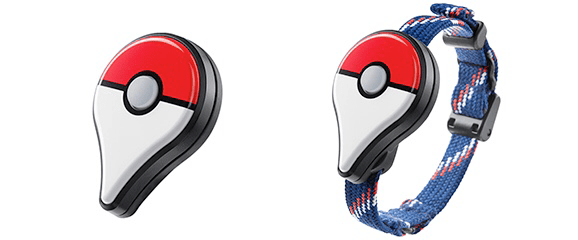
If there was ever an accessory likely to get you bullied at school, this is it. The price tag should just read “the sum total of your lunch money for the next three years.”

Which isn’t to say it will all go smoothly. As a matter of fact, at the moment I’m kind of worried about this game, because it feels like it’s going to take a sharp left before it hits Superb Street and instead go down that dark little dead-end cul-de-sac known as Micropayment Alley, where narrowed eyes watch you from every corner and there’s a toll booth every ten feet.

Well, I say “it feels like”, but there’s no “feels” to it. The game IS using a micropayment model, though the details haven’t been released yet, probably because the company is trying to work out that perfect middle ground where the most money will get coughed up by the most people. It is free to download, so it’s not completely beyond saving, but what keeps me lying awake at night is the awful thought of having to buy pokéballs at extortionate prices, with no other way to get hold of them.

And that’s odd, because considering it honestly, I think I’d be happy to pay quite a lot for this game up front if I knew there were no micropayments in it. Maybe I’d even pay as much as a regular 3DS game, depending on how many people I could battle against and how common wild Pokémon were.

But there’s something slightly sickening and guilt-inducing about paying lots of little fees, not least because it’s terrifyingly easy to lose track of how much you’ve spent, and also because I always feel like I’m trying to hack the Achilles tendons out of my lovely gaming industry. It’s distressing, quite frankly. If it was small, boring things like customising Pokémon with outfits I wouldn’t care, but I suspect that won’t be the case.

It all seems so gut-wrenchingly plausible. Fifty pence for a pokéball, one pound for a great ball, one-fifty for an ultra ball and five quid for a master ball. You want to trade? That’ll cost you. Are your Pokémon unconscious? You have to bribe Nurse Joy to wake them up. And keep that credit card ready, because you’ll need it to for held items, TMs, potions, berries, evolution, levelling up, unlocking rare Pokémon to capture and so on and so on. The basic battle system of the franchise is so multi-faceted that you could put a paywall on anything, and the popularity of Pokémon is enough that they might get away with doing so, at least financially. And as we all know, if a corporation will make some profit from a decision they’ll probably go for it, consequences be damned.

“Just one pound a month can help get a pikachu off the streets. We never knowingly put a healthy pokemon down.”


The only thing that I can think that might alleviate this problem is Nintendo itself. I know I’ve gone on about how strange they are, but I don’t think they’re genuinely malevolent. In fact I think they genuinely care about a lot of their products, though in most cases I can’t see why. They certainly have been reluctant to compromise them in servitude of whatever fad is popular at the moment, though this is why a lot of them stagnate badly, as Nintendo functions on a permanent nostalgia trip.

But I think that quality might – MIGHT – save Pokémon: Go from being a complete fiasco, the fact that they want to keep it somewhat respectable. For what they are, Nintendo games tend to come with a fair level of polish, and it’s possible that with the sheer anticipation and scrutiny centred on P:G they might realise that it’s smart in the long term to make this as good as they can.

It’s a possibility. Not a guarantee, not a verification, just a potential outcome. The Pokéball is most definitely in Nintendo’s court at this point. Let’s just hope we don’t have to pay for it to be there.

TOP TEN GAMES OF 2015

So as 2016 downs a bottle of Viagra and prepares to bugger us as hard as last year did, I realise I can’t get away with not doing what everybody else is doing: a comprehensive list of my Top Ten Games Of 2015. Luckily, there were some stand-outs in this otherwise incredibly boring and forgettable year, so let’s begin by getting down and dirty with a dreary but downright doggedly deserving display, demonstrably drab yet damnably difficult and delightfully daring.


10. Darkest Dungeon: “Though in a constant state of technical flux and still in need of refinement, the solid core of Darkest Dungeon is something that stays the same. Bleak, beautiful and superbly narrated, Darkest Dungeon drips with a palpable atmosphere.”

9. Grand Theft Auto V For The PC: “For a while I struggled to find what it was that had made this game so popular, and then I found it – the joy that comes of screwing around with friends in a world so dripping with potential chaos. That’s something it does incredibly well.”

8. Metal Gear Solid V: The Phantom Pain: “A silly, boring script and an ending that screeches to a halt half an hour too early can’t detract from some very organic stealth mechanics and a nice sense of freedom. Also, pop songs from the eighties – you can’t go wrong with those.”

7. Sunless Sea: “It’s slow enough that it’s almost a deal-breaker, but then turns around and slaps you with a world so wonderfully creative that you’ll be unable to stop exploring until you’ve seen all of the perilous Unterzee. All hail the terrible might of the Dawn Machine!”

6. Dark Souls II: Scholar Of The First Sin: “Could it ever be as good as the original Dark Souls? Probably not. Does it still shine as a game anyway? You better believe it.”

5. Elite: Dangerous: “Yes, it came out late last year, but ED only started to become the game it should’ve been recently, as constant patches are ever added to make it bigger, better and more fun. The new CQC multiplayer mode is like fighting a battle from a Star Wars movie, and the rest is filled with a hundred little joys. This game is why I sit drooling for the release of the Oculus Rift.”

4. Fallout 4: “Yes, 4 is fourth. Some claim that Fallout has lost its way a little and in some respects I think they’re right, but I still found myself eating it up regardless. What it’s lost in narrative focus it nearly makes up for with tighter mechanics and a richer world than the previous ones. Maybe it falls short in comparison to the old guard, but compared to most of the games this year, it’s a powerhouse.”

3. Witcher 3: Wild Hunt: “Expect a review for this one soon, though I’ll confess that after the boring mess that was the first Witcher game, I didn’t have high hopes for Wild Hunt. But powerful character arcs, a rich, tangible atmosphere, a variety of fun missions and a surprisingly engaging core theme of “supernatural pest control” makes Witcher 3 one of the best fantasy games in a long time.”

2. Tales From The Borderlands: “Telltale returns to form with a story filled with lovable characters and mountains of ridiculous excitement, proving that they can make us laugh as well as cry. One of their strongest creations and a shining star in the growing genre of interactive narrative.”

1. Undertale: “Holy cow. Undertale reminds me of why I love video games, of the moments where everything comes together perfectly and I find myself blown away. And yet it’s so outside the box that I can barely describe it – and I’m not sure I should try. Those of you who haven’t played it should come to it fresh, because it’s totally worth it and will stay with you forever. An amazing soundtrack, an unbeatable story and more heart than anything I’ve seen in ages. My Game Of The Year by a country mile.”


Happy New Year to all of you out there! I never expected that people would enjoy this site as much as they say they do, and I hope that you’ll all have as much fun reading these articles as I do writing them.

Anyway, lovely to see you. Mwah, mwah, party streamers, champagne corks, etc. Now let’s all give up on our resolutions and get back into those terribly unhealthy habits again. Cheers!

THE BINDING OF ISAAC: REBIRTH REVIEW – “CHILD ABUSE IS SURPRISINGLY FUN”

So let’s take note. Last time we did a review, it was about an indie game with bullet-hell elements primarily available on Steam, focusing around the traumatic experiences of a small child. The time before that it was a gruesome action game from 2014 that turned out to be a lot deeper and more thoughtful than a person might think at first glance.

So now we’ve split the difference and decided to take a look at The Binding Of Isaac: Rebirth. It’s a pretty timely choice considering the first DLC pack, “Afterbirth,” has just been released to the public, in the way that one releases a bear into a primary school and sits back to observe the results.

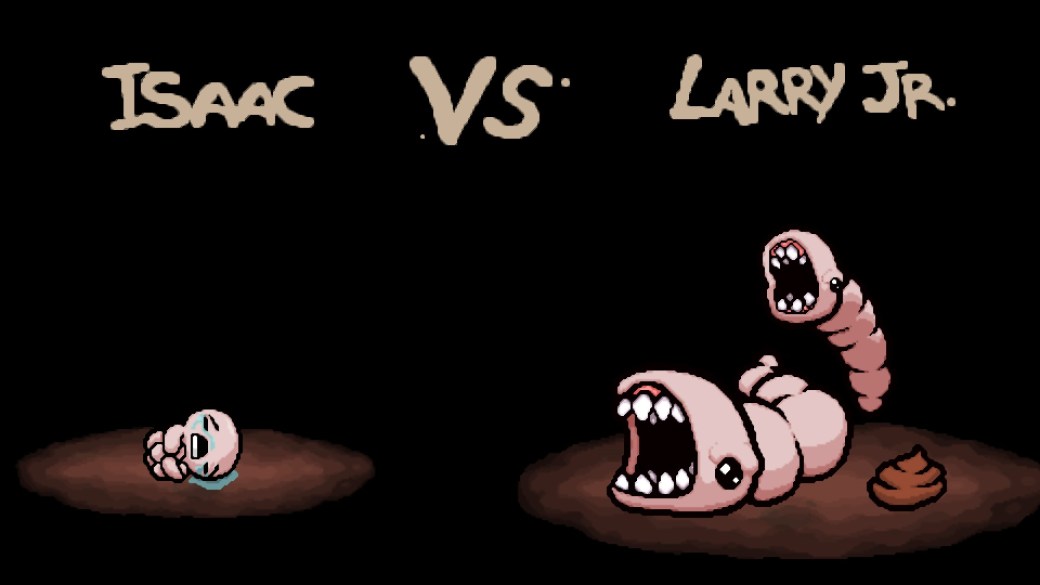
Rebirth was released in November last year as a remake of the original indie title; “The Binding Of Isaac” in 2011, and it’s not an easy game to summarise. Perhaps “Rogue Legacy” by way of a mental asylum? “Nuclear Throne” in your crazy aunt’s cellar? “Don’t Starve” in the brain of a Westboro Baptist Church member?

2015-12-15_00019

Jesus, where to begin?

Actually this is harder than I thought, because before we can compare The Binding Of Isaac to anything, we have to say exactly what it’s about, and that’s not easy. It was made by a guy named Edmund McMillen and may say an uncomfortable amount about his psychological profile. At least that’s what I find myself thinking as I watch the little lightbulb-shaped protagonist weep at a misshapen monster, in the hope that it’ll go away and leave him to wallow in his own excrement.

On the surface, it’s a story about a child trying to escape his home, clearly inspired by the biblical story of Abraham and maybe a few bad acid trips as well. The rather minimalist but engaging intro sequence shows the infant boy Isaac living a peaceful life with his bloated mother, who spends all day watching evangelists on TV and growing increasingly enthralled by their nonsense. When she starts hearing voices from god telling her to take away Isaac’s toys and lock him in his room, things get increasingly crappy for her beleaguered son, and when she finally gets the order to kill him, Isaac decides that he’s not going to hang around much longer and escapes into the basement. A basement that has been locked from the outside and covered up so people won’t find it, but I’m sure that’s no big deal, right?

And there’s the framework for the gameplay, a procedurally-generated set of labyrinths set beneath Isaac’s house, all filled with hordes of ugly enemies. Rebirth stitches some pre-made rooms together, dumps you in one of them and tells you to find the boss monster that’s sitting on the hatch leading down to the next level. Your goal is get as far down as you can and hopefully find an escape. Good luck with that.

The actual style of the game is a “rogue-like” top-down bullet-hell shooter, the kind that would’ve been played with two-separate joysticks in an arcade. You make Isaac beetle around rooms with WASD and shoot in various directions with the arrow keys. Hit E to drop bombs, SPACE and Q to use special items that you’ve picked up and – hey presto! You now know everything you need to know to play. It’s really that simple.

And I’m not degrading it for that. Simple isn’t a bad thing, not always, and Rebirth has perfected the school of “Easy to learn, difficult to master,” with some of the deeper levels being more deadly than a holiday in Syria but always rewarding the player for skill and competence.

2015-12-07_00002

The basement gets darker than you might believe.

There’s also a staggering number of special items, some of which are triggered at will by the aforementioned player, but others just adjust Isaac’s appearance and stats permanently with no way to undo them. And considering they refuse to describe themselves or what effect they have until after you take them, poor little Isaac could end up quite a bit different to how you’d prefer.

I actually like this quite a lot. It does sometimes come with nasty surprises, such as taking an item that’s completely detrimental to your playstyle and only finding out AFTER it’s glued to your character, but there’s certainly enough pick-ups to make for a fresh experience each time and they’re diverse enough that they don’t get old.

It’s the aesthetic flavour that makes the game special, though. Rebirth is a game about coming face to face with the worst elements of humanity, mythology and psychology, and they’re reflected in a combination of monsters, objects and concepts that all meld together surprisingly well, in a style I can’t help but think of as “Horror-Lite.” Horrible, yes, but presented in a way that takes the edge off just enough not to seem genuinely harrowing. On the surface it looks like a crude game about killing monsters with literal blood, sweat and tears, not to mention urine and shit, but it’s actually a lot deeper and a lot darker than that.

You see, I’m not convinced that the basement isn’t just meant to be a metaphor for Isaac’s damaged psyche. Aside from the fact that the rooms get more surreal and disgusting as you descend through them, there’s a lot of imagery that feels like it was based on a perversion of a healthy child’s mind, as well as monsters that seem like misunderstood interpretations of religious figures and poorly-explained concepts. Isaac fights sentient poo, the four horseman, mutated spiders, angry sperm, the devil made flesh, huge tapeworms, the trickster god Loki, an impossibly large version of his own mother and about a hundred variations of himself, all twisted and deformed in some way, as though Isaac was wracked with self-loathing and felt the need to destroy himself by proxy.

2015-12-15_00014

…VS Marvel VS Capcom VS Mortal Kombat VS DC…

By the way, everything you’re capable of follows these disturbing themes too. Isaac attacks enemies by blinking tears at them (more effective than you think) and most of the items you find are suggestive of some traumatic experience that he’s adapted into something useful. For example, wooden spoons and belts make him run faster. I hope I don’t have to explain it any more than that.

But on the other hand, it’s the items that are probably Rebirth’s biggest weakness. The diversity, creativity and sheer bloody number of them is good, but some of them are fairly inconsistent with the game’s themes and it becomes slightly annoying to see something obviously out of place, when everything else has been maintaining the dour, ghastly atmosphere so well. I don’t see how a reference to a sub-par internet video meme about firing lasers from your mouth relates to a game about the darkness in the human heart and the dangers of a highly religious upbringing. Or is it just me?

Maybe that’s a bit nitpicky as criticisms go, but this one isn’t – the game needs to be balanced better. You unlock more characters with different stats and abilities as you go, as well as new items, and some of them are frighteningly effective when combined. Sticking a severed cat’s head in the hand of the “Azazel” character will promptly make you the most powerful thing since Robocop took up jedi training, to the extent where a person with no real talent could breeze through the toughest levels and take down most bosses in a single attack.

2015-12-15_00016.jpg

Who would’ve thought that child abuse and religious dogmatism could’ve turned out so poorly? At this rate, the only jobs Isaac will be qualified for are going to be child pageantry and wearing sandwich boards with “THE END IS NIGH” written on them.

I’m also not sold on the fact that now I’ve completed the game a fair few times, there doesn’t seem to be anything to strive for. Admittedly, it’s designed to be played over and over again, but to begin with that made more sense, as more items and characters were unlocked each time for subsequent playthroughs in classic “rogue-like” style. But now I’ve got the majority of everything there doesn’t seem to be much more to do. Don’t get me wrong, I’ve enjoyed what there was and it’s taken me a long time to do so, but the prospect of being made to repeat it over and over ad infinitum only makes me wonder how long that can really be entertaining. It’s the curse of multiplayer brought through to singleplayer.

Of course, I could buy the new Afterbirth DLC, which promises to have much, much more of all of this stuff. And I probably will, because The Binding Of Isaac: Rebirth is a very good game. It’s challenging, unique and manages to tread the delicate line between fascinating horror and repulsive horror perfectly. It also manages the clever task of taking a core set of mechanics and pushing their limitations, whilst still staying loyal to the basic format.

Yes, maybe it’s crazy, but it’s my kind of crazy, so drop your pants, tear up your bible and make burbling noises with your lips as you join me down here in the basement.

At least you won’t be lonely.


8.5/10

Some experiences are unique enough to be worth trying for that reason alone, and Rebirth is certainly one of those. On top of which, it’s also well-designed with an excellent difficulty curve and a bucketload of material that should delay the inevitable sense of repetition for a good, long time.

UNDERTALE REVIEW – “A GOATY GOTY”

“It’s kill or be killed.”

I saw those words at the beginning of Undertale, and something about them won’t go away. Despite my best efforts to distract myself, that phrase stays in my head. It sticks there like a parasite, a little itch that I can’t quite scratch to satisfaction. It’s… Unnerving.

“It’s kill or be killed,” sneers a character in the opening scene, grinning cruelly at the truth of these words. His eyes are black voids, his mouth a crooked slash across his face like it was carved into him. I think he knows something I don’t. I think he’s hoping I’ll find out what it is.

“It’s kill or be killed.” Damn it, I really can’t shake them.

Can I prove him wrong?

Undertale is one of those games that’s been giving critics a lot of trouble by its sheer weirdness. It’s almost impossible to describe and still do it justice, but many feel the need to praise it anyway, because – well, because it’s amazing. But I’m going to try. I’m also going to do what I can to avoid spoilers, so this review might be weirdly coy in places, but I’ll do my best.

So, Undertale. It’s a game that came out in September after nearly three years of development, made almost solely by a chap named Toby Fox and funded by Kickstarter. It needed only five grand to make, but clearly some people saw potential in it because in classic crowdfunding style it made over ten times the amount.

And that’s interesting in itself, because with a perfunctory glance Undertale does look incredibly cheap. The graphics are nothing special, not a bit of it. They’re designed to look like they’d be on the NES, and though there’s the occasional bit of underwhelming design, every now and then they’ll surprise you – and sometimes they’ll surprise you a lot. This is the kind of graphic design where the placement of a single pixel can convey emotion, and Fox manages to utilise this to its best in some scenes. Oh, and there’s a boss fight where… Agh, I don’t want to spoil. Let’s keep it a surprise, yeah?

UT intro

And so it begins – the war between plain ponchos and customised ones.

And that’s kind of the theme of Undertale – it’s always surprising, never boring. Every scene can make you laugh, quiver, snarl, or even cry. Think about that. I’m a pretty emotionally-repressed guy, and this was making me well-up like a fifteen year-old watching a romance movie about terminally ill people. And I felt like that more than once! I had to go and lift some weights afterwards just to affirm my masculinity.

Because Undertale is Well Written. I’ve capitalised those words, because of how true they are. It’s amazing, it’s superb. From a rather innocuous and simplistic start – “humans live above ground, monsters live beneath ground, and you’ve fallen down from one to the other, oh no,” the game gets a thousand times deeper (no pun intended) than you could possibly imagine. This isn’t a set of rooms and caverns clipped together, this is a living, breathing world that shines on every level. It’s got history, personality, small-scale conflict, large-scale conflict, and a cast of characters who really felt like friends to me at the end.

In fact, Undertale has one thing that I haven’t seen this much of in a long time: HEART. And yes, that is kind of a joke to those who’ve played it, but I really do mean that. You can feel the love, the delight, and the spark of creativity that can’t be factory farmed; that can’t be produced by committee or on the whim of a contract. It’s shining with the personality and pride of its creator in a thousand ways, and really gives the impression that somebody wanted to make this.

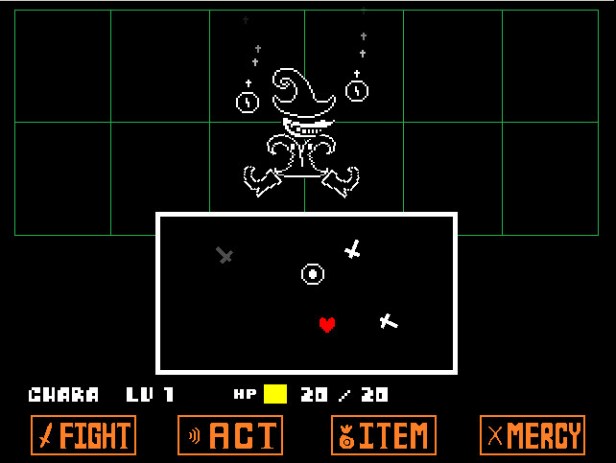
UT Jester

This may need some context.

This is certainly one of those games that could only ever emerge from an indie company or a solo developer, because Undertale also takes the occasional potshot at mainstream gaming. They’re infrequent and subtle, but they always made me grin when I saw them. My favourite moment of this is the tutorial, where the person escorting you asks with complete seriousness if you’re ready to walk across an empty room, all by your own. Yes? Are you sure? Well, just be careful not to hurt yourself.

And you can’t get that kind of self-parody properly with AAA,  because the whole house of cards could come tumbling down if you point out where it’s badly put together. Can you imagine any blockbuster title like Call Of Duty or Rise Of The Tomb Raider having the balls to point and laugh at such a common attribute of gaming? I don’t think I can.

So what about gameplay? Well, it’s odd, but I like it. I’m reminded a little of Earthbound (though that might just be the visuals) mixed with the Mario and Luigi series, as it’s a narrative-driven turn-based RPG that gives you chance to avoid enemy attacks with reaction tests. These tests take the form of little bullet-hell sections, where you have to weave a tiny heart-shaped icon around the various objects that are thrown at it. Pull these sections off and you’ll never suffer a scratch. And good fucking luck in the later battles, buster.

But you don’t need to hurt enemies either, not if you don’t want to. You see, the fascinating thing about Undertale is that it’s possible to complete the whole game without killing anybody at all. Every attacker has an exploitable trick that allows you to persuade them to bugger off and leave you alone. For example, earlier today I was attacked by a small dog in a suit of armour (which is about as normal as enemies get in this game. I haven’t even got to the sentient airplane with complex romantic feelings yet).

UT librarby

“Hi, do you have Fifty Shades Of Grey?”

And I could’ve killed Rover, sure enough. In fact, killing enemies tends to be the easier option by far. But instead I studied him and thought – why should I? I’m sure we can settle this amicably.

And we did, playing a brief game of fetch before I gave him a friendly pat on the head and he went to sleep in my lap. The battle was over, and everybody was happy. Why bother slaughtering your foes when you could bring the olive branch of peace? It’s generally slower than a sword, but it weighs a lot less on your back.

By the way, the life/death choice isn’t just for show. The game’s story varies HUGELY depending on how murderous you’re feeling. And I can only speak for me, but I couldn’t muster a single iota of aggression, even against the most challenging bosses of all.

That’s weird. I didn’t want to hurt any of the members of the monster kingdom, yet I spend time in The Phantom Pain tormenting people for fun. How the hell did it manage that, considering my usual modus operandi in RPGs is to splatter anything that looks at me funny?

It’s probably the aforementioned characterisation. The cast of Undertale are a lovable band of misfits who care about each other deeply, and who’ve all been wounded by their past in some way or another. They’re not evil – they’ve just suffered. And you might be able to make them feel whole again, if you’re really willing to try.

I’m kind of surprised about this, actually. Normally this sort of “power of friendship” thing would make me roll my eyes and stick my fingers down my throat, but Undertale pulls it off by having a strong character focus and understanding when to dial “the feelz” back just enough to keep it in sub-text, rather than rubbing it in the player’s face.

This is actually a very important distinction. A good writer doesn’t have their characters standing around saying how much they love each other. No, he shows his audience how they interact – and we see that love for ourselves.

And that’s kind of infectious to be honest, because they interact with us too, and we grow to love them as much as anyone. My particular favourite was an early figure named Toriel, who has claimed a special place in my flinty heart alongside Dungeons And Dragons, Cadbury’s milk chocolate and the actress in the “Stacy’s Mum” music video – though for very different reasons than any of those.

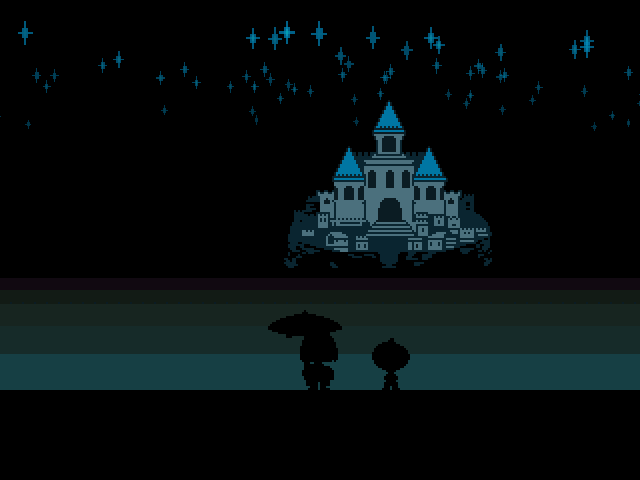
UT View

Kiss him, you fool!

But what about flaws? Well, I’m pretty hard pressed to think of any major ones, though there are a few small wrinkles. Occasionally the graphics do seem a bit more “lazy NES visuals” than “clever NES visuals,” and there are one or two story beats I didn’t feel entirely on board with. And though boss fights are pretty brief when you’re going aggressive, the pacifist route tends to take a lot longer – perhaps too long in some cases.

But these are tiny flecks of dirt on a big, sparkling diamond, and there’s one glittery facet I haven’t even mentioned yet – the soundtrack.

Oh my god, the soundtrack. A score so diverse, so clever, so catchy and so fundamentally good I immediately went out and bought it afterwards, stuck it on my phone and had my head bobbing up and down like a pigeon for the rest of the day. The music varies between retro 8-bit tunes, dynamic upbeat guitar solos and powerful orchestral pieces – and that’s barely scratching the surface. There’s techno-synth pop, tinkling little music boxes and swinging jazz pieces that wouldn’t sound out of place on a montage in a kid’s cartoon. But it gels together well and certain melodies are repeated at the most poignant second possible, giving a lovely sense of deja vu.

Whilst Undertale does have a few very minor blemishes, I’m hard pressed to think of anything fundamentally wrong with it. Sure, some things it does better than others, but it doesn’t do anything badly, and most of the stuff it tries it manages to do incredibly well.

Perhaps the thing I’m most surprised about is that Undertale made me care – a lot. It made me feel emotional and sad, then made me feel joyful and happy. I think that’s the thing some don’t realise about people like me, people who are cynical to their core. We didn’t used to be like this and we hardly ever enjoy it. We’ve just… Adapted. We took on that attitude from certain experiences and we came to a conclusion early in our lives.

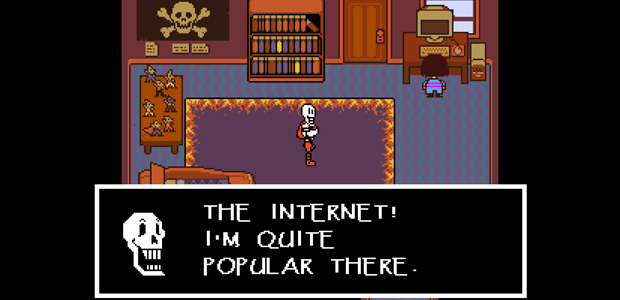
UT pap

And rightly so!

“It’s kill or be killed.”

But I’m not so sure about that mantra, not anymore. Maybe that’s why it’s so hard to get those words out of my head, because they’ve been something I’ve sometimes considered, sometimes believed in, or even delighted in when I was at my most jaded.

But that’s what Undertale made me realise – there’s no law that says it has to be that way. No, we enforce that law. We choose it. And we try to convince others that it’s the case because that way we won’t feel quite so awful for following it too. But, if we really try, we could always aspire to something better. It might be unlikely that we’ll ever manage it for real, but do you really think we should ask for anything less?

“It’s kill or be killed,” sneers a character in the opening scene, grinning cruelly at the truth of these words.

I think he knows something I don’t. And now I want to prove him wrong.


10/10

Unique, beautiful and artfully crafted in its every intricacy, Undertale is one of those games I will always hold with me. If you haven’t played it, go and do so right now. If you’ve tried it already, treat yourself to a replay.

ANNOYING CHARACTERS IN GAMING: PART 2

So last time we looked at a trio of narrative nightmares and learned some important lessons. Namely the importance of self-awareness, the dangers of fruitless repetition and the knowledge that even a flawed character must have some redeeming features to be realistic, or even tolerable.

But today we’re looking at three more bozos who could’ve used some more rethinking, and we’re starting with one of the most famous characters in gaming – and one of the dorkiest.


SONIC THE HEDGEHOG (ALL VOICED VERSIONS)

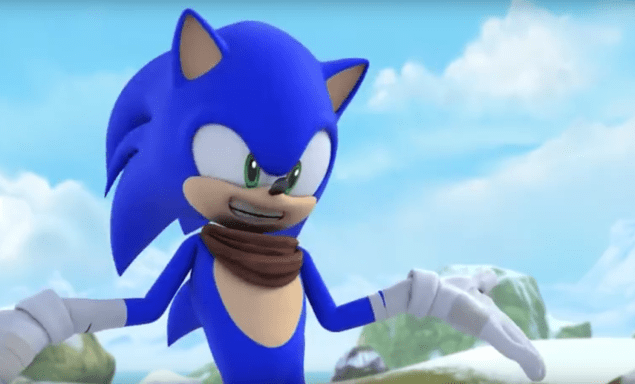
Sure, people whine about Sonic’s comrades, most specifically Amy, but let’s think about this dispassionately for a moment and look at Sonic himself. Even before the horror show that was Sonic Boom, the little blue bugger never seemed anything other than cringingly embarrassing. In fact, nearly all of the attempts made to develop Sonic as a character have fallen flat, mainly because somebody at Sega decided a little while ago that Sonic is a product of the nineties and that should be reflected in every facet of his being.

But nothing from the nineties has aged well. And I’m from the nineties, so believe me, I would know.

As a result of this mistake we have a character who is just sort of fascinating in his sheer awfulness. I’ve never been a massive fan of the franchise as a whole, but Sonic The Hedgehog in particular has always rubbed me up the wrong way. Maybe it’s because he feels like the worst elements of a dated Saturday morning cartoon hero brought to life, with his cocky, arrogant swagger and constant “Dreamworks’ Face.” Maybe it’s the fact that the freakishly modern attitude and running shoes seems to clash weirdly with the storybook fantasy that the games are set in.

Sonic Boom

Or maybe it’s the voice, usually badly acted and inspired from the kind of person who wears a baseball cap backwards and uses the word “radical” every time he inhales. And though I don’t think Sonic has ever actually rapped to camera, at this point it feels like only a matter of time. It is possible to make a kid-friendly hero who doesn’t make me want to run screaming from the room. Even Mario, devoid of personality completely, is preferable to something this painfully outdated.

But there’s not much to be done here, not without burning it down and starting all over from scratch. And the opportunity for that was Sonic Boom, which of course failed beautifully.

And it didn’t fail because they changed the formula, mind you. The franchise has never stuck to one thing long enough to develop a formula, and as we’ve mentioned, everything from the older canon was kind of sickly and needed shaking up anyway.

No, it just kept all the problems of the originals and added a batch of new ones. The biggest problem is Sonic himself – and nothing will be fixed until that issue is sorted.


CL4P-TP/CLAPTRAP (BORDERLANDS)

And on the opposite side of the coin, what happens when a series is all too happy to let you make fun of a character, swamping you with reasons to detest him?

Claptrap has been a staple of the Borderlands series since its inception, he’s the third NPC you meet in the whole story (besides Marcus and the flaky chick who managed to wangle enough money for FMV). He’s kept showing up constantly since then – in Borderlands 2 he was a major character, in The Pre-Sequel he was actually playable, and in Tales From The Borderlands he was an easter egg, available if you’d been hoarding money throughout the game, which came as something of a disappointment to people like me who had been doing so and were hoping for something better. The series has likable characters, but I couldn’t help but get irked by having to see this jackass show up yet again.

CLPTRPSome might claim that Claptrap has the same problem as Ben – namely that he’s an entity designed to be annoying, which is certainly true. The developers have admitted as much and it’s constantly brought up in the games. But I would say that Claptrap is a more obvious failure than Ben, as his purpose for being so aggravating is much clearer – Claptrap is designed to be so annoying, he becomes funny for it. And the problem is that he isn’t funny.

Gearbox were really playing with fire here, because there really were only two ways it could go. Either he managed to go right round the circle and make people laugh as intended, or he’d fall short and get real old, real fast. And boy, we know which one it was now.

And yet, they still keep trying. The battle to make Claptrap accepted by the public has been a losing struggle for years now. They tried everything, including making two DLC campaigns about him, and yet it still won’t take, not quite. Perhaps the most bitter pill to swallow is that Telltale made what I can’t help but think of as “what Claptrap should have been” – Gortys, the chirpy little robot who managed to blend childlike naiveté, excitable charm and a real sense of friendly altruism.

Whereas Claptrap is just an arse, through and through. He’s whiney, egocentric, boastful and lethally unamusing. And though this is pretty bad, he probably wouldn’t be so detested if he didn’t have such a permanent presence in all the games. Not only do Gearbox insist on making him a major figure, he refuses to keep quiet when he’s around, constantly bleating out self-deprecating “jokes” over the top of a gunfight or grunting out the tune of some dubstep garbage. Yes, he’s even a fan of the most unlikeable music going, and there’s no way to make him shut his Hyperion-brand hole.

The cure here is a pretty minimalist one – to minimise the bugger’s performance. I know they can’t drop him completely, as he IS the mascot of the series, but keep him out of our way as much as possible, OK? And please, Gearbox, really work hard to make those jokes click. You’ve tried humanising him and that didn’t really work, so I’d recommend that you keep pushing to do what you did before – get right back round the circle to make him funny again. And just in case, keep him in the background. That way it can never be much of a problem. Deal?


BABY MARIO (YOSHI’S ISLAND)

Did you know that the human brain has evolved in such a way that we are inherently programmed to find the sound of a baby crying unpleasant? Apparently we’ve developed this so that when there’s something wrong with our kid we feel a sense of urgency to do something about it, to make it better, healthier, less hungry or whatever.

Of course, that only ever applies when it’s a child we care about. When it’s somebody else’s baby wailing, we just give the parents an ugly look and ask the stewardess if we can change seats to somewhere else on the plane.

Yoshi’s Island was released for the SNES in 1995, and I’ll happily admit that it was a pretty good game that still holds up, which is probably why it’s been rereleased and copied in various forms such as “Yoshi’s Touch & Go,” “Yoshi’s Story,” “Yoshi’s Island DS,” “Yoshi’s New Island,” “Yoshi’s Woolly World” and we’ll probably see Yoshi’s Championship Manager if somebody doesn’t stop Nintendo soon. It seems that Mario’s mount has so many islands and worlds that he probably owns more real estate than Donald Trump.

YoshiBut speaking of Mario, that was always the glaring flaw in those games – the ‘ickle Baby Mario. See, there was never a health system in Yoshi’s Island, because you were basically acting as a substitute courier. Baby Mario needed to get to a boss fight before the shops closed and you were the bloke who had to carry him there through enemy-infested lands, like he was a wounded soldier on the beaches of Normandy.
Except that there’s a tit on a broom who’s constantly hanging around, waiting for the chance to pinch Baby M and sell him for adoption to wealthy celebrities. So when an enemy hurts you, Mario is knocked off your back and for some reason, instantly generates a bubble around himself that promptly carries him away into the horizon. That is to say, away from the only creature that’s helping him. Not only that, but up towards the clammy hands of the child-catcher above you!

And whilst Mario’s bubble-borne, he starts to make the most awful, screeching cry you can imagine. It’s like a woodpecker going at your eardrums, a high-pitched repetitive noise that sounds unnervingly like a siren. Meanwhile all sorts of bells start ringing, and everything goes to shit very quickly.

Because now the baby’s floating off, and you have a limited time to get him back before he gets stolen – which is usually about ten seconds. And Mario has the terrible habit of floating up just out of your reach, leading to some frustrating moments as you bounce fruitlessly beneath him, pawing at the air and never getting close enough. And besides, you had to lose a couple of seconds to turn down the volume because of that goddamn crying noise.

The true irony here is that you’re putting in the effort to retrieve a kid you’d have every reason to avoid. Baby Mario has no personality, no reason to like him and no benefit to gameplay. The only noise he makes is the screaming and other than that he’s just a pain in the arse.

This is a fairly easy one to remedy, though. A bit more lovability injected into the character would be necessary, as well as cutting out that wailing noise. I’d also drop the bubble, because the urge is to blame Baby Mario for his own predicament when it carries him off. Why not have enemies run off with him, so you’ve got to give chase and get your kid back? As it is right now, I’m kind of in two minds about doing so. Guess I’m no father of the year.


Hope you enjoyed this list – maybe you had some characters in mind that we missed? Feel free to mention them in the comments, and special mentions go to Navi (Ocarina Of Time), Eli (Metal Gear Solid V), Leon Bell (Dead Rising 2), Tingle (Majora’s Mask) and amateur bowling enthusiast Roman Bellic (GTA IV).

ANNOYING CHARACTERS IN GAMING: PART 1

Whilst games in more recent years have started putting more effort into their narratives, that doesn’t necessarily mean that they’ve all been successful in that endeavour. After all, the lifeblood of any story is its characters, but what does that mean when the characters are insufferable? Yes, we have boring, bland figures every year in video games, with personalities that would make the cast of a Transformers movie look like Shakespeare, but these tend to be forgotten swiftly and are usually content to stagnate in a corner somewhere.

But sometimes there are thorns. People whose every action is like sandpaper rubbing against the taste buds, and they stick with us for a long time. Some of them have become infamous for it.

So here we have a selection of particularly annoying entities from gaming history, and the lessons that should’ve been learnt from them. Maybe it’s wrong to cast the first stone, but truthfully I’d be delighted to see any of these pricks buried under a landslide.


TOM SHELDON (THE JUST CAUSE SERIES)

Just Cause was never celebrated for its story, but quite frankly it didn’t need to be. When gameplay is as maniacally fun as this then I’m willing to let a silly plot slide, particularly if it intrudes very little on the game as a whole. And Just Cause 2 understood that.

But that doesn’t mean that it gets away with it entirely. Though none of Just Cause 2’s characters were hugely likeable or complex, they generally did whatever was needed of them and then were shunted off-screen to let the madcap action take place. Basically, they all had the role of signposts saying “THIS WAY FOR EXPLOSIONS.”

Except for one of them, whose every moment on screen made me want to hookshot him off a cliff, or tie him to a helicopter and fly it into the ocean. And yet he was the one person for whom the game would not allow it.2015-11-26_00008

So meet Tom Sheldon, an ostensible ally of the player who plays like an awful stereotype of the worst urges associated with Southern States America and right-wing republican idiocy. He’s constantly burbling about barbecue, getting other people to do work for him and contributing fuck-all to help out, bar a vague sense of slightly racist superiority to any other country. And of course he hates communists for no real reason besides blind patriotism, just to round it all off. Pair this shallow, unpleasant wanker with a voice that sounds like a piece of metal being torn in half and my tolerance wears thin real fast, as he shrieks another high-pitched “YEE-HAW” for the thirtieth time that day.

But how could you fix this character without destroying it completely? Well, I’d say what was needed for Sheldon was a great deal more awareness about the archetype they were playing with. He’s probably intended to be a parody, but this doesn’t count for anything if it’s just not funny (a theme we may be coming back to later). If you want an idiot, play him like one, commit to it. Don’t shuffle back and forth uncertainly, and at the very least make him worth something when it comes to the humour.

Sheldon comes across as unpleasant, but the game seems to think he’s cool – and he’s not. So what we have is somebody I don’t want to be near or even see getting praised, being fawned over by the narrative from dawn ‘til dusk, such as when it allows him to finish off a boss fight by crashing a chopper into the enemy. Rico spends the first half of Just Cause 2 actively trying to find him, then the second half working with him, which seemed somewhat at odds with what I wanted – aka, the hookshot-helicopter-hijack-hoorah, and to watch that ugly Hawaiian shirt and its pudgy contents plummeting into the sea.


ZUBAT (POKEMON)

Alright, so this one actually goes by many different names, but they’re really the same entity deep down. In water it’s called Tentacool, in deserts it’s Trapinch and in more recent games Bibarel has been a great source of frustration – but at their core, they’re all the same thing, the spirit of Zubat reborn over and over.

Here’s a basic rule of games and life in general – you can always make people angry by forcing them to expend effort, money, resources and time on something that doesn’t benefit them in anyway whatsoever. And Zubat is the personification of that feeling, mixed with a load of other little irks and niggles.

For those of you who don’t know, here’s how it works – Zubat is an incredibly common Pokemon that is frequently found in many of the game’s cave systems. It’s weak, ineffective and has a type disadvantage to pretty much anything. And yet it’s also one of the most horrific things that you have to endure, because caves are filled with Zubat. No sooner have you batted one out of the way then another drops from the darkness to get tangled in your hair. And Pokemon is nothing if not willing to drag its feet, so every one of these battles has to start with a protracted animation in which the two sides gear up, deploy Pokemon, give a squawking little battlecry and so on and so on and so on…

ZubatAnd then you have a choice. You could try to run (which is by no means guaranteed to work and uses up your turn, giving Zubat a chance to attack you for free) or fight it on its own terms, which uses up the limited pool of power points you’ll probably need for proper fights later on. You know, the fun fights that you want to be doing.
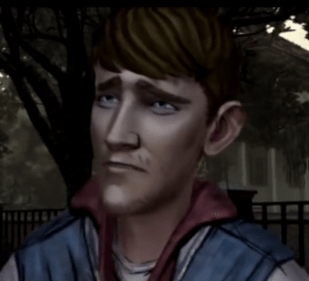
But, as you are probably thinking, what’s so bad about all this? Yes, it’s annoying, but who cares when you’ve just said the Zubat is no proper threat to the player?

It’s a little hard to explain it clearly, but the issue is that Zubat’s the kind of fighter that will go for all the below-the-belt punches. This winged pain knows a lot of bullshit attacks which aren’t dangerous per se, but will keep the fight going in the most unsatisfactory way possible. Zubat regains health, confuses your team, makes them flinch to miss turns and poisons them to cause damage even after the fight is over. And I hope you’ve got some kind of antidote, because otherwise that poison isn’t going away until it’s reduced your Pokemon to zero health. Hooray!

Basically, Zubat is all the most annoying moves and tactics combined into one creature, then repeated forever, until you finally break through or just throw away the Game Boy. Picking away at your health and morale until only a shell remains. Kind of appropriate for a creature that has the signature move “leech life.” And though the games allow you to buy an item that keeps wild Pokemon at bay, Zubat is usually at its worst in the early stages and that’s when these items tend to be proportionately very expensive. So the system is basically suggesting that you bribe it to keep the little sods off you for a while. Not cool, Game Freak.
What’s to be done about it? Well, let’s have no more enemies with all these horrible attacks up their sleeves. Mix them up, make them less annoying, and change what you’re likely to find inside caves. Maybe one day we’ll be able to look back on this with forgiveness. Maybe.


BEN PAUL (TELLTALE’S THE WALKING DEAD: SEASON 1)

(Warning: this one requires a little bit of spoilers to talk about properly. If you haven’t played The Walking Dead: Season 1 yet, feel free to skip this.)

The problem with this part is that I suspect that supporting character Ben Paul might have been designed to be annoying at a basic level. But I still think my criticism stands, because the overall public response to Ben was – “OH GOD, WHY ARE YOU STILL HERE?”

I do respect the writing in The Walking Dead Season 1 greatly. In fact, let’s not split hairs – it’s the best interpretation of Robert Kirkman’s work, including the original material itself, which meandered on and on without ever really going anywhere, thus losing the tight focus and narrative elegance that Telltale’s story had.

And what I like most about the characters in The Walking Dead is that they’re all universally flawed and realistic. Clementine in particular is like a monument demonstrating how to portray children in fiction without getting on your nerves (another thing we’ll be coming back to), but this is the problem that I’m toying with – does a realistic perspective justify the addition of a character who is so unlikeable as to make the game less entertaining as a whole? Or, to put it more simply, can you justify sticking a real bellend in your game, one who’s so frustrating that he makes you want to stop playing completely?

Ben PaulThe reason why I suspect Ben was designed to annoy the player is because we’re constantly given chances to let him die. It’s a little ethical test put upon us by the writers to see if we’ll break and give him up to the hoard, but I actually don’t like this challenge. Ben is discovered by the group at the beginning of the second episode, and whilst to begin with he’s tolerable enough, that rapidly changes as he makes one frustrating mistake after another, many of which indirectly result in various deaths of his friends. He even abandons the infant Clementine to the hoard to save his own skin, which drove me nuts with outrage. Yes, it’s a plausible response for many people, but it made me aggravated to see him constantly making these errors and other people paying for them.

But what’s the lesson here? Isn’t this an intentional choice? Well, yes – but it’s a bad one in my opinion. A complex character certainly has flaws, but isn’t entirely composed of them. Ben has no real redeeming qualities, no reason why we should want him around, which in itself seems kind of implausible. He’s cowardly, stupid, throws a couple of tantrums, seems unwilling to admit to his bad decisions until he suddenly becomes a big moping mess and is genuinely detrimental to the group as a whole. And when he finally died (because of yet another thing that he fucked up) I felt only a vague sense of gratitude to the zombie that finished him off, marred somewhat by the fact that another, more interesting character got taken out with him. For fuck’s sake, Ben – you even ruined your own death for me.

Ben needed nobility, some purpose, something – even if it was just a sense of commitment to what he was doing. There’s few things more irritating than watching someone flip-flop back and forth, learning nothing and contributing even less. Even evil characters tend to have a backbone, or some strength of will that makes them a tinge more admirable. And when you rank below all the worst villains, something’s gone horribly wrong.


The second half of this list will be available soon, only at joelfraney.com.