WHY IS THERE NO BLOOD ON MY PC?

You know, I’ve heard it said that good things come to those that wait. It’s one of those stock-phrases that people say when they’ve exhausted all statements with any meaning or logic, like “Every cloud has a silver lining” and “You never know, the doctor might be wrong, you could live another ten years.”

The fact of the matter is that all this waiting business is a provably untrue saying, because if that were the case I’d have gotten a lot of things I really wanted, purely by the merit of having sat around expecting them for absolutely ages. Power, wealth, women, and of course Bloodborne coming out on anything that’s not the PS4. God damn you Sony, you son of a bitch.

Let me be very clear here: I don’t own any of the next-gen consoles. Neither the Xbox One, the PS4 or the Wii U will ever make it into my home whilst I still live breathe. If I wanted to lose cash that fast I’d just go to a comic shop, or move into a district with a steak restaurant. So before you all tell me just to buy the sodding console, I’ll tell you that I have something better, and it’s called a PC. How do I know it’s better? Well, for one thing, the next-gen consoles are all trying to bridge the gap between themselves and PCs, so not only am I right, the consoles themselves agree with me.

Skeletons

I’m sorry, little ones. We’re not going to be on Steam in the foreseeable future.

But it’s bloody (ha ha) annoying, because I really want to play Bloodborne. Really, really want to play it. I love Dark Souls, as is well-documented at this point, and Bloodborne seems to be Dark Souls with guns and highwaymen’s coats. Sign me up, please.

A lot of people seem to be hoping that Bloodborne will be released on the PC later, because it seems to be well-suited to it and all the other Souls games have made the transition. And whilst I’d absolutely love it if the game was ported over, I really doubt it will be. I mean, it’s not impossible… Just depressingly implausible.

You see, I know there was a petition done online to ask for a port, and whilst I’m all in favour of that, it was aimed at the wrong people. Almost 50,000 signatures went straight to developers From Software, shrieking inanely for a computer version, but they’re not in control. It’s the publishers who need to be pleaded to, but there won’t be any luck there, because the publishers are Sony themselves.

Yes, Sony, who own the PS4 and would rather die than let a rival competitor get one single sale from a product that they had a hand in. Do you really think From Software care that much about the Playstation? Of course they don’t. They just make games, it wouldn’t have mattered to them whether it was for Sony, Microsoft, Nintendo, Cthuhlu or whoever, as long as they can sell their game, they’re happy. Fair enough.

But Sony have a lot invested in keeping ol’ Bloodborne on the Playstation. Ever since their failed investment in The Order: 1886, Sony have been looking for that perfect PS4 exclusive to really cement some sales. They have Uncharted 4, yes, but that’s not out yet, and only one person bought Knack, because he thought it was the album with “My Sharona” on it.

But Bloodborne is kicking ass when it comes to sales, having moved over a million units already, more than Sony expected. It’s a critical success and it’s also visually striking, making it an effective poster boy for the PS4.

Stab

I believe this is a fair summary of how PC gamers think From Software has treated them.

So why would Sony give permission to lend it to other platforms? Well, they wouldn’t. At least, not any time soon. Maybe when the sales die down it will consider selling the rights to the PC, but that won’t be for at least a year when all the PS4 sales have been exhausted, and it’s possible by that point that there might not be a high-enough demand for it.

Sony have said themselves that there’s no plans to release it on the PC and I believe them, though of course they would say that either way. Even if they’re going to send it to Windows and Mac, they don’t want to mention it in case we feel the need to have a brain aneurysm and buy their shit product before they do.

So we can’t expect a PC-friendly Bloodborne soon, and probably shouldn’t at all, much to my sorrow. But since the Steam Summer Sale is up now, I feel happy enough that I can deal with that. This War Of Mine? Yes, please. Hotline Miami? Oh, I’ll have one of those. Farming Simulator 2015? Erm… Maybe another time.

NOT HAVING NEW EPISODES IS GOING TO GIVE ME AN EPISODE

You know what I hate? When I pay the standard video game price and just get given the whole thing at once. God, it’s annoying. Just one payment, just one download, and bam. Suddenly I’m staring at a WHOLE GAME. What on earth is going on?

Yes, that was sarcasm, but lay off, I’m in a bad mood. You see, episode three for Tales From The Borderlands just got announced, and now I’m pissed off because a) it comes out on the same day as Arkham Knight, meaning I’m going to have to choose between them, and b) I’m going to have to play it all over to remember what happened, because episode one came out seven bloody months ago and episode two was was offered four months after that.

First world problems, am I right? I can barely remember where the cambozola cheese is, I’m so angry.

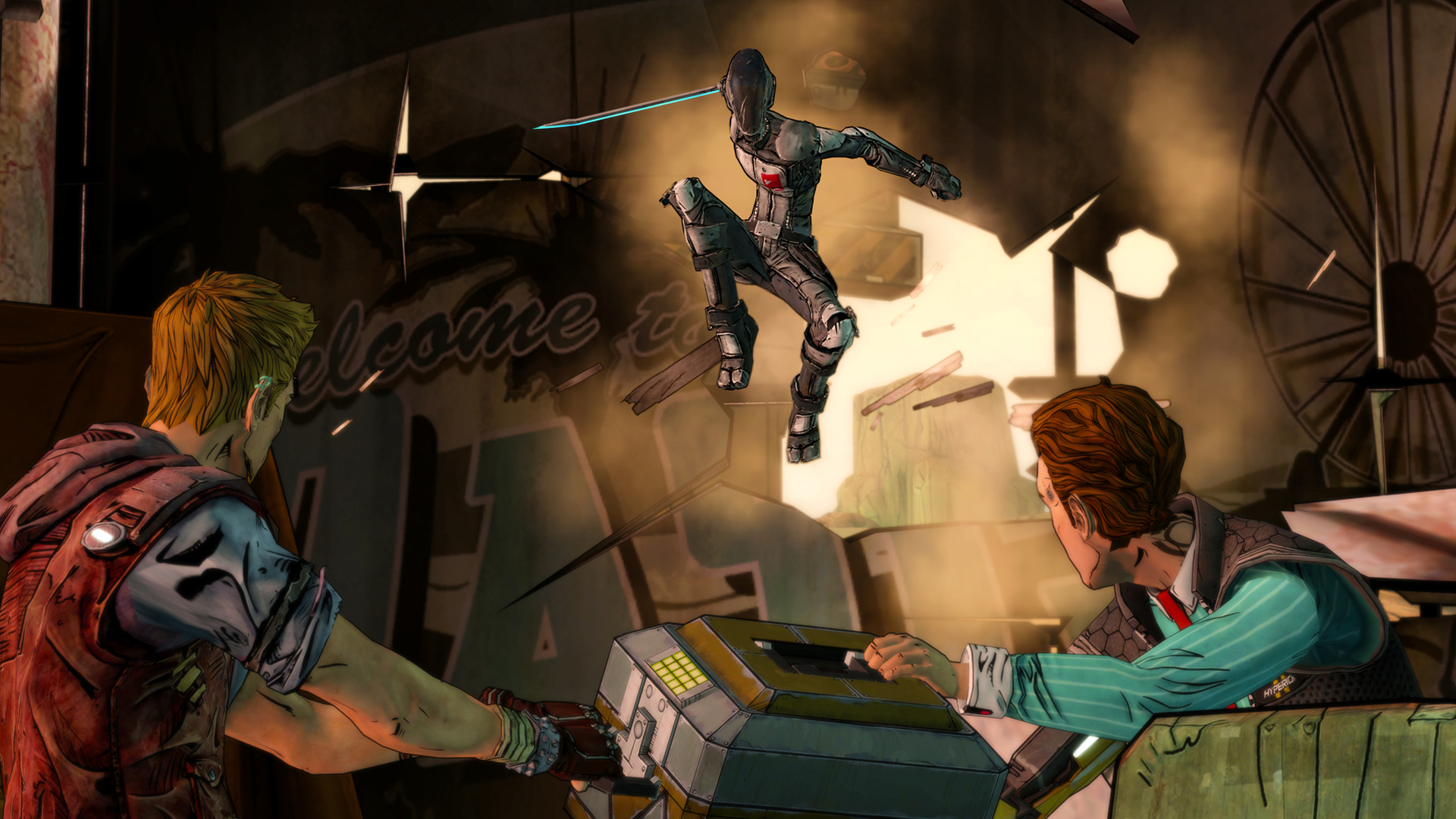
It’s a double-edged sword, because the only reason that I’m this annoyed is because episode one and two were both really good, probably some of the best material Telltale has done. A good story, lots of laughs, exciting action, interesting choices and some genuinely likeable characters. But after part three comes out, I feel I’m going to be lucky to see this story conclude by Christmas.

Zero

This is what Borderlands fans have to do to get their episodes on time, god bless ’em.

I do struggle to see the advantages of episodic gameplay. Alright, so you get to basically have five separate releases per game, boosting your profits because of how often it gets to ping up on the Steam homepage, like a money-powered jack-in-the-box, but what about benefits to the actual players? It’s just annoying for me, and looking at how much vitriol was in the comments on the news site for this announcement, I feel safe to say it’s not just me feeling like that.

The fact of the matter is that I’m also kicking myself for having bought the whole season when it first came out, rather than do what my friend is doing and just wait for it all to be finished before coughing up money. Because doing it this way feels like I’ve been watching an exciting movie, only for it to get to a climactic moment before some prankster pauses it and runs off with the remote.

It wouldn’t be as obnoxious if they had a schedule planned out from the beginning for us to know about, like what Resident Evil: Revelations 2 managed, i.e., releasing an episode every week for a month. I could deal with all this if they’d just told us straight up when it was all going to be ready, because then I DEFINITELY would have emulated my friend and waited the extra century.

But I guess when you’re a critically and commercially successful company working squarely within your comfort zone, it must be a bit hard to work out basic planning techniques. Oh snap! Seriously though, I’m not asking for a timetable that’s accurate down to the minute, but an idea of what month I can expect the rest of the game would be nice.

Here’s a thought, Telltale. What if instead of spending all that time working on that weird Minecraft adaptation, you could in fact NOT do that, and finish the games you already started half a year ago? Or what about releasing games one at a time, rather than having to divvy up your efforts on several games at once? Or even just release a whole game in a single go, like what human beings do?! How’s that for some fucking out-of-the-box thinking?!

Minecraft horror

No, it’s not a joke. We only wish it was.

It’s weird, because I wouldn’t care so much if the games were rubbish, but they’re really not. The Wolf Among Us, The Walking Dead Season 1, and what so far exists of Tales From The Borderlands have some of the best video game stories I’ve played, ranging from grim and despairing, to suspenseful and mysterious, to joyful and anarchic. But having given us a meaty bite of gameplay experience, Telltale then decide to whip the sandwich out of our mouths, and just sort of wave it in front of us until they feel like giving us another bite, and it’s hard not to feel like we’re being teased.

Not only that, but why is it that the Game Of Thrones story, released a month after Tales From The Borderlands, is somehow two episodes ahead of it? Especially when just about everybody seems willing to agree that the Borderlands game is better? Exactly what kind of madman is running this system?

There’s nothing intrinsically wrong with Telltale games, but this episodic stuff is surreal and more than a little frustrating. Especially in today’s age, when a whole culture has been built around not making people wait for their purchases. Netflix, iTunes, even Steam itself, their main selling point is not having to wait for your product to show up or fiddle about with it when it does. It’s more convenient, and it’s pretty sweet. But clearly Telltale don’t get it. I bet they cook meals with about a week between starters and main courses too.

PICTURE-PERFECT NEEDS A TAINTED IMAGE

Yes, I admit it. I like good graphics in a game. It’s not the be-all-and-end-all, but it’s a nice bonus if the game has that “extra-polished” feel. For some games it can make a good experience into a great one. I like the online space simulator Elite: Dangerous, and there’s something kind of spell-binding about the visuals in that game. The very act of taking off has a wonderfully smooth and seamless feel to it, made all the more exciting by how utterly realistic it looks. It’s genuinely awesome, and for that experience alone, I’m not going to say that graphical quality doesn’t ever matter.

Minecraft pic

Welcome to Minecraft. Anybody caught bringing in an object with curves will be shot.

But how pretty a game looks is not the only way to rate. As I pointed out in the Minecraft article a while back, one of the most popular games in the universe has a look that wouldn’t have been out of place in 2001, a vague hybrid of origami and cut-price kid’s toys. But people seem to cling to the idea that the measure of a game is how she looks, not how she plays. And let me tell you, this is having rather nasty consequences on gaming as an industry.

But how did this come about? Well, I have a theory that I’ve been working through the past couple of weeks, and every bit of research I do seems to back it up. And whilst I’m proud to be right, I’m upset about the truth of the matter.

Where to start? Probably at the beginning, I suppose. Yes, that makes sense.

This horrible little life cycle starts with the release of a new console generation, just like the one we’ve recently had to endure with the three big offenders: the PS4, the Xbox One, and the… What’s this one? I’m not familiar with it. The Wii U? Has anybody heard of this? No? Huh, how strange. Perhaps I’m reading it wrong.

Anyway, every time that there’s a new console generation, we can depend on one guaranteed feature – more processing power! This is not a bad thing, I’ll admit that. I’m not hugely happy with how they put it to use, but fine. There’s nothing inherently wrong with a console that can process like Alan Turing on speed.

The problem is that this is a major selling point, and all the console manufacturers have quite a bit invested in demonstrating just how hard this ugly machine can think at us. It’s one of the reasons why you have to pay an eye-boggling three hundred quid, MINIMUM, so they’d better rub it in our face as hard as possible.

But how to bring across the amazing power of this machine in a way that the average punter will understand? It’s got to be pretty explicit, it’s got to distract him from that jawbone, for a start. How do they show how cutting-edge this thing is on screen?

You’ve guessed it, they settle on graphics. That makes sense, right? Gameplay might not come across as easily, or designers might be resistant to changing it, so suddenly a memo goes around to everybody who’s making games for these titans. Better graphics! Make it look spectacular, you understand? And any game made by the console makers themselves are always polished to a high sheen. Well, at least visually.

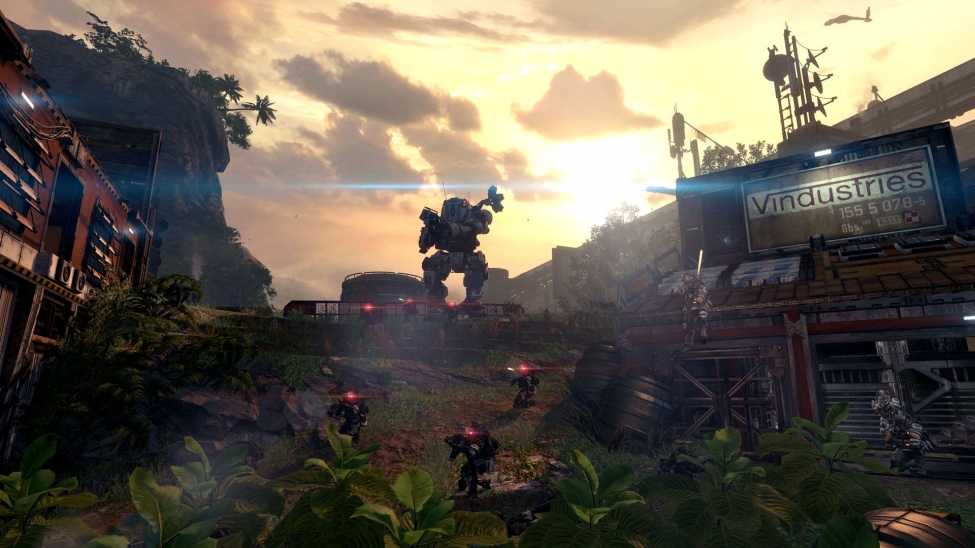
But then something starts to change in the mind of the public, and it’s down to the fact that all the console front-runners and exclusive titles are advertised to high-heaven. When Destiny came out I couldn’t walk down the street without seeing massive billboards for the stupid thing. And we all remember Titanfall and Ryse: Son Of Rome swanning around on the side of buses, don’t we? Big games and big names mean big expectations. Not only that, but these titles are seen as representative of the whole console’s library.

Titan

FEE-FI-FO- BANG! Heh heh. I’ve been wanting to say that all day.

And just like that, the bar is set. These bigwigs become the standard by which the graphics in all games are judged, at least in the mind of the general public. Yes, YOU lot out there. You’re responsible for this mess, at least partially. Bet you regret putting that jawbone down now, don’t you?

And it’s not fair for graphics to be this flashy, because artists and big skyboxes cost not just an arm and a leg, but a whole aeroplane disaster’s worth of discarded limbs. Making high-quality graphics is bloody expensive. It’s why nearly all indie games tend to gravitate towards cartoon visuals, like Limbo, Braid, Fez, Papers Please or Mark Of The Ninja. They have to accept and acknowledge the idea that they just can’t afford to make anything hyper-realistic. Bummer.

But then the public refuses to stop drooling over anything pretty, and suddenly the big companies have an idea. Why don’t we just keep blinging up all the visuals and not bother doing diddly-squat to the gameplay? After all, tweaking the mechanics is risky, it might not be well-received. But everybody loves a picture-accurate locale, right? Let’s just do that for ever and ever, and let culture stagnate, like a man face-down in a swamp.

It only gets worse, because at some point it gets to the ludicrous extent where they have to consider that they’re pushing the limits of the processing power again. The touted next-gen consoles aren’t powerful enough for our super-graphics! What are we going to do?

And thus they’re presented with a choice. They can reduce the graphical settings, or they can start to reduce the gameplay. And by this point they’re committed to option one. Did you hear that bang? That was any hope for gameplay innovation being shot by a ditch, sorry about that.

And what do you do then? You wait for the next console generation to come out. The cycle begins anew. Hip, hip, hoo-fucking-ray.

47

I know how you feel, bro. If I sold three million games and was told I wasn’t good enough, I’d get out the pistols too.

There’s other flaws I haven’t mentioned yet. What do you think having entire squadrons of animators and artists costs? They don’t do all that for free, you know. In fact, it’s one of the aspects of game manufacturing into which the most money is sunk, and it only makes profiting from it that much harder. A while ago, Square Enix was whimpering about how their three big products: Hitman: Absolution, Tomb Raider and Sleeping Dogs, all underperformed and hadn’t sold enough copies. They were considered failures.

Seriously? Hitman sold 3.6 million, Tomb Raider sold 3.4 million, and Sleeping Dogs managed a respectable 1.75 million. Not only that, but EA were telling us that Dead Space 3 had to move five million units to get a sequel, and Capcom were disappointed with Resident Evil 6, which actually managed to reach that monstrous figure! I can’t quite believe how inflated the budgets must have been. How on earth were you expecting to move that level of product? And, more to the point, how much did you spend making them look marginally better than other games?

What other problems are there? Well, let’s get an obvious one out of the way – some studios just can’t attain that level of graphical perfection. They just can’t. They don’t have the staff, or the money, or the time. So when that studio releases a game, the graphics of which are just “OK,” – well, suddenly they’re hammered from every angle. How dare you look just OK?! Get out of my sight and never come back! You’ve shamed this world and the civilisation that spawned you! Not to mention the fact that certain games I might mention would like to think that looking nice is all it takes, meaning you can get away with shit gameplay.

When actually I suspect that it’s the other way around. Team Fortress 2, World Of Warcraft and the Mario games, they all have basic cartoon graphics but reliably sell copies. Perhaps this might be because that people don’t care about super-realistic skin tones and rock textures as much as the industry thinks? Perhaps we just want a game that plays well and is generally fun?

Warcraft

That dragon started talking about texture quality! Get him!

Remember, I’m not against kick-ass graphics, nor am I opposed to a game looking accurate or realistic. But the costs involved, be they financial, cultural or just both at once, they’re too much at the moment. Can anybody realistically disagree with that?

What I wonder about is what the executives are going to do in twenty or thirty years. Once games get to the point where they just look unfailingly real, then they’re going to have to stretch their tiny minds to think of a new selling point.

I can just see them desperately watching footage of Call Of Duty: Really, Really Advanced Warfare, tearing out their hair and racking their brains in abject terror. “Oh god, it looks just like the last generation of games! We’ve reached the peak of what graphics can do! Christ, we’ll have to start advertising gameplay! People are going to have an idea about whether a game is good or not before they buy it!”

Oh, I’m waiting with bated breath for that day…

DYING LIGHT – I THINK WE’VE BEEN HERE BEFORE

I feel the need to do an article on a specific game here. Basically it’s a review, and whilst I don’t normally do those, I felt I should for Techland’s game “Dying Light,” which was released at the beginning of the year.

For those who don’t know, Dying Light is an open-world zombie game in which you parkour around in first person in a large city, avoiding the undead and doing all your missions and resource hunting during the day, because all the really nasty buggers come out after dark. I don’t know why, maybe they were obsessive clubbers in their previous life, but apparently that’s what they do now.

The problem was that when I first heard about all this, I got very excited. Zombies are nothing if not stale by this point, but I liked the idea of going up against strange night-time horrors. I also enjoy games with free-running, because I’m nowhere near that fit and it’s nice to live the dream. And of course I rather liked the idea of scrambling for ammo and bits of food in the day to bring back to my hut and chew on, whilst I hid under a table at two in the morning and something hungry padded around outside, sniffing the air. I like that idea of pure survival, of doing what you can to live and making tough decisions to do so, followed by adrenaline-pumping terror as you sprint across a rooftop chased by a screaming crowd of undead aberrations.

But of course, the things we imagine are always better than the things we end up with. Dying Light isn’t a bad game over all, I suppose, but it’s insultingly plagiarised from other titles and couldn’t even improve on all the stolen mechanics it had in its little swag bag. Let’s take a run-up at these, because we won’t get through them otherwise.

We’ve got the parkour taken straight from Mirror’s Edge, the combat lifted from Dead Island, the open sandbox style and constant first-person perspective AND the trio of skill trees from Far Cry 3, the Zombrex plot device from Dead Rising 2 and the sunlight-weakened zombies from the movie I am Legend, the horrible lockpicking mini-game from Skyrim and a bland set of crafting mechanics from Watch_Dogs and most triple-A games, not to mention the day/night split from Minecraft and Don’t Starve. But put all these powerhouses together and what do you get?

Uh, something that’s not quite as good as any of them actually, except maybe for Watch_Dogs and Dead Island because, well, Watch_Dogs and Dead Island are a bit shit. But I digress.

The problem with Dying Light is that it’s hard not to think that it tried to trick me, what with my having gotten the wrong impression about the game so quickly, and with so little done to contradict that image. And then, having played it for a while and generally thinking that it’s OK, it started doing the Man Of Steel thing, where having sat down and thought about it properly, I realise that I like it less and less the more I think about. And any game that holds up as long as it takes to remember that it exists isn’t going to do great.

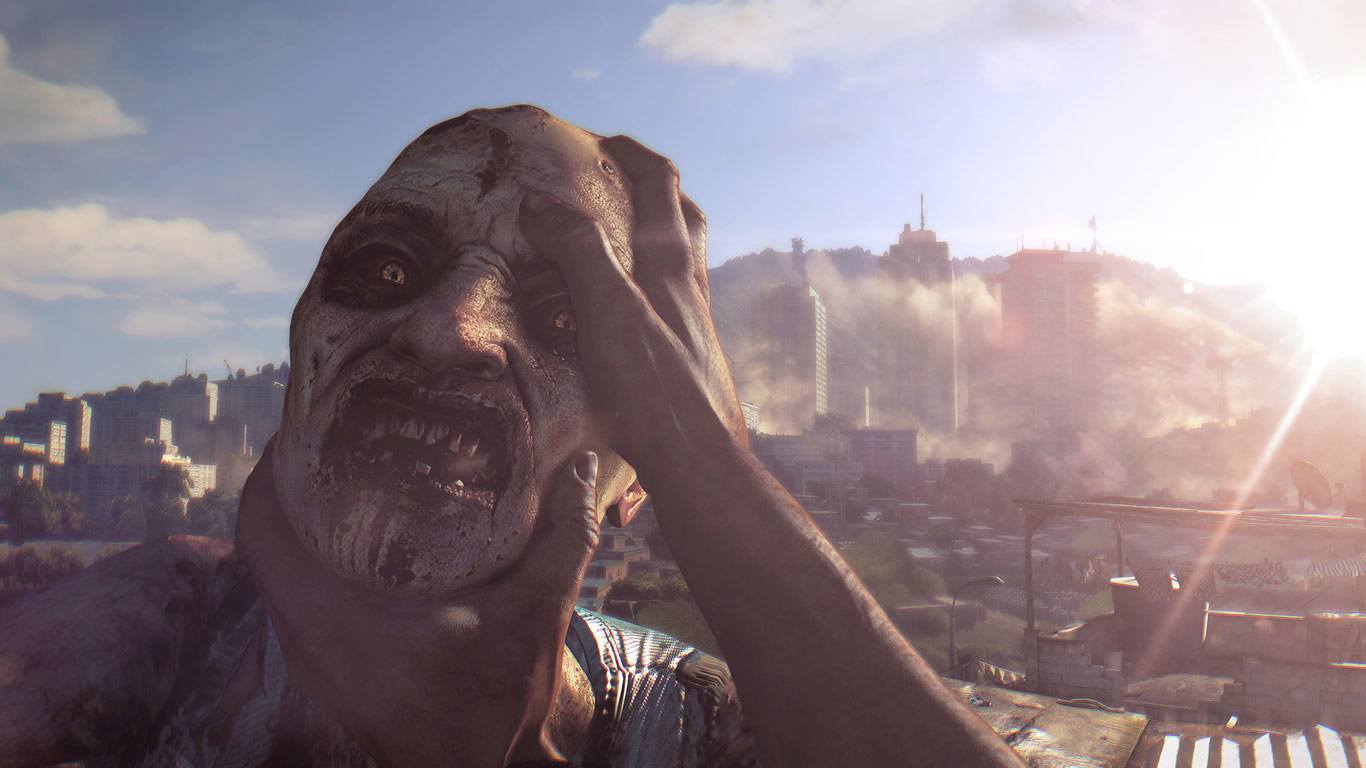
Grapple

You know, people said my method of dealing with the homeless was too harsh. I’m not convinced.

Take the survival element. In the trailers we see Crane, the rather bland protagonist, gathering up just about every item you can imagine and storing it in his Bag Of Holding for later. I figured that after dark he’d be hunkered down in some shack, boarding up the windows to keep out the clammy hands of the dead and using those power cords he found to either electrify certain areas or just hang himself out of despair.

Nope. You just strap these bits of junk to a crowbar, or a wiffle bat and hey presto! You can now deal electric damage on top of the regular wiffle damage! And if you get other items you can make weapons with fire, explosive or toxic damage as well.

Alright, it’s less interesting than interacting with the environment, but yeah, I can get down with an ice sword or a poisonous hammer. I’m not above that. But tell me, do any of these damage types have some sort of mechanical difference?

And suddenly Dying Light comes over all quiet and starts looking at its shoes with embarrassment. Ha! I caught you out, you huxter. No, no, protests the game back, scrabbling in its pockets for something else to show me. You can also make medkits and grenades and all the other “crafting 101” rubbish that could have been thought up by a man with a pigeon for a brain.

Yeah, nice try. And even then it cocks it all up, because finding the parts for powerful items is just too easy. Any diligent scavenger can find quite a few components in not much time, because on top of being a boring character Crane is also part truffle-hog, built with a “survivor instinct” that can cause useful gear to ping on your radar when you get close to it. Then you just add them to a weapon that isn’t going to break for a while, and suddenly you have a piece of kit that kills anything with ease and has the durability to last until you find the components for three more.

Did you hear that wooshing noise? That was any sense of challenge flying out of the window.

Actually, the combat in general can go jump in a lake. Regular zombies are the slow kind, and it’s pretty easy to push through a crowd of them whilst taking minimal damage, something that only gets easier when you get the power to vault over them. And all fighting basically comes down to mashing the melee button and occasionally dodging, with one or two additions as you gain powers, none of which do anything new. Hold down melee to do a more powerful charge attack? Gee, aren’t you striving ahead for new ideas, Techland?

No, of course they’re not. There are a bunch of special zombies that actually get dropped in, none of which are anything fresh in either sense of the word. There are quick ones, ones that spit goo, ones with AoE attacks and there’s also a shameless copy of the Left 4 Dead tank, right down to the ability to rip concrete out of the ground and chuck it at you whilst mysteriously leaving the road unharmed.

I’d also like to express my utter hatred for the suicide bomber zombies, which give you no time to escape, can kill you in a single blast and are always spawned by the game behind closed doors. Perhaps they enjoy watching you through the keyhole or something, but it got to the point where I couldn’t bear to unlock another door before hearing that wet explosion and watching the “Game Over” screen fade in. And then the red mist would descend and I’d say a word that isn’t repeatable in mixed company, and finally I’d wake up three days later on the far side of town covered in blood with what I hope is animal meat in my teeth.

I feel like I’m being very harsh on the game, so I’ll try to find something nice to say. Well, the exploding shuriken is cool, I guess? And I won’t deny that there’s something fun about the absurdly overpowered dropkick, but both of these gimmicks get old fast and the difficulty somehow manages to go down as you progress, which seems a little bit bonkers. When you start the game you’re wielding bits of wood and trying to hold off the zombie hordes with a bent nail, so fights are hard and you’re well-advised to take the rooftop express. However, by the end of the game you’ve accumulated blueprints for all sorts of insanely tough weapons, and the combination of a billion upgrades and a backpack filled with flaming swords means that even the toughest zombie gets knocked over like it’s made of origami. Dealing with them all just feels like a chore, and I lost interest fast.

Down and out

Even as I kicked and struggled, I knew it was no good. I’d been fighting them for years, but it could only come to this. As their clammy, lifeless hands pushed me down, I saw them all start to pull out leaflets, and one of them gave me a dead-eyed smile. “Sir, we’d like to talk to you about Jesus…”

Even going out at night wasn’t as spicy as I hoped. You can skip the dark hours by resting at a safe house, and even before you’ve unlocked them all you’re never more than five minutes from the nearest bed. Not to mention that the vast majority of zombies don’t change much. There are a higher number of the sprinting ones, and of course we see the big bouncy lads who pose the main threat, but they don’t spot you unless you wander three feet in front of them, and anybody who doesn’t want to be seen can get past without difficulty. Honestly, going out at night just became an annoyance in the later game, rather than the terrifying cat-and-mouse chase I’d been hoping for. I even found it easier just to kill all the threats rather than spend the time avoiding them, especially when I discovered that the major uglies seem to have been paid to be here and all have wads of money crammed into their pockets like they’re about to go to a strip club.

So combat is a pain. But what about the parkour, the bit that I was most looking forward to?

Eh. It’s alright, but Mirror’s Edge did it better in just about every respect, and even then it wasn’t perfect. To start off with, Crane is in almost as bad a shape as I am, and runs out of stamina every time he takes an alternate step. This can be changed with an upgrade, but it’s the last one you can get and you’ll have completed the game long before you’ve earned it, so never mind that then. Running out of stamina means you have to slow to an agonising crawl to regain it, which is horribly jarring and forces you to hang around in one place, so good luck getting into a nice sprinting groove. You’ll be stopping and starting more often than a bumper car.

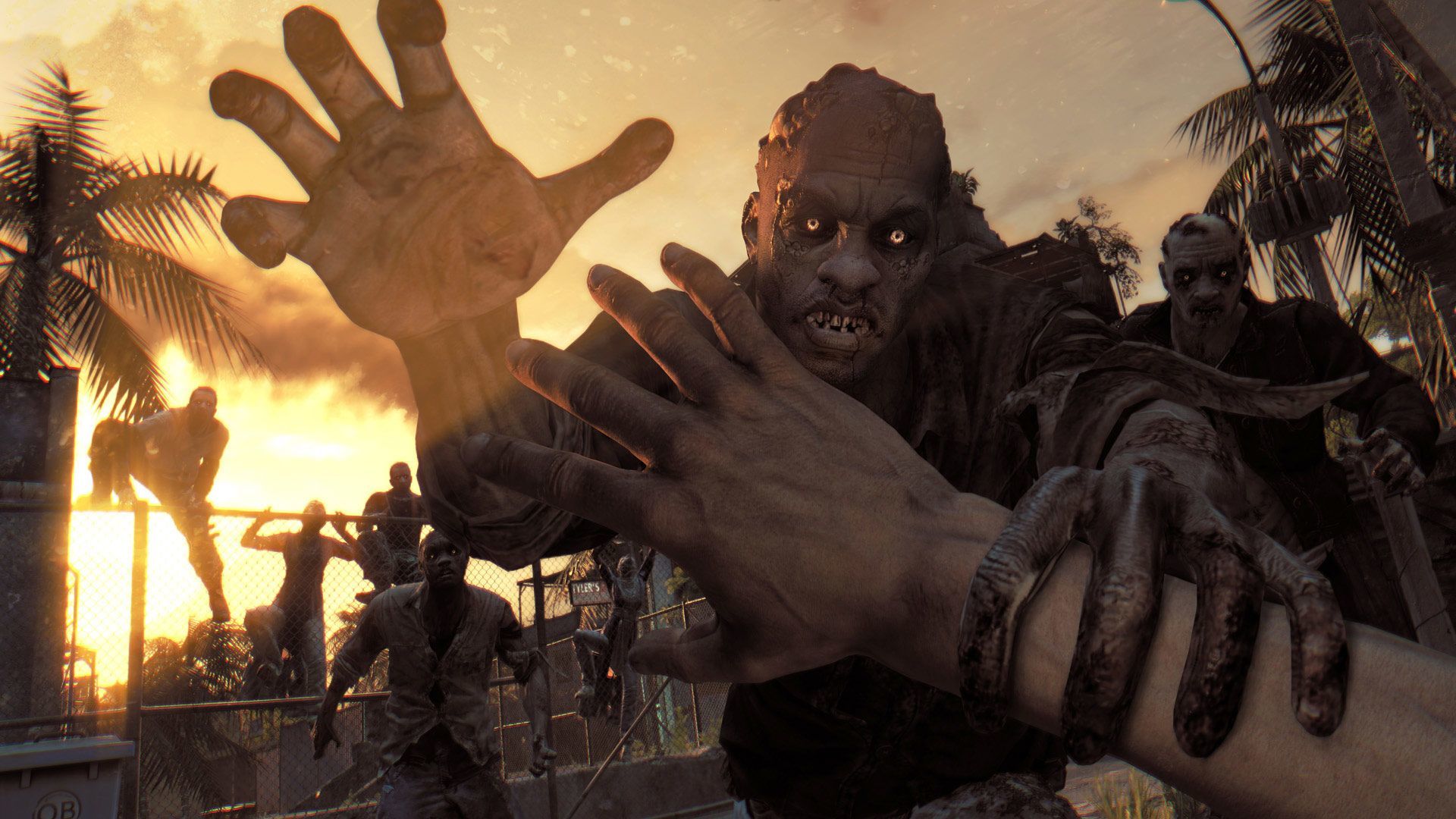
Big monster

Don’t worry, I think Gandalf just showed up on top of the next hill.

Even then, the city of Harran is pretty poorly designed for the actual free-running. I’d keep finding dead ends and have to go back, or leap along a string of buildings only to be faced with a fatal drop and a lot of hungry faces looking up at me hopefully. Once or twice the game seems to remember that there’s somebody actually playing it and puts in an incredibly obvious ramp before a jump, or a gap in the fence to slide under, but it’s not enough. One of the perks of Mirror’s Edge was that the environment was well designed for the gameplay, an obstacle course hidden beneath a façade of pipes, walls and boxes. It was all pretty sweet and you could sprint through without breaking the flow, at least most of the time.

But Dying Light seemed to design Harran with none of this in mind and went about building the entire map without considering the parkour element. It then seemed to recall its mission brief and dusted it with a few zipwires and piles of rubbish before knocking off for a beer.

By the way, the bin bags are Dying Light’s answer to the equally dumb haystacks from Assassin’s Creed, in that you can fall like a comet and still not take damage if you land right on top of them. One day I hope Crane confidently plunges into the rubbish below, only to land on a TV antennae and get the metal prong straight up his arse. That’ll show him to be dependant on littering.

And then, out of nowhere, the game introduces the grappling hook and all bets are off. It’s a ranged weapon that will immediately take you to any location you aim at within a hundred feet, regardless of position, direction and whether you’re in the middle of free-fall. Even the super-zombies had no chance when I could just Spider-Man my way out of there in a heartbeat, and then the only part of the game with any challenge is thrown to the curb to die.

So let’s see – the crafting is dumb, the combat is boring, the parkour is derivative and has no flow whatsoever. The last chance for Dying Light is its story, so can it redeem itself there?

Well, the idea is that the (Turkish?) city of Harran has been savaged by zombies and promptly quarantined.

OK, nothing new so far.

You play as Kyle Crane, who is an undercover agent for some big company and is sent in to get some file from another agent, who apparently nicked it when nobody was looking and decided the safest place to hide would be the most lethal city on Earth. Oh, it definitely makes sense to go there. It’s why I go and hang out in an active volcano when I want a bit of “me time.”

Kyle shacks up with a group of survivors in order to start finding this document, using their network and resources to fuel his own hunt, but starts to feel his loyalties being divided between his employers and those with whom he lives and – Oh, for god’s sake. Does anybody really think he’s going to stick with the big corporation over the grungy free-runners who all like him and depend on him? How naive are you?

Speaking of, I could understand Crane better if he did want to abandon these people, because they all appear to be massive clichés. There’s a dynamic action girl, a confused old scientist who’s obsessed with his work, a hotheaded young runner who’s so unafraid of death that he might as well be gluing a steak to his face whilst flicking peas at the Grim Reaper, and the antagonist is so evil that the average James Bond villain would feel uncomfortable sitting next to him.

No, I really mean it. His evil goes right through to the point of absurdity and keeps going, to the point where I wondered if I had missed some important part of the plot that would explain his actions. At one moment Crane manages to punch him in the face whilst he’s being captured, and rather than do the sensible thing – have somebody gun Crane down and get a plaster for his nose – the guy decides to shoot two of his own men for no reason and throw his attacker into an easily-escapable pit of undead. That’s a score of eight for evilness, but only a two for intelligence, bad luck.

Perhaps this idiocy is why our foe decides to inflict on us the worst punishment of all – the quick-time event. Rather than actually duel him at the end, the game goes all Shadow Of Mordor and gives us a string of button prompts, rather than anything as engaging as fighting him ourself. Not only that, but the QTEs are incredibly quick and unpredictable, and there’s only one or two checkpoints in about fifteen presses. It’s a good thing I finally got through them all, because if I had to hear his opening monologue again I’d have pushed my thumbs into my ears so deep I’d have impaled my brain on my fingernails.

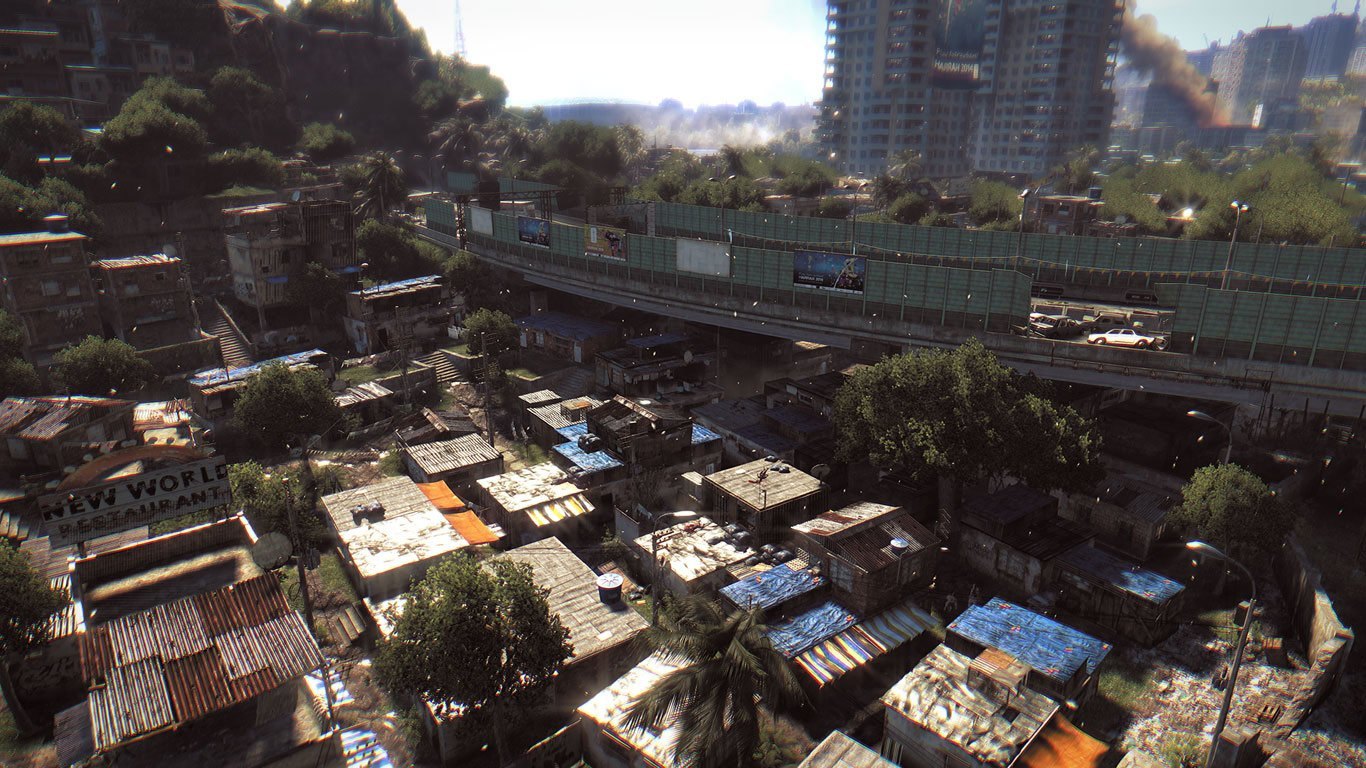
Harran

Harran looks kinda crap, to be honest. Couldn’t we just firebomb it and get on with our lives?

It’s frustrating, because every idea above could have been a good one if implemented properly, but nothing here is new and certainly not at its best. Every time I look at something this game has to offer, I can also point to another game that’s done it better.

Dying Light is a Frankenstein’s monster, a shambling patchwork of games that can just about give a semblance of life, but it’s fleeting and the decay sets in fast. The core idea was a good one, survival and free-running to keep you on your toes, but there’s too many places to stay safe and there’s nothing dangerous enough to challenge or frighten you by the end of the story.

Perhaps I’m just bitter because what I was hoping for was so far removed from what showed up, but I do feel that this is something we need to call more games out on. Taking inspiration? That’s fine. An improved form of an existing game mechanic? Fair enough. But doing the bare minimum on some disjointed ideas that you didn’t even think of? Sorry, that won’t do.

You know, even as I wrap this up I’m thinking of the tagline that was featured with this game. “Goodnight. Good luck.” I suspect it might be prophetic for some of the folks at Techland if they pull this trick again.

HOW POKEMON CAN ACTUALLY START TO EVOLVE: PART 2

4. FAMILY SAGAS ARE BETTER THAN CHILDREN’S STORIES

This gripe is an odd one, because the series has sometimes been guilty of it, yet sometimes not. Generation one didn’t really have a story, yet bashing my head against the tedium of Team Plasma in Pokemon White felt like I was being punished for a crime I couldn’t remember. Not surprising I couldn’t remember it though, what with that ponce with the green hair dragging me across yet another Ferris wheel ride to mumble animé angst at me for the third time in a row.

The annoying thing is that it is possible to write stories that can appeal to both children and adults. Movies tend to be the best example of this. Toy Story, The Jungle Book, The Princess Bride, all are examples of great narratives that can be appreciated by all ages. But games in general, and Pokemon in particular, often struggle with this.

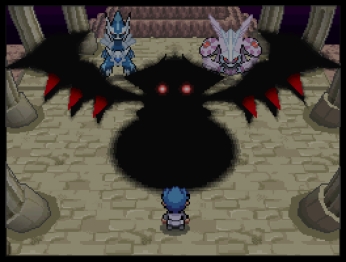
Giratina

I hope this thing remembers that this is a kiddy’s game, because otherwise I might be in serious trouble.

I know I said earlier that a gamer can ignore context, but I’d prefer not to. A game with fun mechanics is good. A game with fun mechanics AND a great story is a plus-sized bag of sweets with a prostitute on top. So aim for that, please. You did quite well with Platinum, almost getting a little Lovecraftian in tone (though almost certainly by accident) as we wandered through an absolute void, hunting for the horribly powerful creature of darkness that dwelt spitefully at the bottom. But when you fuck up and start writing for kiddies again, I’m uncomfortably reminded of my age, as random NPC townsfolk no.37 talks to me like I’m a particularly thick toddler, or tells me that “I love my Pokemon!” in a manner that would seem patronising to Barney the Dinosaur. Yes, I know how much you love shorts, idiot child. Can you get me an adult to talk to?

I know that this is probably Nintendo’s least pressing issue. Those who are on board the Pokemon bandwagon aren’t likely to be diverted by a crap narrative at this point, but it would be nice to see a good one, and like I said, you can write a plot that works for all ages without too much difficulty. Just a thought, because I’ve heard Pokemon has a bit of money floating around, and I know that a writer will do anything for a bit of cash, up to and including lick the employer’s testicles.

5. DON’T LET IT END WITH THE ELITE FOUR

I know this one kind of ties into point number three, but it’s an important point, so I feel the need to reinforce it: Once we become champion, don’t let it end there. I know, some games didn’t stop at that point, but enough did that it’s worth mentioning. Make an effort to add new features, because it’s frustrating to go through all the effort and get nothing out of it. Winning the Elite Four always felt a bit anticlimactic to me. You smack down member number four, move onto the champion, who is always either your rival or that confident character who helps you out two thirds through the game, beat the hell out of him, and boom. You’re done. No really, we just have to upload your scores to Reddit on this overly large machine (don’t pay attention to how much it looks and sounds like the one in the pokemon centres) and we can all break for lunch.

Ghost

The beauty of this place is that even if I lose the battle, I can just push a pile of books on top of her and say that I won.

The worst games have always let it end there. Oh, you can still explore, but it’s all places you’ve been before, and now you’ve levelled up to the point where it’s all too easy and without any reward. I kind of imagine this is how Superman would feel if there were no supervillians. He just breezes through, detached and disinterested, whilst all those he fights bounce off him like tumbleweed against a freight train.

But adding new regions with tougher threats helps with this problem, as do areas that were previously too high level with interesting plot stuff in there. Fire Red’s matrix of islands worked well, bouncing between various places to find a rock that was useful for some contrived reason. It was too short, and again, it was an anticlimactic ending to the game as everything just sort of resolved itself with no twist, but the intention and the spirit was right. Ideally, the Elite Four should not represent the end, but the midpoint of the game, as new stuff opens up that is worthy of such a kick-ass trainer. Perhaps an island full of former champions, or an escaped and dangerous legendary that needs taking down a peg? Perhaps a Team Rocket revival in which they are planning some new, stupid scheme? Whatever it is, make it thick and meaty and full of juicy content, not a few table scraps that got rejected from the main game by the QA department.

6. GIVE ME SOMETHING TO DO BETWEEN BATTLES

Alright, I’ll just say it – I liked the Pokemon contests in Gen III. They were flawed, and a bit too reliant on chance, but I liked the idea of developing some aspect of my team that wasn’t related to stamping on somebody else’s. It made them feel less like weapons in a fight and more like actual creatures, as other NPCs judged how pretty or cool they looked.

Pokemon’s battle mechanics have always been fairly strong and are constantly being refined, but the games have forever struggled to think of things to do when you’re not fighting. The contests, the casino, those weird minigames it would throw at you at the end of Fire Red, nothing really sticks out. None of it has had the effort put into it that this sort of thing needs. Compared to the combat, any other mechanics or gameplay styles felt rushed, like they uploaded whatever the designers had been working on in their spare time at the end. What Pokemon needs is something fun, developed, and rewarding with regards to how you play it and what it gives you, and I think I have the idea – the player’s own safari park.

Seriously, I mean it. Manage the thing like a business, see what customers do and don’t like, research ideas, pay for new pokemon, build new features, and so on. The benefits? Regular cash income based on how well it’s performing, items found when excavating new land, and the occasional rare pokemon from the park itself. Simple.

Cops

Calm down or I’ll taser you with my Raichu again, don’t think I won’t. Now face the wall whilst Zigzagoon here sniffs for any narcotics on your person.

No? Alright then, how about the ability to act as some sort of peacekeeping force once you become champion? Randomly generated crimes are sent to you via text, you can respond to them and sort them out with your pokemon like some brightly coloured, under-age SWAT team, breaking into Team Rocket Headquarters and tackling them to the ground. Hell yes.

Not your kinda thing? Fair enough, how about a job at the Pokemon Day Care Center, where you have to deduce how to elevate the creature through a combination of loving care and drill-sergeant training, like an even more sickeningly cute version of Nintendogs?

These were just thought of from the top of my head. I’m not saying it needs to be any of these, though I do think the first idea has some potential. Just make sure that there is something else, something tangible. You can stop it feeling like a contrivance or a gimmick by making real and tangible rewards to bring into the main game, and have the main game influence the other mechanic in some way. Maybe you beat a gym leader using a fire-type pokemon, so suddenly there’s a demand for fire-types in the safari park and you can make some extra money by throwing charmanders in there. Or perhaps you catch a legendary ice-type, and this gets around, until everybody wants an ice-type pokemon, at which point you can capitalise on that and start getting snow machines in and painting all the creatures blue.

EPILOGUE

Basically, we’re getting there. We really are. Pokemon is like most other Nintendo properties, full of potential but unwilling to progress unless it’s guaranteed safety, but people know what’s needed and should tell Nintendo, because that will motivate them. Any of the above would help, all of them would help make a magnificent game. I’m not saying that would be all it would take, nor would I suggest that it should never go anywhere after this, but it’s a damn fine start.

Oh, and take out Vanillish. That thing is just weird.

HOW POKEMON CAN ACTUALLY START TO EVOLVE: PART 1

Ah, it seems like only yesterday I was desperately trying to take down Brock’s bloody Onix with the starting Pikachu. Pokemon as a series has been around for almost two decades now, and has made enough money to buy its own country and have every living creature there forced into a small red and white ball.

I was playing Pokemon since the beginning, I remember owning both Blue and Yellow as a child and frowning my way through them, as my eyesight deteriorated in direct proportion to my social standing. I’ve owned at least one game from every generation, but as I picked up my copy of Alpha Sapphire last year, I realised it was it was more out of a sense of tradition than any desire to play the thing. In fact, looking back, I started to realise I haven’t really enjoyed the games since I played Platinum back on the first Nintendo DS.

Some might say that this due to me having finally grown up, and might be what little cultural urge I have, rapidly attempting to drag me into my twenties with everyone else, but I’m not so sure. You see, the thing about children’s games that doesn’t apply to children’s television, is that one can still appreciate the mechanics of a game whilst ignoring the context of it. Or, to give an example, chess is still chess, even if all the pieces have animé haircuts.

So with that in mind, here are my Six top tips for Game Freak, or Nintendo, or The Pokemon Company or The Illuminati or whoever the hell owns the franchise now. Your games were good, there’s no denying that, especially Platinum, Emerald, and the real shining star that was Crystal. Here’s how you bring them up to date and make them truly great.

1. WHY NOT MULTIPLE DIFFICULTY SETTINGS?

OK, so the original Pokemon games were designed for snotty, idiot children, and you know what? I get that. Nobody really expected the franchise to explode the way it did and develop the adult following that it has now. But that audience existed for one reason – not to play against the NPCs in your game, but to play against the much greater challenge of each other.

Koga

You… You’re the one that had that muk! YOU BASTARD! I’LL KILL YOU!

See, Pokemon has always been fairly easy at best, and an absolute cakewalk at worst. As long as you had the type advantage, you could be five levels beneath your opponent and still wipe the floor with them. In fact, the older games had a few more teeth, sometimes throwing enemies with tricky tactics at you, forcing you to think on your feet. I’m thinking of that damn Muk and its minimize power, and I know you are too.

But Pokemon, bizarrely, has only gotten easier as it progresses. X and Y practically threw a whole kaleidoscope of variously powered pokemon at you from the get-go, meaning that within ten minutes you had every type you needed, and the game might as well bend over and ask for it gentle. I breezed through the whole thing whilst barely paying attention, and when the stupid gimmick that was “Mega-Evolution” reared its ugly head, I just became annoyed. It’s a mechanic where the most impressive pokemon in the game can get a sudden and cost-free power-up, like they’re auditioning to be a villain in Dragonball.

The game could’ve just played itself for the rest of the story, because whatever useless tactics I took to, I always ended up winning. And that’s not good enough. People sometimes approach the game with self-inflicted rules or handicaps, such as refusing to use the starter pokemon or releasing any that faint during the game, but it’s a failure of the games that the players have to impose these restrictions just to give it life again.

So you know what, Pokemon? Have your toothless, safe, babies-first turn-based strategy game. That’s cool. But have an option for those who want to play against a game with some actual challenge to it. Make enemies tougher, good pokemon rarer, make AI that know how to use a tactic more complex than “use potion when hurt.” Whatever it takes, I’m ready for it. Or, more appropriately, I hope I’m not.

2. LET US ACTUALLY CATCH EM’ ALL

Seven hundred of the little animé bastards? Piss off, Pokemon. No, seriously, why on earth would anybody without severe brain damage want to catch them all these days? In the first generation, OK, I could understand that. There’s a hundred and fifty-one, which is manageable, and they’ve all had a fair deal of thought go into them. The legendary pokemon number only five, making them special, and whilst hiding Mew away from those who don’t live in Japan or a Toys R’ Us is a dick move, we’ll give them the benefit of the doubt and attribute that to teething problems.

But over four times that many? It’s just not worth the effort, even for the most rabidly obsessive completionist. On top of which, none of the games ever hold more than half of them at once, meaning you have to fiddle about with other, older games to transfer them over. Ugh.

All of 'em.

Yeah, I think I might not, if it’s all the same to you, Nintendo.

But the real nail in the coffin is that collecting them just becomes boring, especially as it’s often hard to do until you’ve completed the main story. Everybody with any sense of fun loses patience before they’ve hit the mid-point, and because the only two things in the game with any value are pokemon themselves, and master balls which have no purpose but to catch the damn things, there’s nothing that the game can reward you with. It always seemed like an enormous anticlimax. You’ve caught them all! You’ve really done it! One hundred percent completion, hell yes! So here’s a primary school certificate and a juice box, now sit down and wait for the next batch of sprites to be released.

So being a collector is pretty much a wash. But not to worry, this is a problem with an answer, and it ties in to my next point.

3. BRING BACK MULTIPLE REGIONS IN ONE GAME

As mentioned earlier, I still think of the second generation, Gold, Silver and Crystal, as being the apex of the series and a classic example of how to do a game sequel properly. Rather than just splash about in the remnants of the old game, Gen II brought in a new region with less linearity and an interesting mix of aesthetics, put in a rival who was less of an irritant and more of an actual adversary, added new mechanics to balance the game properly and even had an underlying narrative about the schism between tradition and modernity. It took the original concept and improved it on every level, just as a good sequel does.

But as I was dusting myself down after having beaten the Elite Four, and considering another playthrough, imagine my surprise! The old region of Kanto was back, fully available for exploration, and yet having changed dynamically since the last game over the canonical three-year gap. This was a delightful bonus that ended, of course, in the greatest challenge that the series has ever offered – the original protagonist, Red, waiting for the hero to show up and take the Sisyphean task of beating them and becoming a true master.

The series has occasionally indulged in variations on this idea, such as the island cluster at the end of the Gen I remakes, but they never had the same sort of stakes that the original had. Therefore, I invite you to imagine Pokemon Rainbow (or whatever the hell they’d call it), the game with every region featured, containing every pokemon from the series. Every single one, legendaries, the ones you had to download, all of them. Make one enormous saga of a story to keep them all interesting and relevant, raise the level cap to accommodate for a longer game, and let us really go at it with the combined nostalgia and lust for power that the game would bring. Some might say that it would be in Nintendo’s interest to stagger out this content like they do now, but I think this would make for the best final product, and let’s be honest – do you really think it wouldn’t sell eighty-billion copies? Pokemon makes more money than the Catholic church already, and a massive game like this would probably make so much cash that Japan would collapse under its weight.

THE LAST THREE PEARLS OF WISDOM WILL BE RELEASED TOMORROW

CONVERSION – RED DEAD REDEMPTION

OK, so this is a series we’re going to be doing every now and then, in which we consider games we’d like to see converted to other media or vice versa. Adaptations aren’t always good, and they’re often cynically motivated by corporations trying to squeeze money out of some brand recognition, but they can be done well. They HAVE been done well.

Think of it like this. A good adaptation takes the original material and tries to elevate the concept, not just wallowing within it out of a sense of obligation. For example, Alien: Isolation is a good adaptation of the Alien franchise. It came to us with a new plot and stayed loyal to the canon, but didn’t feel restricted to anything directly tied to the movies. It understood the tone of the original, a sense of predator and prey, and even managed a perfect recreation of the dirty 80’s sci-fi imagery, that showed the kind of future where the best computer screens in the galaxy have about eight pixels each.

Alien Isolation

I just wet myself out of sheer terror. Good, this game knows what it’s doing, then.

Aliens: Colonial Marines is the bad kind of adaptation. Even if it hadn’t been explicitly dishonest in its advertising campaign, even if it hadn’t been so riddled with bugs you’d think you were looking at a digital version of a wasp’s nest, it was still doomed. Splashing about in the remnants of the second film, not really knowing what it wants to be and stealing from the big book of clichés – they’re just three crimes for which it deserves death. It even missed the point of the Marines entirely. Anybody who saw that film knew from the beginning that most of them were useless chumps, all bluff and bluster and brainless swagger at the start, whereupon it got replaced by brainless terror when the Aliens actually show up.

Well, at least the game took one aspect of the film to heart. It’s so brainless that it could have been shot in the head without noticing.

So there we have it. A good adaptation shows progress and deeper understanding of the source material. A bad adaptation goes in circles and misses every point going. Thus the lines are drawn, for what is and what is not a good adaptation. So what’s our first move?

RED DEAD REDEMPTION

Perhaps one of my greatest sorrows was that Rockstar’s gorgeous western world never made it to PC. I loved it with every fibre of my being, but now that yet another Xbox 360 has broken, and backwards compatibility is apparently so toxic that no console can go near it, I guess I have to resign myself to the fact that this is a game that’s going to be lost to the ages. I suspect that this is something that’s going to happen more and more as the industry progresses.

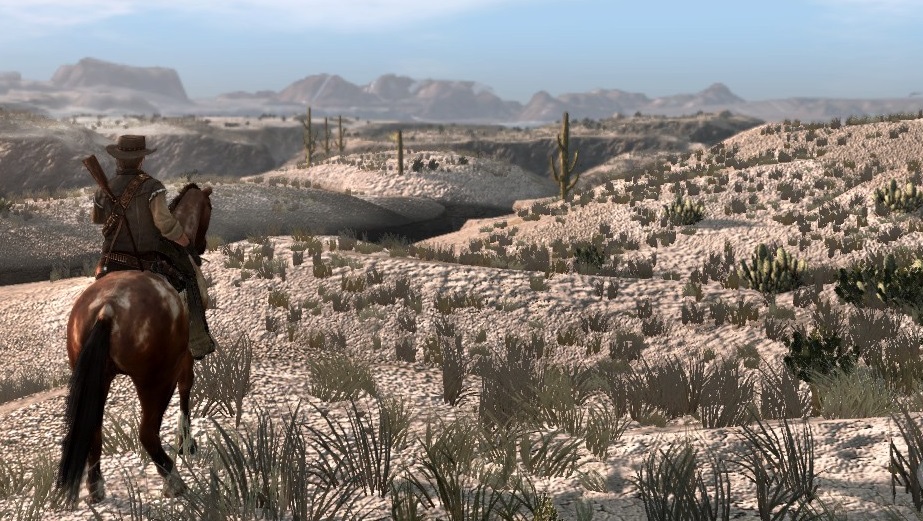
Marston

It’s a pretty nice view, but that horse is just wishing that there was some grass around that didn’t taste like dirt and unwashed hair.

It’s a crying shame, because I loved RDR more than any of Rockstar’s Grand Theft Auto games. It had real character, it felt like a true western in everything it did. Charging across the dusty desert landscape upon my noble stallion, glaring down some villain in the tense seconds before a duel, or throwing lit dynamite at the feet of some shrieking bandits before gunning down the survivors with a six-shooter – great stuff. It really got the tone right, and the Mexican/Californian border upon which this saga was set, it felt like a glorious backdrop to a classic gunslinger’s tale.

But what about the gunslinger himself? You play as John Marston, a reformed bank robber who ran with a gang of criminals years ago. When John’s family is imprisoned by the United States government, John is tasked to kill his former gangmates, who are causing no small amount of trouble for Uncle Sam. When he does finish them off he’ll get his family back, but as John hunts his way across the country he realises that things are never as simple as they seem, and old loyalties stir within him as he confronts the men whom he once saw as brothers.

Pretty cool, right? It’s a simple basis for a story. Kill baddies, get wife and son back, but Rockstar added layers of complexity on top of these simple foundations, until it was some grand Scooby-Doo sandwich of a tale. Remember that this doesn’t take place in the glory days of the Wild West, it takes place at its ending, the year of 1911. One of the major themes is the relentless passage of time and how John and his ilk are almost antiquated already. There is no room for wild men anymore, and during a cinematic that I now rank as one of my favourites in gaming, one of the government spooks puts it very simply. “Sure, civilisation may be dull, but the alternative, Mr. Marston, is hell.”

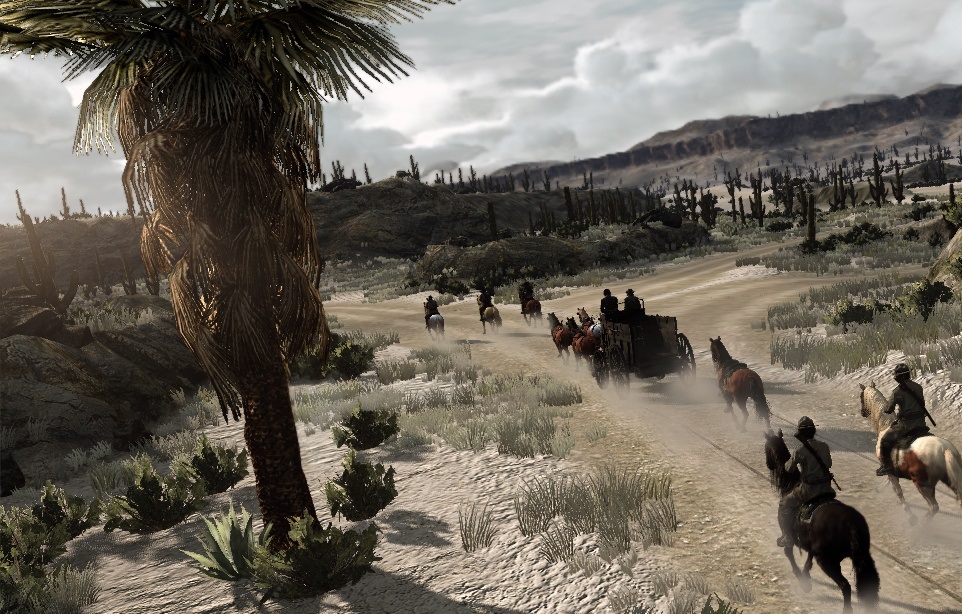
Convoy

“Wallace, will you please stop singing the theme to Rawhide? It’s been six hours now, we get it!”

And the annoying thing is that he’s right. Things aren’t as simple as we’d like them to be. In fact, a great part of Red Dead Redemption is the disturbing amount of moral complexity. Nobody’s perfect, nobody’s close to it. Even John is an aggressive killer with a short temper and not much imagination or schooling, but that barely matters. The true issue here is the spiritual war between order and chaos. You are not on the side of good, just on the side of law and order. Your enemy is not evil, he wants true freedom and chaos. It’s not so simple any more. Do you want to be safe, or free? And are you going to change your mind when there’s a gun pointed at your head?

But all that complexity was good. It added the detail that made this place tangible, gave it a sense of spice. We even meet one of the old western legends later on, now aged and alone with nothing to his name but history. And of course, he’s not perfect either. All you can do for him is what you do for everybody else you meet – hope he’s good enough.

So how would we adapt this epic tale? A film, of course. A great big romp of a movie that took the classic spaghetti western style to heart, layered with the subtle messages of the original story. It could potentially be three films, as John’s story is kind of divided into thirds by its narrative, but this would probably be too long. Stick with just one, I think.

Casting? Hmm… Tricky. I won’t do all of the characters, but let’s get a few out of the way. Marston isn’t really handsome, but he has a calm and focused presence. He’s also middle-aged, probably in his late forties. A lot of people think Hugh Jackman would be good for the role, which I can agree with. I happen to think Liam Neeson would be a good match, though. He’s the right age, or at least he looks the right age. He’s a provably good actor with a sense of on-screen charisma, just what the role needs. I’ve also heard some talk about Karl Urban, who played Judge Dredd and Eomer. He seems like he could fit, if he’s aged a little with make-up.

Bonnie MacFarlane should be Natalie Portman. Dutch would be Tom Hanks, because all films improve with Tom Hanks. Nigel West Dickens would suit the attitudes of Stephen Fry, though the image would change a little, and Seth would translate into Mackenzie Crook easily, though no offence to the man. And of course, Landon Ricketts would be played by the aged cowboy himself, Clint Eastwood.

By the way, don’t think you shouldn’t hire Ennio Morricone for music. The man’s a genius when it comes to soundtracks, but especially the western soundtrack. He wrote the classic theme to “The Good, The Bad And The Ugly,” for god’s sake, and the even better: “The Ecstasy Of Gold.” You’d be mad not to do everything you can to get him.

I think it could happen. I think it should happen. Red Dead Redemption took a lot from the classic westerns, but it became something on its own, by meshing all the traditional threads and ideas into something more contemporary, yet thrumming with affection for the classics.

Westerns are now seen as something old and pointless, something we don’t do any more. Not properly, not really. The age of the gunslinger is over. But it doesn’t have to be. Video games remember those times. And maybe if we glare from beneath the brims of our hats, and knock up the sand with the spurs on our boots, then maybe the movie industry could remember too.

SHOULD WE BE READY TO CRASH AGAIN?

Alright, kiddos, today we take a history lesson back to the forgotten times when food was neon, big hair was a big thing, and dinosaurs roamed the Earth, except they changed their names to Stallone and Schwarzenegger, so as to go unnoticed and sneak into positions of political and commercial power without anybody complaining.

Yes, it’s the eighties, that time we’d all rather forget about. Quite frankly, I never understood the appeal of that era. Alright, there were a few songs I’m slightly embarrassed to admit I like, but what about the thirties? Flappers, stylish suits and some great swing music, not to mention the Wizard Of Oz and the Empire State Building.

I guess I’m reluctant to think back to the eighties because I’m a gamer, and video games and the eighties go together like heavy drinking and an on-call heart surgeon. Except that whilst a botched operation only makes the patient’s nose buzz, at least according to what I’ve heard about it, gaming in the Reagan years was nothing short of lethal.

You see, in 1983 there came to be the infamous Video Game Crash, an absolute implosion of the industry that almost wiped gaming out of the public’s hands altogether. It hit Atari worst, probably rightly so, and there are certain games that we point at accusingly when the subject comes up (more on that later), but everybody who made consoles, or just made games for them, felt the noose around their necks.

But today it seems to be considered kind of cool to expect another imminent crash. I study games design at university, and everybody on my course always nods sagely like some cut-rate fortune-teller (so just a fortune-teller, then) when the subject of 1983 gaming comes up. Apparently history is due to repeat itself. Well, everybody seems to hope that it will, in the style of some biblical flood that sweeps away companies like EA and Ubisoft whilst leaving all the nice indie designers alone.

Are they mad? You’re all studying how to design games, you berks. If the coin comes up tails again we’re all out of a job, and besides, do you really think the big corporations will somehow die before the little ones do? The tiny companies are going to be the first to sink beneath the water, with their stumpy legs and low brand recognition. It’ll be worse this time round.

But let’s not get ahead of ourselves. We need to know if this event is coming back round at any time soon, and to do that we have to look at the old problems of the market. Time for an eighties-style montage.

ACTIVISION AND THE THIRD-PARTY PROBLEM

Back in the era when Return Of The Jedi was new, part of the problem for games designers was that their corporate masters, Atari in particular, basically considered them to be expendable lackeys. They weren’t credited for their games of course, why the hell would they credit the people that made the product? They also weren’t paid royalties for the games that they helped create, so we have the slightly surreal idea that they could make an amazing hit bought by everybody and their dog, and were still considered lucky to scrape a living salary for one. It would be like Leonardo DiCaprio being paid ten quid an hour whilst filming Titanic.

Of course, many designers decided that this wasn’t good enough, and started to split off from the major companies to form their own third-party studios, the first of which was Activision. After a while there were about a billion third-party developers, so all’s good, right? Lots of companies means lots of nice games being made, and those Atari meanies get what’s coming to them.

Activision

I feel like ominous music should be playing. Is that just me? It can’t just be me, right?

Well, no. There was never any shortage of developers for Atari and their ilk to scoop up, but the consequence of many more companies, all making games for consoles without needing their permission, was inexperienced developers producing terrible games. Without the guiding hand of the major publishers, staggering out releases and demanding a certain level of quality, dreadful games started being pumped out into the marketplace like sewage into a lake. Damn, we were so close. I guess people just don’t deserve freedom.

THE SATURATION OF THE MARKET

KOOL AID

Do you see this?! Do you?! This is why nobody likes the eighties anymore!

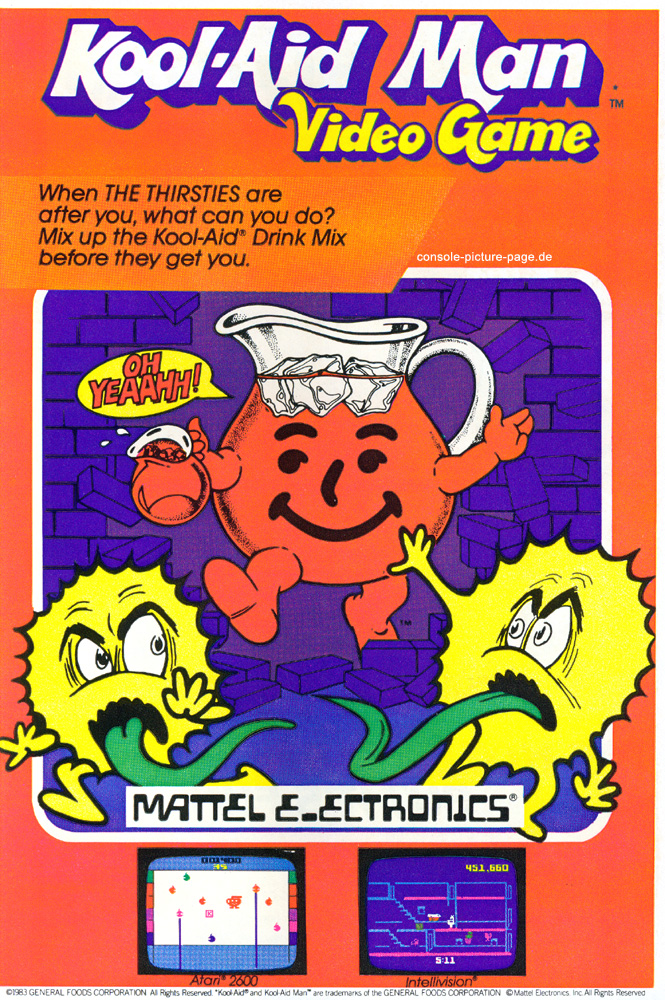
Try going onto the Android app store. Then, when your head has finished spinning and you’ve played some of its very terrible releases, you might get an idea of what the problem was back then. With the glut of crappy games being spat out into the market, many of which were commissions from businesses who wanted a certain product sold (The Kool-Aid game, anyone?), suddenly the market was flooded with derivative, awful games that were indistinguishable from the very few good ones. People lost trust in the quality of the industry and only bought those games that they felt they could be sure about, badly wounding the marketplace and causing profits to plunge.

Of course, it wasn’t just games that were flooding the market. In an age where there are essentially three entities making consoles – Microsoft, Sony and Nintendo – it might seem strange to think that there were so many black rectangles on the shelves back then, that we might have been inside a shop for Monoliths, but there really were. At the time of the crash there were almost a dozen different consoles on the market. Some were updated versions of old ones, but they were all functionally different and none could play any of the same games as they others. This meant that when a game was released, even if you were interested in it, you only had a one-in-twelve chance of it being compatible for the ugly cuboid you happened to have. That said, there was a smarter choice, and before long people knew it.

THE ADVANCEMENT OF THE PC

PC

… Well, I’m sure it seemed better back then.

As it is today, so it shall forever be. Yes, the PC was the preferable alternative to a console. The home computer was the up and coming thing back in the eighties, and because those interested in gaming tend to have an interest in modern technology, it meant that the people who were buying games didn’t always need a console, not when they had a PC at home.

Not to mention that the computers at the time were more powerful and had more memory than any of the leading consoles, meaning that all of the more sophisticated games ended up in your study, and not in your living room. And of course, your console only plays games. Your computer could do ANYTHING. Well, anything that could fit on a floppy disk, but people thought it was the best thing ever. It just didn’t make sense for the public to buy something less practical, less powerful, and less useful. It didn’t take long before they’d all worked this out, and the consequences were nasty for those caught in the flak.

The console manufacturers just couldn’t keep up. For a while they had an edge, being the cheaper option, but when computers started dropping in price to outsell each other, the real casualty was the Atari line-up and its band of brothers.

CONSOLES THAT WEREN’T MEANT TO MAKE MONEY

It’s a business plan that still exists with consoles today. Make a product, and hope the thing can make its money back from related merchandise, i.e. the games it plays. Loss leaders, eh? I don’t see anything that could go wrong here.

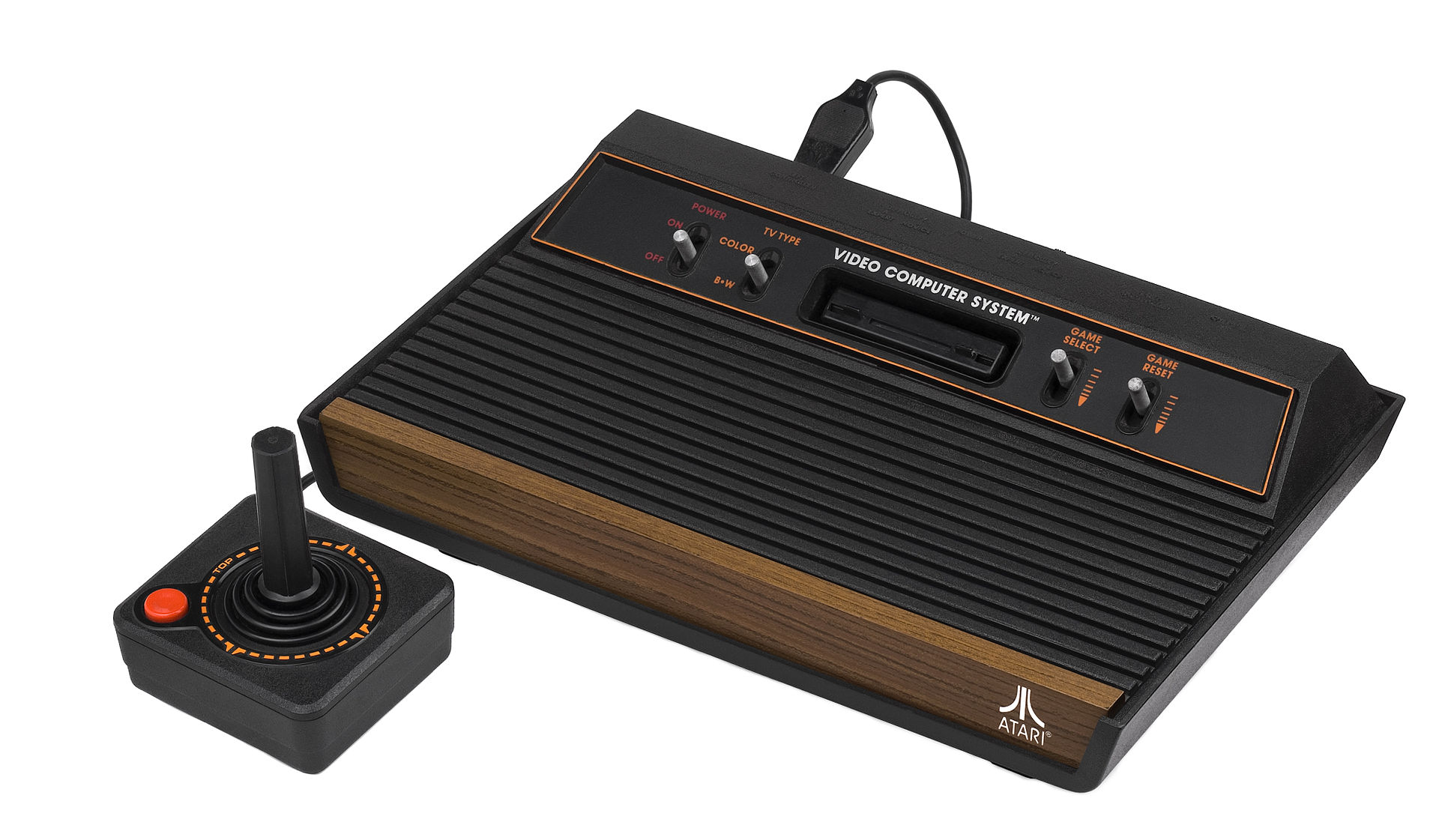
Atari were doing the same thing back in the day, making consoles that they knew wouldn’t profit and planning to make their real money through the games that they released on them. Maybe the Atari 2600 won’t do great, but if we sell enough copies of Combat, we can make our way out of the red and finally all get paid. Sound good?

Sounds idiotic, actually. Without restricting third-party support, not to mention the issue of games being for other consoles, the flood of derivative titles meant that somebody could pinch your idea and do it better. Not only that, but they could be cheeky enough to do it on your own platform. Atari were forced to witness other developers making games for their own consoles, undermining their profits and stopping any chance of this strategy coming up as rosy as they’d hoped. And with the public unable to tell any of these similar games apart, none of them made much money in the end, what with a roughly equal distribution of success that satisfied nobody.

Of course, some games didn’t deserve even that much success.
Atari

Aagh! It’s come back! Kill it! Kill it!

THOSE THAT FAILED

What, you thought I’d get through the whole article without mentioning these two scoundrels? No such luck, I’m afraid. Yes, it’s E.T. and Pac-Man, the two that couldn’t live up. We’ll deal with these one at a time, so I don’t feel like mashing a spike into my brain, and we’ll start with the slightly less offensive of the two.

To my mind Pac-Man is a greatly overrated game, even at the best of times. Yes, it’s an integral part of gaming history, but there are older games that have aged better. Tetris, for example. So I was slightly gleeful when I found out that the stupid yellow circle had let the public down with its movement to the Atari 2600 in 1982.

I don’t know what they thought would happen. The game was visibly worse than the arcade version which it was based on, but this was pretty much to be expected. The development was done by a single man, pressured by both the public and Atari for a really good port, and of course he could never deliver on his own. Whilst the game sold well, it was mostly from pre-orders and the first few day of sales, before anybody knew what they were paying hard-earned cash for.

And it worked as well then as it does now. When they saw the mess they had put into their consoles, excitement turned to disgust, and people were understandably upset. See, this is the danger of pre-ordering. You’ve essentially paid money for a product that doesn’t exist yet and is under no obligation to be good now that it’s made the cash already. How did you think this was going to go?

Pac-Man made its money, but the impact on the public was bad. The scales started to fall from their eyes and they began to see the quality of games for what they really were. They only needed one more push…

… And in Christmas, 1982, it came. E.T. The Video Game, for the Atari 2600. Order now and get your own statue of Icarus thrown in, screaming as he plummets towards the Earth.

E.T. has achieved some weird cult status just by its sheer, dribbling awfulness, and yes, I’ve tried it. You can find it online without too much difficulty, and I wanted to know more about the game that is commonly referred to by those who remember this catastrophe as “The Worst Game Ever.”

ET

No jokes here. Seriously, nothing. I don’t want to make jokes after playing this fucking game for twenty minutes.

Well, after playing it for a while, I can safely say that if E.T. isn’t the worst game ever, it’s making a pretty good try for it. Watching an ugly crooked sprite bleep his way from frame to frame, falling in every pit just because it looked at him funny, and watching a timer count down to your death with no way to speed it up enough, the whole thing is just staggeringly awful, even for its time. By the even harsher standards of today, it comes somewhere between Malaria and Michael Bay movies.

But then, in retrospect it almost seemed like this game’s destiny. Right from the beginning it was going to have huge difficulty getting anywhere near profit. Atari spent about twenty million just to get the film rights, and were desperate to have it out for Christmas, whilst the film’s popularity was still high and the market would be just right.

But in order to make enough copies, the programming had to be done by September, and they’d only gotten the green light to start designing in the last week of July. With just over a month to make a bestseller, a small team got to work and diligently went about screwing everything up, including rejecting ideas by Spielberg himself, who saw the hideous monstrosity they’d made and suggested that they make something very different instead. Sorry, Steve. You might be thought of as clever, with your celebrated understanding of pop culture and having made the very inspiration for the game we’re working on, but we think we’re onto something with this repeated pit-falling lark.

The true irony is that Atari weren’t just walking towards failure – they were throwing coal in the engine and going as fast as they could. They advertised E.T. more than Catholicism advertises misery, and the result was that the public were chomping at the bit to get this exciting game when the Holiday season rolled around.

Only when they finally did chomp, they immediately spat it back out, and Atari was horrified to realise that having made four million copies of this freak show, three and half million had been unsold or sent back. These unwanted copies were promptly buried in a New Mexico dump, with a few Atari consoles added for good measure, in a manner that is staggeringly reminiscent of a sacrificial offering.

The end result of all this was to help finish what Pac-Man and other failures had started: The realisation that most games being sold on the market were embarrassingly awful. The crash wasn’t the sole fault of E.T., but it certainly was one of the worst offenders.

The financial fallout hit Atari hardest and came close to finishing it off, and the dying star that was the industry became a black hole that started to suck everybody into it. Damn, I guess I can no longer consider the Xenomorph to be the scariest alien lifeform. E.T. is the only one who ever actually helped destroyed an industry, the long-necked little bastard.

EPILOGUE

So what does this mean today? Are we due a second crash? Can a stable games market only be a fleeting dream?

Well, I don’t think we’ve got problems, at least not within the next five years. The market isn’t saturated on consoles for certain, so that isn’t an issue by any means. There are major games that disappoint, yes, but the wider spread and variation in the industry, not to mention how easy it is to find specific kinds of games with the help of the internet (you’re welcome) means that people can find something that suits them without too much difficulty.

Not to mention that the big companies are now nothing short of suspicious when it comes to third-party support. You don’t do anything without their permission, bucko. They’re the Godfathers of gaming. Previously it was the fault of the unrestricted, unsupervised production of games and the disinterest in the wider market. They were the major causes of the last crash, the ones that ruined everything and the big corporations have put a lid on it now, for better or worse.

There’s other factors that are different. A great deal of the old crash was due to the failure of arcade machines, and gaming on the computer never died at all. So the PC master race can relax, because history shows us that their babies can endure anything.

Anyway, time to go throw a brick through Atari’s window. I feel they’ve earned it.

SORRY, BETHESDA – WE CAN’T SEE THE VISION FOR THE GRAPHICS

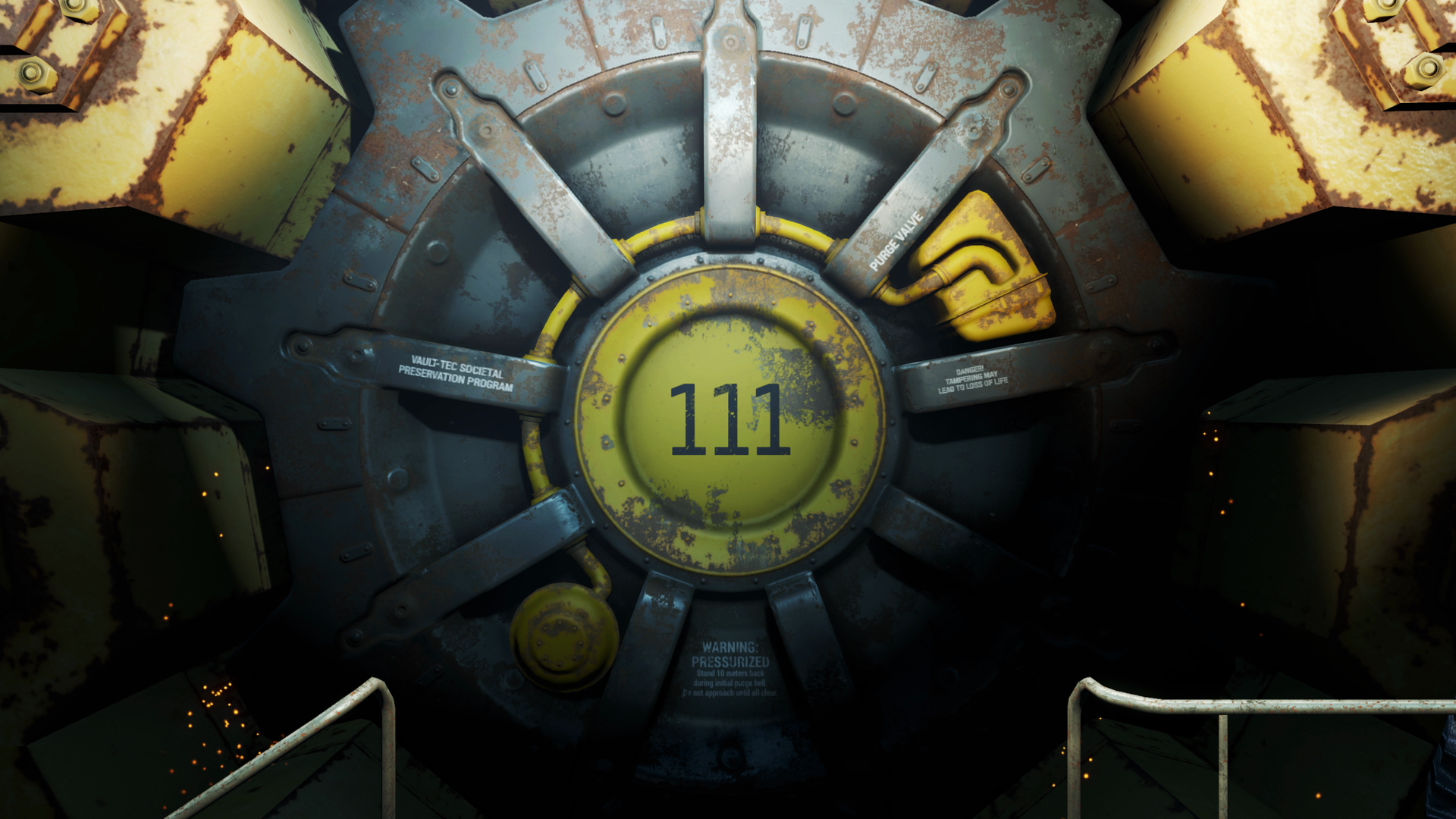
Oh dear, this isn’t Bethesda’s week, is it? Fallout 4, perhaps one of the most anticipated titles since Skyrim, is announced to the world at large with a big, flashy trailer. Except that whilst it was big, it wasn’t that flashy. The public, it seems, aren’t too enthused about the graphics.

And yes, I’ll admit it. Games these days can and do look better in terms of aesthetic realism. The dog that bounces around the trailer as a focal point is probably the most noticeable flaw. It moves well, mostly, and has the right kind of behavioural animation, but it looks kind of flat. The fur that doesn’t look like fur, the slightly angular body shape, the way its feet don’t quite seem to touch the ground with any impact, it all makes it look a bit like a robot – a really well-made robot, mind you – that had an Alsatian painted over the top of its chassis.

What else? Well, the humans have Lego hair, we see a couple of people with an identical running animation (one that looks a little floaty, like in the previous game), the ghouls in the supermarket somehow push against big metal trolleys with no resistance, and people’s faces seem to have that slightly glassy, mannequin look that’s almost a Bethesda trademark at this point. No, it’s not the best graphics I’ve seen in a major video game, not by a long shot.

And yet, I don’t really care. Because it looked gorgeous.

III

The outside world’s not in HD? Guess we’re staying underground, then.

This is probably what I was most excited about from the trailer, because the series really seems to have gotten some colour back into its cheeks. Everything, from the contrasting blue cot in the faded bedroom, to the bright, toybox spectrum of the pre-war streets, to the beautiful cinematic shot of the neo-noir city, it all shone with visual personality.

I really liked Fallout 3 and New Vegas, but I did tire of greys, greens and browns. I know that this world is meant to look scarred and sickly, but there’s a difference between faded colours and no colours at all. So Fallout 4 splattering itself with all the best members of the rainbow is a plus in my book.

Not to mention the visual design, something that stays with us long after we’ve forgotten about the graphics. The sweeping shot of the huge pirate ship, the mighty doom-Zeppelin floating in the thunderstorm, the prowling deathclaw in the radioactive mist, they all point to ideas that aren’t just realistic, they look good. Old concepts like the Protectrons have gotten some life into them visually, with the glint of a red LED eye shining within their circuitry, or the hanging suit of DIY power armour, a massive network of hydraulics and gears solemnly draped from its supports. Even the blue Vault-tec jumpsuits look more blue. The whole thing seems delighted to see you, and that’s pretty cool.

I know, the images could be better, could be clearer. They still might be – remember, this is a trailer, not a finished product – but yes, it would be nice if they were as svelte as other games, Perhaps it’s a little disappointing that a game with this kind of pedigree and expectation behind it couldn’t manage graphically what titles with smaller budgets can do, but I still can’t bring myself to be all hot and bothered over it. You could record an orchestra doing Beethoven on your phone, and yeah, it might be little grainier than intended. But it’s still Beethoven. It’s still excellent at its core.

C3PO

Here I am, brain the size of a planet…

Perhaps I’m just bitter because an excellent game series has just been announced to have a fresh new game incoming, and all anybody can talk about is the aspect to games that engages me the least. Nobody’s talking about what might be contained in Vault 111, or whether we get to use vehicles for the first time, or if we might see a user interface that doesn’t make me want to gouge my eyes out. I can’t help but notice the ugly cube of a Pip-Boy lashed to the protagonist’s arm. If he has any sense at all, he’ll drop it for an iPhone the first chance he gets.

IT’S NOT HOW LONG IT IS, IT’S WHAT YOU DO WITH IT THAT COUNTS

Time taken to complete a playthrough of the Stanley Parable? About five minutes. Time taken to complete Alien: Isolation? About thirteen hours. Time taken to beat Bravely Default on the 3DS? I’m fifty-five hours in, and there’s no end in sight.

The bloody thing moves like a snail on valium, and it keeps doing that thing from the third Lord Of The Rings film where you think it’s over – and surprise! We’re going to keep this crap rolling like we’ve locked it in a hamster ball.

Except that The Return Of The King started doing that stop-start nonsense in the last twenty minutes of the film. Bravely Default started doing it about a third of the way through the game. At least, a third of the way through MY game. For all I know, there’s another fifty-five hours left in it to torment me with. And that, I won’t allow. Those whinging, stereotypical anime brats have taken up too much of my lifetime already. I don’t want my pre-death flashback to be mainly of kids with stupid haircuts in turn-based combat.

You can’t say I didn’t try, and I’ll give it this, I had high hopes at the start. There were some bits of intrigue, some good turn-based mechanics, and I found myself growing slightly fond of one of the protagonists, a suave lady’s man who annoyed everybody else constantly. I wonder why I found him so relatable?

But then the whole thing started to wilt. Without the life energy of new mechanics added in, the game became dull. The story tried to stretch like a pair of tights, but only overreached itself and started laddering badly. Not to mention I found a combat set-up that was basically as good as it got, dealing huge amounts of damage whilst keeping my party at full health, so battling just became a chore.

The berks

Here’s to you, Bravely Default protagonists. By which I mean, here’s a grenade that I am going to forcibly feed to you.

Even the character who’d I’d come to think of as “the manga musketeer” just became repetitive and disengaging, joining his friends and world in the part of my brain marked “Not worth my time,” where they can now all join modern music, League Of Legends and regular exercise.

It was the story aspect that truly killed it for me. I knew I’d seen this game before when I bought it from Amazon last year, only I couldn’t place it. Now I know where it was. It was on trail for breaking the rules of the Geneva convention.

I couldn’t believe the gall of this damn game. I went through the story to save this little pixelly world, which took about twenty-five hours. OK, Bravely Default, I’m done. A vaguely decent game with a more than suitable story length. “Oh, you’re not done,” chortles Bravely Default back at me. “You’ve been sent back in time to before you saved the world! Now it needs saving ALL over again!”

Bloody hell. Alright, after another whole day of gameplay, I’ve rescued this rather tiresome little kingdom from damnation twice. Can I go now? “Nuh-uh,” squeals the game, slapping itself on the thighs with glee. “You’ve now been teleported to a parallel universe where the identical kingdom is also in need of saving! In the exact same way, with the exact same characters! So why don’t you settle down and we’ll start mmpph mmmph mmph mmmph.”

Oh sorry, Bravely Default. I seem to have closed the 3DS on you. And then dropped it into a hole a mile deep, before also throwing in two dozen lions and a nuclear bomb that’s on fire.

I think I can safely say this – Bravely Default is TOO LONG. Like a guest at your house at three in the morning after a dinner party, the fucker refuses to leave, raiding your fridge for snacks and asking you if you want to play Scrabble. And you just wish he’d call a taxi and go, so you can finally head upstairs and start apologising to your wife for having invited the idiot round.

But it’s a little strange to think this. Surely a long story is a good thing? Value for money, right? We all remember those embarrassingly short games that came a little late to the party, had a disinterested sniff at the wine and played on their phones for twenty minutes before sneaking out. That’s worse, isn’t it?

Well, no. They’re both equally suicidal in their own way. Bravely Default had just enough interesting ideas for a ten hour game, maybe fifteen at a push, yet it was lobbying to be a game that could be played for a straight week. And if it had been ten hours long, I might have been impressed at how condensed and well-paced it was.

But it wasn’t ten hours, or fifteen. I’ve just looked at a poll online, and it states that anybody who wants to do the main game and side missions (which all have utterly essential plot info within them, so I don’t know why they’re made optional) will be tapping at their tiny little screens for about seventy-five hours, possibly as long as a hundred. One person stated that it had taken him one hundred and seventy hours to get the whole game over and done with.

No, no, no, no, NO. That is too much. I know Square Enix games have a history of dragging their feet like they’re trying to make their shoes catch fire, but this is absurd. And remember, there’s only a single set of combat mechanics in this game, aside from some dopey village-building gimmick that’s over and done with before you’re done saving the world for the first time.

But is there such a thing as a story mode that is too long? Well, I don’t think so, at least in principle. That said, I do become very suspicious of games that sell themselves on having a story that never ends, because there’s two ways it can go. Either it’s a complex epic with a diverse narrative and crammed so full of interesting ideas that they had to make it last a week to fit them all in, or it’s just padded and drawn out to try to fill space.

I’ll be honest, anything that claims to last more than forty hours starts ringing alarm bells. Does anybody believe that there’s truly enough in those games? Don’t get me wrong, titles like Skyrim can last a lot longer within the same save file, but the core story, the one about dragons, do you really want it lasting for that much time? Aside from anything else, you’re going to be struggling to recall the beginning by the half-way point.

It’s hard to think of exact formulas for this sort of thing. Different games pace themselves at varying speeds, dynamic characters can alleviate a slow story and if gameplay is fun enough then I might let a dreary plot slip under the radar.

Maybe. If it’s lucky. And I’m feeling kind.

But my personal philosophy is this – if the narrative I’m playing has not changed in some intrinsic way by the end of each hour, it’s moving too slow. Whether it be a new angle on a character, the death of another, a wildcard element throwing us off balance, or somebody inevitably betraying us, it should be a key development that should help the story move at a decent pace.

Ds 2

I know how he must feel, trapped in a terrible limbo between life and death. His game made me feel the same way.

One of the more recent offenders in this regard was Darksiders II. I’ll be frank, this game was making an uphill struggle from the start with its story, partly because it just seemed to throw in vaguely-Christian mythology whenever it didn’t know what to do next, but also because this story had one idea that never, ever changed. You have to go and resurrect the population of Earth, killed in the last game when somebody with a bad dress sense got over-excited and started Armageddon before everybody was ready. Alright, who am I playing as in part two? Somebody who doesn’t look like a a rejected Warhammer character design? No, you’re playing as Death, actually.

Well, disregarding how strange it is that I can be killed in combat whilst playing as the Grim Reaper, don’t you have anything else to bring to the table? Within five hours of starting, I’d forgotten the central goal that I was meant to be fulfilling, though bizarrely it hadn’t changed a single iota. You want to resurrect Earth? Well, you need to get to the Keeper Of Secrets (no, I have no idea who that is) to find out how to do that. He tells you to go to the Tree Of Life (don’t ask). However, the Tree is in the land of The Makers (nope) and is being sealed off by Corruption (because of course it is), and also some berk keeps trying to stop you because he is one of the slaughtered Nephilim (fast-forward) and sends you to the Land of the Dead (not sure how) to find the Well Of Souls (Jesus Christ).

All this rigmarole took five hours, and by the end I was slumped horizontally in my chair, wondering if the thirty-foot drop out the window would kill me.

I think I was about a quarter of the way through the game.

What’s that line from Macbeth? “It is a tale told by an idiot, full of sound and fury, signifying nothing.” God, it could’ve been written about Darksiders II. AND Bravely Default.

The sad thing is, it’s the well-paced stories that we wish could keep going, because they’re so addictive. But all the longer tales keep going because only the writer doesn’t want it to end. Everybody else is glaring at him and wondering if they could pull the plug on his PC without him noticing that they did it. Remember, a cut-throat editor is just as important as a good writer.

I’m particularly suspicious of fantasy games in this regard. I don’t think it’s a coincidence that the two offenders named above are of that genre, and there’s others I could point the finger at. If you wrote down all the dialogue (not the plot itself, just the spoken stuff) in Dragon Age: Origins, it would apparently come down to about nine books. The Witcher, a game that I’m trying to work up the energy to try again, is rumoured to have eighty hours under its big renaissance belt. Tell me, you two, are you that long because you have a story that couldn’t be crammed into the standard fifteen hour length? Or are you just drawn out beyond belief? If The Witcher is as long as it says, then according to my theory it needs to have, at minimum, eighty separate events that shake the plot to its core and engage the interest of the player.

I’m not saying it doesn’t have that. But somehow I doubt it.

Hand J

What do you mean, you’re getting tired of shooting at bandits for the fiftieth time that day? Jeez, aren’t you fussy?

Or what about Borderlands: The Pre-Sequel? Don’t get me wrong, I like the Borderlands series. I like the anarchic, punky, nonsensical style, touched lightly by the influence of classic westerns and the Mad Max films. I like the way it doesn’t take itself too seriously, how the characters push right through their own archetypes to become self-parodies who are, at the same time, pretty cool and likeable. With the exception of the kid Pickle, naturally. That loathsome little sprout can go fall into a thresher’s nest.

But The Pre-Sequel was just annoying at times, because it had the same problem as Darksiders II. The issue was that the plot had found a nice, comfortable place to sit, and it wasn’t going anywhere without a winch, a mile of rope and fifty strong men. Right from the beginning, your goal is to take back a space station from an invading military force, but for about three-quarters of the game all you do is make dull preparations for that task. Go here to talk to a contact, then here to shut down a signal jammer, go there and steal an AI and then, when you’re done, we’ll go and clear out a disused robot factory. Even the missions themselves seemed a little dull for a Borderlands game, which always prided itself on lunacy and surrealism. What happened to the quests where I had to play through a Dungeons and Dragons game, or raise an ugly, little alien dog from infancy to adulthood?

I remember saying to a friend, whilst playing The Pre-Sequel for the first time, that I didn’t think that this campaign was going to be as long as the previous game. There just didn’t seem to be enough meat in the story to make it that length. And it turns out that I was right! Only Borderlands didn’t want to admit it, and diluted itself so much that a lot of the flavour was lost. Even the rather uninspired missions above are spread too wide, jammed full of monsters and one-note bandits to pad them out.

Look at games like Portal, or Bioshock, or the Walking Dead. Games that were just as long as they needed to be. And they all take vastly different amounts of times to complete, but they’re all fine, because they have just enough substance to be well-distributed amongst their relative lengths. I have much greater respect for any short, good narrative than I do for anything that drags its heels like the lethargic creations mentioned in this article. Or, as they would put it:

“Surely it’s conceivably better, certainly within the boundaries of human imagination, or at the very least a more admirable ideal, at least to the extent where our wider cultural integrity might be thought of as the judge, to consider the possibility that when a particular plot, or character arc, or perhaps just more generally a narrative, of the interactive medium that we widely refer to as video games, might be thought of as especially well-crafted when due consideration is paid to the relevant factors of pacing within the anticipated timeline of the aforementioned narrative, so that the two aspects might not be contrarily opposed and inherently be damaging to the structure of the contextual plot that the hypothetical game might contain.”

Bastards.