THE TRUTH (50TH ARTICLE ANNIVERSARY)

The following is intended as a joke. Joel VS Games intends no offence to anybody involved. It regularly intends offence to others, but not to anybody in this article. It makes for a nice change, I’ll tell you that.


I don’t know if this will ever be read. I hope it will. There are things happening here, things that need to be known, and we don’t know how to leave. When we look out of the windows, we see only vast expanses of desert, and none of us have seen anything else for the last five years. Bill Evans struck out two months ago with as much water as he could carry, telling us that he’d come back, that he’d get help for the rest of us.

But like I said, that was two months ago.

While I don’t know where in the world we are, I do know that this place is called Facility 17, and referred to by those kept inside it as “The Offices.” A grey complex of heartless concrete buildings, arranged in a disordered cluster amongst the sands. The strange thing is that everybody thinks the real offices are in America somewhere… Washington state, I think? The name Bellevue keeps coming back to me… I’m sorry. It’s hard to remember, it’s been a very long time since I was part of civilisation.

Facility 17 exists in service of The Project. It was made for that single purpose, made for that function. It holds five thousand people within its walls, some of the greatest technology ever made, vast databases of information. Everybody here understands how important it is. We know that when it is done, when the Project is shown to the world the next age of humanity will dawn and that everything would change. Empires would rise, culture would become unrecognisable, our very souls would ascend into something greater.

And two days ago, it was finished.

We couldn’t believe it. We ran every test we could. We checked and double-checked our research, we submitted it to every exam we could think of. They all came clean. It really was what we thought, terrible and awe-inspiring and fascinating all at once. Even those who weren’t aware of it being there still felt a chill as they entered the room, and none of us could pick it up for long without feeling dizzy and light-headed. It was a humbling thing to hold the future in your hands.

But we knew what we had to do. The procedure had been drilled into us from the very beginning, and the motions came smoothly and naturally. As one, the top five workers of which I was one, all drew our keys and went to the main computer, a vast tangle of microchips and screens that thrummed with energy. In the centre of the console were five locks, arranged in a star shape, with a button under glass at their centre. We twisted our keys as one, all feeling the same fear and anticipation. Alarms started blaring, lights started flashing. The rest of the work force held each other close. The glass barrier segmented into four parts, which sank seamlessly into the panel, leaving the button unprotected. The others looked at me. I knew what my duty was.

I pressed the button, sweat running down my forehead, and something rose out of the console. A small phone, albeit one with no buttons or numbers. It didn’t matter. There was only one place it could call.

My hand trembling, but my voice steady, I raised the receiver and spoke into it, staring straight ahead.

“Yes, this is Jeffrey Miller from Research and Development. I need to speak to the CEO. The project is finished.”

There was no response, but at the front of the room the elevator, which never moved at all, silently sprung to life, and the doors opened expectantly like the maw of some great monster. I and the other four workers silently looked at each other, not knowing what to expect, but I solemnly took the finished project in my hands and went to enter with the rest of them.

As the doors closed behind us, we could see the rest of the team saluting us, tears in their eyes.

The doors sealed shut, completely airtight, and the lift began to ascend to the top floor, the offices of the CEO. I am aware that the man has managed to maintain a sympathetic appearance in the outside world. He must have more spin doctors than hot dinners.

At any rate, we could feel the tension rising in that steel box. Sweat was building on my palms where I held the project tightly, and yet this building in the middle of the desert somehow seemed to be getting colder as we ascended. My colleagues were staring up at the ceiling or at their shoes. Several of them were praying quietly.

It took several minutes for us to reach the top, and as the doors opened we stepped out into a gorgeous waiting room, with a set of massive oak doors ahead of us. To the left of them was a desk with a receptionist behind it.

She was huge, at least seven feet tall and still proportionately broad even for her size. Even sitting in her chair she was at eye level with all of us, and as she shifted it gave a mournful creak of protest. Her face was a mass of scars sat upon a broad, scowling mug with a cleft chin and a broken nose. Her hair was brown, tied into a tight bun at the back, and she wore a tight floral dress that bulged against her muscles and wasn’t quite low enough on her forearm to hide the KGB tattoo. As we approached her, she rubbed her chin and glared suspiciously at us, and we could all hear the scritch, scritch of facial hair against her calloused palms.

“Da?”

We looked at each other, nervously, and I spoke quickly before she might consider us rude or just attack us out of pure aggression. “We, uh, we have an appointment? About the project?”

Her eyes narrowed, and she picked up a phone on the desk and tucked it under one ear. “You wait, stay quiet.” She growled as she typed in a number. We all nodded like kindergarten pupils. After a moment, she spoke into the mouthpiece a stream of Russian dialect.

“Yest’ tri idioty zdes’. Oni govoryat, chto oni imeyut naznacheniye, chto-to delat’s proyektom. Vy khotite, chtoby ya s nimi borot’sya?” There was pause, then she gave a booming laugh and a predatorial smile, exposing three gold teeth. We looked at each other. This was not a good sign.

“Ponyal. Ya dam vam spravit’sya s nimi. Vsya khvala klapan.” She put the phone down, and smirked at us. “You go in.” She rumbled, and pressed a button under the desk. From the massive oak doors there was a clunk of a bolt being shot back and we approached it like rabbits approaching a foxhole. It might have been what we had to do, but it would never be what we wanted to do.

The doors were so heavy, it took all of us to push them open and they closed again with a mighty rumble when we let them go, leaving us trapped in the main office.

It was everything you’d expect. A cavernous, rectangular room with bookshelves on one side split by a roaring fireplace, and a massive fish tank in the opposite wall, in which several sharks swam in lazy circles. There was a window at the far end of the room, from which the whole of Facility 17 was visible beneath us. The walls themselves were made of varnished wood, and the floor was covered in a thick burgundy carpet. Beneath the window, facing us, was a desk with a seat behind it. The desk itself was the epitome of neatness. A single computer, with the mouse at a perfect parallel to the keyboard. A single stack of precise papers in one corner, five identical pens on the desk. Again, they were all parallel to each other, straight to the degree. A phone was there too, the same make as the one in the office, and a crooked table lamp hunched over it like a vulture.

There was a high-backed leather office chair behind the desk, turned away from us, but we could feel the presence of the person upon it. As we approached, there was a growl from the shadows in the corner of the room. Something with long claws and yellow eyes watched us approach.

“Excuse me, sir.” My voice was shaky.

There was no response from the chair.

“We, uh… We have the project, sir. It’s finished.”

Still nothing. The sharks were still circling, but now closer to the glass, their soulless eyes watching us without emotion. The thing in the corner made a noise that sounded like sniggering.

“If you like, we could leave it and come back later.” I knew how desperate I sounded, but I didn’t care. I just wanted to leave.

There was a pause before we heard the response, as though the listener was considering every syllable in our dialogue. When he did speak, it was in a quiet, low tone, almost a murmur.

“What does it say on my desk?”

“I’m sorry?” I was unbalanced by the question, I’d been preparing myself for enquiries on the project, not this strange segue. Especially when you took into account that there wasn’t a…

I recoiled slightly. There was suddenly a nameplate at the front of the desk, perfectly centred and facing us. Lord knows where it had come from. It hadn’t been there a moment before, but now it was just calmly sitting there, as though it had always been.

“I-I don’t…” I stammered. The creature in the corner was laughing again.

The voice interrupted me, cutting through my words with smooth precision. “What does it say?” He repeated softly.

I looked at it again, resisting the urge to wipe sweat out of my eyes. There was no name, only three letters. “It says C.E.O, sir.”

Suddenly one of the men standing behind me, a balding man named Walters, burst out in frustration and misery. “For god’s sake,” He cried, “What does this have to do with-”

There was a click, and the floor beneath him opened up. He dropped into the trapdoor without a word, and for a second I could see the shock in his eyes, the utter realisation of what was coming. He vanished, there was a brief scream, and the hatch smoothly closed itself again. It was now indistinguishable from the rest of the carpeted floor, and we all suddenly pulled away, feeling scared and insecure about our relationship with gravity.

There had been no movement from the chair, no press of a button or throw of a lever. But now the voice spoke out again, still calm and in control, but stronger than it was before. “It says C.E.O.” It rumbled ominously. “To be the C.E.O is to be in control, wouldn’t you say?”

Cue frantic nodding and clucking of agreement. We weren’t going to over-analyse what he was saying, he could’ve told us that we were made of aluminium and tennis balls and we would’ve smiled and gone along with it.

“And to be in control is to have people follow your orders.” It continued. “That is the system that has kept mankind going. That is what is necessary.” It lowered in tone slightly, thrumming with suppressed hunger. “And speaking of necessary… Let me see the project, please.”

“Yes, sir.” My voice was a hollow whisper. As if in a dream, I walked forward and placed it on his desk and as I did so the chair rotated to face me. For a moment I met the stare of the man sitting there.

Nobody could hold their gaze to those cold eyes. The sharks looked friendly by comparison, and I looked away, stepping back into the group.

The project was a large, open topped box made of beautifully varnished mahogany, and inside lay a velvet cushion of the richest scarlet, soft as a cloud and without a single crease, stain or scuff mark. Lying on top of that was an orange binder, filled with neatly pressed paper. Among the “top secret” and “for approved eyes only” stamps littering the cover were five simple words. Or rather, four words and a number bisecting them.


HALF-LIFE 3 DESIGN DOCUMENT


I looked up, my voice trembling. “Mr Newell.” I said hoarsely. “After all these years, it is done. The project is complete.”

“I will decide that, Miller.” He said sharply, but his eyes were flicking over the folder, absorbing it. With a watchmaker’s care he lifted the folder from the cushion and laid it carefully on the desk, studying it for a moment before he opened it and started to read, peering over the intricate matrix of words, pictures and graphs.

The group bustled nervously about, trying to get a read on his expression and working out if we should make a break for the door. Our deductions didn’t come to much. He was completely inscrutable, a perfect poker face, adding a layer of uncertain confusion to the already prominent terror.

But then we were shocked by something even more unlikely. He didn’t look up at us, but he spoke again, and his voice was was tinged with… Satisfaction? Contentment?

“This is… Quite good.” The last two words seemed forced, but we lit up as a group. We’d take what we could get. “Really, sir? You mean it?”

“I do. I definitely can’t say it was rushed,” he added in a dry tone, “But it does seem to be of a high enough quality that I think we could-”

He stopped suddenly. If there had been any look of positivity in his features, it vanished from them in a moment.

“What’s this?” He whispered. It was almost inaudible.

My own delight faded. “I’m sorry, sir?”

“What… Is… THIS?!”

The last word was a booming roar that made us all draw back in terror. Even the sharks moved to the other side of the tank and the yellow-eyed thing in the corner withdrew further into the shadow, no longer laughing. Nobody was laughing any more.

He lent forward and laid both his hands flat on the desk, looking up at us through eyes tinted with cold anger. “Perhaps one of you,” he hissed, “Could be so good as to explain this to me?!”

He picked up the folder and slammed it in front of us, one finger pointing accusingly at a paragraph halfway down the page. At the sound of the impact half the group came close to fainting, but the fight-or-flight adrenaline won out in the end and kept us all standing, albeit with a fair amount of facial twitches and damp trousers. We moved forward as one, all trying to stand at the back simultaneously and looked down worriedly at the offending section.

Mr. Newell’s hand shot out across the desk and grabbed Irving, the man next to me, by the collar, pulling him close, inches from his own face.

“Read it.” Mr. Newell rasped, and thrust the frightened man back before turning to stand with his back to us, looking out of the window with his hands held behind his back.

Irving made a whimpering noise and looked at us, pleading with his eyes, but there was nothing we could do. I nodded slightly. Our best hope at this point was to appease him, to placate him. Go along with it, I urged him silently. Remember what happened to Walters.

Nodding back and wiping the sweat off his brow, Irving lent over the paper and cleared his throat. It sounded dry as a bone.

“Having made his daring escape from the Aperture vessel Borealis, Gordon Freeman uses the newly discovered technology to upgrade the Gravity Gun, allowing it’s design to incorporate a new feature that enables the player to-”

“Stop.” Mr. Newell did not turn back to face us, but the hands behind his back clenched into tight fists. “Read the bit about the Gravity Gun again.”

Irving nodded weakly. His voice was now no more than a terrified wheeze. “Gordon Freeman uses the newly discovered technology first to upgrade the Gravity Gun, allowing it’s design to-”

“‘IT’S DESIGN?'” Newell span round to face us, slamming a fist onto the desk and bellowing at us in a vicious rage. Irving actually fell back onto the floor in his terror to get away, only to remember that he was no safer there and leaping awkwardly to his feet.

“Sir, what is the matter?” I almost begged him. “I don’t see what’s the problem!”

“You fools.” He spat with venom. “You bring me this, this thing and you dare to suggest that it might be sufficient? We’re not some two-bit indie company, we are Valve. Don’t think to insult me with this garbage.”

“Sir, I still don’t see what’s so-”

“THERE IS A MISUSED APOSTROPHE!”

The statement fell upon us like the sword of Damocles, and echoed around the room as we stared at him. A vein was throbbing in his temple, and suddenly he looked very tall. Very tall and very big.

“Surely not.” I said hoarsely.

“Oh yes.” He snarled at us. “Indeed there is.”

I looked down, and of course I saw it. How could I not? It was so obvious, so glaringly clear that it might as well have had a page all to itself. And yet we’d missed it. And now our mistake was coming back to haunt us.

I tried to speak, but Mr. Newell beat me to it. “Don’t you people understand?” He said in a voice flooded with pure hatred. “We have made two of the finest titles ever to hit the market, critical and commercial lightning, and we have made Portal, Team Fortress, DOTA 2 and Counterstrike. We have the greatest distribution system for PC gaming every created. We have lead the way in this medium since 1999 and we have never stumbled. AND I WILL NOT SEE US STUMBLE NOW!”

He sat back into his chair, his head bowed low and glowering at us from beneath his eyebrows. For a long time he said nothing, but then he spoke with no emotion at all. “We will destroy it.” He said quietly. “Start again, from the beginning. I want to see nothing reused, do you hear me? This is tainted, it is insufficient. No recycled concepts. Retry, from page one.”

There was a moan of horror from the group. “Sir, not again!” I wailed, begging explicitly now. “That’s the fifth time you’ve made us restart this project!”

“Well,” he thundered back, “Perhaps if you didn’t keep submitting this trash then I wouldn’t have to keep putting it in the fire where it belongs. First it was run-on sentences, then the Comic Sans font, then you used that paper with the watermark on it. Failures, every time! This will be gotten rid of, it is the only way to purge ourselves of its inadequacy.”

And with that, he took it to the fireplace and threw it onto the flames. Within seconds it had merged with the inferno, and we watched it burn with the eyes of the truly damned.

“Go back to the Offices.” He said brusquely, sitting back down at his desk. Suddenly he was all business again. “Perhaps next time you can make something that is more acceptable.”

We trudged out of his headquarters, not even bothering to fight him on this. We knew it would make no difference, but as we left, we heard him speak again.

“Better late than never, people. Perhaps someday you’ll all work that out.”

Then there was a pause, and a decisive tone arose within him.

“Actually, Irving can stay. I want to talk to him.”

The poor man froze, but summoned all his courage and walked back to Mr. Newell. As the door closed behind us, we heard the boss say one final sentence. “What do you know about making hats for Team Fortress 2?”

We never saw him again.


Thank you to everybody for your support! I never expected people to enjoy this site as much as they do, and I’ll be sure to keep bringing you more articles in the future. Thanks again!

ZELDA’S PROBLEM? WE CAN LINK IT TO THE TRINKETS

So, I finally got around to completing The Legend Of Zelda: Ocarina Of Time, and once again I’ve shown how dated I am when it comes to the medium I love. Don’t get me wrong, I never had an aversion to playing it, but I didn’t have the right console when it hit the shelves and couldn’t scrape together the pocket money (or the parental pity) to get it.

So I had to wait until the 3DS got released, and then wait another few years just to be on the safe side. You don’t want to rush this sort of thing, after all. Actually, it might just have been because I had to undergo the severe bone readjustment surgery that’s necessary to use a 3DS for more than half an hour, at least without your hands feeling like they’re turning into shapes that would give Picasso a migraine.

But I find Ocarina Of Time an interesting point of discussion. Obviously it’s a well-made game and a fundamental piece of video game history, but it’s not perfect, not by a long shot. The targeting system is rubbish, a few of the puzzles are just completely illogical and the forced stealth sections in Hyrule Castle and the Thieves’ Hideout made me want to drive nails into my eyes, and myself into a river.

It’s probably safe to put this down to teething problems. Ocarina Of Time didn’t have much to learn from and it certainly got a lot of things right. I particularly liked the Spirit Temple and the character you meet there, and the graphical style in general was an endearing mix of cartoon exaggeration, Japanese manga-aesthetics and polygonal crafting, not to mention a nicely organic bag of side-quests to perform at your leisure.

Link and ocarina

Thanks, I guess, but I really wanted an electric guitar, or at least a bug-zapper for the fairy.

That said, there’s one aspect that really bugs me, one that many games still adopt today and can be seen in nearly all forms of story-telling to some degree or another: The dependence on mystical mcguffins in place of anything the reader can actually understand.

There are many games that do this, but Ocarina Of Time was one of the biggest offenders I’ve seen in a long time, filling its plot with confusing ideas and concepts in the hope that the glamour of them would distract from how utterly baffling they were.

To start with you’ve got three goddesses who create Hyrule, representing power, wisdom and courage. Then they piss off again, but leave behind the Triforce for no explained reason, which is a sort of supremely powerful artefact which embodies those three qualities, but also grants wishes if you’re lucky or possibly it doesn’t if you’re not. Except that they didn’t leave it in Hyrule, they dumped it in the Sacred Realm, so we’re not sure how everybody knows about it, but the monarchy are using it as their coat-of-arms just to confuse everyone. Then there’s three grand fairies for some reason, who are colour-coded in the same way as the goddesses but never mention any link to them, so I guess that’s just to confuse us again, and the Master Sword shows up as a sort of pointy time machine and we’re not sure how it got here but just run with it, and you’re the chosen hero, though it never says who you’re chosen by and why somebody else can’t have a go at sorting stuff out, and the Ocarina Of Time is a magic doodad that’s been passed down the generations of the Royal family for some unexplained purpose, but you can only use it when you’ve collected three gems from several temples, and one of them is given to you by the Deku Tree who happens to be a god but obviously isn’t, because we saw the goddesses before and he looks like something else, and then he comes back as a new tree when he dies except that he hasn’t died, because now he’s a new thing entirely but forget all that, and there are six sages in the Sacred Realm but also in our world, all of whom have some power that we’re not sure about, and they each give you a medallion that’s super awesome though does nothing, but fuck it, you needed them anyway to proceed, and there’s really a secret seventh sage who leads them and creates arrows out of light which you needed all along but wasn’t even mentioned up until the very end, and the villain is the embodiment of evil called Ganondorf and it turns out that he can’t take the whole Triforce because it splits up as a sort of burglar alarm function but with a consolation prize, so he’s only got a third of it and the other two pieces have become a couple of really rubbish tattoos on the back of your hand that don’t do much, and he’s a sore loser who turns into a pig with a shorter name when you beat him and then he goes to some dark realm that was presumably just hanging around waiting to be useful and HOLY CHRIST, WHEN DOES THIS END?

You know, I would’ve put a spoiler warning at the beginning of all that, but I’m not sure I needed to, the whole thing’s completely impenetrable. The moment-to-moment character dynamics in the game are fine and enjoyable in a kids’-cartoon kind of way, but it’s broken up with this confusing mess of mythos and I found myself tuning out whenever these ideas were mentioned, what with Zelda babbling on about nothing particularly interesting for the thirtieth time that day. Mind you, I have to say that Link represented my feelings perfectly as he just stared at her vacantly, like a lobotomy patient in a dentist’s waiting room.

Actually, that’s worth mentioning as a side note – if you’re going to make Link a silent protagonist that’s all fine and dandy, but there’s a limit to how much you can emotionally involve him in the story if you do. Spoiler warning here, I suppose, but if you didn’t guess how this tale ended you might just have the brain of a whelk rattling in your skull. At the end of the game the last thing we see is Zelda and Link united, and Zelda’s face breaks into a happy smile to see her friend return. But Link? He keeps that same face that he’s had the whole game – that of a person who is so filled with drugs that he might just make it to the Sacred Realm under his own steam. I’ve seen a floor lamp display more feeling, and it was fairly weird to see that face, in what was obviously meant to be a romantic scene. Zelda would’ve gotten more reciprocated love out of Epona and a less statuesque face from a goron.

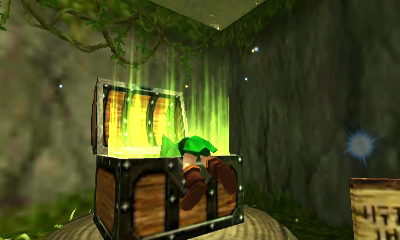
Link and treasure

Christ, more of this junk? I’m dragging half the contents of Hyrule around with me already.

But that’s a digression – the point is that Ocarina Of Time and many other games see the mystic and the inexplicable as a means to progress the story, when as a matter of fact they don’t help, they only overcomplicate and seem overly convenient. The game could have dropped the goddesses, the medallions, the light arrows, the great fairies, the Ocarina itself and it wouldn’t have hurt it, only have made it more streamlined. There’s a huge cutscene at the beginning explaining just what the Triforce is. It lasts for ages and I just ended up more confused than I had before. Maybe the intent was world-building, but there’s a difference between essential lore and needless extremities.

I suspect that the writers were trying to make one of these mcguffins the core of the story, the epicentre around which everything spins, in the same way that Borderlands was centred around the mystical Vault, KOTOR orbited round the Star Forge and Fallout: New Vegas was built on the secret of the Platinum Chip. But when you have dozens of objects all being given equal attention, they just start pulling the story to pieces as they each try to become the true centre of gravity.

Think about it. Out of all these ill-defined objects, which one is the proper one, the real heart of the game? Is it the Triforce, ostensibly the reward and that which can save the kingdom? Not really, no. You never see it properly formed and it’s only referred to by other people. Is it the Ocarina after which the story is named? Nope, that only serves to open up the Temple Of Time, and after that point it’s basically forgotten about and interchangeable with the ocarina you had before. Or what about the Master Sword, the object that allows you to travel between time zones? Possibly, but you only have it for half the game and there’s a better weapon you can get in a side-quest. Its not even the tool you need to beat the boss, that’s the light arrows we mentioned earlier.

This lack of focus really does damage the story and detracts from the truly good bits. It’s not a deal-breaker, but it’s still something that reduces the game and could’ve been done a lot better. Trying to fit all those whatsits into one story is like trying to fit Tingle into that green jumpsuit, and ends up about as pretty.

STAGNATION IN MY SOULS

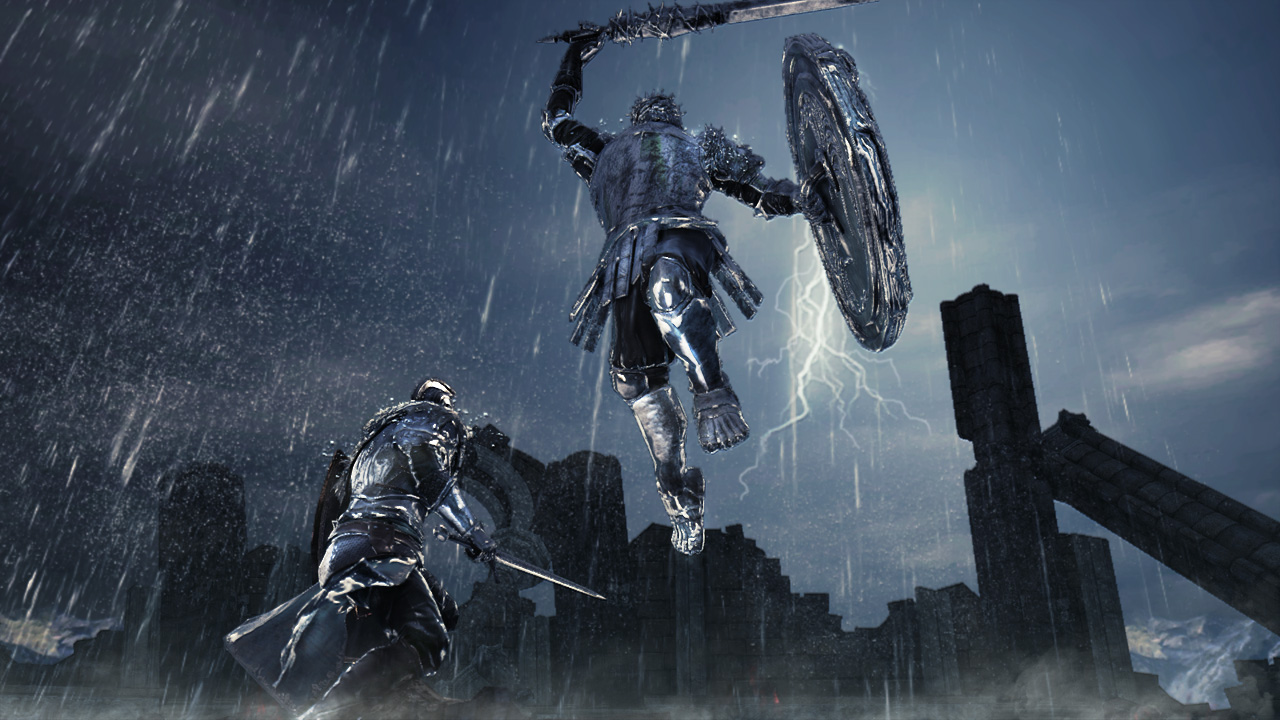
Dark Souls III! Dark Souls III! The third one, it’s coming out next year! Dark Souls was a phenomenal game, Dark Souls II wasn’t as good, but still of high quality, and Bloodborne, by all accounts, was excellent. Not that I’d know, dammit. And yet there’s something that makes me very nervous about this new game. Maybe it’s just that their trademark tone of dead-eyed misery is beginning to rub off on me, but in all honesty, I don’t want another one. At least not yet, not so soon. Why? Well, this is an annual system that’s beginning to look rather rushed.

When Dark Souls III comes out, it’ll have been three successive years of “That game that From Software makes.” It’s always a good game, but it’s only tweaks to a provably good formula and all has the same core mechanics and stylistic choices. 2014 shows us DSII, 2015 produces Bloodborne, 2016 will return to DSIII. But this worries me, and also seems like a dangerous tactic.

There’s something peculiar about the Dark Souls games, because although I love them, they’re something I have to work my way up to, in the same way that one works themselves up to a marathon, or a space walk, or a sexual act done adjacent to a sleeping Komodo dragon. This could be very rewarding, but there’s definitely going to have to be some work put in, and it’s not without the risk of catastrophic failure.

Shiny

Look out! He’s got a giant penny and he’s using a trampoline!

I felt pretty exhausted after completing the first game. That’s not a bad thing, it’s the right effect for what it was and is a testament to the celebrated challenge of the series. But I found I didn’t want to play Dark Souls II for a while, I needed a rest. I started playing Pokemon, Just Cause 2, Mario, games which allowed for easy, lazy gameplay. I know it’s not just me who feels like that, I’ve heard others mention it too. Dark Souls was a fight, which is pretty cool. But nobody wants a fight every five minutes, sometimes you need a cup of tea and a biscuit instead.

But From Software don’t seem to recognise this. Admittedly, they don’t have much competition for this style of gameplay. Their only challenge recently was Lords Of The Fallen and well, we saw how that went. It was like a small sparrow pecking at the heels of a lion, furiously shouting “Come at me, bro!” And of course it went about as well as you’d expect.

But the Souls games are perhaps one of the easiest kinds of game to oversaturate the market with. Look at Guitar Hero – one year Activision released ten of the buggers, and the next year it was axed. People had enough, and Guitar Hero is comparatively easygoing and accessible. For something as brutally and wonderfully obnoxious as Dark Souls, it won’t take long before people start to turn it down. You can have too much of a good thing.

I also worry about a drop in quality, and again we can look at Activision, this time with the Call Of Duty franchise. It might have had early gems like the first Modern Warfare game, but what do we get now? The moronic game that was COD: Ghosts and then Advanced Warfare, the only title to make jetpacks boring. This is what you get when you’re producing too fast to think about what it is that’s being released, unimaginative tripe of the most disinterested kind. “Yeah, I’m here,” Ghosts yawned as it wandering into the public eye, scratching its arse and swigging from a foul-smelling can. “What of it?”

The other reason I feel concerned is that Dark Souls should be more special, more unique. The first one was a startling revelation that took the public by storm and accrued a devoted fanbase that was already brewing from the earlier experiment Demon’s Souls. The second one was a slightly less polished, but nonetheless perfectly adequate creation. Bloodborne hammered home the idea that there’s a real theme going on here, that From Software have found their comfort zone. And now, suddenly, it’s routine. Even the eternal majesty of the Aurora Borealis gets old if you see it every time you open your windows, and at least the Northern Nights don’t shout “think fast!” and try to bash you over the head with a bit of wood when you’re not expecting it.

It seems to me that the developers have got a taste of success, and are really reluctant to let go. I hope they do. Sure, finish Dark Souls III. It’ll probably be genuinely good, something worth playing like the others. And then do what’s best, and stop making them. Not for ever, let’s say for… Five years? Ooh, how about some new IP? It shouldn’t be hard, you’ve proven that you’re a creative lot. Make something else, some new set of mechanics and a new story, because we can all see that there’s genuine genius hiding out there. And then, in 2021, make Dark Souls IV. It’ll be awesome and engaging and ruthless, like all the Souls games, but it’ll also be fresh, for the first time since the original. That’s worth the wait.

SEX! AND ALSO VIDEO GAMES, I GUESS

In a move that should surprise no-one who is even remotely familiar with me, I’ve been thinking about sex. That’s an internet hat-trick right there: Explicit sex, video games, and middle-class white people who think their opinions matter, the famous trilogy of the world wide web. All I need to do now is start filming housecats in compromising situations and I’ll have the full set. Might as well start now – those “cheezburgers,” amirite?

Anyway, back to sex, a phrase I don’t get to say often enough. A few articles ago I accused filmmaker-in-denial David Cage of having made one of the most awkward sex scenes it’s possible to make, in the creative endeavour that was Heavy Rain. In it, one of the protagonists is attempting to rescue his son from an insane killer by completing multiple deadly trials over the course of a week. Having evaded death numerous times, suffered hideous burns across his torso, mutilated his own body, been on the constant run from the police and forever struggling with the constant knowledge that little protagonist junior is one bad choice away from being sent to Hell with all the other video game children, the hero somehow finds the willpower to get it up and bump uglies with another player character. I guess the convenience of the child in danger is that if he thinks about it midway through the act, it’ll stop him from finishing too early.

Hardly a bed sprinkled with rose petals, is it? Maybe he wants to have a replacement kid ready in case he screws up royally, but it’s still absurd. And of course she has to go on top, because if somebody in his physical condition leans forward too much, their innards will fall out and smother the person they’re straddling. How could they not be turned on?

Even if the context wasn’t surreal at best (and psychologically revealing of the writing staff at worst), it still made me cringe to watch the whole thing. It’s not as if the graphics were bad – they were pretty good, not phenomenal, but sufficient enough to maintain immersion in all other scenes. But suddenly it was very obvious that I was watching a couple of polygonal models clonk against each other. It would have been less surreal and embarrassing to mash a couple of stick figure drawings against each other and make kissy-kissy noises in front of a camera.

Kiss

You can’t hit the X button fast enough.

I wonder if it was ruined by the knowledge that the scene was made collectively by dozens of people. Sex is something that most people still think of as private, or at least very personal, a shared experience between two persons. But the understanding that there’s nothing personal about this, that it’s a false construct made to explain part of a story, that might detract from the whole thing… But I doubt it. We wouldn’t feel that way about any other form of love-based scene, such as a first kiss or a romantic dinner. No, it’s not problematic that it’s personal, it’s something else. And besides, you can still ignore that feeling in a movie, something that’s made by just as many people, if not more.

Is it the failed attempts at eroticism? Nah. Don’t get me wrong, that Heavy Rain scene and the infamous ones in Bioware games are about as sexy as a middle-aged accountant committing infanticide by the glow of a TV showing Ann Widdecombe, but again, you can see sex scenes in films that are focused around love instead of allure, and they don’t make me want to cringe straight through the wall in an attempt to escape. I just process them in the context for which they are intended and move on, but it’s harder to do in gaming. I don’t know why, it just is.

I think that the contrasting motivations between the gamer and the characters don’t help. Ethan Mars, Madison Paige, Ezio, Commander Shepherd… They all have their canonical reasons for wanting to do the nasty with other people in the game, but their reasons are usually different to ours, based around love or seduction. Whereas the player’s reasons are usually less intimate, more based around bored, dispassionate amusement. Curiosity, the completionist urge, that’s what drives us to find out, and the schism between their heartfelt drives and our observational ones become all too obvious when we’re watching them bonk each other in scripted, choreographed thrusts and moans.

Taking a step back, I think that might be the real mood-killer – the fact that these people are doing it on our orders. Anybody can sense the weirdness in coldly instructing two people to either fall in love or feel horny on cue. It’s the extension of the old “press F to pay respects” madness that Saints Row 4 was wise to made fun of. Short of using a Wii remote to simulate jerking off a partner, there couldn’t be a way to make it more humiliating.

ME Blue chick

Captain Kirk would be proud, though less so if he could see the hideous mess that she’s hiding at the crotch of her jumpsuit. It’s like the Predator’s mouth after a bad trip to the dentist.

I’m not going to get involved in the “is there a need to even have sex scenes in games” debate, because I wouldn’t ever make a statement on what content is or isn’t necessary in art. The Binding of Isaac is a game about child abuse and the damage that can be done by a religious upbringing. Hotline Miami is all about the mistreatment and deception of those with learning difficulties. This War Of Mine is all about the loss of morality of favour of survival, and all three manage to be superb games whilst dealing with dangerous or controversial issues.

There’s no inherent reason why a game with sexuality as a core theme should necessarily be bad or come across as cheap, in fact it should speak to a lot of people. But it speaks to the comparative immaturity of gaming that they just can’t get it quite right, that they can’t make it seem genuine and it usually comes across about as organically and naturally as a terrorist attack, and just as erotic and loving.

Actually, I think the graphics quibble I threw away earlier might be more relevant than I thought. When the focus of the scene is on the physical contact between two folks, we need it to look real enough to fool us. If smooching lips suddenly clip through each other, or limbs seem disjointed and angular, it snaps us out of the delusion, because now the bodies of the heroes are the point of interest. For that reason they need to look as real as anything, because otherwise we’ll consciously know that something that should be as natural as possible is being structured in the most artificial way. You might as well just bung a couple of blow-up dolls in a centrifuge and you’d get the same result from your audience.

Gaming will have to grow up a bit before we get it right. It’ll have to work out the most tasteful way to display two people making love, it’ll have to stop the vending machine mechanics of “hand over gifts and niceness to go to bed with somebody” and it’ll have to get past the over-simplistic presentation of the most complicated aspect of human interaction.

Oh, and stop forcing bad voice actors to make cheap moaning noises. Just let the music swell or something, because it always sounds like two seals slowly dying in unison. Trust me, I’m English – if there’s one thing we know how to do, it’s disapprove of sex.

CONTENT DOES NOT MEAN CONTENTMENT

There’s a rather insidious word floating around the games industry, namely “content.” It seems to be a highly praiseworthy thing to have a massive amounts of content crammed into your game, to have it so jam-packed with stuff that it’s practically bursting out of the screen like it’s auditioning for Poltergeist.

I’m not so convinced, because content isn’t so inherently great, though you’d hear arguments to the contrary. “Watch_Dogs, Titanfall and Destiny failed critically for not having enough content.” “GTA V and Arkham Knight were great because they had tons of content.” To this I say a strong and resounding… Meh. It’s not awful to have this stuff, but it’s not great either, a bit like a clingy lover. I assume.

No Surprises Here

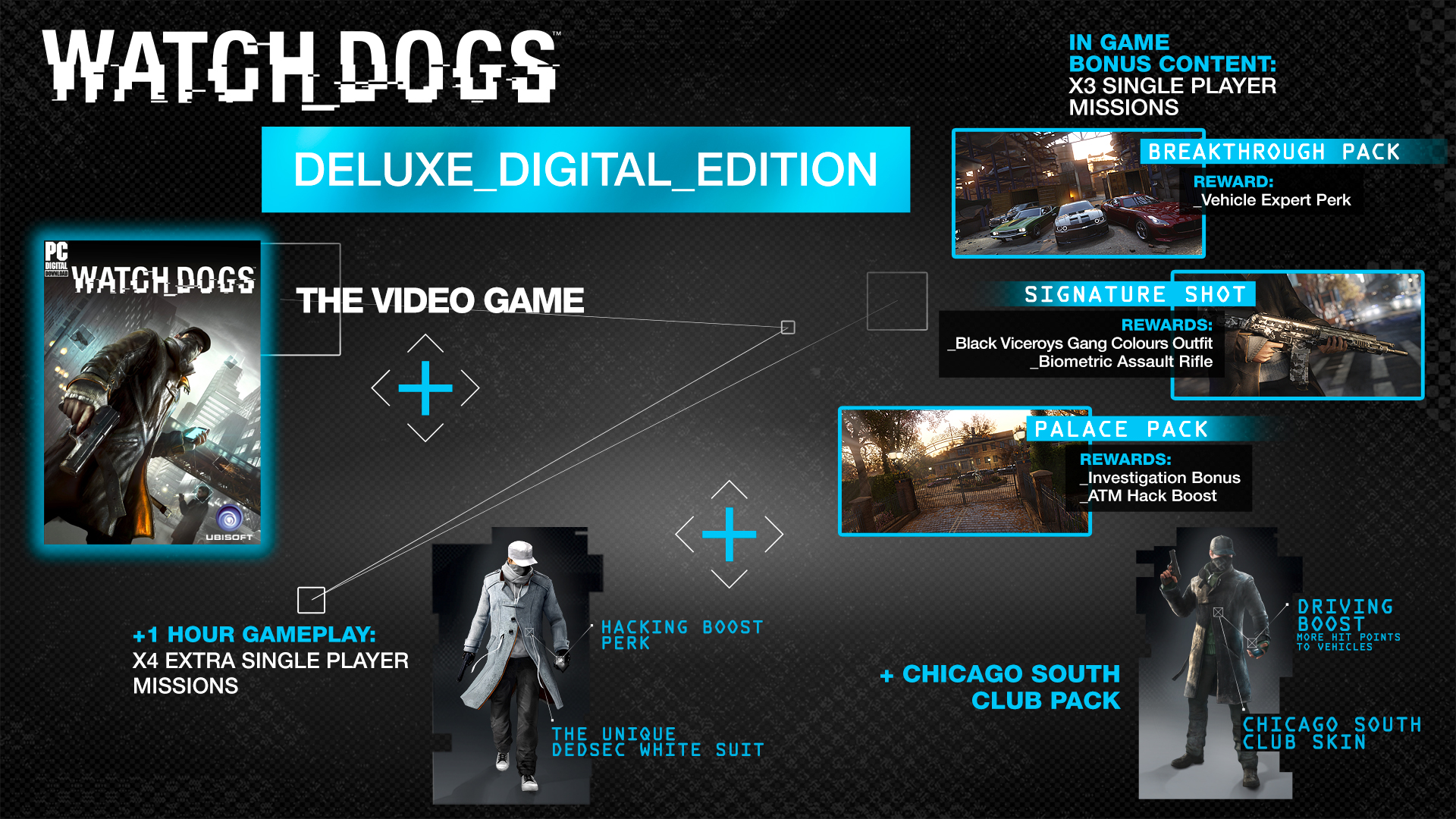
Oh, look. Watch_Dog’s first screenshot on Steam involves Ubisoft trying to cram day-one DLC and special editions down our throat. What an utterly unexpected surprise.

Let’s take a look at the examples above. Watch_Dogs seemed anaemic because it held a vast sandbox map with very few activities to fill it. But if it had been a sequence of linear missions, we wouldn’t be complaining nearly as much, because there wouldn’t be that sense of emptiness. Titanfall and Destiny struggled with content because of their multiplayer focus, and without a structured story they both just petered out and became boring when you started doing the same things over and over. And whilst Grand Theft Auto and Batman both had lots of side quests, they were often dull or just not worth the effort, such as the golfing in the former or the Riddler trophies in the latter.

That said, there are some games that thrive on vast quantities of content. Skyrim boasted a vast fantasy world with adventure in every direction, and came up clean on that score. Dark Souls is a long, teeth-gritting slog in which you have to push for every victory, but it works and fits the tone perfectly.

I think that’s the issue – that to make a game full of content is not a victory in itself, you have to make all that content fun or it might as well not exist. It’s just packaging and extraneous matter, and it’s a problem that’s endemic to sandbox games in particular, which hope that if they throw enough variety at the players then maybe something will stick.

Look at Sleeping Dogs, so desperate for additional features that it added a bizarre cock-fighting minigame (I’m resisting the urge to make an immature joke) and a horrible karaoke feature, a feature which has the gall to come up twice in the main story, and that’s not even mentioning the embarrassingly easy drug busts you do over CCTV. None of it was fun, none of it was rewarding, but goddamn it, we made this sandbox and we’ve got to stick something in there, even it makes the player want to start cutting bits out of themselves.

The real danger is loss of focus, padding out the game to fit some arbitrary timespan without the consideration of pacing, a tightly-designed narrative and whether the gameplay is fun or not. GTA V has the attitude of child’s toybox, so filled with little functions and playthings because it hopes you’ll enjoy some of them, rather than building on the core features and making something more elegant and razor-sharp. I still can’t forgive that game for that bloody yoga sequence, forcing me to play that before getting to do heists and gunplay. You know, the fun stuff that we buy the game for.

I do get the urge, there’s an appeal to a longer game, and whilst I do like a well-paced story that’s slim and tighter than others, there’s nothing wrong with a title that has a wider reach and allows for options. But as we all know, an excellent story doesn’t come just from a good writer – it comes from a good writer AND a good editor, who can cut down the unneeded fluff and make something really focused.

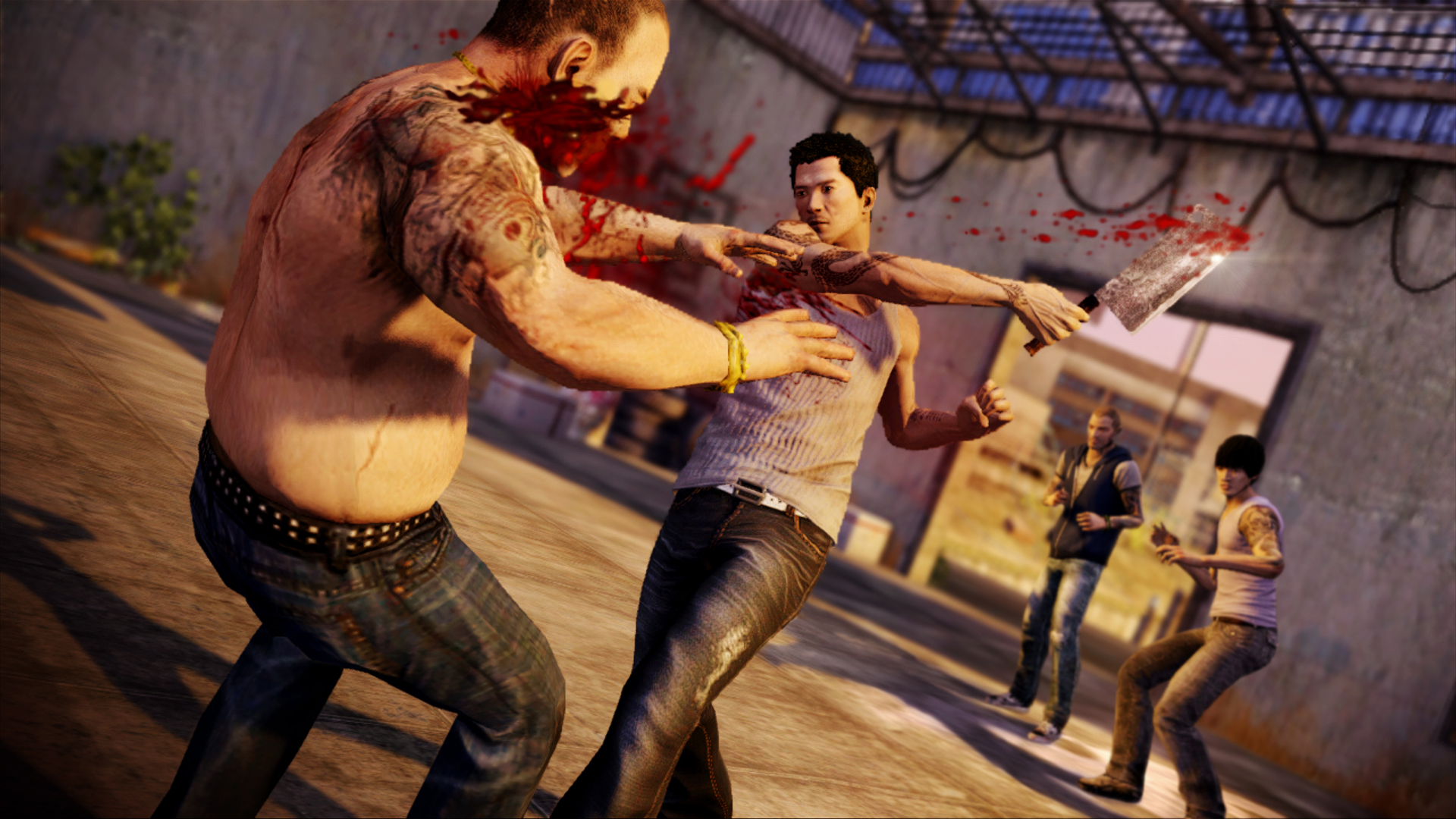
Wei Cleaves A Bitch

This isn’t a mission fight. This is just the result of me being angry that the story made me do a rhythm game to sing “I Fought The Law.” That’s worth a cleaving on any day.

Games need more of this cut-throat attitude, though sadly I doubt it will happen. Making any of these features requires so much work, that it would be horrible to think that it’s got to be thrown away right at the end if it doesn’t make the grade. With the resources and capital that gets pushed into everything in a big-budget game, they can’t afford to lose any of it. There’s no room for experimentation.

The annoying thing is that many games only work so well because all the extra flab has been cut away, leaving a pure and hugely rewarding experience that’s unfettered by anything else. Even the big games like Skyrim all revolve around a provably good set of core mechanics. There aren’t any minigames about dragon taming, skooma cooking, or being racist towards elves, thank Talos.

Though we should take into account a game’s length when we’re pricing it. The Order: 1886 can be completed in five hours, but is being sold at the same price as any other game. That’s preposterous, it’s a scam, no matter how pretty the graphics are. You don’t sell a bungalow at the same cost as a mansion, even if it does have great décor. And yes, I’ve said before that story length isn’t the best measure of a game, but you have to be sensible when you’re sticking a price tag to the result. People want the best value for money, and how much we get out of a game does matter in that regard, it’s ridiculous to think otherwise.

No, a game being full of great content is fine, but if you don’t have much to work with, just make a shorter game with a lower price to match. It might sound horrific, the idea that you might not make as much profit, but it’s far better than hammering various ideas together in the hope that you’ll be long enough to fit some self-imposed limitation.

Essentially, it comes down to identity. Be Wario Ware or be Portal, but don’t try to be both. Then you just get Chell with a big mustache, and that pleases nobody.

MARIO IS DEAD, LONG LIVE LUIGI

Let’s start off with a test for all you Nintendo-loving johnnies out there. Mario has existed since 1981 and has been in dozens of games, which should allow ample time for minimal character development. So let’s all count down the five most interesting aspects of Mario’s personality together! This should be fun.

First of all, he’s heroic and brave. We can agree on that… Though we have no idea of the motivation behind it. Secondly, uh, he’s nice? I guess? Thirdly, it’s easy to see that he’s, um…

Well, this is awkward. Shouldn’t there be more to him than this?

It suddenly struck me how little we know about this massive multimedia icon, when I was recently playing the Mario and Luigi games, namely Partners In Time and Bowser’s Inside Story. I really like it as a series so far, they eschew the traditional platforming for a highly involving take on turn-based combat that works well and develops nicely as it progresses.

But I also like the fact that there’s an emphasis on plot. The last entry I played before these was New Super Mario Bros 2, a game that took to originality like Nazi Germany took to ethnic diversity – pretty damn unfavourably. But the Mario and Luigi series has always leaned towards a focus on linear story telling and characterisation, which is pretty cool for a franchise that has always resented any plot more complex than “squash the goomba.”

ML BIS

Look at that. Four characters on the cover, and the only one showing no emotion is Mario. Creepy, moustachioed little bastard.

But the weird thing is that there’s only one person in these games who doesn’t get a personality – Mario himself. Everybody else is filled with charm and charisma, particularly Luigi and Bowser. In fact, it becomes kind of weird to see Mario just standing there like a brick, whilst his brother in particular acts very dynamically and constantly shows aspects of himself in cutscenes, all through visuals alone. Luigi is lazy, nervous, clumsy, a little vain, but good-natured with a fondness for children. He cares about what people think of him and enjoys food perhaps more than he should, and always reacts with genuine delight at every victory in the game, doing little dances or bragging proudly.

And Mario? It’s difficult to say anything about him, there’s not much to work with. Oh, he likes Peach? At least, I assume he does. He certainly puts in the effort to rescue her, but when he finally gets her back he just stares at her like she’s a “Where’s Wally?” book. I can’t even tell if they’re meant to be going out. I think that used to be the case, but at some point it was quietly forgotten about and now they’re just good friends. Yep, they’re innovating the canonical relationships by making them increasingly boring.

I’d be happy to see Mario get put on the backburner from now on, because he’s just a place-filler for anybody more interesting. I even enjoyed playing as Bowser more, for Mario just comes across as weird, especially in games that are selling themselves on personable heroes and characters. It would be like watching a Punch and Judy show, with the addition of one character who was just a mute piece of wood standing right in the middle of everybody. It’s unnerving, it’s awkward. You keep wishing he’d have the sense to politely leave.

That said, it’s not hard to see why Nintendo have resorted to this methodology. If there’s nothing tangible to Mario, there’s nothing that’s going to be inoffensive or polarising. It’s nice and safe, but then again so’s a glass of water, and there’s not much flavour there either.

But for all my quibbling, I can’t actually think of what I’d like Mario to be like. He’s been so bland and so generic for so long, that it’s hard to imagine him showing any genuine complexity. It would seem unreal and forced. Maybe if he grew into a personality over multiple games, it would be interesting to observe, but it does seem unlikely. They’ll just keep making 2D platformers and putting a Mario template over the top, ignoring any chance of evolution. Is a charismatic hero really so dangerous? Everybody loves Luigi, and he’s the one that’s taken all the risks. Doesn’t Nintendo see the value in trying that out again?

Mario has always announced himself with the rather self-congratulatory cry, “Its’a me!” A phrase to which everybody should now reply: “so what?”

PIP-BOYS, PUBLISHING PROBLEMS AND PRE-ORDERING

So I might have to confess something here. After the Fallout 4 E3 article I did a few weeks ago, in which I made some arrogant snorts about Bethesda’s rather strange presentation, I sat back feeling very pleased with myself, knowing that I’d said something cruel about some people who weren’t there to defend themselves. Monday as normal, life goes on.

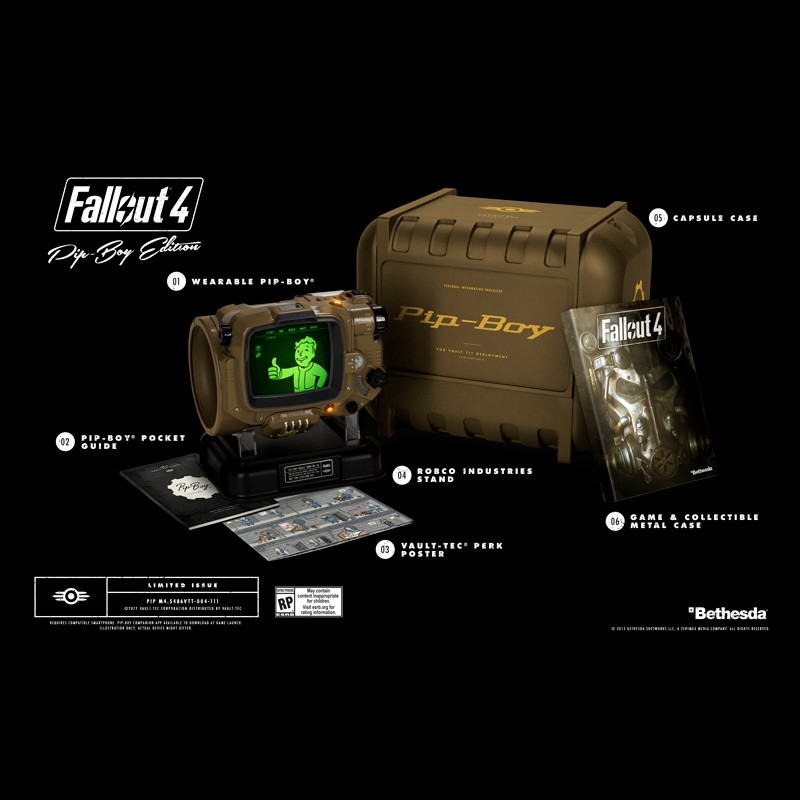
In fact, one of the things I was most cynical about was Bethesda trying to sell us the Pip-Boy edition of the game, which comes in a special case with a bunch of extras, including a life-size recreation of a pip-boy which you can slot your smartphone in, to use as a replacement screen. I have the exact charges here, M’ lud, taken verbatim from the original article.

“But I’m worried the game is spreading itself too thin, because we really didn’t see much, even though it was trying to show us everything. One fight, a sped-up crafting demonstration, and all the less interesting bits of the plot, and to top it off, the presentation still had to be padded with the dull-looking app and the Collector’s stuff. Look, Bethesda, why don’t you show me what this game is actually like before you try to convince me to buy the version that costs over a hundred bucks?”

I do think my argument still stands, by the way. I didn’t really know what Fallout 4 was at that point, so I wasn’t going to spend money on a better version. I still needed to see the standard one.

But that smug feeling faded slightly over the next two days to be replaced by an uneasy feeling of awkward realisation, understanding that I might have just been very stupid. Why? Because, well… I really wanted a Pip-Boy. Like, a lot.

Part of it’s a weakness I’ve had for trinkets since I was a kid, something that plagues a lot of geeks like myself. Like a bespectacled magpie, I have to grab anything of value, just because it’s so pricey and holds some very minor status. I’m pretty bad with comics, for example, grabbing the more respectable issues on sight, issues that I didn’t want until I saw them, or snagging little toys related to games I have a fondness for. At the end of the day a lot of the problem is hubris and being weak-willed. That’s a rare and expensive item? Well… I’m a rare and expensive person. Yoink!

But part of it is that the Pip-Boy looks genuinely cool, and I like the idea of having it on my shelf like a gaudy trophy, or wearing it to taunt those who didn’t get one. Aside from Vault Boy, it’s the most iconic thing in the Fallout series.

I started to realise that I might have been very stupid, and the uneasy feeling became worse and worse. By the time I realised how badly I wanted one, they’d all been pinched by heartless scalpers and die-hard fans, much to my frustration and embarrassment. But luckily, Bethesda decided to make a few more, and a very good friend of mine who works in a Game store procured me one. Shout-out to you, anonymous figure. The only way I would’ve been more happy would’ve been if you sent round the less inhibited members of a burlesque show.

PB

My precious… Gives it to me, the preciouses…

So I’m getting a Pip-Boy come November, and it can’t come fast enough. And that makes me stupidly proud, but I’m also worried I look like a bit of a hypocrite. I’ve mentioned several times on this site that pre-ordering is a dumb idea, and now I’m directly benefiting from it… Should I be eating my words?

Nope. Don’t you people realise yet that I’m forever right and infallible, like Jesus with better hair? I haven’t broken my rule, because in truth I’m not against pre-ordering as a concept. In fact, times like this prove that you should  pre-order in some cases. That first batch of Pip-Boys were gone in two days, those that got them were smart to be as fast as they were.

That’s when you pre-order, that’s when it makes sense. When you’re scared that the amount of copies may run out, you reserve one to get on the day it’s released. There won’t be any more Pip-Boy editions of Fallout 4, sadly. And when the next game is released with an edition containing your own pet centaur, it’ll make sense to pre-order that too.

But that’s hardly ever the case these days. It makes no sense to do it with digital copies, and when was the last time you went into a store on the day to pick the normal stuff up, only to come out disappointed? In all my years of gaming, it’s only ever happened to me once. They just don’t run out of regular copies any more.

The truth is that the bigger the release, the less likely it is to vanish from the shelves. The shops buy according to the public demand, and they always buy more than they think they need, because they know they can sell them later in the year. It’s not like the games are going to go off, they’re not a box of peaches, so they just stock up on enough copies to build a fort with and divvy them out over time.

Now, let’s talk about the actual advantages of pre-ordering. There are two main reasons that publishers love this practice, and one of these is harmless and doesn’t matter to the buyer either way. However, the other reason is a very nasty, insidious one that is directly to our disadvantage.

First, the harmless reason. Pre-ordering helps publishers because they can start making educated guesses on how many more copies they’ll have to make, how many sales they’re going to get, how lucrative advertising might be, all that mush. It doesn’t benefit us, but it can help publishers get all sorts of useful information that can help them maximise profits or reduce unnecessary spending. Again, it doesn’t hurt us, but it’s also not our problem.

But the other idea behind pre-ordering is quite manipulative and cruel. See, pre-ordering means that you’ve bought the product before it’s been reviewed, before it’s been criticised. You’ve paid money for a game that might be rubbish, and by the time you’ve found out it’s all too late. You’re committed to the buy. Before Steam introduced refunds, this was even more of a problem.

But surely that can’t be all that common, right? I mean, if a game was surprisingly bad or even broken, we’d know way in advance. It’s only happens in rare events like Assassin’s Creed: Unity, Duke Nukem Forever, Aliens: Colonial Marines, Arkham Knight for the PC, Arkham Origins for the PC, Sim City, Watch_Dogs, Destiny, Thief, Halo: The Master Chief Collection, Driveclub, Sims 4, Titanfall, Sonic Boom…

Hmm. Maybe this is more common than we think.

And of course, it leads to getting burned by that sense of disappointment, self-loathing and feeling cheated that pre-ordering a shitty game always brings.

Duke Pukem

The tale that never stops being relevant. Maybe some games should just stay dead?

There’s more problems. For the reasons mentioned above, publishers are getting more and more desperate to rake in the pre-orders, ravenous to separate us from our money at the earliest opportunity. They really like it when we pre-order, it’s just safer for them on every level.

And thus we have the pre-order bonus. New missions, new character skins, new weapons, new gear, new content packs. Order now and get it free, all for you to enjoy.

Except none of it is new. This stuff should be part of the release as is, because a lot of the time it originally was. But before it’s sent out and distributed, publishers look at a full game with the clinical eye of a mad scientist. What can we amputate from this game without killing it in the process? How much can it afford to lose? Snip, snip, snip.

Don’t kid yourselves. They’re not selling you extra content, they’re holding the original content to ransom. They’re keeping it back from you to offer out again when they feel like they need it, making you jump through hoops for parts of the original design. If I kidnapped a large family (again), and returned them all back later except for elderly aunt Gladys, I wouldn’t try to sell her back to them under the label of a beneficial add-on. “Pay the ransom before August in order to get the Crabby Old Woman DLC.”

But if we stop pre-ordering and come down hard on publishers for this nonsense, they’ll stop hacking bits of content off the game. We’ll get the whole thing, all for ourselves. I wouldn’t have bought the better version of Fallout 4 if there’d been actual gameplay bricked off, but Bethesda have been gallant enough to leave their beloved creation alone and unmolested. Good for them.

ACU Gunshot

We never saw him coming, sir! He clipped straight through the wall at us, and when one of us attacked his face it vanished completely, leaving only eyes and a mouth floating in mid-air!

And seriously, do you HAVE to get that game in the first few minutes of release? The fact that one of the arguments for pre-ordering on Steam is the ability to “pre-load” has always irked me, mainly because it shows how utterly terrible people are at waiting for their games. Can’t you show the tiniest bit of self-restraint? It’s for your benefit, you know. I wouldn’t throw myself at a meal if I knew there was a chance for it to be poisoned, I’d wait for somebody else to try it first and find out for me.

For those who don’t know, pre-loading means that you can download the game in advance, but the file has a little lock on it. When you reach the release date, the lock comes off and you can start playing instantly. Here’s a thought – why don’t you wait twelve hours to buy it, a period of time you could literally sleep through, then check the reviews (which will be out by then), and reconsider accordingly? A lot of disappointing purchases could have been avoided if people just took the time to check what they were spending money for.

That’s all it comes down to – making sure. Are you hoping for a limited product that looks to vanish fast? Then go for it, that makes sense. But are you enthusiastically encouraging companies to hack their games to pieces in an attempt to trick you into a bad purchase? That’s not as smart. In fact, that’s very, very stupid. And now we have this bizarre situation where it makes sense to pre-order the more expensive version of a game, but not to pre-order the cheaper one.

Anyway, time for me to sit around drawing pictures of Pip-Boys. Whoever said material things don’t bring happiness was quite clearly a moron.

PRESS F TO GIVE UP ON CINEMA

You know that new game that’s “cinematic?” Well, bollocks to that.

It’s not a nuanced start to an article, I know, but it’s really starting to annoy me whenever I see that word come up when referring to a game. It crops up a lot on IGN reviews, enough that I’m wondering if they get paid to use it. They coo about how cinematic it is, but is that a good thing? In short, no. Not in the slightest.

We know what that phrase actually means, of course. It’s used for games like Uncharted and Call Of Duty. Titles that are defined by their set-pieces, by pretty graphics and impressive (but often meaningless) visual effects. Buildings exploding in slow-motion, detailed shots of vehicle crashes, scripted action sequences that you mustn’t deviate from in any way. Seriously, if you do anything but the exact actions they have in mind, they’re going to stamp on you, hard, and make you start all over again. That’ll teach you to have free will, you troublemaker.

The reboot Tomb Raider had a lot of this nonsense going on. You know the sort of thing I mean – sliding down a hill and rolling out of the way of debris, or parachuting in an uncontrollable direction and having to swing out of the way of trees. It’s a big thing for major games these days, to have these visually memorable stunts, but it’s pretty dull and unengaging. The whole thing feels weirdly artificial and seems to want to wrestle control from the player. They’re like overbearing mothers, slapping our hands whenever we try to do our own thing.

SOTL

What could go wrong? No, don’t answer that.

I think there’s some weird belief permeating the whole industry that games should aspire to be like films, but I don’t get why. If a film became a slideshow so that it could be more “photographic,” or books started trying to clamp on your hands to be more like a video game, we’d think the creators had lost their marbles. Why can’t you commit to the medium you’re part of? Surely games are at their best when they embrace their nature and work with it, as opposed to against it?

Spec Ops: The Line is a phenomenal example of this. The writers understood that there was a unique opportunity here, one that was exclusive to this medium. See, their stroke of genius was to make the player commit awful atrocities in order to survive. What was the effect of that? Well, we felt responsible. In a story all about the damaging nature of guilt and the things that humans will do to survive, Yager used the interactive dynamic of the game to make us feel guilty. And god, did it work. You couldn’t do that with a movie, we’re only observing that as an outsider. But not here. Here, you’re the one who pulls the trigger and ends up with severe PTSD. If you’re lucky.

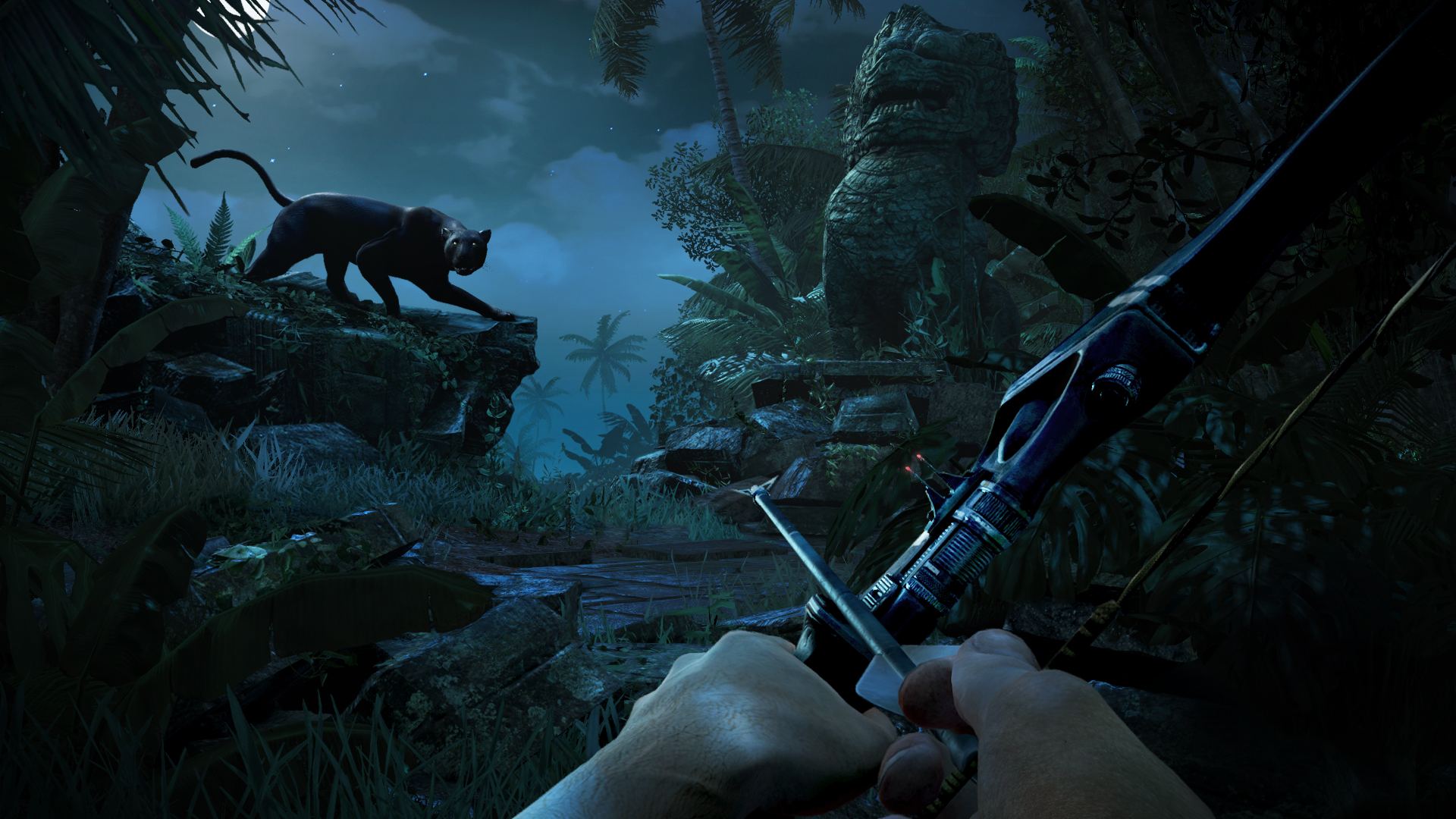
There are other examples of this. The Far Cry games are nicely organic, and why? Because they work with choices, not with a script. For example, you want to take out a stronghold of bad guys? Sounds cool, what do you feel would be a fun way to do that? You could go all sneaky and start backstabbing people like Ezio on a bad day. You could charge in with an LMG and turn everything into red mist. You could sit on the next hill along and start sniping bad guys as though they were heavily armed ducks. Or you could just set a tiger loose and have him take care of everybody for you. What floats your boat? We cater for all tastes here, my friend.

Pussy Cat

Don’t worry, folks. That panther went to a really nice farm with other big cats. Then I shot it with an arrow. That’ll teach it to try and hide.

These games work because they aren’t constantly fighting to be something else, and the worrying thing is that we’ve seen when games are trying to be more like movies. It’s not pretty.

Let’s be straight here – I did not like Heavy Rain. The story was absurd, the characters were boring, the tone was surreal and the gameplay was minimal. The sex scenes made me cringe and the irrelevant ninja fight dream sequence made me want to bang my head on the wall in frustration. The only good bit was watching one of the characters lop his own finger off. Call me cruel, but that was the only part of the story that seemed even somewhat grounded in reality.

I don’t really get why David Cage makes these games in the first place. They can be done well – Telltale’s recent trend of games, the one that started with The Walking Dead, proved that they live on strength of story and that you need to have your QTEs integrated well with the action to prevent it from being distracting.

But Heavy Rain’s story was abysmal, and the complex combinations of button pushes needed to perform the action scenes was like trying to bring somebody to orgasm with one hand whilst trying to make a caeser salad with the other. And Mr Cage, if we fail one of these, please don’t count it as a choice for god’s sake. If I choose to let somebody fall off a cliff, you can roll with that. It’s what I wanted. But don’t do it if I just missed the button prompt, because that leads to a story I’m not interested in, one I didn’t want.

I honestly don’t know who David Cage was making Heavy Rain for. Film lovers? Nope. The story’s too long and doesn’t have the tight structure that would be expected, not to mention that large portions of the game are filled by wandering aimlessly around, looking for the thing that wakes the plot up again.

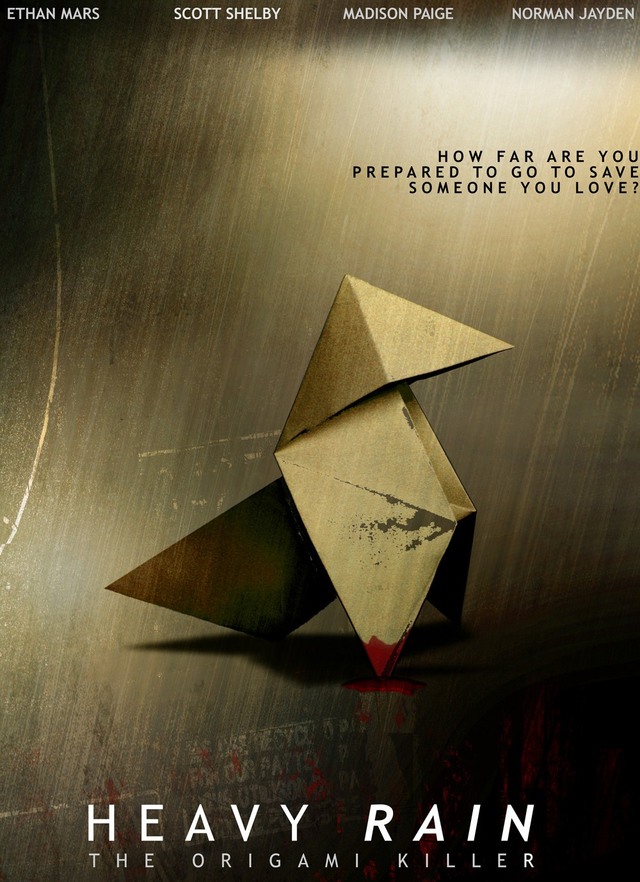
HR poster

Does anybody else wonder if Mr. Cage is upset that he directs games and not films? Maybe we should start a Kickstarter to get him a job with Michael Bay. That’d make him happy, and also stop him making stuff like this. Win-win.

Is it for gamers? God, no. The gameplay is anaemic and reluctant to show up at all, like a cantankerous Baptist uncle at a gay wedding. Not to mention that any ending that isn’t the totally happy one feels like a failure on the player’s behalf. So who exactly is this mess of mechanics and motivations aimed at?

Well, it’s aimed at the gamer that hates video games. The snobby hipster, the aloof critic, the unimpressed academic, who plays Rayman Origins or Team Fortress 2 and sniffs at how there’s no depth to the writing. The one that loves anything pretentious, and doesn’t see the value in fun.

David Cage seems to view himself as an hauteur (though I don’t see it myself), and Heavy Rain is aimed at those who think like him, who would rather see fake depth than genuine joy and who are just happy about the fact that the game is different, rather than thinking about whether it’s engaging or even if it makes sense. It’s innovative, but that doesn’t mean much. Putting bleach in your eyes is innovative, but I’d be reluctant to call it an improvement.

It’s just weird to watch at this point. Is he embarrassed about the fact that he’s making a video game? Indigo Prophecy had an unforgivably awkward joke where a character makes fun of fetch quests whilst doing one of his own, almost like it wanted to weakly urge how unlike that trope it was. It also didn’t have a “Start Game” button in the menu. Nope, Indigo Prophecy opted for the “New Movie” button instead. I guess if you’re laying your cards on the table, you might as well do it with enough force to break that table in half.

But I can’t deny it – David Cage’s games are indeed cinematic, but it’s also why they suck. They’re basically going through a crisis of identity, and boy, does it show. Let’s not forget the key factor about cinema – it’s unwavering, it’s inflexible. Films don’t change depending on how we hit the play button, they’re not going to obey our instructions. They are inherently non-interactive, but a game is defined by interactivity. They need it like a swan needs a bad temper.

That’s the real issue to be noted – the more cinematic a game becomes, the more it strives to take control from us. Cameras pull away from our control to show events, characters perform moves we aren’t even aware they’re capable of doing in the middle of QTEs, freedom is compromised so that the game can tell its story, and not ours. This is fine in tiny quantities, but it gets annoying when it becomes overbearing. And I have one more way to prove it.

“Press F to pay respects.” That’s the future of cinematic gaming right there. It shouldn’t hope for much respect itself.

WE NEED TO BE CRUEL TO BE KIND

Acting nasty is really, really fun. No, don’t lie, don’t disagree. You’re a nasty, dysfunctional human being like the rest of us. You get a kick out of tormenting your fellow man, just as much as we do. When you sprinkle toast crumbs in a friend’s bedsheets, it’s done for that tired, haggard look of misery they have the next day. When you spend five hours lowering a person’s doorway with newly-learned carpentry, it’s all for that satisfying clonk as they discover what you’ve done via the medium of the forehead. When you lure a person into a room with a pack of hungry wolves, it’s so that you can witness the outrage on their face as they hear the the click of the lock behind them and realise the significance of that raw steak you gave them.

… Alright, maybe there’s a limit.

The reason I bring this up is because I’ve heard some grumblings from the other side of the industry recently, from developers and mainly the indie ones at that. There’s the idea floating round that criticism of smaller, independent games needs to be more careful, to be tactful, to be considerate of context and not to be as harsh or clinical as the criticism of major releases.

The most recent time I heard this was in the interview with the critic, journalist and online personality Jim Sterling, formerly of The Escapist and Destructoid. Mr. Sterling had already been accused of being overly brutal and living off the work of small developers when he came down hard on Skate Man Intense Rescue, a memorable product made by Digpex games that he tore to shreds online.

In a responding letter, Digpex accused him of “using poor weak developers for money,” and this came up in his interview as well, with the frustrated creators of The Slaughtering Grounds (another game he reviewed unfavourably) claiming that he was a “leech,” dependant on the work of small, struggling developers whilst harming them in the process.

TSG

This is The Slaughtering Grounds. You… Should try it before you judge. Or not. Could always let a critic judge for you.

I’ve seen the same ideas levelled at personalities like TotalBiscuit and AngryJoe on forums too, and both have been the subject of attempted censorship on YouTube, when upset developers try to take unfavourable videos down under the guise of copyright. It’s embarrassing, clumsy, and it never works, but they try anyway.

I do get why indie developers can get so upset. Indie projects are small scale and thus very personal. A developer might be desperate for the income that such games generate. There can be emotional attachment to even the most horrible, lazily constructed game.

But I’m going to have to tell you developers that I think you’re wrong to make these claims, because the gaming industry needs no more of this “the player is the last one that matters” mentality. I said before that this is a akin to a war between those that make the games and those that buy them, and whilst this isn’t a major blow, it is an attack on consumer awareness and worth responding to.

Let’s make this clear – if you are selling a game, for money, in the public sphere, you are up for criticism. All of it, on every level, uncensored. You don’t get a pass depending on your circumstances. You also don’t get to cancel out unkind criticism, even though it never works.

The Slaughtering Grounds is currently on sale for fifteen pence, but it wasn’t when it was put up, when it was getting the initial attention. It was going for almost ten pounds. And as somebody who’s played it, I don’t believe the quality of the product justifies that price. That was too much to ask for the product as it was being sold.

That might sound mean, and it probably is, but I don’t think it matters in comparison. When somebody criticises something and ends up giving the final verdict, it’s often done with the price taken into context. For example, watching a crap film would still be unpleasant, but it’s not so much of a loss if the ticket only costs fifty pence. It might even be worth it, if there’s a good sex scene halfway through and you can just sleep through the rest in a comfortable cinema chair. But if it’s fifteen pounds? Well, the situation’s different. It’s not good value for money.

That’s the point – criticism defends the consumer against the deceitful monsters that are PR, Marketing and spin. And when criticism is dropped, some very big problems can get past the radar. Critics were waiting to leap past the review embargo when Aliens: Colonial Marines came out, desperate to warn the public against a horrible game that was riddled with technical issues and disturbingly different to the trailers. And those that pre-ordered the game were wishing that they’d listened to them first.

ACM

Horror is contextual. The game wasn’t scary, but the attitude it represented terrified everybody.

It’s the same principle here. Money is important to people (not to mention the time invested) and they want to know they’re getting the best use out of both of these things. Thus, if you’re selling something for money, the critic is morally obliged to urge potential customers against it if he thinks they could be getting far better use from other products and other uses of their hard-earned cash. It’s not just the developer who has to be watchful of income, you know.

Besides, things get better when they’re criticised and the developers take it into account. There’s a reason why we put “constructive” at the beginning of that word so often. A good critic doesn’t just wave his or her hand at a product and say “Yeah, that? That’s kinda shit, don’t waste your time.” Even with the most toxic product, the critic points to specific issues and says exactly where they’ve gone wrong, or even suggests potential solutions for the next game.

And if they’re being mean? Well… That’s the way it goes sometimes. I’m afraid you’re going to have to grow up and deal with it, and I’m not being harsh here, that’s just the risk you take when you enter the public sphere. We all know this, none of us are exempt from it.

That said, critics probably shouldn’t be unjustly cruel, or at least should have good reason for blistering reviews or analysis. You have to know what you’re talking about, have to feel right in saying these things. You’re not a priest, you do have to put SOME effort in to proving your claims.

That’s the final point I’d make. Brutal criticism might be hard to hear, but it’s not done out of spite, it’s done out of necessity, for both the customer and the creator. So you’re going to have to learn to deal with it. Remember how at school, there was always that one kid who cried at every little thing? Don’t emulate that kid. That’s not going to get you anywhere, except dehydration and wet trousers. That one’s for you, Wikiquote.

THE WORLD LOVES TO HATE HATRED

Talk about being behind the rest of the world, next thing you know I’ll be discovering that people landed on the Moon when my back was turned. See, I finally got round to playing Hatred, the recent isometric shooter to hit Steam in the same way that a brick with a rude note tied to it hits a window.

Hatred was announced a while ago, and garnered a lot of press attention because of the fact that the objective of the game is to run around an American town with more weapons than the average platoon, gunning down everything you see for basic recreational purposes. Can’t we just stick with Crazy Golf?

Let me start by saying I do quite like the visual design in Hatred. It’s almost completely black and white in the Sin City/Madworld/Schindler’s List style, with important factors like fire or police lights done in full colour and the whole thing comes across as quite engaging to watch, if nothing else. I’m getting this complement out of the way early because it’s the only thing I’m going to praise. The rest of the game is a load of rubbish.

Right then, let’s get down to the meat of it – you play as an unnamed character in a douchebag leather trench coat, who is inexplicably angry at everything in the universe. Oh god, I thought, as he growled his threats at the camera. This is going to be a long evening.

Oh, and to the developers I say this: the “unnamed character” aspect is bloody asking for it in my opinion. People will instinctively fill the gap with the first name to float through their thoughts, and it my case it was Mabel. Somehow I don’t think that’s what you had in mind, but that’s as seriously as I’m going to take this greasy wanker.

Mabel and Shotgun

Excuse me, good sir. I believe my shotgun barrel is blocked. Could you possibly check for me?

Anyway, Mabel has decided that he’s bored of the fetid worms in this dying corpse of society (no, he really does talk like that), and from behind the black curtains of his award winning “world’s worst haircut” he makes the momentous decision to run out and start blowing heads open like they’re a bunch of coconuts in a shy.

Then he gets shot and killed ten minutes later because the controls are rubbish. There’s little niggles, like the inability to control the camera, but then there’s some big ones, like the fact that you have to sprint at cover to vault over it. But this requires both a run-up and that you come at it from a direct angle, and several times I found myself glancing off fences like a sparrow flying into a window pane.

Also, I’m fine with destructive scenery, Hatred, but not the way you do it. Red Faction proved it was fun to drive through the wall of a bunker and watch it collapse. XCOM proved it was useful to blow holes in buildings to get the best angle of attack. And in Hatred, the ability to knock down a wall with a well-placed grenade would be fine, but not if it’s just useless. At one point I got swamped by the scurrying insects of this corrupt and tiresome world (that’s the local constabulary to you and me) and tried to flee through a gap in the wall I’d made earlier.

Except that Mabel ran smack into nothing and just started jogging on the spot like he thought this was a good time for his morning cardio. Oh, I see. Destruction physics with a low attention span. Do we want to give this programming lark another go?

The AI is just as useless. Civilians will run when they see you open fire, but only for about five seconds before they lose interest and start milling around again like farmyard turkeys. Some enemies will see you before you’ve even entered the same building – presumably they use X-ray specs – and they all seem to gravitate towards fire like suicidal moths.

On top of which, the only way to regenerate health is to perform executions on weakened enemies, which all involve some boring fatality in which Mabel shoots them or cuts them up whilst looking like he’s trying not to ejaculate all over his coat.

But this means that there’s almost no point in using the better weapons, which all kill in one hit and don’t allow you the chance to get your HP bar back up. And considering there’s no penalty or danger in executing people (all the enemies stop shooting whilst you do so, presumably they’re keeping score), you might as well use only the starting pistol so you can stab your way to full health when you need to.

Mabel Dances

You gotta practice your dance moves, even when you’re in the middle of a killing spree. You – are – GOLD!

The weird thing about Hatred is that it gets boring VERY fast. Killing people has shock value, but it’s not long before you realise that it’s all this game has to offer, and it’s not even very good at that. Nobody shows any humanity or intelligence whatsoever, so it’s hard to feel sympathetic for these automated screaming machines, and Mabel himself is about as complex as a Bond villain. We never know why he wants to kill, or what drove him to this state. Maybe if he had demonstrated internal conflict we would’ve felt something more towards him, but he just clomps outside in combat boots and starts smirkingly gunning down people at the bus stop.

I also noticed that the game is tagged with the word “Mature” on Steam, which gave me a good chuckle. It’s anything but mature, this is the sort of game a thirteen year old with too many Image comics finds cool. Everybody who’s grown up at all knows that this is just ridiculous, it’s a child’s view of what adult material should be.

In fact, Hatred seems kind of cynical in my mind and not in the obvious way. It’s the bare minimum needed for controversy, you know what I mean? People might have been worried about the message, but there is no message here. It’s been made purely to exploit the profit that comes with a controversial release, and there’s nothing else to it. No statement, good or bad. Just a product out to make money.

I couldn’t help but wonder if the developers were having fun with it by the end. There are times where I come close to thinking that the game is a parody of itself, a knowing jibe at the silliness of the basic concept. Mabel is a rejected slasher movie monster as opposed to an actual character, and I just started laughing at his stupid lines about “toxic vermin” and “blessed damnation.” They’re not being serious with this, right? I’m imagining the voice actor trying to get through his lines without giggling, whilst the guys doing the recording pull faces at him through the glass and wear black wigs that come down to their shoulders.

But it doesn’t matter. The media took it in a straight-faced manner, and I’m sure they’ll take the relative success of the game seriously too, when there’s really no need. The reason that it sold so well was that most people wanted to know what all the fuss was about. They’re only interested because pundits spent several months telling them that they shouldn’t see it. It’s basic human curiosity, it’s Pandora’s box. Tell us we can’t have something and we’ll want to have it more, just to understand why we can’t.

And the reaction from those who played it was actually pretty encouraging. The critics just rolled their eyes and went back to The Witcher 3, and the Steam page is littered with joke reviews taking the piss out of the game. Isn’t that strange? The only people who were looking for an evil message were those that didn’t want the game to be released at all.

But I can anticipate the response to this of argument. Some might say that we have been desensitised to violence and gore by these kinds of games. Desensitised by Hatred, by Postal, by Grand Theft Auto, by Manhunt. Even my precious Dark Souls got a lot of attention when it was found in the room of the Craigslist Killer, Miranda Barbour. Thanks, Fox News! Another reason for me to hate everything you stand for.

But I really don’t think violent games do effect us much. There’s a little switch, an understanding that registers in people’s minds. We know when we’re observing a fiction or a harmless fantasy, and when we’re observing real life. We can make that distinction without difficulty.

In an age where you find footage of anything online, we’ve all probably witnessed video recordings of people dying, be it publicised tapes from terrorist groups or live news of police combat. The one that haunts me most is the suicide of the politician Budd Dwyer, who took his life at a press conference in 1987 when he put a revolver in his mouth and pulled the trigger, all the while advising people to stay back lest they be hurt accidentally, and ignoring the pleas of those around him.

It’s horrible to watch, the sort of thing I shall not forget within my lifetime. I think it’s the speed with which it happens, the rapidity in which he goes from a complex human being to an unthinking object on the floor. After pulling the trigger, he drops with startling speed, blood leaking out the top of his head and pouring in streams out of his nose, as witnesses scream and rush forward.

I never knew the blood came out of somebody’s nose when they did that. It never occurred to me that it would.

Budd Dwyer

R.I.P, Mr Dwyer. I’m sorry that it had to end the way it did.

But that’s the point. That’s real life, and no rational person looks at that event after playing Manhunt and shrugs their shoulders. The experiment’s been done, we see people react in visible horror to this kind of footage, whether they’re gamers or not. They still have that basic empathy that they had before they started playing. The reason we don’t respond to gaming violence is because we understand it’s not real, we can see the difference.

I think that might be the reason for violent figures often having violent games to hand. I don’t consider those games to be the cause of aggression, instead I think they’re the outlet for aggression, at least for a time.

If a person feels angry and wants to hurt somebody, maybe it helps him to let it out of his system in a harmless, pixelated world. But of course, they too can see the separation. They understand, like us, the difference between a false world and this one. And for that reason the game has limited capacity as an outlet for that anger, and that’s when things get very bad.

Do you really think that a game could do otherwise? Drive a normal, sane person into the realms of psychotic insanity? Turn a pacifist into an axe-murderer? If this were true, why did we not see a spike in aggression when GTA V was released? The last figures put the sales of that game at 52 million copies, so why has gamer violence not gone through the roof in the last two years? It’s had the time, and should only have gotten worse with the PC and next-gen console releases.

It’s important to distinguish that it’s not the case that games make you crazy, because people keep trying to ban them for that reason. Australia and Germany won’t allow Hatred within their borders for a start, and there have been other games that have suffered the wrath of short-sighted political figures who want something to get all righteous about. Maybe with time they’ll work out that we’re grown-ups and can choose for ourselves how we spend an evening. Maybe.

Anyway, I’m thoroughly miserable after thinking back on poor Mr. Dwyer. Time for a bar of chocolate and some digital killing sprees in Just Cause 2. And you know what? I’m not even going to use a hookshot on anybody in real life afterwards.