THE NINTENDO CONUNDRUM

Three of the big stories in the last couple of weeks were linked to Nintendo. The first was the announcement of Pokemon: Go, the first proper game in the venerable “Pocket Monsters” franchise to be put on mobiles since the depleted chicken bone that was Pokemon Shuffle – a “match three” game with the little critters’ pictures pasted over the top, the easy option when somebody needs to hammer out a tie-in mobile game and the idea bucket is running so low that it could venture into a combination Fun Run/Limbo contest. Expect Pokemon: Go early next year, if you’re into that sort of thing, or watch the unbelievably cheesy trailer if you want a primer on it.

The second bit of news was the reveal of the new President of Nintendo – Tatsumi Kimishima. He’s replaced the late Iwata as the head of the company, but only for a year and says that he’s basically going to be following the plans set down by his predeccessor. More about this later, but for now just know that something tells me might be a token gesture.

The third story was the release of Super Mario Maker, a game that allows you to make your own Mario levels for yourself and others to enjoy, celebrating the little red plumber’s thirtieth anniversary. I don’t have it, but if I remember the fads in Halo 3 custom maps correctly, I’m pretty sure that about ninety percent of the initial uploads will be enormous shapes of anime girls made of thwomps and strategically placed pipes, as well as about two billion attempts to recreate World 1-1 from Super Mario Bros. If you’re not sure which one that is, then I can tell you this: yes, it’s the one you’re thinking of.
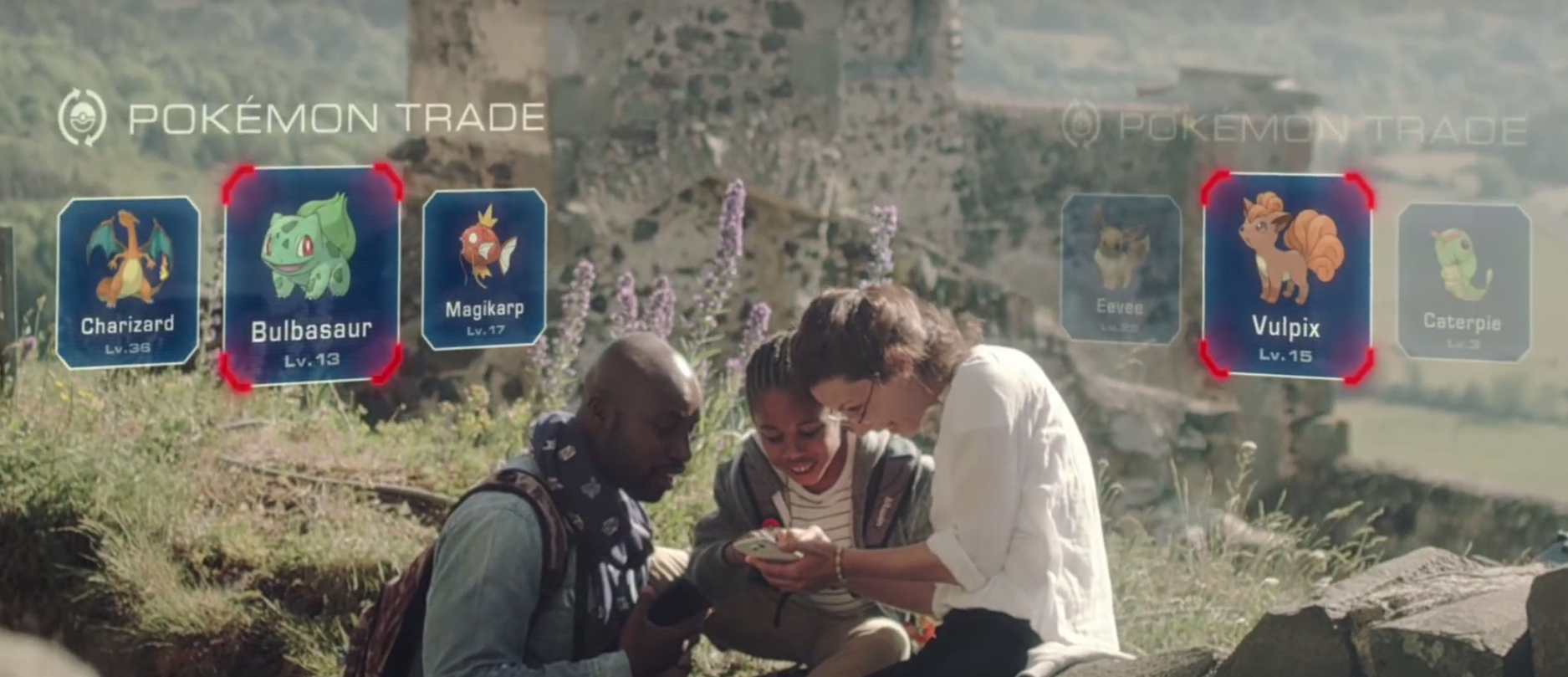
PK Trade

You let your daughter trade a bulbasaur for a vulpix?! WHAT WERE YOU THINKING?!

Super Mario Maker seems odd to me, and more than a little short-sighted. If you stick every mechanic, environment and sprite from the series in there, it stands to reason that just about every map possible is going to get made, in the old “infinite chimps at infinite typewriters” theory that the internet has spent the last two decades confirming.

So here’s the problem – why would anybody buy the inevitable upcoming generic Mario platformers when this game is producing community levels constantly? Yes, there’s going to be a bunch of awful maps made by brain-damaged toddlers that are basically straight lines with goombas marching down them, but if there’s leaderboards involved then sooner or later the good ones are going to rise to the top, like… Actually, a bunch of analogies come to mind for that, but none of them are particularly wholesome, so we’ll let it go.

And remember, people will almost certainly remake levels from other games, including any future ones. I think this is one of those things that’s bad for Nintendo, but good for us, as they’ll be forced to think of new and substantial mechanics that SMM doesn’t have, in order to have the edge on a game that they themselves designed.

Oops, bet that’ll come as a shock! Of course, they could always start pulling the recreations off the internet and banning those that just ape the old classics, but that won’t endear them to anyone and they’ll lose a large portion of the audience by doing that.

Fortunately, this strange decision – and all the others – can be explained handily by three simple words. Repeat after me, children, because they’re going to keep coming up: Nintendo is weird.

And it’s not like they only just started acting weird recently. I always thought that if any major corporation was run by space aliens, it’s Nintendo, with their psychedelic IP and banana-studying upper echelons.

Not that this has always been a bad thing, and it often used to work to their advantage. Creative out-of-the-box thinking was what allowed them to carve a substantial niche in the early days of the NES in the 1980s, they basically healed the wounds from the 1983 games crash on their own and brought console gaming back to the public eye in the West, so top marks there.

But there’s also always been a sense of detachment from reality, combined with terrifying quantities of “refusing-to-accept-the-obvious” in recent years. Sure, they’re not performing the legitimate actions of self-harm that Konami is so gleefully inacting, but lately they keep getting things wrong when it comes to major decisions. The obvious example is the Wii U, that dead weight which they’ve basically jettisoned to keep themselves afloat in favour of the mysterious NX. Nobody wants to make games for it, the Wii Pad is an absolute joke, and it’s been behind the Xbox One and PS4 for as long as people can remember.
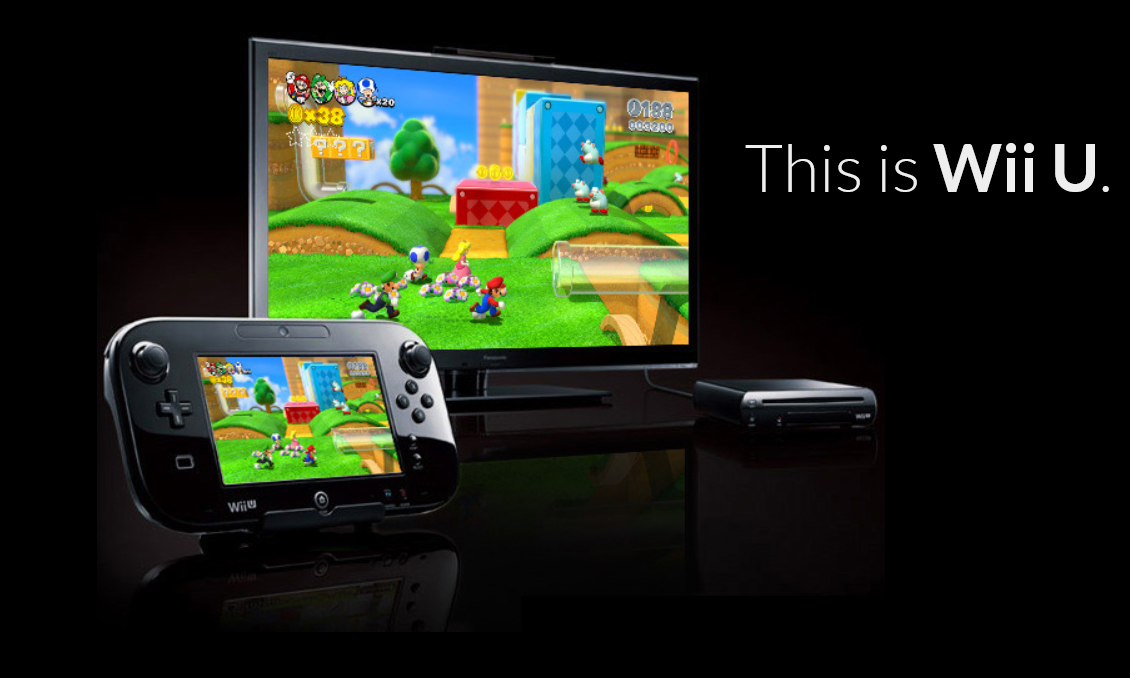
Wii U ad

Indeed it is. It seems Nintendo were worried that having a website and a massive ad campaign dedicated to it might not be clear enough.

That said, you can still see the semi-logic that went into making this stupid thing. A series of half-formed ideas that don’t quite get what would make it good, and that’s what makes it so infuriating. People like tablet devices and quirky controllers? Make the controller a quirky tablet! The original Wii was popular? Take the user interface from that! People enjoyed the DS, a device with two screens above each other? Give the Wii U two screens! How could people hate the result? I’m sure we won’t be edging away from this thing like it’s a ticking bomb in just three years.

Speaking of the DS, Nintendo still takes the lead when it comes to the handheld market, but basically by virtue of being the only people still in it, aside from Sony’s half-hearted attempts. And even then, things are going poorly. Admittedly, the 3DS had a spirited release when it turned out the new feature was melting the eyeballs of children who played it, but even then the prospect of making games for it was daunting when Nintendo were demanding that developers use every function going, including the horrible ones. How many times do we need to go over this, Nintendo? Don’t make a game use the touchscreen or the microphone if it won’t make it better, damn it! And while we’re on this topic, please make the 3DS a shape that doesn’t cause havoc on my finger bones! Until I get a girlfriend or a fresh watermelon, I need them.

But again, we see the attempts at human thought, coming close but not getting close enough. 3D is popular in the cinema? Here we go! Folks like multiple features and functions? Bam! Is the Wii interface still hanging around? In it goes! Don’t worry, any soup tastes good if you put enough in it! Mmm, tastes like falling profits!

And why? Because Nintendo is weird, remember? And not only is it weird, it’s pretty childish about the way it does things. When a kid hears a joke or draws a picture that makes people praise him, you’ll see what he does – the same thing. Over and over and over. The same joke, the same drawing, and Nintendo operates in the exact same way. Mario, Zelda, Pokemon, Metroid. Mario, Zelda, Pokemon, Metroid. All work and no play makes Jack a – sorry, that got away from me.

The point is that they put on the broken record when they don’t have any other tunes to play, and recently they’ve been doing that a lot. New Super Mario Bros. 2 was basically the standard Mario template, unchanged, and when it comes to Zelda, a series that rarely took any massive leaps forward anyway, they’ve actually given up all together and started re-releasing the older games.

But in the last year or so they’ve begun to realise that running in circles might not be enough any more, but the problem is that when you’ve had your gaze turned inwards for two decades, it becomes very hard to rotate your eyeballs outwards again. The best attempt they’ve done to modernise is Splatoon, a third-person shooter with an emphasis on online multiplayer, which is so out of character for them that it would be like Batman being in a good mood, or Mel Gibson showing some iota of religious and ethnic tolerance.

Splatoon teams

God, look at those prats. It’s like a Mad Max tribe forged in the remains of an anime convention.

And you know what? By all accounts Splatoon is pretty good, so kudos there. But now that their obligation is done, they’re going straight back to the broken record again. Look at E3, where they announced no new IP or ideas whatsoever. Zelda, Metroid, Mario, Star Fox, Animal Crossing. All old, tired concepts, and everybody thought so, if the general response from the internet is anything to go by. It looked underwhelming, it looked boring, it looked low effort.

The really revealing tell is the new Smash Bros line-up, in which you could see them desperately scraping the bottom of the barrel for new characters to put in, considering they haven’t made many in the six years since the last Smash Bros. Out of forty-nine playable mooks, only sixteen of them are newcomers to the series, and many are just older characters invented decades ago. Some obscure Pokemon, Bowser Jr, Pac-Man, the second-string characters from games like Kid Icarus and Punch-Out, and to top it off, the Wii Fit Trainer and a trio of Mii designs! Wow, I hope I’m wearing reinforced shoes, because I think this is going to blow my socks off!

But what about the general strategy? The tragic death of their President Saturo Iwata earlier this year may have huge consequences for the company, though his legacy was not without its issues. That said, whilst we can accuse Nintendo of cynicism from time to time, Iwata seemed startlingly genuine and though he sometimes made what some consider mistakes, it never seemed to be from malice or greed, only a desire for the best games available. I can honestly say that the industry is a slightly lesser one without him in it.

But now that Kimishima has his job, things could be changing quite rapidly in the near future. I don’t think it’s a coincidence that Pokemon: Go has just been announced in the months following Iwata’s death, as he was famously against the mobile market until just last year. And even then he seemed wary and cautious about compromising Nintendo’s image by putting stuff on the Apple Store, despite the fact that the vast majority of critics, fans and even figures within the company were concerned about Nintendo being left behind.

Bananiwata

RIP, Mr. Iwata. You’re watching bananas in heaven now.

But now that he’s gone, I bet all restraints are off. Oh, they’ll start slow, because they don’t want to look disrespectful to their former leader, but within five years they’ll be uploading Super Mario Bros 3 to the App Store and selling replica SNES controllers to plug into your iPhone. And you know what? That’s probably a smart move, because otherwise it’s going to be a losing battle. After all, anybody with an Android phone or a PC just needs to download an emulator and they have what is basically the entire Nintendo library.

But Nintendo have backed themselves into a corner by taking so long to acknowledge the mobile market, because by not putting games on phones they’re losing money. However, they also can’t commit to mobiles right now because it will kill the 3DS, at least if they do it properly like everybody wants them to. After all, why buy a whole new chunky bit of hardware to play Majora’s Mask, when you can download it onto something sleeker that you’re bringing with you anyway? And then, if the 3DS is gone, it will pretty much end the dedicated handheld gaming market, because the only other competitor is the Vita and not even Sony cares about that.

I made a joke about Nintendo being run by space aliens earlier, but that’s not their biggest issue. Being out-there and otherworldly, that’s what gets you noticed, that’s what makes you look like a pioneer, and even if you fail it’s for the best reasons.

But most major publishers have what I like to think of as an attitude. When viewed from a little further back, the sum of the whole seems to emit a certain ambience and a distinct feeling to those dealing with them. For example, EA broadcasts a cold lack of respect for customers and other businesses. Valve comes across as quiet and introverted. Bethesda gives the impression of being like an excitable geek, furiously writing for years at a time before shouting to the rooftops about what they’ve made.

But Nintendo? It seems to me that recently they’ve been defined by one characteristic – denial. They fight every sensible suggestion, they refuse to significantly update their older IP or come up with many new ones, they won’t accept that they’re going to have to change if they want to stay relevant. Yes, they’re a charming embodiment of an older time in gaming, but there’s only so much goodwill that buys you and Nintendo has been struggling for a while now as more progressive companies move past it. Without adaptation, without evolution, the company is going to start looking even more dated than it already does. It’s spent the last few years in a comparative nosedive after the flash in the pan that was the Wii, and it doesn’t seem to want to take any of the steps that would be necessary in order to save it.

And yet, I don’t dislike them for that. There’s a strange sense of stubborn nobility to that behaviour, holding firmly onto values from a previous era and refusing to let them go, but they need to recognise that it can only hurt them now. It’s antiquated, it’s pointless, it makes them look… Well, you know the answer to that one.
A KICKSTARTER CAROL

You know what? I don’t trust Kickstarter. Not one jot. I’d feel more positive about a shark in a paddling pool filled with children. Perhaps it’s how cautious I am with my money, but there’s something suspect about a system that says “cough up cash now and maybe we’ll get round to creating a product vaguely similar to the one we mentioned later.” Call me cynical – and I’m sure you do, if you’ve read this site before- but that seems a little shifty.

However, it’s clearly taken some people, because Shenmue 3 recently made enough money to drown a small city, and it’s not like Sony, a major international corporation that’s leading the global console race and has hands in just about every technological aspect of society, would be able to afford a few million to fund a game that’s basically guaranteed to be a success. No, we had to cough up for that one, I’m afraid.

The problem was that I used to be in favour of crowd-funding, and to a certain extent I still am. I like the theory, I guess would be the best way of explaining it. Conceptually it makes sense, but in reality it keeps letting us down, and not in any small ways. You can tell how broken this system is by looking at a trio of games I’ve come to think of as The Ghosts Of Kickstarter Past, Present, and Future.

The Ghost of Kickstarter Past is the least offensive of the three, Tim Schafer’s and Double Fine’s adventure game Broken Age (released in two halves about a year apart), the project that proved that having an interlude might work for theatre but it don’t hold well with PC gaming.

Broken Age was one of the first real gaming successes on Kickstarter, and like Shenmue 3, it came out of the initial funding process with a startling amount of cash. After asking for four hundred grand, Schafer stumbled away with three and a half million clogging his piggy bank, and even at the time I could suspect what was going to happen. Because let’s be honest about one thing here – it will never cost that much to make a point-and-click adventure game, not unless you’re hiring the cast of the Avengers for the voices and building functional starships for the motion capture.

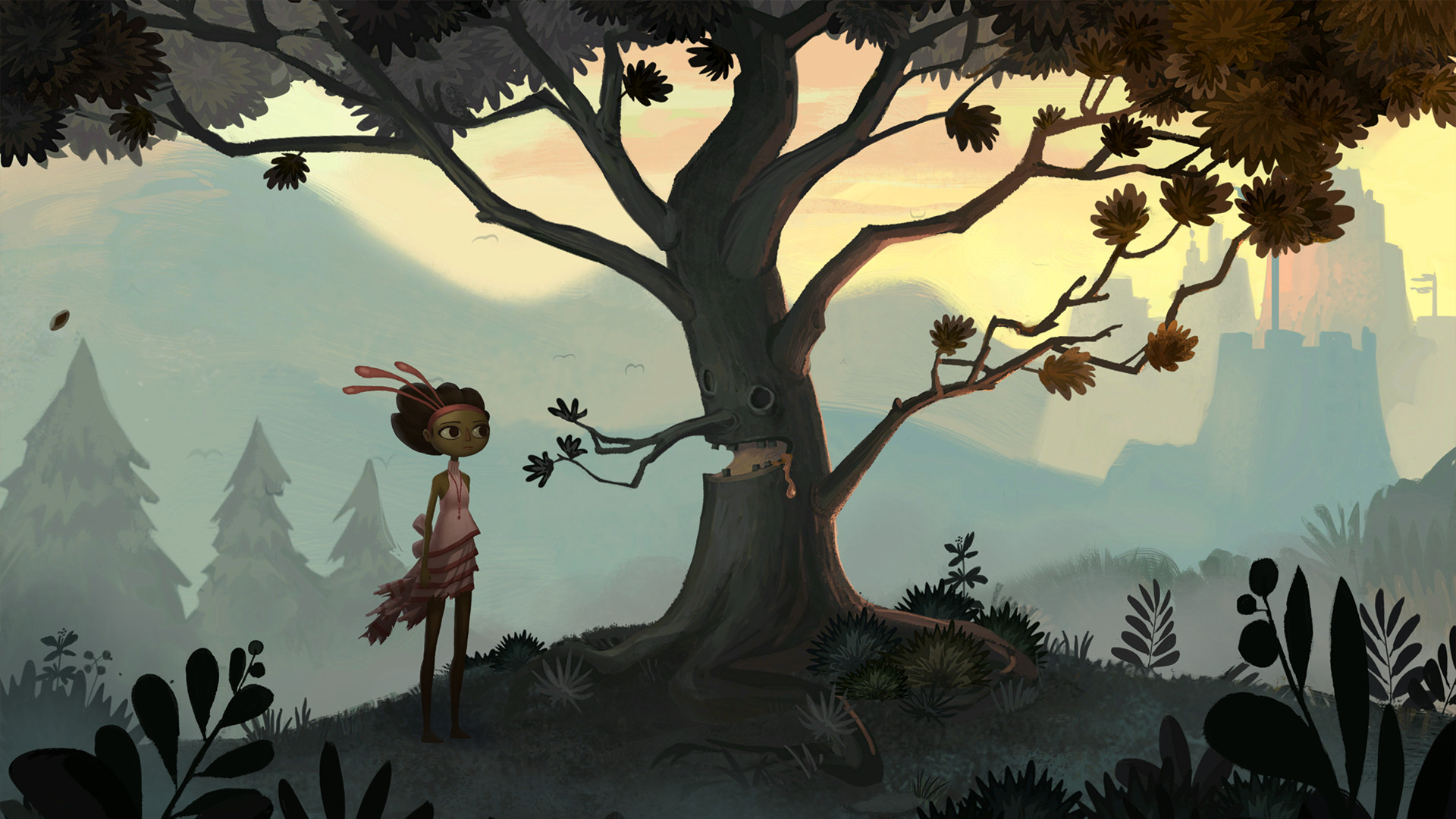
BA Tree

There’s a “got wood” joke here, but I’m not going to acknowledge it until someone else does.

Something tells me that before it got so much funding, Double Fine was planning on a single release, but after getting loaded like this they must have felt obliged to do more, and that was the problem. The initial vision was being hampered by public demand, and they were duty-bound to listen. Tim Schafer might have been planning a short and powerful game, but short games don’t cost over three million, so suddenly they’re having to change it, stretch it, and god, it shows. So much of the second half seems dull or made-up at the last moment, like they weren’t planning on making it at all.

But what was the alternative? If they made a short game, people would’ve been annoyed and wanted to know where all that money had gone, and there’s no system in place to give a certain percentage of it back, at least not that I know of. The ideal situation would have been a limit to how much could have been donated, but the day that a company turns down three million is the day that Rob Liefeld looks at a character design and thinks “that’s probably enough belt pouches.”

Next we have the Ghost of Kickstarter Present. It’s the worst of the three, and also the one most deserving of being described as an ethereal being with no basis in reality. I’m referring to the infamous case of Godus, the hypothetical game suggested by Peter Molyneux and 22 Cans.

This one is so messy that it’s probably deserving of an article on its own, but I’ll try to condense it down and be brief. Peter Molyneux was a game director working for Lionhead, and was the guy responsible for the Fable games. After Fable: The Journey, he went on to help form a developer company called 22 Cans, and immediately opened with a new Kickstarter campaign for Godus, a PC god-game in which you torment small people from above and occasionally help them out if you’re bored, that sort of thing.

Godus inspire

Well, this is awkward.

Godus got the money it needed and then some. That’s not to say it exploded like Broken Age did, but it held out a begging cup for four hundred and fifty thousand pounds, and not only succeeded but got an extra seventy-five grand on top of that, so I think we can call it a win.

Or at least, it should’ve been a win. Funding for Godus ended in December 2012, and for a while everything was quiet while the backers waited for it to show up. In May the next year, a horribly glitchy Alpha version of the game was put out for testing, and everybody promptly shat on it from a very great height. Not that an Alpha build should be perfect, the whole point is that it’s a work in progress, but huge sections of the game were missing and it was so technically incomplete as to be basically unplayable. It wasn’t a skeleton of a game waiting to be fleshed out, it was missing both femurs and couldn’t stand up without suffering multiple fractures.

Then came an even longer wait with only minimal updates from 22 Cans, until in August of 2014 when they put out a mobile version of the game, something that nobody had wanted but was coming out anyway on our dime, so suck it up. It bore shockingly little resemblance to the original concept, people got angry, key designers started quitting 22 Cans, and the result was that a boat that was already unstable began to rock very violently indeed. The reputation of the developers was irreversibly damaged and Molyneux was ordered not to speak to the public anymore.

Today, Godus does still exist on Steam Early Access, but it’s buggy, unfinished and ignored, like a sick puppy left in an alleyway. Whole features like multiplayer are missing, and the end result is that thousands of backers have been asking for their money back, which seems to me to be very reasonable.

I find it hard to believe that there’s any complexity to this issue. If you’re taking money from people in order to make a product, it’s your duty to make that product, isn’t it? Nobody tricked Mr. Molyneux, nobody forced him to make claims about the game that he couldn’t live up to, and he’s the one who chose how much money was necessary.

Now, if he’d tried to make it, failed, and returned the cash, then that would be different. A designer who is famous for over-promising does an Icarus-style flop in front of everybody and has to hand back what’s left of his wings. That would be disappointing, but not actively outrageous. But what we have now is a mobile game that nobody asked for and a non-functional design on Steam, neither of which have the larger features that were part of the reason that people were funding it.

Godus water

“Don’t be a fool Bobby, you’ll never make it! We’ll just have to live on this island for the rest of our lives.”

Maybe the PC version will be fixed and even upgraded to the full package, but that doesn’t excuse the fact that this has taken three years, when 22 Cans initially promised it to be finished in seven months. It doesn’t excuse the fact that certain factors about the business plan have been changed, such as taking on a publisher when it was initially claimed that no such thing would happen. It doesn’t excuse the fact that Bryan Henderson, a young man who won the “God Of Gods” award they had going and was therefore entitled to a certain cut of the profits, has been basically ignored from the start and wasn’t given a bean. Guess his reward isn’t one of those things that’s going to make it into the final product, so better luck next time.

The strange thing is that nothing happened about all this. The word “fraud” is spoken in hushed tones around this incident, and I don’t know enough about the legality of Kickstarter to say whether that’s a valid accusation or not, but I think we can agree that morally there’s something very off about all this. No real effort was made to undo the errors or even just to give a genuine show of apology. There’s been talk about the fact that they might just abandon Godus altogether and start on a new game, and Peter Molyneux has admitted in an interview there’s still some Kickstarter money left, so to that I respond thus – GIVE IT BACK. You weren’t given that cash to make some unrelated game, it was donated so you could make Godus, and if you’re not going to make it then you should give it back. That’s just the way it works. Or at least, that should be the way it works, but nothing’s been done to reimburse the public and it doesn’t seem likely at this point. Most of the donations are gone, and it seems 22 Cans has arbitrarily decided it’s done enough to validate the claims.

I should probably move onto the next example before I get too angry, because I can feel my blood pressure rising and lord knows with the amount of red meat I eat, I don’t need that as well, though I doubt the next example is going to do much to calm me down. The reason is that the final spectre is the Ghost (or perhaps Ghosts) of Kickstarter Future, and the title is richly deserved, because this is a story all about looking ahead rather than doing what it needed to be done at that moment.

Our story begins in 2013, where Keiji Inafune (one of the main figures behind the legendary game series Mega Man), suddenly popped out of nowhere. He’d left Capcom to start his own company called Comcept, and like 22 Cans, he started by putting a new idea on Kickstarter named Mighty No. 9, a spiritual successor to the older classic for which he was rightly famous. Announced at PAX with the goal of making $900,000, by the end of the month it had made over four million and had become one of the most successful crowd-funding campaigns in history.

Everybody was very excited, and sat down to wait for it. And wait. And wait again. Whilst progress was evident, it was taking quite a long time, and then, just to rub our noses in it, two additional crowd-funding campaigns were started up in 2014, one for a DLC pack and another for a bunch of additional extras, including an English voiceover. Hmm, that seems a little suspect. You’re asking for more money before the game is out? Why wasn’t this part of the original campaign, and why can’t you afford it, considering you made over four times what you needed? Alright, fine. We’ll let it go for now, as long as you don’t ask for more.

MN9 Enemy design

It seems that one of the enemies you fight in Mighty No. 9 is an aggressive wall clock. Who knew?

Except that they did. In July 2015 Comcept started a new campaign for a game called Red Ash: The Indelible Legend. Even from the start it was problematic, as the game had been poorly explained. Is this linked to Mighty No. 9? Which consoles is it coming out on? And why on earth is there a second crowd-funding effort on a different page for a “Red Ash” anime show?

Then the confusion turned to anger. Hold on, people said, why are you making this at all? Why aren’t you finishing the original game and using the profits from that to fund this new one? Why are you asking for another $800,000 before you’ve proven the first investment was justified? Unsurprisingly, this new campaign failed to meet its goals, making just over half a million before it ran out of time and became just another hypothetical idea.

What didn’t help was that Comcept were treating the public with a very obvious lack of respect, talking about how it was so important that they met the stretch goals… Whereupon Comcept would get around to deciding what those stretch goals were. No, really. They wouldn’t talk about what you’d get for putting in more money, only assured you that you’d regret doing otherwise. The exact words were thus:

“The Kickstarter campaign is going 100% towards more content! Consider your pledge a contribution to stretch goals from here on out.

Exactly what are those stretch goals? We’re sorry to say that will have to wait a little while longer! Like we said, we’re very busy with many behind-the-scenes things over here, and we apologize if you feel left in the dark. As you can see, the things we have brewing that are keeping us occupied are BIG, and all for the purpose of getting you RED ASH in its biggest, bestest form.”

There were two implications here, the first one being “all we need to do is snap our fingers at this point and you’ll pay up. We don’t even need to say what we’re making, we know you’ll fund it for us anyway.” The second one was more insidious, more subtle. Look at the last sentence and what they mention – “Red Ash in its biggest, bestest form.”

The suggestion is unavoidable. Anything other than the maximum is sub-standard, it’s not what it could be. And surely you don’t want to miss out on the best version of the game you can get, otherwise it would be… Well, worse.

This tactic has been used for a long time and is dangerously effective, it’s the same reason that we feel the urge to pre-order for the content bonuses. Nobody likes to think that they’re missing out, that they’re getting a product that is anything less than perfect, but we know that we are. It takes a great deal of self-control to say “no, I’ll stick with the inferior version, thanks,” and a lot of people would rather pay the penalty and get the best version of the game that’s going.

The end result is that Red Ash has been torpedoed, and unless the company uses the profits from Mighty No. 9 to make it, it won’t exist. And why? Because they got greedy. One of the company members has claimed that large sections of the team were done and they needed a new project, but they must have known how it would look. Their desperation for cash was so obvious, they didn’t even wait to think up stretch goal incentives, assuming that the public would be gullible enough just to smilingly hand over their hard-earned money.

The fact of the matter is that these examples prove that the system needs to change. Some might say that it’s the people, not Kickstarter itself, but that’s kind of the point – Kickstarter is a system used by people, and it’s revealed itself to be full of holes. You need a method of crowd-funding that can’t be exploited, because otherwise people will exploit it, they’ll get carried away and make stupid, short-term decisions that benefit them and nobody else. It’s not good enough to say that not the site’s fault, because people are a key part of it. You might as well say “Seaworld would be completely ethical if Shamu would stop moping around and enjoy herself for once.”

The key issue here seems to be oversight and regulation. In their defence, Kickstarter has recognised this and is making an effort to be more hands-on, but it’s going to need a lot more of this sort of thing before people feel safe, because for the last few years the site has basically operated on the Honour System, and when this kind of money is going around, that just isn’t good enough.

There needs to be more awareness of how excess money can change demands, there needs to be a legally binding contract to ensure that those asking for funding have to live up to their side of the bargain, and there needs to be the understanding that you are beholden to those who have invested in you, just like in any other business. You can’t just cut and run, or produce a semi-functional product and call it a day.

Chivalry arm

See what we can achieve when we try? …Um, It’s more about the principle than the actual image.

And again, I like the idea of crowd-funding in theory. If a new developer or even just an independent designer working in his bedroom has an idea, and neither have the income for it, then Kickstarter can be what makes the difference, but the system by which it operates needs to be changed. At its best, Kickstarter provides awesome projects like the Shadowrun games, FTL: Faster Than Light, Chivalry, and of course, Elite: Dangerous. Examples like these are enough to prove that we should keep trying to make this work.

Of course, you could always donate generously to a different cause, like the Joel Franey Fund, which will keep me angrily shouting at the screen for years to come. And remember, we have stretch goals! If you donate enough, then I’ll be able to afford a pizza so large that I will literally stretch the jeans I’m wearing. How could you turn that down?

MAD MAX: THE VIDEO GAME REVIEW – “SANDBOX? MORE LIKE BLANDBOX”

It’s an accepted lesson in life that you don’t gain much by hanging out with somebody who is generally better than you. If you’re going to sell yourself on looks, don’t eat dinner with Brad Pitt. If you’re going to brag about how good an athlete you are, avoid going to the theatre with Usain Bolt. And if you’re going to make a video game inextricably tied to a movie – a movie that was one of the best things to be made this year – you’d better be sure that you know what you’re doing.

Mad Max is one of those franchises that has had a huge hand in inspiring other video games, such as Fallout, Rage and especially Borderlands, but never really had a direct presence until now, using the recent success of Mad Max: Fury Road as a jumping point to push this game into the public eye.

By the way, get used to hearing about Fury Road in this review, because it set a benchmark in quality that I’m going to point at every time I can. Some might say I shouldn’t judge a game based on how it related to a different creation, in a different medium, but those people are more deluded than a man with a fistful of lottery tickets. This game wouldn’t exist if not for that film, it constantly brings it up in an attempt to validate itself through association and it’s selling itself on the goodwill that George Miller’s recent blockbuster created. The game is basically hanging off the side of the movie like a remora.

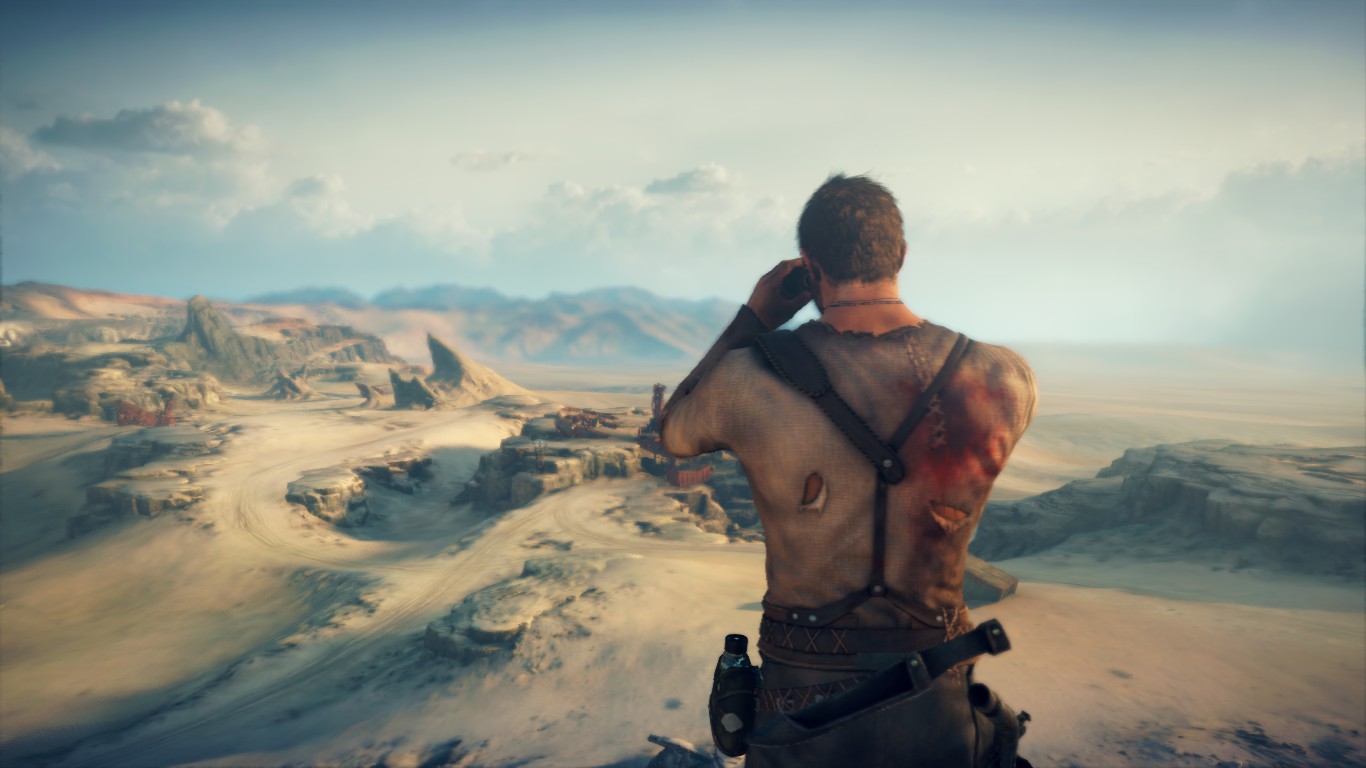
Max with binoculars

Yep, that’s sand.

Obviously, the problem is that Mad Max: The Video Game is nowhere near as good as Fury Road. It hasn’t really done itself a solid by drawing attention to the comparison, because it’s not a favourable one. For god’s sake, it’s so unwilling to think for itself that it was advertised as “Mad Max: The Video Game.” When was the last time you heard of a game with that subtitle this side of 1990? The most recent one I can think of is the infamous Rambo: The Video Game, and that was like being punched in the gut by Sylvester Stallone for several hours.

Which isn’t to say that Mad Max is bad. In fact, it falls just on the positive side of average for what it’s worth, but that’s not worth much. I don’t regret buying it, but I don’t feel the need to go out of my way for it either, that sort of thing.

What we’re looking at here is a sort of driving, punching, resource-collecting free-roam game in a literal sandbox, kind of a cross between Sleeping Dogs and Just Cause 2. You play as Max Rockatansky (no, really), a lone survivor in a dusty, post-apocalyptic Australia. At least, I think it’s meant to be Australia. The actor playing Max is a genuine Aussie, apparently, but he sounded to me more like an American trying to gargle a mouthful of koala pee and shredded Fosters cans.

The game starts off with Max having his car stolen by the local warlord as he drives across the wasteland, whereupon he’s beaten and thrown into the dunes with absolutely nothing and must claw back his meagre needs from an uncaring and hostile world in which – no, wait, it’s alright. He’s immediately found by a deformed mechanic prodigy named Chumbucket, who has a safe base of operations, a set of highly useful practical skills, knows the area like the back of his hand, and is also brain-damaged enough to believe that Max is some sort of deity for whom he needs to build the best car ever.

And good thing that all this was here, I was almost expecting there to be some effort put in from the player. Mind you, I do have to congratulate the game for being the first one I’ve ever seen to have a button solely for “make my twisted, brainwashed, hunchbacked slave fix my car whenever I feel like it.” You know what button that is? E! It was so intrinsic to the gameplay to be able to order the disabled guy around, they actually gave that function to one of the vowel keys, and not one of the crap ones like O, or I.

So it’s not a struggle to get from nothing to something. The difficulty comes into driving the sodding cars, because the physics are lurchy as hell and vehicles feel about two tons heavier than they should. They don’t drift, they break easily no matter how much armour I put on them, and all the fun extras you can add to them, like flamethrowers, grenade launchers and the annoyingly necessary harpoon upgrade, they’re all locked off until you do a bunch of side missions, or just spend your time knocking over student art projects.

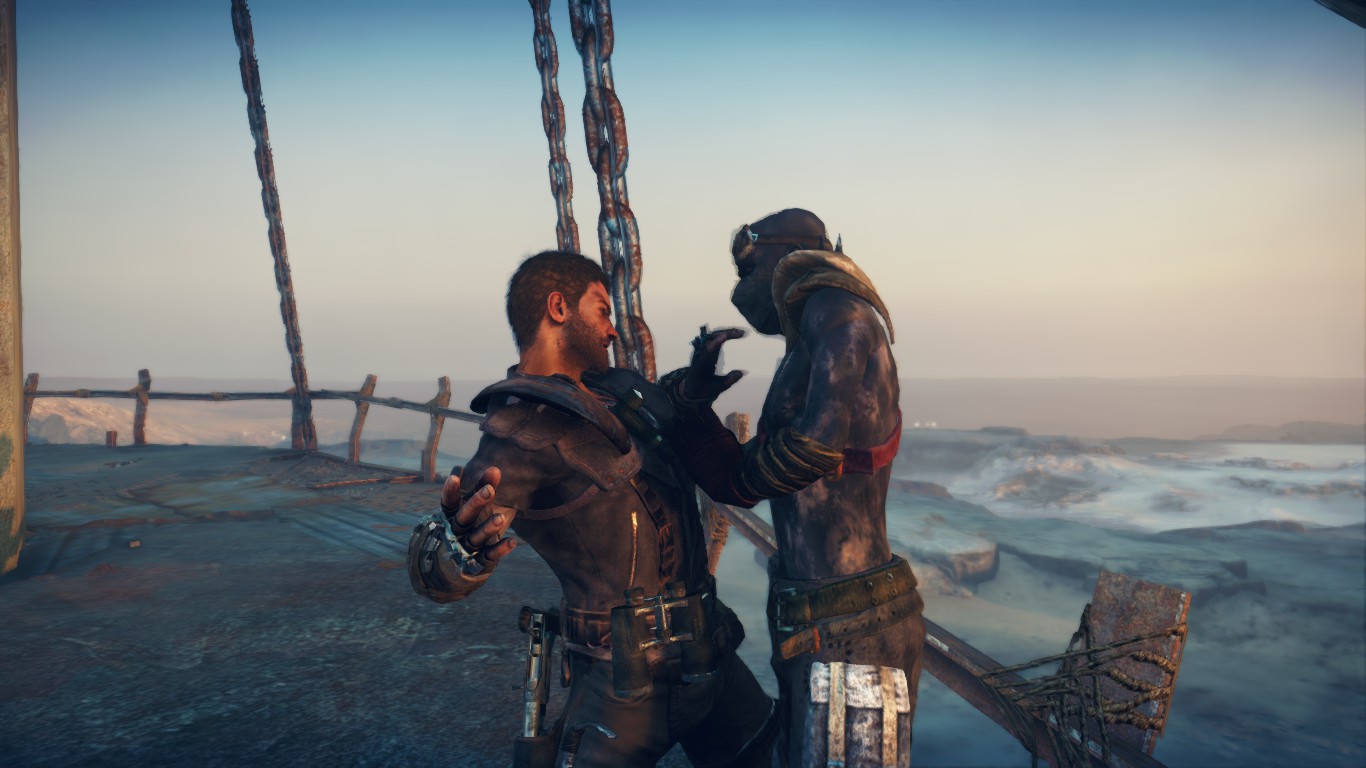
Max grappled

“Alright, but no tongue!”

See, the wasteland is divide into sections, each one owned by a settlement, and they’re all under the heel of the nutjob who committed grand theft auto on you at the start. Therefore you can earn goodwill by roaming their respective areas, pulling down the scarecrows he’s made, killing snipers he’s sprinkled over the place strategically (pretty smart for a guy who wears a fake rhino horn as a codpiece) and blowing up the conveys that go around doing… Well, we’re not sure yet, but they need exploding, right?

The other way in which you can lower his influence is by clearing out bases of thugs and destroying his oil supply, and that’s probably where the game is at its strongest. By the way, don’t be fooled into thinking this is a shooter, for while there is a shotgun you can use, there’s almost no ammo and it’s more of an instant finishing move for when you desperately need it. For most of the time you’ll be relying upon your fists and the occasional bat with nails in to make it through your foes.

How’s it function? Well, I didn’t make that early Sleeping Dogs comment lightly, because Mad Max uses the kind of melee combat we’ve seen in the Arkham games, Shadow Of Mordor and yes, United Front Games’ recent odyssey of Wei Shen. And this sort of combat needs a name, so I’m calling it a “reaction brawler,” fighting that’s more about keeping an eye on your opponents and cancelling out their attempts to hit you than it is about just tearing through them like an American tourist mistakenly walking through a Japanese paper door.

Luckily for Mad Max, I really like reaction brawlers, but that doesn’t mean I won’t ask for a new take on those mechanics. All the other games I’ve mentioned had their own spin that separated them from the herd. The Arkham series, ostensibly the original creator of the reaction brawler system, was about free-flowing movement and the right tools for job, engaging in a complex game of rock/paper/scissors as each enemy had a specific weakness you had to exploit to defeat them. In Shadow Of Mordor it was based around crowd control – picking off specific targets with the bow, brainwashing others who might be useful, blasting back troublesome enemies to deal with later and terrifying the rest with psychotic finishing moves. Finally, Sleeping Dogs utilised a more combo-based methodology, bringing in heavy and light attacks as well as a variety of different counters and grapples.

But Mad Max doesn’t have any of this. It’s got the basic mechanics, but there’s nothing else there. It’s like the starting template from which the other games all grew, but there’s not a lot added to it in this case, bar a vague emphasis on picking up breakable melee weapons if you see them. It’s still fun, but once you’ve played it a few times you’ve basically seen everything you have to see.

Mind you, the combat can be pretty brutal. Enemies move fast, it’s frequently hard to counter them in time and there’s a fair few attacks that you can’t block and have to roll out of the way. This makes for a pretty jarring barrier to entry, as players will need to have quite a lot of caffeine in them to adjust, but I actually like this. The whole point of this world is that it’s unforgiving, that it’s a struggle to survive. If you could just knock over a settlement with your B.O. it wouldn’t mean much, and it gives it all the more cathartic potential when you increase your stats over the game and can return to entry level missions to break people in half with your massive metal knuckledusters.

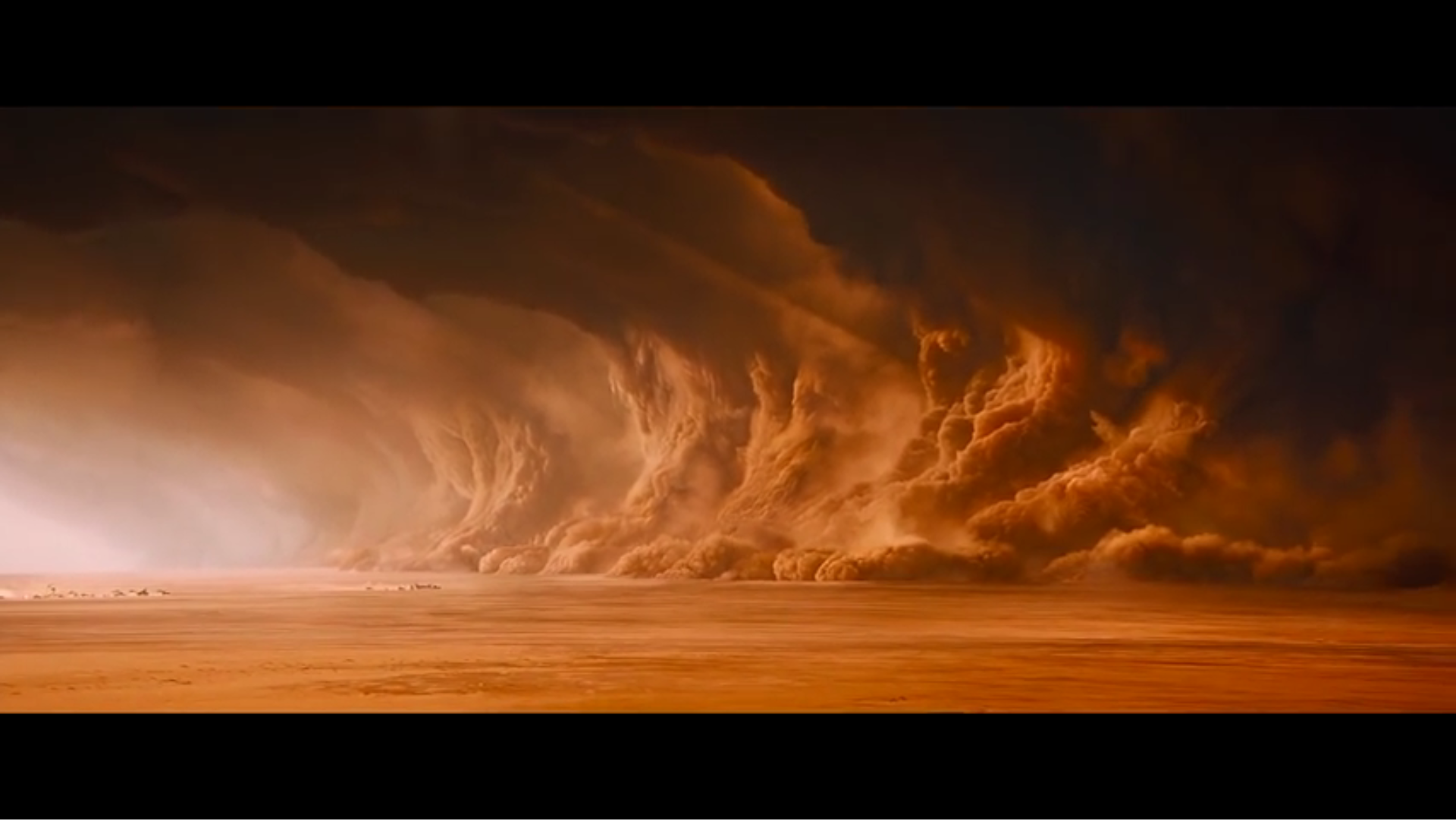
However, psychotic skinny people wearing body paint are not your only threat. Perhaps you remember the moment from Fury Road, in which a lightning-tornado-sandstorm obliterates most of a fleet of super-cars without batting an eyelid, like an angry two-year old set loose on his dad’s model train set? For those of you who didn’t know, it looks like this.

Mad Max storm

Holy shit, that puts Hurricane Katrina to shame! And of course, the video game adopted these destructive typhoons as well. Storms occur randomly in the wasteland as you explore, and you’re given a shockingly brief amount of time to get to a settlement and wait it out. Of course, you could always venture back outside to face them, because the rewards are not insubstantial, though you do run the risk of getting fried by a thunderbolt or hit in the face by a piece of corrugated iron that was was being blown past. The profits to be had are large crates of scrap metal, the game’s primary resource, which are blown through the air and can be secured with your car’s harpoon if you get close enough. Cracking these open will get you far more scrap than any other source in the game, which you’re going to need to upgrade yourself, your car, and basically get around in style. It’s money in all important respects, except that it doesn’t have the Queen’s face imprinted in it.

There are other resources, but there’s not much to them, so don’t get your hopes up for yet another survival simulator. Water just functions as a health-regen item you can carry around, and food has the same purpose, it’s just eaten on the spot rather than stowed away for later. The only other thing you can search for is petrol to fuel your car, but it’s so common that I never ran out. A full tank lasts as long in the game as it would in real life, and every base is overflowing with the stuff, not to mention that you can store an entire spare can of fuel in the back for emergencies. I never needed these spares, though, and found them more useful as makeshift explosives, as you can always stick a burning rag in the top and use it to ruin a warboy’s day.

But this is all fringe stuff. The real nail in the coffin, the real reason why it shouldn’t have sidled up to Fury Road and kept smelling its hair, is the story. Fury Road had an epic plot, combining massive action set-pieces and fascinating absurdity with powerful character arcs, heartfelt emotion and a surprisingly nuanced approach to several philosophical questions about faith, patriarchal values and gender attitudes in society.

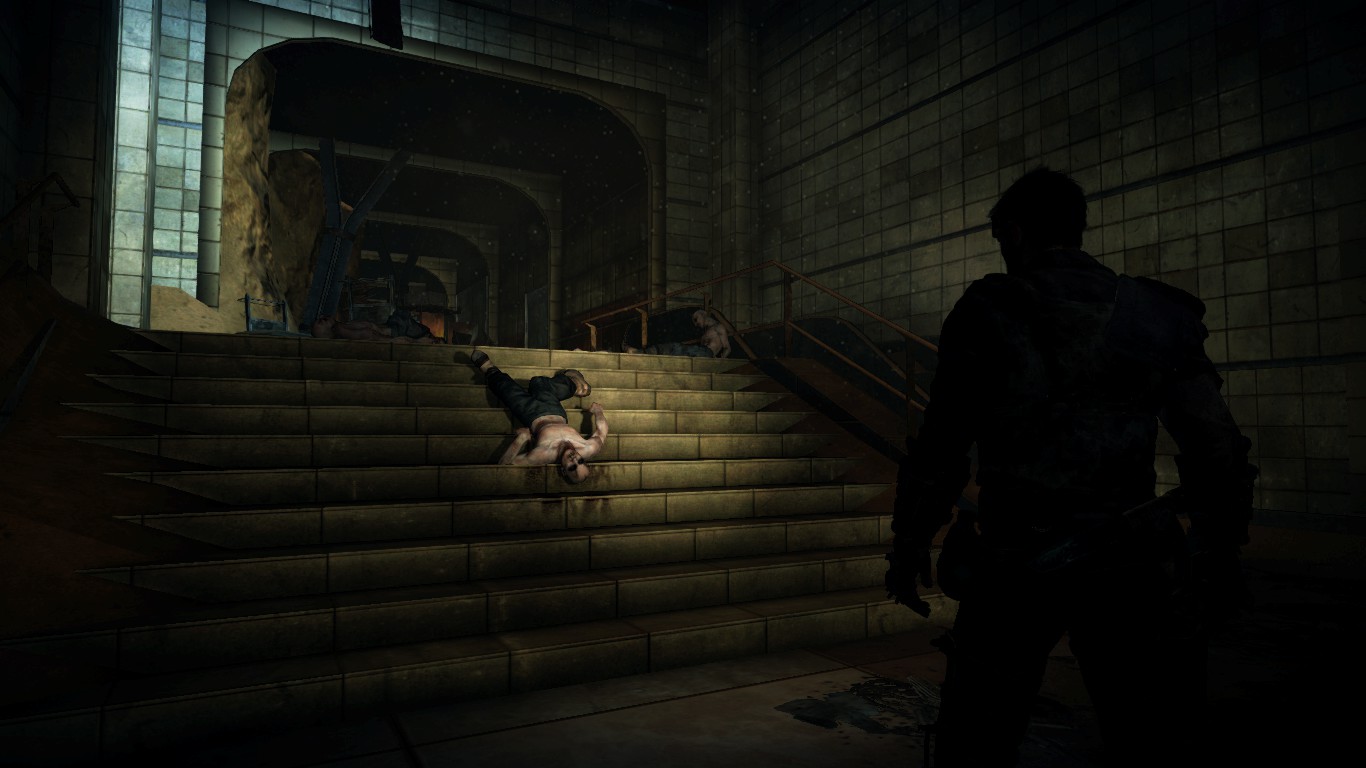
Max vs stairs

Max bears witness to a shopping mall the day after Black Friday…

So which of these did the Mad Max game bring with it? Um… None of them, or at most makes a few vague shrugs towards them. Even the easiest and most iconic part, the Mad Max weirdness, all feels fairly token. Yeah, the cars have spikes on them and the villain is called Scabrous Scrotus, whatever. It’s surreal, but it feels forced, feels unnatural. It’s entry-level oddness, insanity for beginners. I never felt really startled by any of it, which is pretty much a deathblow.

On top of which, what the hell happened to the empowering presentation of females from the film?! The movie included a badass woman warrior who personally lead a dynamic escape to return to a superior matriarchal society, only to decide that what really needed to be done was to go back and conquer the testosterone-driven civilisation they left behind. And, if that wasn’t enough, she had a robot arm and was called Imperator Furiosa! Seriously, how awesome could she be?

Unfortunately, the game doesn’t have her or anything comparably close. The only major female character is an imprisoned prostitute who has to get Max to rescue her daughter, because there’s absolutely no way that somebody without a Y-chromosome could do it herself. Any others? Well, there’s a woman with no legs who needs Max to build her a boat, and a drug-addled lunatic who you then have to murder once she’s done what you needed her to do. Yeah, something feels a bit off about this story.

The weakest flaw is Max himself. The character portrayed in Fury Road was a great deal more sympathetic, as numerous horrible experiences had basically reduced him to a terrified fight-or-flight instinct, albeit one coiled around a sense of stubborn altruism. But the Max in this game is just an arsehole. He’s bad-tempered and aggressive, even going so far as threaten those who are already helping him, which is hardly likely to make him relatable unless they’re marketing this game to loan sharks.

I also don’t get much sense of Max’s motivation. He’s determined to get to somewhere called the Plains Of Silence, but he’s obsessed with the idea that he needs a good car to do that, and for that reason about 85% of the story is Max trying to get hold of a V8 engine, because apparently the V6 he has already just isn’t good enough. And whilst the Plains Of Silence might have held intrigue, his bio in the glossary flat-out tells you from the start that they’re made up in his head, so there’s not much to be had there either. The most development Max gets comes from one poorly-written scene in which you can practically hear the writers straining to make him more human.

Hope

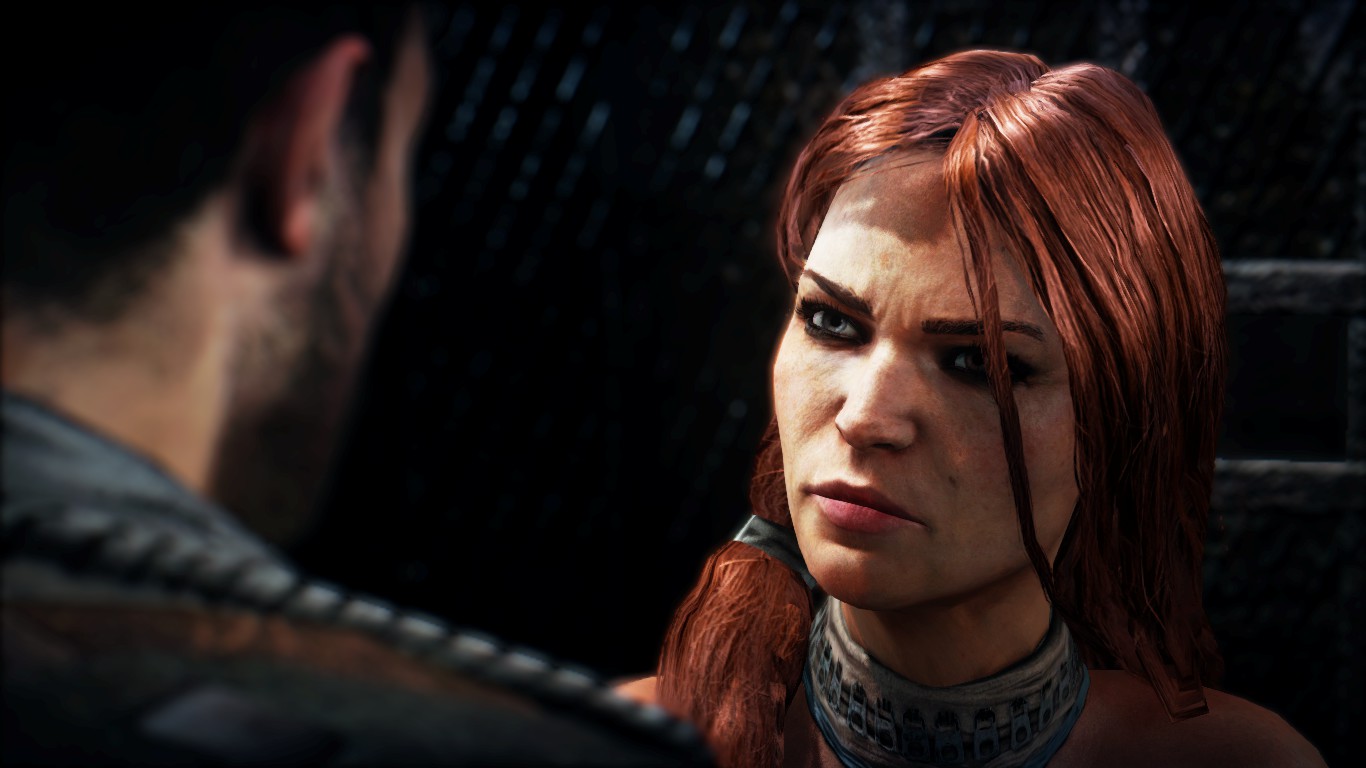
“What do you mean, I’m as good as female representation as this game gets? I’m shit as a character and we all know it!”

But he’s not human. He’s just a vague concept, that of “angry white man with dead loved ones.” That’s a tango we’ve definitely danced before, but like the melee combat earlier, there’s no twist on this or even on him. No charm, no complexity, no reason to follow him except that the camera demands it. And all the bone-crunching finishing moves aren’t going to make me like him any more than the next guy, because a fridge falling off a cliff could accomplish the same thing.

Finally, frustratingly, the ending is a flop. After a disappointing boss fight in which you basically blow up a few vehicles as you’ve been doing before, Max does something truly horrible for no reason, at which point he has to throw spears at a car, and then the game is over. That’s it. Not with a bang, but a whimper, I think is the phrase.

There’s enough good stuff in Mad Max to make it just above average, but most of the game is wasted potential. Story is pathetic, combat isn’t as developed as it should be, driving is clumsy, survival elements are lacking. There’s other stuff, like the fact that climbing is too contextual and the difficulty curve is wonky, but generally Mad Max comes across as lazy. Buy it if you see it for fifteen pounds or less, but don’t feel the need to rush out for it now.


6/10
Good mechanics go undeveloped and the plot is a trial to get through, but there’s enough at the core to make Mad Max basically workable and occasionally enjoyable, though it’s largely unadventurous and won’t stay with you for more than a week.

DARK SOULS II: SCHOLAR OF THE FIRST SIN REVIEW – “GUESS WHO’S BACK?”

Here we go again. I’ve hitched up my pantaloons, pulled on my most heavily-armoured codpiece and have gone venturing forth into a world beset by despair, devastation and strange messages on the ground that say cryptic things like “destroy but hole,” and “try jumping” right next to vast chasms. I tried leaving my own message once in response, but they didn’t have any of the words I was looking for. Clearly Drangleic doesn’t know Urban Dictionary.

Yes, it’s Dark Souls II: Scholar Of The First Sin, a game that was not warmly received by the fans who had already purchased the older, inferior version of the game and weren’t getting a tune-up for free. No skin off my nose, I didn’t have the money for it at the time and got this edition when it was on the Steam Summer Sale. So now I’m playing the successor to the incredible Dark Souls, what’s changed?

To start with, it’s set in a new world called Drangleic, or at least I think it’s a new world. It might just be the original kingdom of Lordran, because I’ve heard that it’s at least a few hundred years since the first game and there’s little elements that harken back to the old days. However, I’ll be bloody cross if that’s the case. I spent so much time desperately trying to fix the world back yonder that it’s annoying to think that nobody took the time to keep it in good nick whilst I was away. See, this is why we can’t have anything nice.

Now I admit I haven’t completed the game yet, because a Dark Souls campaign is traditionally something you don’t so much play, as get married to. It’s a long, tough slog that can go on for days. It’s more of a commitment than amputation, and about twice as painful.

Which isn’t to say I don’t love it. Dark Souls has always brought out the masochist in me and about a million others, with its tightly-designed core game loop and matronly tough-but-fair gameplay. So let’s get to the nub of the matter. Is DSII better than DSI? No. Is it still worth playing? Hell, yes.

I remember feeling a bit confused at the idea of a sequel, honestly. I didn’t know how the gameplay could be much more refined than it was, and basically I was right. Nothing at the core has been changed, it’s all stuff around the edges. Enough to make it feel like a sequel, not a massive expansion pack, but only just.

Of course, considering that I knew how to play already, I decided to get that back-to-basics feel by making a completely different character build to the one I had in the first game. And so began the adventures of Sparkly Bert, the red-headed sorcerer with his staff in one hand (careful) and a sword in the other. No more heavy armour and shields for you, Mr. Franey, and you can put that halberd down while you’re at it. You’re going to be soft and quick, a bit like a raspberry and roughly the same colour when a giant sits on you.

So it’s the classic tale of dodge, block, fail to parry properly, backstab, get mashed into the floor, lather, rinse, repeat; but the formula’s been tweaked, sometimes in good ways and sometimes not. One thing I like is that there’s an easier entry for new players, something that bugged me about the first one. You have to do a few hours of basic combat before you fight a boss, and a comparatively easy one at that.

DSII Giant

It brings a whole new meaning to putting your face on in the morning.

Which isn’t to say that Dark Souls II has no teeth, only that it starts you out on the smaller molars before you get to the larger fangs and as mentioned there are things that help and hinder. For a start, the new hub area, Majula, has any merchants and blacksmiths congregate there once you’ve met them, which makes for a useful central point with which to stock up for when you go out battling, whereas Firelink Shrine was basically useless but for the world’s roundest cleric. Some people might claim this is too much of an advantage (they always do), but you don’t get any chums until you’ve found them in the wild and it’s just about convenience, not difficulty.

I even think it suits the tone somewhat. Majula is the one point in the game that isn’t completely hostile, and it’s not like the NPCs are throwing a big BBQ every night. They’re slumped inside individual buildings, refusing to acknowledge each other like a bunch of distant relatives at a wedding. It’s not even a community, it seems more like a resentful refugee camp. They’re all engaged sullenly in their own activities, forging metal, tending to supplies, studying maps or licking themselves. No, seriously.

Another interesting fact is that you can warp from bonfires at the outset, but I suspect this was only done to cover for the rather odd change to the levelling system. Rather than level up at bonfires as before, you now have to warp back to Majula and chat up the drugged-sounding girl in the green hood who will burble meaninglessly into your ear for a moment before remembering that you want to give your stats a boost. This doesn’t change anything mechanically, it just breaks the flow as you have to warp back home to get a quick pump-up before bamfing back to whatever you were doing previously.

And whilst I’m at it, there are other nitpicks I have. For one thing, enemies you kill enough times don’t respawn when you use a checkpoint, and whilst this is useful in the short-term for getting through tough areas, it means that you can’t grind anywhere for very long, and in a game all about the cycle of “kill baddies to get upgrades to kill baddies better,” putting a cap on how often you can kill enemies means that you can’t get as strong as you’d like or practice moves on weaker enemies indefinitely.

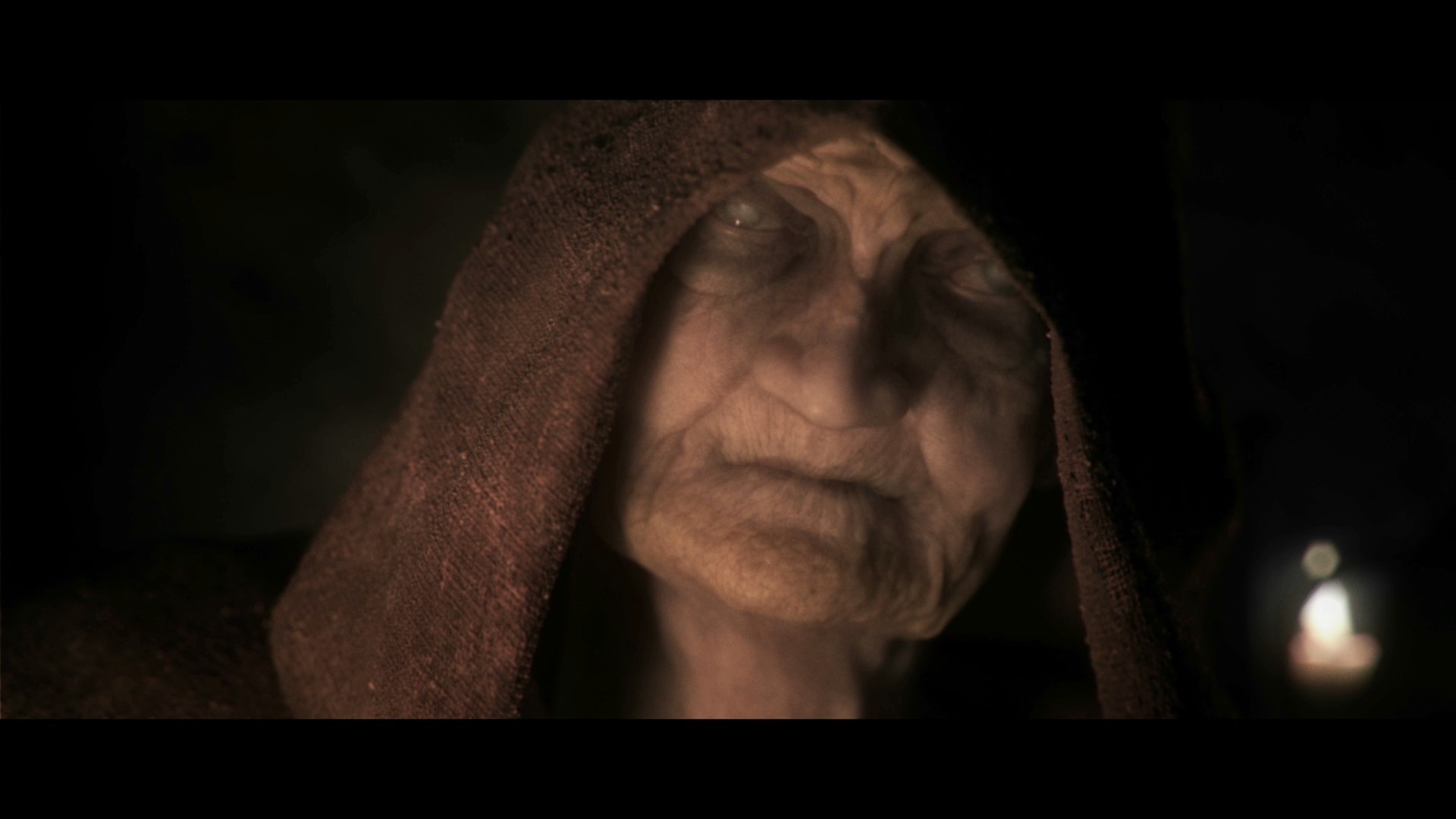
Crone

“I hope you know pyromancy, because these cataracts need burning off fast!”

In fact, grinding comes with a second issue. Now when you die, you lose a bit of your maximum health each time. Get splatted about a dozen times and you’ll suddenly realise you’re at half your max HP. You can reset it by turning human, but the “human effigy” objects for doing so are rare and limited, so suddenly each death comes with a sense of panicky frustration. The beauty of Dark Souls was that your death was consequence-free if you could get back to where you dropped your souls, and now it becomes harder and harder to achieve that every time you get killed. I dread to think what happens when you eventually run out of effigies, you’ll just have to stay depowered and suck it up.

I also feel a bit less enthused over the visual design as a whole. Most of the enemies I’ve fought have just been knights, other hollowed walking around in various styles of protective clothing. Four of the five bosses I’ve killed have basically been blokes in armour and helmets. Come to think of it, one boss was a trio of knights working in tandem, and another was two knights mashed together.

It’s kind of dull, I’ll be honest. Did all the concept artists get the same memo or something? Where is the spark of originality that fuelled the gorgeously drab design of the first installment? What happened to the big pile of bones that shuffled around in a fur coat? Or the demon with centipedes for hands? Or the dragon that was just a big mouth with a few limbs added on, like the evolutionary destination of somebody who shops at Iceland? It feels less creative, less awe-inspiring than the previous Dark Souls. Of course, it’s still miles ahead of most games, but it is a step backward nonetheless.

Right, let’s talk about something I like. Weapon degradation has changed a bit, in that your equipment now has all the physical resistance of a paper plate, but restores itself automatically for free whenever you rest at a bonfire, whereas DSI basically taxed you for wanting to keep using your favoured murdering tools. Now it’s a matter of considered, calculated strikes, keeping an eye on the little bar that symbolises your weapon’s integrity and swapping it out when it finally gives up the ghost.

This might sound irritating, but it inspired something that nothing in the whole Dark Souls series has inspired in me before – experimentation. When my favourite dagger became unusable, I was forced to sheath it to draw a sword and what do you know? It was just as good, if not better.

Cyclops knight

Wow, Scott Summers took the death of Phoenix pretty badly.

I like that it makes you try other tools in your kitbag, because otherwise I wouldn’t have left my comfort circle. The issue is that because the stats in Dark Souls II don’t feel that they have to explain themselves to the likes of you, it means that players feel reluctant to try anything they don’t already know, especially with death now having real consequences. The series design has always squashed trial-and-error gameplay because you need to be using something that is guaranteed to work, and by the halfway point in the game you’ve got a stylised build for your character and you can’t use anything aside from what you’ve been training with.

But now there’s a little more of this “make do with what you’ve got in a dangerous situation” angle, I realise I quite like it. Dark Souls was always about making do with what you had, and nothing makes a player wet themselves like taking away that small allowance right when they need it most. Besides, you never have to use your second-tier stabbers for very long, so it’s never massively aggravating. There’s not as much of a gap between bonfires this time round, you see, so you tend to fight more densely packed clusters of enemies for shorter amounts of time.

However, I don’t think that was a conscious design choice, more a necessity when they saw the environments they were working with. Dark Souls II, by all accounts, seems… Smaller. In every sense of the word. There’s nowhere with the same feeling of scale as somewhere like Blighttown or Anor Londo, you don’t spend much time in any one place before you’ve left it and the pathways loop back on themselves quickly enough that it doesn’t have that satisfying feeling it did before, when you’d walk fifty miles though eighty terrains and finally come full circle to the beginning once again.

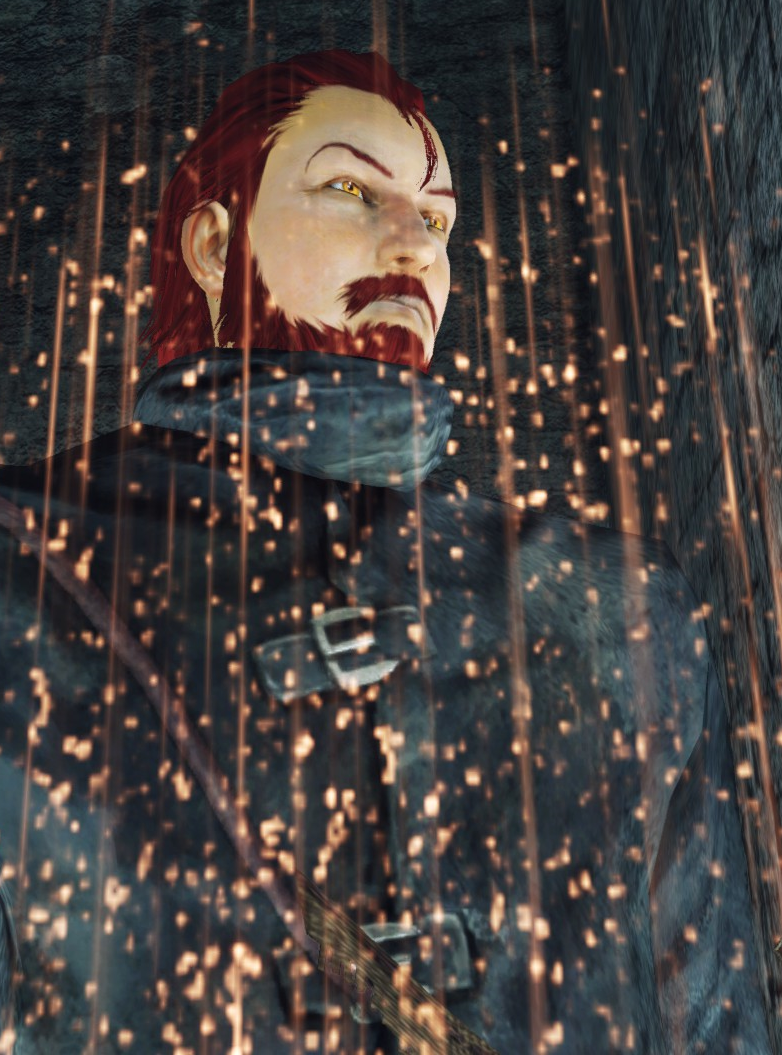
Sparkly Bert

Sparkly Bert lives up to his name, motherfucker!

In fact, Dark Souls II really has all the hallmarks of a game that was made in less time than its ancestor. It’s smaller, less creative in design, not as innovative as it should be and it doesn’t have the same weight to its history or elegance to its craftsmanship. Some of the new mechanics don’t feel like they were thought through properly, and the already problematic ones weren’t revamped when they should have been. For example, the jumping controls have been changed. They used to be absolute arse, and now they’re even worse, mapped to L3. Christ, was that thought up by a man with a tire iron lodged in his head?

However, these quibbles don’t hide the fact that it is still a superb game, and I don’t blame the creators for trying to shake up the formula a tad. Besides, none of the problems are dealbreakers, and DSII is still far superior to the dime-a-dozen schlock you’ll get most days. I’m having a blast with it, and if you have a brain in your head, you will too. Of course, any Dark Souls game will try to forcibly remove that brain, but that’s the way it goes. No loved one is truly perfect.


8.5/10
A worthy successor to the original modern classic, though a little less refined and polished in its execution. Whilst the bad alterations outweigh the good ones, there’s definitely enough going to keep it fresh and worth playing.

ANGRY BIRDS 2 REVIEW – “CHEEP, CHEAP”

Once upon a time there was a young man with silky blonde hair and the purest of hearts. He cared about all things, was always considerate of people’s feelings, and never said anything mean to anybody. He was the kindest young man you ever did meet.

And one day, he bought an amazing new device from a man named Mr. Steven Jobs, who had lots of money and a jumper with a long neck, and he worked in a shop where they didn’t allow bricks, so everything was made of glass and bits of metal. The device was called an iTelephone, and though it had only four buttons it worked like no portable telephone that the young man had ever seen.

A big part of the iTelephone was a special shop inside it called the Application Store, an amazing digital market stand that allowed you to buy special games and functions for the iTelephone to use. There were lots of different ones, including applications that let you go fishing, send pictures to your friends, and ring a cowbell.

…We were easily amused back then.

Then, after not too long, a new game appeared that the young man happened to see. It was a game called Angry Birds, and not many people had heard of it before. And this man bought Angry Birds and really enjoyed it, because it was fun and cleverly made and you got to smash things but without really hurting anybody.

And this young man was ever so happy, and he thought “This is surely the beginning of something amazing for electronic video games on the portable telephone. Perhaps we are witnessing an evolution, where games will turn into something beautiful with lowered prices, innovative concepts and interesting uses of available hardware.”

And now the man is very angry and bitter, and he drinks a lot and throws things at animals and has some unfinished business with the authorities that he’d rather not talk about, though he’s almost saved up the money for the ammunition he needs. For you see, children, things have not gotten better for mobile games. They all copy each other and keep trying to take your money even after you’ve bought it, and they use up all the memory space on your phone and don’t realise that you can’t effectively use joysticks on a touchscreen because it’s like trying to tap dance on an ice rink.

But then a few days ago Angry Birds 2 came out, and the angry man was filled with a sudden sense of hope. Maybe, he thought, this game would strive for that age-old dream, maybe it would aspire to something more than to simply turn a profit, to bring real joy without compromising on that original dream and to elevate everything that made the first game so smart.

And now that man is even angrier, and he keeps lighting matches in the corner of the room and staring at the flame, and every now and then he just makes a noise like a crow with a dry throat, and everybody is wishing he’d move because he’s been there for three days and they’re all very uncomfortable about the whole thing.

And the moral of story is: Don’t ever play Angry Birds 2. Or have hope and love and that sort of thing.

I know that was a long opening, but Jesus, was I pissed off when I saw what this game series had turned into. It was like some execs had sat around the original, and said to themselves, “Now how can we remove any sense of charm and integrity from this?”

So yes, it’s loaded with micropayments that make the game easier. Yes, there’s pointless online elements that don’t add anything. Yes, you can’t play indefinitely because you can only have five lives at a time (then just three after a recent update), and it takes half an hour for a single life to come back, so good luck using it to kill time on long journeys like you could do with the old one. Of course, if you’re willing to pay, you could always-

OH FUCK OFF, ANGRY BIRDS 2. I’m not going to keep giving you money to keep playing a game that is demonstrably worse than the other one.

Attack

He’s going to blow himself up? I guess he must have played the game.

Perhaps the most insulting aspect is how virtually nothing has been added. Isn’t that the point of sequels? To make an enriched, fuller version of the original concept? There’s hardly any of that here, just ways to gouge money from us, like they took a beloved dog and started strapping leeches to its back. You don’t want to go near it for fear of getting drained.

I actually don’t have any gripes against the free-to-play model, at least in theory. It sounds very fair, like the natural extension of the game demo concept. “Here’s a fun game for free, but you can acquire additional gameplay and cosmetics if you feel willing to throw in a couple of bucks.” Hell, if a game’s fun enough you could just donate money to the artist. After all, he’s done something cool and we want talented people to keep producing fun stuff. Quid pro quo, I scratch your back, etc, etc.

But this? This is just gross. They’ve gutted their precious prize in the name of making capital. I know, I know, it’s not like Angry Birds was a sacred cow, but those Star Wars and Rio expansions generally kept to themselves, you know? The core series had at least a little respect offered to it, when it began.

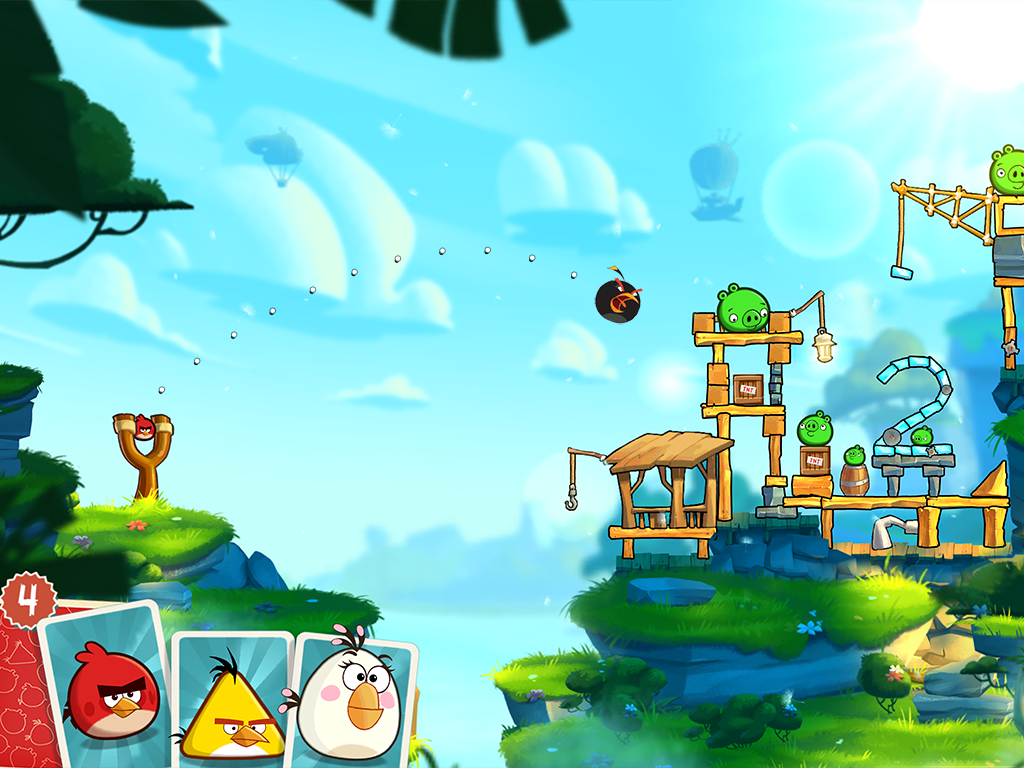
That is, until now. So what’s new? Well, there’s a new bird, easily the shittiest one available. When you hit the screen it suddenly does a loop mid-flight and smashes its face into the floor, albeit with all the force of a cat’s fur gently brushing past your arm. So not only does it have the stopping power of a water pistol, its power is to make itself less accurate, partly because the loop is so huge that it always hits something before it reaches the right trajectory, and it flies forward so quick that it’s impossible to activate it in time.

The one saving grace is that you don’t have to use Mr. Spin Cycle if you don’t want to. Now the order in which you get the birds is randomised, and you can swap around the first three as much as you like. But this in itself seems silly to me, because the obvious loss is focus and good design. There were levels in the first game that were challenging because you had to use specific birds in a specific order, and now you just get one of each thrown at you in whatever order seems most inconvenient. Not to mention that the levels are randomly generated, so you never have time to work out a strategy before it’s replaced by another one you haven’t seen before.

Ironically, the stages are easier when you’ve only unlocked two birds, because it’s guaranteed that one of the ones you want will be in the accessible line-up and the early levels are designed to accommodate for your lacking variety in ammunition. Whereas if I needed a exploding bird later on, it would always be sitting at the back of the queue where I couldn’t use it, behind barrel-roll bill, the three musketeers and some pointless ice spell.

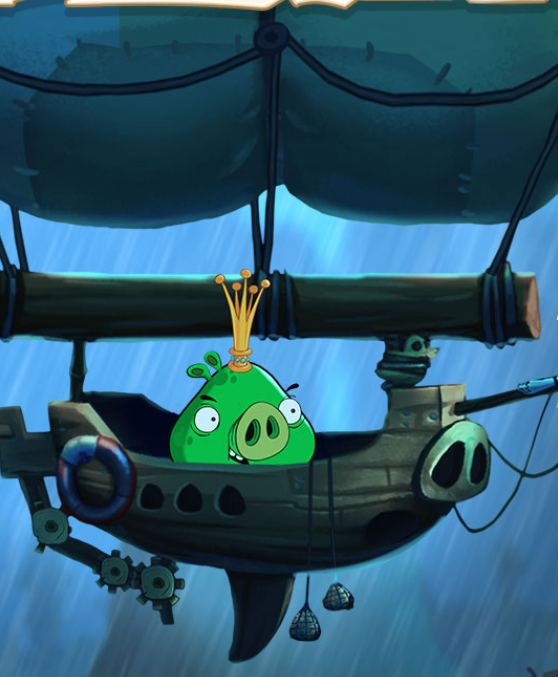
Airship

He borrowed that airship from a nearby JRPG.

Speaking of which, The spells are one of the ways in which Rovio are trying to distance you from your money. They all have different effects, such as doubling the size of the pigs, dropping a cloud of objects from the sky, or just winning the fucking level for you. That’s right, Angry Birds 2 is offering to play the game for you if you’ll just cough up the cash. You only have limited uses of spells, and once you run out there’s no way to get them back without handing over your credit card details. The problem is that whilst the game starts off easier than farting in the bath, after a while it gets annoyed and ramps up the challenge, so unless you want to be stuck on that level forever (only getting to try it three times every two hours, now that there’s a life system), you might have to cough up some cash to get past it. Sure, and why don’t I pay an intermediary to watch the film I want to see, and read that book I was interested in?

The final twist on the formula, in the same way that one twists a turkey’s neck to kill it, is boss fights. Basically, it’s just a piggie with an unreasonable amount of health, the result being that when I slam a bomb into the emerald bastard, detonate him into the atmosphere, watch him crash through three buildings and finally come to a rest on a bed of spikes, only for him to lose ten percent of his health, I do feel the need to throw my iPhone through a plate-glass window. I’ve nothing against challenge, but this is always my problem with micropayments, the games are so often structured so that you get forced into a corner, with the only way out being a door for which you need to buy a key.

There are some games I love tearing to shreds, but this isn’t one of them. The game I enjoyed is in there somewhere, but it’s buried beneath the work of cold-hearted executives who have no purpose but to scrounge children’s pocket money away from them. Maybe it feels churlish to disparage a free game, but at the end of the day I thought about how much fun I had with it, and that’s not much at all. Smashing stuff is always fun, but you could always do it a different way. Such as breaking a phone full of free-to-play games over a corporate villian’s head.


3/10
If I could get at the good stuff beneath the flabby design and horrible attempts to steal my money… I’d just have the original game and nothing more.

BIG-HEADED INDIE GAMES MADE BY BIG-HEADED DEVELOPERS

In gaming, as in all things, there is a sense of duality. This is perfectly fine and necessary, as one can only appreciate the glory of Alien: Isolation if Aliens: Colonial Marines is there to put it into context. You can’t really loath modern Sonic The Hedgehog games without knowing the superior titles they came from. It’s not really possible to feel horrified by the bloated budgets of the Triple-A industry without seeing just how much money one man can make with a few new ideas and the most basic of assets. Or, to stay within the indie theme, you can’t lose your innocence if you weren’t previously cute and cuddly with a head like a beach ball.

Context. It accounts for everything.

It’s not a particularly fresh observation that indie and low-budget games tend to gravitate towards stories that focus on charming little entities being stuck in a grim and terrifying world, with the theme always being “the ascension to adulthood,” kicking and screaming if need be. And whilst it’s not always the case, they’re often platformers. We’ll come back to that in a moment.

Bear in mind that I’m not saying that these things are bad for any reason. Limbo, The Binding Of Isaac, Bastion, all these titles are worth playing and don’t suffer for their relative proximity to being “yet another game about big-headed cuties getting the emotional shit kicked out of them.” But in the same way that I railed against the stagnation of zombies in the last article, here I think that indie gaming needs to get over this idea and move on.

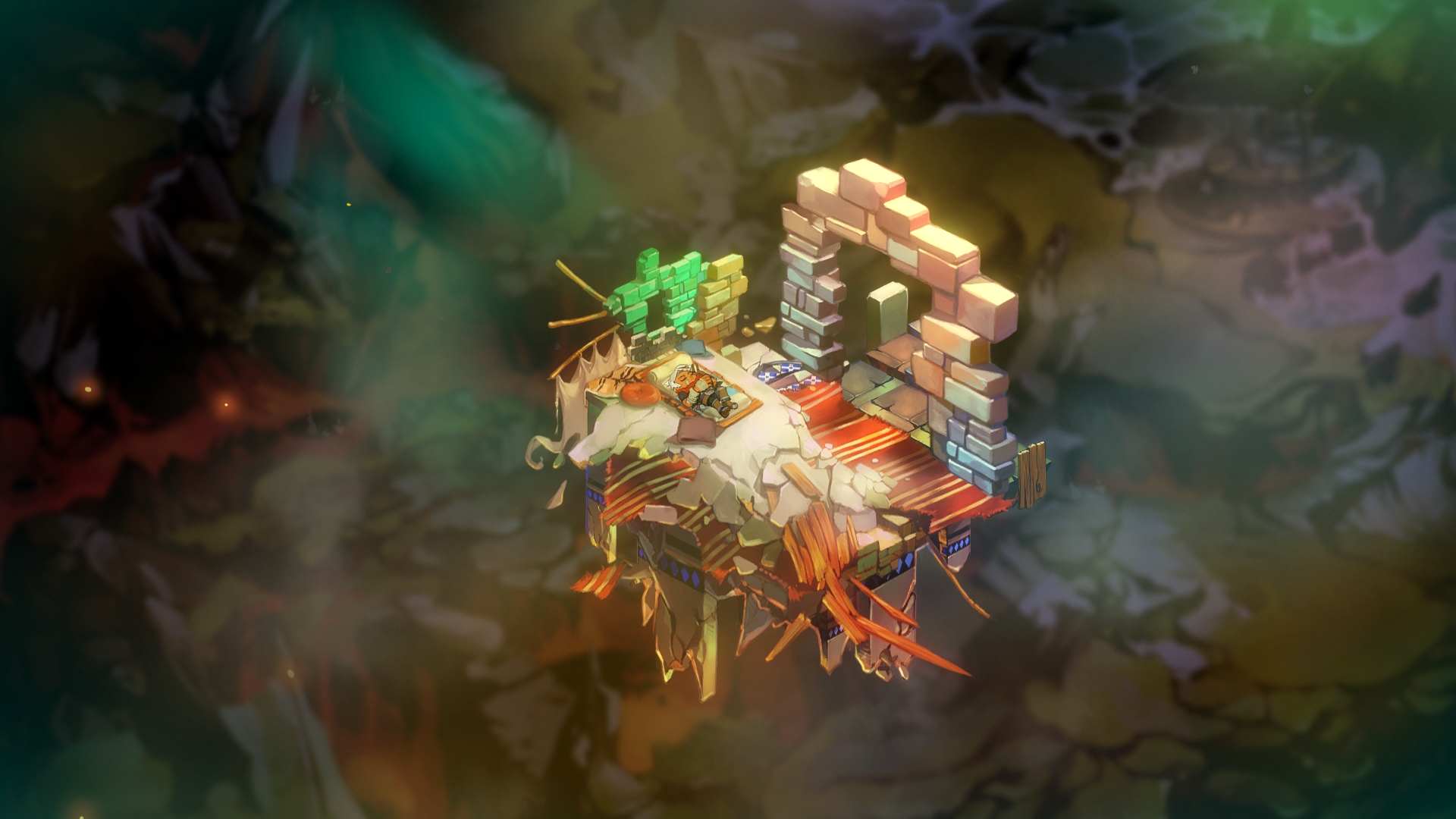
Bastion snooze

Don’t bother waking up, kid. It’s just not worth it.

Why? Well, I think a lot of developers consider it to be a lot cleverer than it actually is, when really it just betrays how little they realise the medium has grown up.

“Look at our game.” They burble, puffing out their collective chests and grinning from ear to ear. “I bet you thought games were all for children and not to be taken seriously by adults, didn’t you? Well, look at what we made. On top of being an emotionally powerful coming-of-age drama, it’s playing on your expectations and being really poignant about it, isn’t it?”

“Er, no.” We respond, looking back at several decades of intellectually sophisticated examples of the medium and wondering whether we should break it to them gently.

“Yes it is.” They insist back. “What should be a game for kids is actually all about growing up, do you get it? Do you, do you? Because we’ve all grown up, do you see? And this shows that games have grown up too, do you get it now?”

Yes, we get it. We’ve been getting it for years, the medium is now venerable enough that there are adults who have always grown up with the idea that games can be for everybody. It’s hardly even relevant anymore. You might as well tell people that they need to keep praising Caesar, or to remember to have a bunker nearby if the Soviets launch the nukes.

I think it’s why the platformer is such a go-to option when making this sort of thing. Platformers bring us back to the age of the NES and even older, when the kids would spend hours with their digital happiness box after a hard day at school, in between episodes of that new “Saved By The Bell” show and playing hacky-sack in their Jelly Shoes.

Look it up.

Anyway, it’s why it’s so much rarer to see these themes in first-person games, because they didn’t come around until the late nineties and even then it still looked pretty awful, like a series of cardboard cut-outs in a kaleidoscope. You can’t stretch that nostalgia angle if you’re utilising a medium which people don’t feel nostalgic about yet. And platformers have fallen a little out of the popular mainstream in recent years, allowing us to look back on some of them with perhaps more affection than they deserve.

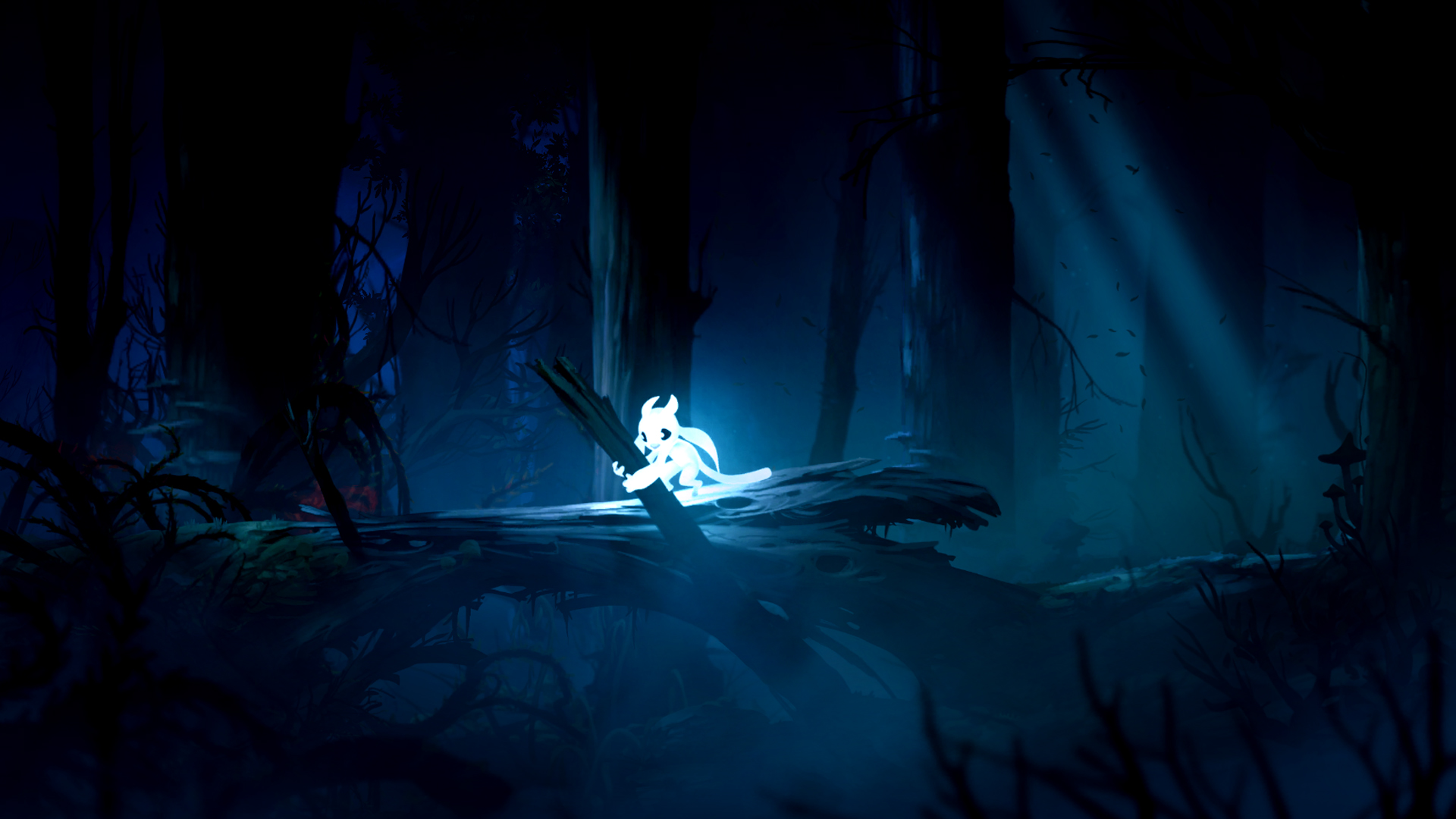
Ori

That thing hasn’t gone through a horrific, maturing experience yet! Get him!

It’s a sticky issue with indie games, because on the whole I never object to any game aspiring to have greater depth than “put bullet in meat,” but this isn’t original any more, it’s just getting old. Can you claim a game has depth when it’s aping something that’s been done a thousand times before? Can you attribute profundity to something that’s been copied from the kid at the next desk? Again, it’s the zombie problem. If you don’t have some new take on the matter, we don’t have a reason to take you seriously.

Look at the Stanley Parables, that’s how you do profundity. It’s a satirical take on video games and the relationship between player and player character. Except when it isn’t. Or when it manages to be both at the same time… Urgh, I have a headache.

Nevertheless, I invite indie developers to look at the already-existing games that feature adorable balloon-headed heroes, then look at your own versions and wonder if you’re adding anything to the genre. Maybe you are, I wouldn’t say otherwise without seeing it for myself. But most likely… Well, it’s probably been done already. Sorry if that sounds harsh, but it’s all part of growing up.

ZOMBIE PSYCHOLOGY 101

I’ve decided that I’m not going to buy any game that has zombies in without looking for some fresh take on it first. I’m bloody sick of zombies, but the little green bastards keep coming back to maintain that the thermometer of story quality is stuck firmly at room temperature, and I’ve just lost any interest.

Let’s be fair though, they’re not limited to games. The undead have shambled their way through just about every artistic medium going, and it looks like they’re here to stay, but they’re always so much more omnipresent in gaming narrative.

I think that his can be partly put down to the fact that there is something inherently cathartic about smashing corpses around. Games designers worked out the formula a while ago, and it’s only been refined since then. Unfortunately, you can only refine something so much before it can’t change any more, and that seems to be the state we’re in now. Dying Light, a game that annoyed me so much that I wrote an entire article shouting at it, teased us with a new take on managing the walking dead and turned out to be bluffing us spectacularly. Thanks for that, Techland.

The fact that “zombie apocalypse” is a tired concept is well-established, but they keep showing up regardless and I think I know why. They tick enough boxes in a variety of checklists that you can basically insert them into anything, fulfil nearly any niche. Visceral B-movie action? Done, that’s your House Of The Dead and Dead Rising games. Frantic terror and desperate fighting for survival? Left 4 Dead and Call Of Duty: Nazi Zombies steps in to help. Developed character arcs? We turn to The Walking Dead and The Last Of Us for that one.

Even when zombies aren’t the central focus, they keep shoving their decaying noses into anything that has room to spare, like the sauce from baked beans pooling around the other items in your fried breakfast. Skyrim, Fallout, Crackdown 2, Half-Life, Prototype, Minecraft, Borderlands, Red Dead Redemption, Dishonored, and Mass Effect, just to name a few. Hell, you can probably think of several games I’ve missed already. It’s unending (which is appropriate really), but it does get old. It has gotten old. So why do they keep doing it? Well, I think one of the major factors is that they relate to the player in so many different ways without us even realising it. The biggest factor, of course, is that there’s no reason not to kill them, ever.

You see, zombies do indeed look like the human beings they came from, but not quite enough to unnerve us, so there’s not usually enough humanity present in them to freak us out unless the designers intend it otherwise. That way we can blow them to bits without feeling like we’re perpetrating some sort of mass murder spree, and secretly vent some much needed frustration.

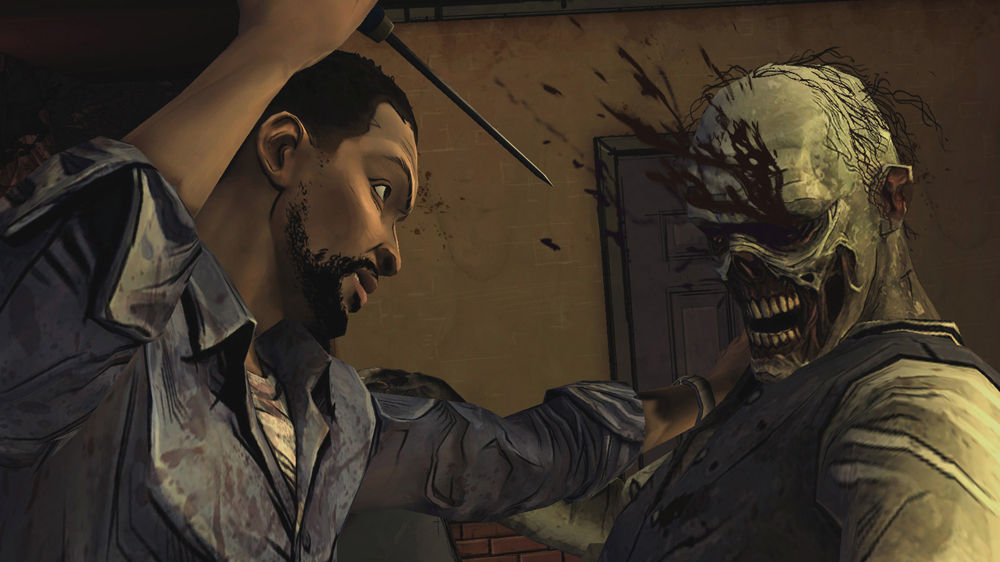
Lee kills zombie

What world is this, where watching a man kill a reanimated corpse with only the tools to hand is considered mundane?

The fact is that whilst they’re clearly inhuman monstrosities, they do look a little like people, just enough, and I suspect that a lot of surplus aggression can get worked out by beating an almost-person to death with a sledgehammer. They occupy that perfect middle-ground between man and monster. The conscious mind doesn’t see a human being, but the subconscious is delighted and is egging you on to keep thwacking that guy who suddenly looks a lot like that moron who bullied you at school… Hey, don’t judge me, it’s not creepy! He’s a zombie, it doesn’t matter if I splatter him to bits. I could turn him to red paste and it wouldn’t be any less moral than playing Cooking Mama.

Actually, it practically goes the other way. Killing the undead seems almost like a moral imperative in the vast majority of stories, what with all that mercy-killing and so on. All these games and books seem to suggest that being an undead is some horrible experience for the resurrected chap in question, so when you finally put him out of his misery with a landmine hidden in a raw steak, you’re actually doing him a solid and he’s going to high-five you in the afterlife. Not only that, but all these stumbling monsters will immediately kill anybody if they get the chance, so you’re kind of pre-emptively saving a life, right?

That’s a stroke of genius, I’ll admit that. An enemy who is so morally uncomplicated that there is no justification for not killing them, no matter who they were in a previous life. I can’t think of many classic villains who fit that need so well. Actually, I can’t think of any. Even Nazis have lederhosen-wearing family somewhere, but zombies? Fuck those chomping psychos. Go get your loudest shotgun and your rustiest chainsaw, and let’s make the world a better place.

Greene the mean machine

Those of you with a nervous disposition may want to look away now…

Which brings us to combat. It seems to be a well-established fact that the risen dead are made by the lowest bidder, hence several exploitable design flaws. For example, the cranium. A zombie does not get a fractured skull, or a cut on the temple, or even a broken nose. No, the second any impact touches upon a zombie’s head, then BOOM! The whole thing explodes like some enormous pimple, showering those nearby with blood and brains, but the kind that will wash off before the next scene, so that’s alright. Then what’s left is a severed neck stump spraying a pathetic jet of blood, before the body comically topples over and we get fifty experience points.

There’s something guiltily satisfying about this, no matter what the context. It’s the absolute embodiment of human destruction to obliterate someone from the shoulders up. After all, the head is perhaps the part of the body we feel the most instinctive need to defend. When we think we’re about to get hit, we raise our hands to cover the face. For that reason we feel that destroying another person’s head is something mighty and cathartic. It’s very final, very definite. If something got up without a cranium we’d feel it was cheating somehow. So when we crush a zombie’s skull, we feel like Conan The Barbarian!

Not only does the method feel pretty good, but zombies tend to be designed to be individually easy to beat, and it’s only in groups that they start getting dangerous. This means that you can normally hack your way through them like the Grim Reaper when he’s behind schedule, and again it makes you feel like a badass. Even if you lose and get dragged down beneath a thousand grasping hands, you can look back on the mountain of bodies you left in your wake and still feel smug despite your failure.

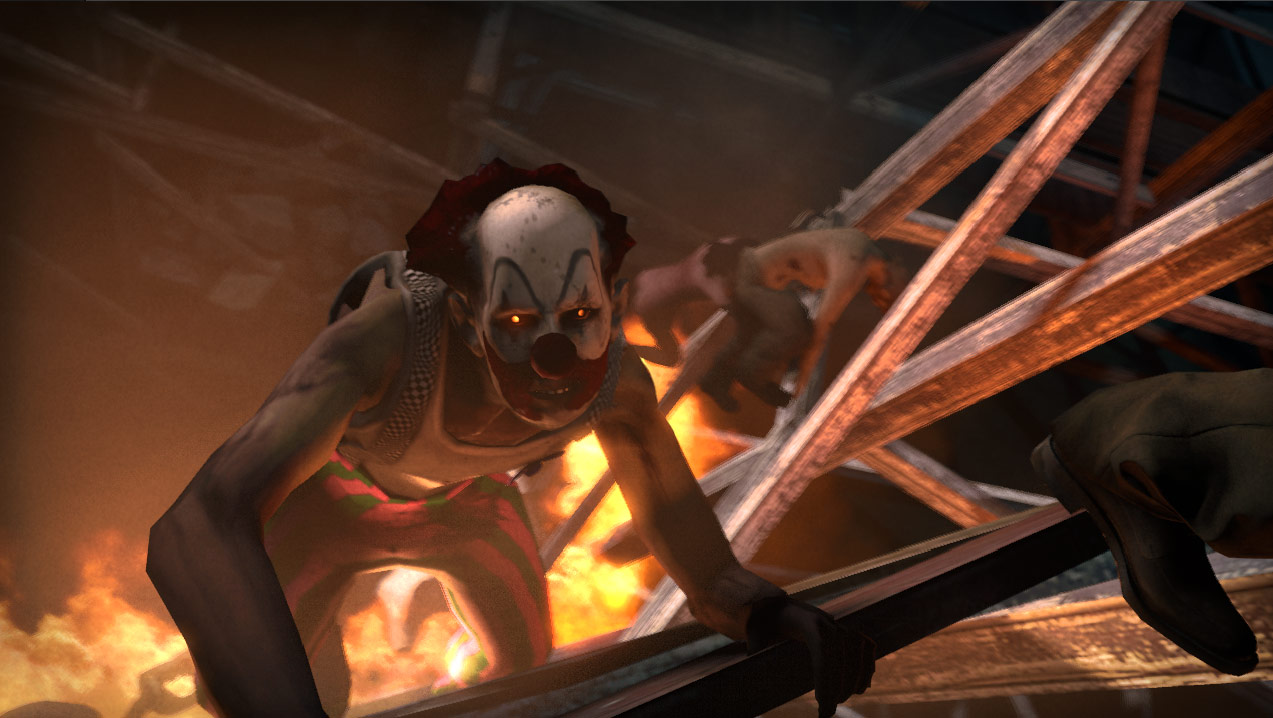
Zombie clown

Aagh! I hate heights!

Hell, you can feel smug anyway. Everybody gets a kick out of feeling like they’ve outsmarted something else, we like to feel prideful about our own intelligence. Something as simple as catching a fly with a newspaper makes us go “Ha!” in way that we really don’t deserve. It’s the same principle with the undead. No matter who you are, however stupid you might feel, you can look at a zombie, something that is matched in nastiness only by its own idiocy, and feel comparatively like a king amongst men. Here’s an enemy you can always outsmart, always outmanoeuvre, always come out on top if you just think clearly. That’s kind of empowering, even if it is for the rather awkward reason that that combined intelligence of the enemy couldn’t outsmart the crowbar you’re hitting them with.

Of course, the other reason that zombies are so popular amongst creative teams is that the stories almost write themselves. You know the drill: Mysterious disease, areas quarantined by the army, small band of plucky but worried heroes trapped somewhere amongst the chaos, and suddenly we’re on a roll. Here’s the bit where someone you care about gets infected and you have to kill them, here’s the bit where you’re in danger from the military bombing the infected zones, here’s the bit where the heroes have a bit of infighting because they’re stressed out, so on and so on.

The broad applicability of the zombie template was proven with Red Dead Redemption: Undead Nightmare, Yakuza: Dead Souls and Call Of Duty: Nazi Zombies, three games series that had nothing to do with the undead until some enterprising young go-getter realised that you could just sprinkle some corpses over the original map, sell it for twenty quid and knock off for lunch.

But that just shows how little impact zombies have, doesn’t it? Tap water can go with any meal, but only because there isn’t any flavour. The Walking Dead is probably the game that did zombies best by just forgetting they were there for most of it. The undead in that game could have been completely interchangeable with any other threat, the point was that this was a character study of people in a difficult situation. Whereas games that orbit around zombies themselves get boring within ten minutes, because there’s nowhere left for them to go.

I think it’s fascinating to see just how homogenised games have become, how this single concept keeps coming up without anybody working on it thinking how tired it is. In the early nineties you could have practically any idea and it would get greenlit. Look at the Mario series. Yeah, Mario seems dull now, but originally somebody decided to make a game about an Italian plumber riding a dinosaur in a psychedelic land, throwing fireballs at giant turtles to save a princess of mushroom people from the largest turtle of all. It’s hardly predictable, is it? These days a game is considered dangerously experimental if the angry, white-skinned hero is wearing an odd hat.

It should be remembered that there’s nothing fundamentally wrong with zombies as a concept, but you can have too much of a good thing. What we need is for some other pop culture fad to take its place for a while, like pirates or ninjas. Ooh, or what about cowboys? It’s been too long since the last good wild west game, i.e., anything more than five minutes.

Anyway, Tales From The Borderlands: Episode 4 just came out, so I’m going to go and try that. And if I see a single undead minion or stumbling corpse, I might just bite someone.

THE REVOLUTION EVOLUTION

Crikey O’ Riley, it’s been a while. Nine days, isn’t it? More? Kind of puts those first few weeks to shame, when I was deliriously pumping out two articles a day and hardly leaving my desk, knowing that I’d just feel the need to start hammering on keyboards again like a lunatic pianist who’s off his meds.

In my defence, there were a few justifications. Internet was down, I’ve been doing some other jobs, and right now I’m on holiday in sunny Malibu. Guess a good work ethic goes out the window when you start noticing bikini girls and colourful drinks with umbrellas in them… But then given the choice I know which I’d rather have. Admittedly, nearly everybody here is so shallow they might as well be a piece of paper, but then that’s all part of the fun. Not to mention that there’s something endearingly cute about a country that struggles so much with ideas that everybody else has gotten over, like giving equal rights to gay people and not arming everybody within its borders. Of course, there’s a leeway to how much goodwill that offers it, and I’m not happy with either the quality of the TV or the way that all the bread tastes really sugary. Have that sorted out by the time I get back, yeah? Ta.

There is one other reason I’ve been late with this article, and it’s because I’ve been playing Deus Ex: Human Revolution – Director’s Cut. I admit, I hadn’t played the series before, but I found myself rather enjoying Human Revolution as I chugged through it, and I know that the sequel, Mankind Divided, is coming out soon, so what better time to be ready for that?

Full disclosure: I only finished it ten minutes ago and I like it, but it keeps bugging me at the same time, like having sex in the shower when there’s soap in your eyes. This is good, but we could have taken obvious steps for it to be a lot better, you know what I mean?

Of course, this is mostly down to ambition. Deus Ex as a series has famously aimed higher than most other games around and has usually been pretty successful. The first one was a landmark in PC gaming that embodied the modern RPG, where every skill you learn could contribute to every mission. You could gun your way through the enemy, sneak past them, hack devices to make turrets blow them to bits, etc.

Adam's Card

I’ll be fine as long as I have my Topshop loyalty card…

That’s a very cool feature and was pretty damn impressive for the time, but Human Revolution keeps forgetting what a good idea that was whenever it comes to boss fights. The game had let me sneak around hacking things for the whole campaign up until then, in fact it’s possible to complete it without killing a single person the whole way through.

Except, as mentioned, for bosses. Alarm bells started when the first boss, a big brute with an LMG and grenades out the arse spawned three feet in front of me with nothing between us and decided to turn my body into a Jackson Pollock painting. Considering I was holding a little stun gun for my non-lethal approach, it could definitely be said that this was not a good thing. Quick-saving in situations like that isn’t just smart, it’s necessary, and to make it worse I’m still not sure why chunky wanted my brains splattered across every wall.

Actually, that’s another issue – the story. Whilst I genuinely like the world building that Human Revolving Door has going for it, the moment-to-moment story beats can seem a bit weird or labyrinthine. The aforementioned boss fights seemed to be pulled from the aether, and the plot is a tangle of various factions, corporations and allegiances all going at each other like the Borgias in an eBay bidding war.

Of course, being confusing is one of those problems that is only ever a problem once, and there’s a lot of story elements I like. The characters are nicely well-rounded and rarely fall into binary good/bad dynamics, adding a tangible sense of moral complexity to a lot of what goes on, and I found myself getting jolly attached to some of them.

But what about the specifics? You play as Adam Jensen in the year 2027, the head of security in a major body augmentation corporation named Sarif Industries. When a mysterious attack on the labs kills his sexy scientist wife, leaves the company in a dangerous position and reduces Adam to a small pile of burnt meat with his bearded head resting on top, Sarif decides to go all Robocop and rebuilds Adam with so much tech in his body that he can probably fire electricity from his nipples. They then spit him back into the world and tell him to find out who caused the attack, or else he won’t get his complimentary can of WD-40.

2015-08-08_00014

What? Is there something on my face?

A small quibble here – the game sells itself on saying that any option is possible and it is quite clearly lying. Go stealth or go home should be the tagline, as for all his mechanical parts Adam still gets reduced to goo and scrap metal whenever he gets in a firefight. Thus it usually comes down to creeping around smacking enemies when nobody’s looking and picking them off with a tranquilliser gun, before diving for cover when you get discovered and hoping you can creep away from the ensuing gun battle or blindfire your way to victory.

Mechanically this all works pretty well, even if non-lethal ammo is harder to find than pieces of the true cross, and more pathways and options appear as you level and acquire cyborg superpowers. The areas are large and non-linear, meaning that you get rewarded for exploration, but there are a couple of tweaks that I’d make for the next game, things that kept bugging me despite my best efforts.

Firstly, there needs to be some non-lethal weapon that you can actually use in a straight shootout, because once you get spotted you basically either have to try to sneak away or swap out to old-fashioned bullets and explosives, because the piddly little taser and sleeper darts are horrible against anything that knows you’re there. I was doing the non-aggressive pacifist run and usually just found myself reloading an old save whenever I got noticed, because I was backed into a corner and the only way out was either to start blowing open heads or making the impossible sprint to safety, and I was buggered if I was going to compromise after more than five hours in. The only time I swapped out my Nerf guns for something with actual stopping power was when an ally was trapped by two dozen enemies and I had only limited time to save my friend from joining the dodo in the history books.

Another thing that annoys me is Jensen himself. Adam has a voice like a gravel driveway, wears a futuristic Shadowrun-esque coat and even has a pair of shades embedded in his face, so it’s hard not to think that you’re looking at a character design that had one or two teenage boys involved. He’s also got Satan’s beard, more artificial body parts than a mannequin repair shop and can use any weapon so well that Hawkeye gets jealous. He’s such a bundle of generic clichés that I can’t take the growly twonk seriously.

2015-08-10_00002

Everybody wait until she leaves the room before you start laughing.

That said, Adam’s visual design is the only one that really ticks me off and there’s a lot of aspects I like. It seems that fashion his moved on to a sort of hybrid of modern suits and Elizabethan finery with elements of classic cyberpunk added in, and this means that the simple act of looking at half the characters is fascinating.

The other aspect that is both a positive and a negative is Deus Ex’s love of choice. I made mention of rescuing an ally earlier, one of the more organic moral quandaries provided. She was stuck somewhere with enough military might to invade Poland bearing down on her location, the implication being that this is an absurd threat that will certainly kill her if you don’t fly in to help. However, they’ll probably kill you as well, so you could use the diversion to sneak away to safety. After all, what kind of madman/hero would face such surmountable odds?

This madman, motherfucker, and I’m doing it through the awesome power of savescumming. Oh, stop judging me. This is always my problem with choices like this, I get too fond of the characters and can’t bear to let them die, but I’m not holding this against the Deus Ex. It’s a credit to their writing that I felt so strongly about the fate of this person, so top marks there.

No, what annoyed me were the choices that weren’t so clearly signposted. The strongest example of this was the very first mission, where I had to go through a base of bad guys in order to take out their boss and rescue a bunch of hostages. But the hostages weren’t displayed on the map, and the patrolling guards with heavy ordinance meant that I didn’t feel like rambling around too much. I figured I’d find them as I went, but that wasn’t the case, and suddenly I was trapped in the concluding cutscene with everybody yelling at me for not getting them out in time. I was trying to, you bastards! It’s not my fault they were being kept in some broom cupboard in the next building over!

On top of which, the ending is an absolute joke. Hit the fast-forward button and skip this paragraph if you don’t want spoilers, you know how it goes, but this is possibly one of the biggest sins that choice-based gaming commits and I want to rail on it for a while. See, when I make a choice, what I want to see is some payoff, something to establish that what I did actually has some weight, but the ending to DE:HR doesn’t have that at all. After killing yet another disappointing boss and getting hustled along a corridor, you end up at a computer with four big buttons that each lead to a different ending. Press one of them, and you’ll get a short movie made of stock footage, with Jensen rasping about why he picked it before getting dumped at the end credits with nary a heartbeat missed, the overall message being… Was that it?

Actually, that seems like a choice statement to summon up the whole game. Remember that I do like Human Revolution, but it makes so many rookie mistakes that the good parts risk getting lost amongst the nonsense, some of which are so frustratingly obvious that you just want to bang your head on the wall and shout at it to think properly for five minutes.

But how could Mankind Divided pick up on this? For a start, I think it should go properly open-world in the style of Skyrim, dropping loading screens off the back of the truck and sticking to one huge sandbox that becomes easier to traverse as you get more robo-powers.

Actually, that would be another thing I’d tweak, making the abilities more fun and engaging to use. Some of them, like the ability to smash through walls and jump like a startled cricket are enormously fun and open up huge parts of the map, but others just seem boring or even pointless. Cancel out the flash from flashbangs going off in your face? I only got flashed once and I just hid behind the wall slamming the takedown button in case anybody came close, I was fine. Why the hell would I pick that over the ability to turn invisible or shoot bombs out of my arms?

2015-08-08_00013

Hey, you’re really pretty… You know, maybe I don’t need to save my wife so urgently. I’m sure she’s fine, wherever she is, right?

The Mankind Evolved trailer has shown Adam using a variety of cool powers and I hope they’re the norm when I start to level up, rather than the croutons in an otherwise bland salad. He shoots lasers and turns indestructible, but if they’re too contextual and not as cathartic is possible, I’ll be disappointed.

Honestly though, I don’t think we need to worry too much. By all accounts, the Director’s Cut that was made took a lot of the original criticisms and went a long way to fixing them, so the developers have proven that they know what they’re doing when they listen to the public. All they need to do now is give Adam a Lemsip and we’re golden.

HALF-LIFE 3 CONFIRMED

No, not really, but everybody has to have a go on that joke, don’t they? Half-Life 2 was released eleven years ago now, and the second episode of that same game made its escape in 2007. So if we’re feeling charitable, and I’m not, it’s been eight bloody years since any meaningful movement. Not exactly rushed, is it? The Sistine Chapel ceiling took only six years, and Michelangelo was one guy with a ladder. Whereas Valve has considerably more manpower and enough money to pay for a whole fleet of staircars, so what’s the problem?

For all my joking in the last article, the reason given by Gabe Newell to the Washington Post last year seemed to be that Half-Life 3 is not what the public really wants, and whilst I find this surprising to hear, I admit that he is the expert and that he has been right about this sort of thing before.

See, Valve always built its success not by following trends, but by working to predict them and having games and products ready for when they exploded. Both Half-Life games emerged as a response to the growing interest in technical realism, with revolutionary physics engines and facial animation to capitalise on those desires. Team Fortress 2 was out just before the online multiplayer craze started and was waiting gleefully for all those who wanted to try it. Steam came up just when it was needed, as was DOTA 2 and Left 4 Dead. Now, with the emerging interest in VR and more immersive and convenient gaming, Valve have got the Vive, the Steam Link and its Controller all ready to hit the shelves before the year is out. The Vive is even beating the consumer version of the Oculus to the shelves, something that I doubt will be an insignificant blow to the Oculus name, especially if it can get the price low enough.

Grigori

For a while, this was all anybody at Valve would see when they were looking out of the window. Those fans were getting pretty impatient, after all.

So Valve tend to know what they’re talking about, but we don’t have to like it. I myself am not one of the naysayers who keep talking about how impossible to justify HL3 would be and how the hype is too high, because what made the other two games so good wasn’t some indefinable quality, some mystic blessing from the fates. It was a commitment to good pacing, an emphasis on character development and some interesting twists on the standard shooting mechanics, i.e., the Gravity Gun.

See? It wasn’t that a piece of the true cross got lodged in the designer’s brain when he wrote this, it was just good writing and imagination, and it’s not like Valve’s quality has dropped recently. The last three games they made were Portal 2, CS:GO and DOTA 2. Regardless of what you think of them, they do what they want to do very, very well. So no, I don’t think Gordon Freeman’s return would be destined to disappoint, it could certainly be achieved with success.

But what would it take to get it released, not including hostage-taking? I suspect there are several scenarios that would inspire Half-Life 3 to get bubbling, but none of them seem to be in the immediate future by my estimations. Let’s take a gander and work out our odds.

A VALVE CONSOLE

This is the one that would almost definitely get it made. If Valve made a proper console with the aim of competing with Microsoft, Sony and Nintendo, a launch line-up consisting of “The Orange Box 2,” (ironically one filled with the third instalments in their franchises) would sell like hot cakes wrapped in pages from Angelina Jolie’s private diary.

Half-Life 3, Portal 3, Team Fortress 3, yes please sir, may I have another? Maybe add in DOTA 3, L4D3, some fresh IP and a new Counterstrike to get it rolling, and I think they’d be off to a flying start, no matter which way the market was leaning at the time. The sheer pedigree would be enough to make them a success, and I think if we ever see Valve move firmly to the living room then our chance of fighting the Combine will dramatically increase.

FLAGGING PROFITS

The most implausible scenario to be sure. If Steam somehow starts to lose people or DOTA 2 doesn’t rake in half a billion dollars every week, it would make sense for Valve to draw their trump card and have the internet lose its mind when they announce it at E3. It’s unlikely that it would ever come to that, but it must give them a nice sense of security.

That said, I do wonder if Valve are holding onto it for that reason. Lots of developers seem to be holding “In The Event Of Emergency” ideas under their belts, the kind that are guaranteed to sell and that they want to keep safe for a rainy day. Square Enix bafflingly shot their wad early with the Final Fantasy 7 remake, but there are others I suspect are being kept close to the chest. When Call Of Duty starts to dip, we’ll see a remake of the first two Modern Warfare games, I’m sure. If Ubisoft feels the noose around its neck, it’ll wipe the dust off Assassin’s Creed 2 and set it loose again with better graphics. If Pokemon sales plummet, it’ll move to the mobile market to save itself, and so on. Safe, dependable ideas that would allow them all to print money en masse.

I wonder if Half-Life 3 has the same thought behind it, being kept safe as some sort of back-up plan. What an awkward situation. Now I want Valve, a company I like and respect, to start failing. Sorry about that, Mr. Newell, but you forced me into this corner.

REPURCHASE BY ANOTHER COMPANY

Playing the damn long game on this one, but if none of the other situations come across then I can guarantee that sooner or later this will happen. No franchise stays dead forever these days, no game fades into the background with dignity. What with remake fever and the nostalgia trip that is Kickstarter, I think it would be harder to keep a game off the shelves than to get it brought back.

Vortigaunt Computer

This isn’t from the game, this is just what happened to the progress for Half-Life 3. It was so unbelievably good that aliens popped in from the next dimension along and nicked it.

Valve will definitely keep a firm grip on the Half-Life license, but one day they’ll break. It won’t be bringing them money any more, they won’t need it, some other company will come along and make them an offer that they can’t bear to refuse, and suddenly – ding, ding! The race is back on!

That might not be a good thing, though. Valve are not the best developers ever – probably – but they’re certainly in the upper echelons and the last thing I’d want to see is EA or Activision get their leathery mitts on Gordon Freeman and his crowbar. It’s kind of a chilling thought, like imagining Al Qaeda stealing the Parthenon, or The Hitchhiker’s Guide To The Galaxy having a modern sequel written – Oh, wait.


I don’t think that there’s going to be enough of an outcry for Half-Life 3 to inspire its creation, at least not on its own. There needs to be some kind of trigger, something to push it forward. People want it but they don’t need it, we’ve kind of committed ourselves to its non-existence at this point. But that’s not to say that people wouldn’t sit up if it was announced, it’s not to say it wouldn’t sell warehouses of games in the first thirty seconds.

But Half-Life soon, as in the next three years? I’m not saying it can’t happen… But I’d be surprised. Shame, really. In a time where the Order: 1886 and Arkham Knight for the PC can plague us like a load of scabby and deceitful tyrants, it would be nice to see Valve swing in like Zorro and do what they did all those years ago – raise the motherfucking bar.

Wait a moment… 1886? If you add those numbers together you get 23, and then if you look at how many years it’s been, then –

Oh, forget it.