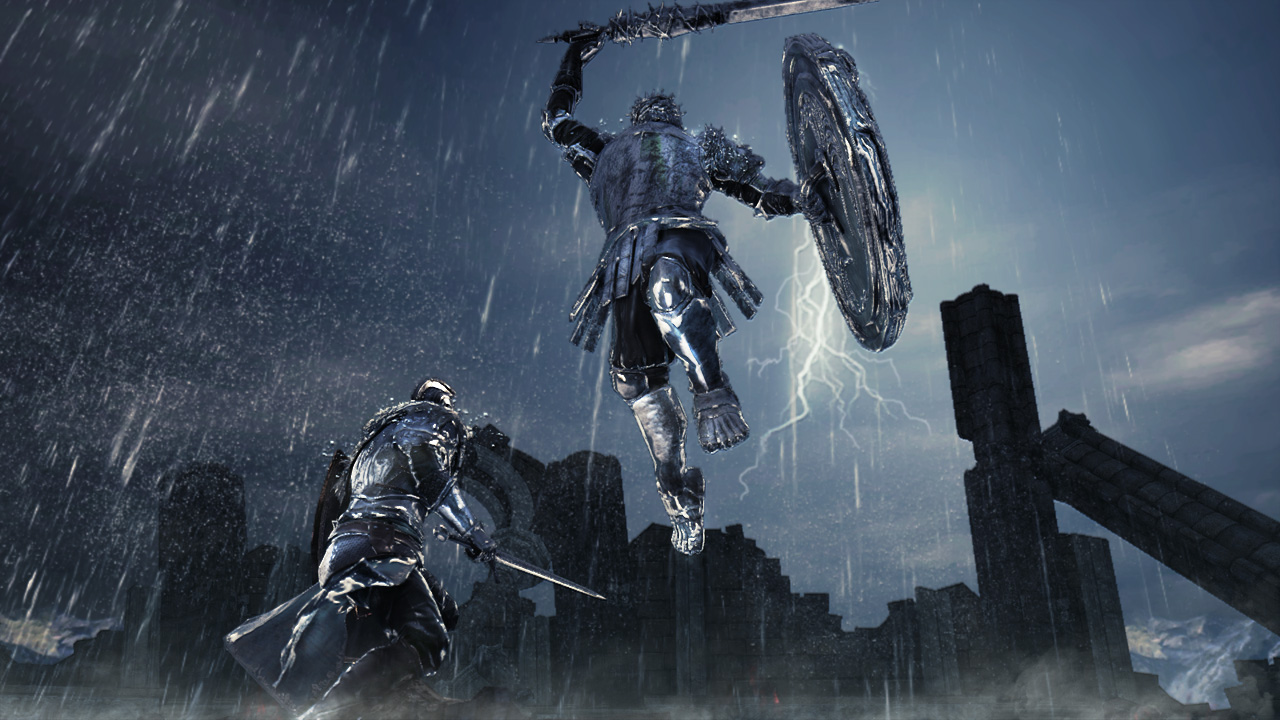
DARK SOULS II: SCHOLAR OF THE FIRST SIN REVIEW – “GUESS WHO’S BACK?”

Here we go again. I’ve hitched up my pantaloons, pulled on my most heavily-armoured codpiece and have gone venturing forth into a world beset by despair, devastation and strange messages on the ground that say cryptic things like “destroy but hole,” and “try jumping” right next to vast chasms. I tried leaving my own message once in response, but they didn’t have any of the words I was looking for. Clearly Drangleic doesn’t know Urban Dictionary.

Yes, it’s Dark Souls II: Scholar Of The First Sin, a game that was not warmly received by the fans who had already purchased the older, inferior version of the game and weren’t getting a tune-up for free. No skin off my nose, I didn’t have the money for it at the time and got this edition when it was on the Steam Summer Sale. So now I’m playing the successor to the incredible Dark Souls, what’s changed?

To start with, it’s set in a new world called Drangleic, or at least I think it’s a new world. It might just be the original kingdom of Lordran, because I’ve heard that it’s at least a few hundred years since the first game and there’s little elements that harken back to the old days. However, I’ll be bloody cross if that’s the case. I spent so much time desperately trying to fix the world back yonder that it’s annoying to think that nobody took the time to keep it in good nick whilst I was away. See, this is why we can’t have anything nice.

Now I admit I haven’t completed the game yet, because a Dark Souls campaign is traditionally something you don’t so much play, as get married to. It’s a long, tough slog that can go on for days. It’s more of a commitment than amputation, and about twice as painful.

Which isn’t to say I don’t love it. Dark Souls has always brought out the masochist in me and about a million others, with its tightly-designed core game loop and matronly tough-but-fair gameplay. So let’s get to the nub of the matter. Is DSII better than DSI? No. Is it still worth playing? Hell, yes.

I remember feeling a bit confused at the idea of a sequel, honestly. I didn’t know how the gameplay could be much more refined than it was, and basically I was right. Nothing at the core has been changed, it’s all stuff around the edges. Enough to make it feel like a sequel, not a massive expansion pack, but only just.

Of course, considering that I knew how to play already, I decided to get that back-to-basics feel by making a completely different character build to the one I had in the first game. And so began the adventures of Sparkly Bert, the red-headed sorcerer with his staff in one hand (careful) and a sword in the other. No more heavy armour and shields for you, Mr. Franey, and you can put that halberd down while you’re at it. You’re going to be soft and quick, a bit like a raspberry and roughly the same colour when a giant sits on you.

So it’s the classic tale of dodge, block, fail to parry properly, backstab, get mashed into the floor, lather, rinse, repeat; but the formula’s been tweaked, sometimes in good ways and sometimes not. One thing I like is that there’s an easier entry for new players, something that bugged me about the first one. You have to do a few hours of basic combat before you fight a boss, and a comparatively easy one at that.

DSII Giant

It brings a whole new meaning to putting your face on in the morning.

Which isn’t to say that Dark Souls II has no teeth, only that it starts you out on the smaller molars before you get to the larger fangs and as mentioned there are things that help and hinder. For a start, the new hub area, Majula, has any merchants and blacksmiths congregate there once you’ve met them, which makes for a useful central point with which to stock up for when you go out battling, whereas Firelink Shrine was basically useless but for the world’s roundest cleric. Some people might claim this is too much of an advantage (they always do), but you don’t get any chums until you’ve found them in the wild and it’s just about convenience, not difficulty.

I even think it suits the tone somewhat. Majula is the one point in the game that isn’t completely hostile, and it’s not like the NPCs are throwing a big BBQ every night. They’re slumped inside individual buildings, refusing to acknowledge each other like a bunch of distant relatives at a wedding. It’s not even a community, it seems more like a resentful refugee camp. They’re all engaged sullenly in their own activities, forging metal, tending to supplies, studying maps or licking themselves. No, seriously.

Another interesting fact is that you can warp from bonfires at the outset, but I suspect this was only done to cover for the rather odd change to the levelling system. Rather than level up at bonfires as before, you now have to warp back to Majula and chat up the drugged-sounding girl in the green hood who will burble meaninglessly into your ear for a moment before remembering that you want to give your stats a boost. This doesn’t change anything mechanically, it just breaks the flow as you have to warp back home to get a quick pump-up before bamfing back to whatever you were doing previously.

And whilst I’m at it, there are other nitpicks I have. For one thing, enemies you kill enough times don’t respawn when you use a checkpoint, and whilst this is useful in the short-term for getting through tough areas, it means that you can’t grind anywhere for very long, and in a game all about the cycle of “kill baddies to get upgrades to kill baddies better,” putting a cap on how often you can kill enemies means that you can’t get as strong as you’d like or practice moves on weaker enemies indefinitely.
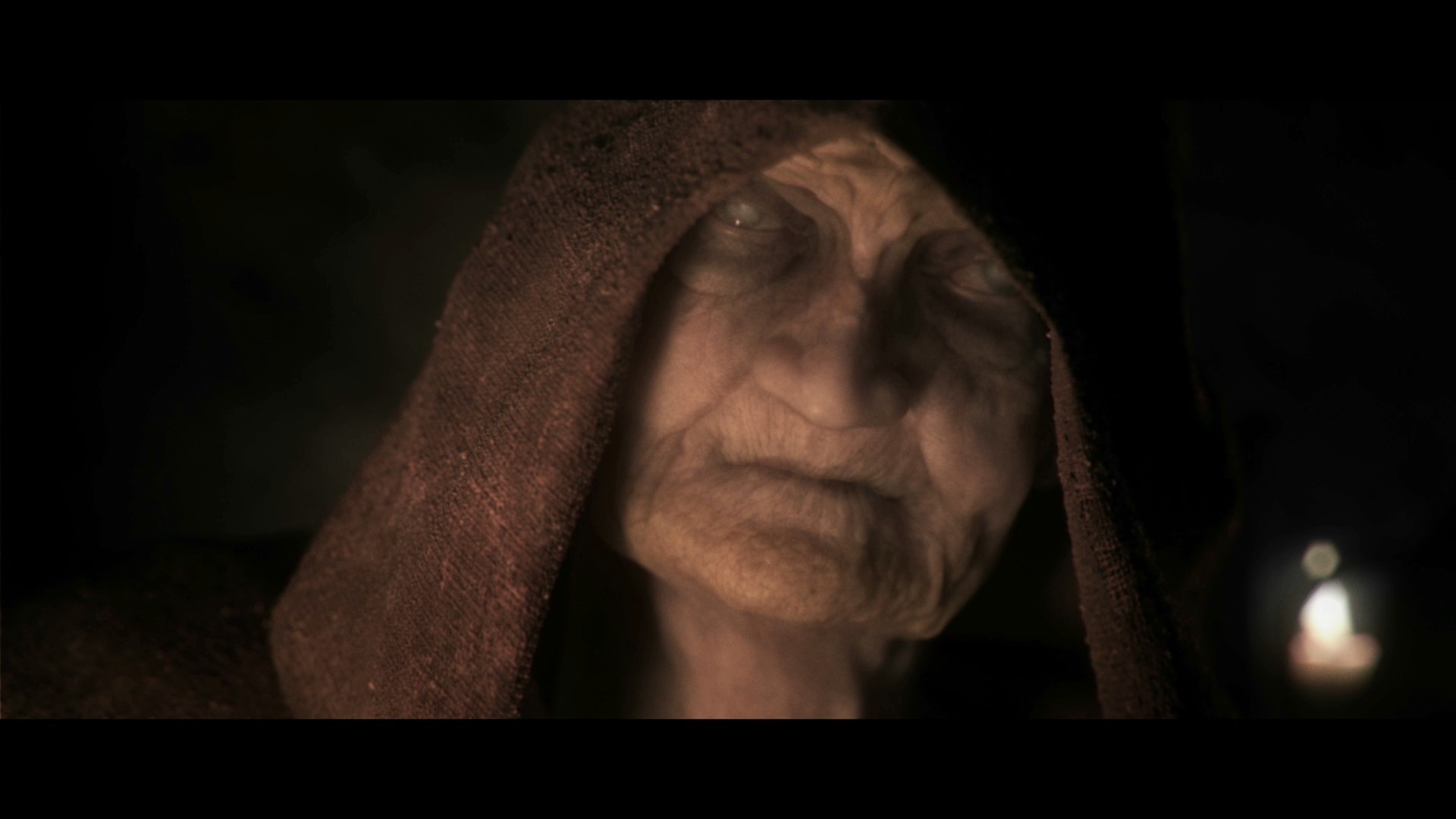
Crone

“I hope you know pyromancy, because these cataracts need burning off fast!”

In fact, grinding comes with a second issue. Now when you die, you lose a bit of your maximum health each time. Get splatted about a dozen times and you’ll suddenly realise you’re at half your max HP. You can reset it by turning human, but the “human effigy” objects for doing so are rare and limited, so suddenly each death comes with a sense of panicky frustration. The beauty of Dark Souls was that your death was consequence-free if you could get back to where you dropped your souls, and now it becomes harder and harder to achieve that every time you get killed. I dread to think what happens when you eventually run out of effigies, you’ll just have to stay depowered and suck it up.

I also feel a bit less enthused over the visual design as a whole. Most of the enemies I’ve fought have just been knights, other hollowed walking around in various styles of protective clothing. Four of the five bosses I’ve killed have basically been blokes in armour and helmets. Come to think of it, one boss was a trio of knights working in tandem, and another was two knights mashed together.

It’s kind of dull, I’ll be honest. Did all the concept artists get the same memo or something? Where is the spark of originality that fuelled the gorgeously drab design of the first installment? What happened to the big pile of bones that shuffled around in a fur coat? Or the demon with centipedes for hands? Or the dragon that was just a big mouth with a few limbs added on, like the evolutionary destination of somebody who shops at Iceland? It feels less creative, less awe-inspiring than the previous Dark Souls. Of course, it’s still miles ahead of most games, but it is a step backward nonetheless.

Right, let’s talk about something I like. Weapon degradation has changed a bit, in that your equipment now has all the physical resistance of a paper plate, but restores itself automatically for free whenever you rest at a bonfire, whereas DSI basically taxed you for wanting to keep using your favoured murdering tools. Now it’s a matter of considered, calculated strikes, keeping an eye on the little bar that symbolises your weapon’s integrity and swapping it out when it finally gives up the ghost.

This might sound irritating, but it inspired something that nothing in the whole Dark Souls series has inspired in me before – experimentation. When my favourite dagger became unusable, I was forced to sheath it to draw a sword and what do you know? It was just as good, if not better.

Cyclops knight

Wow, Scott Summers took the death of Phoenix pretty badly.

I like that it makes you try other tools in your kitbag, because otherwise I wouldn’t have left my comfort circle. The issue is that because the stats in Dark Souls II don’t feel that they have to explain themselves to the likes of you, it means that players feel reluctant to try anything they don’t already know, especially with death now having real consequences. The series design has always squashed trial-and-error gameplay because you need to be using something that is guaranteed to work, and by the halfway point in the game you’ve got a stylised build for your character and you can’t use anything aside from what you’ve been training with.

But now there’s a little more of this “make do with what you’ve got in a dangerous situation” angle, I realise I quite like it. Dark Souls was always about making do with what you had, and nothing makes a player wet themselves like taking away that small allowance right when they need it most. Besides, you never have to use your second-tier stabbers for very long, so it’s never massively aggravating. There’s not as much of a gap between bonfires this time round, you see, so you tend to fight more densely packed clusters of enemies for shorter amounts of time.

However, I don’t think that was a conscious design choice, more a necessity when they saw the environments they were working with. Dark Souls II, by all accounts, seems… Smaller. In every sense of the word. There’s nowhere with the same feeling of scale as somewhere like Blighttown or Anor Londo, you don’t spend much time in any one place before you’ve left it and the pathways loop back on themselves quickly enough that it doesn’t have that satisfying feeling it did before, when you’d walk fifty miles though eighty terrains and finally come full circle to the beginning once again.
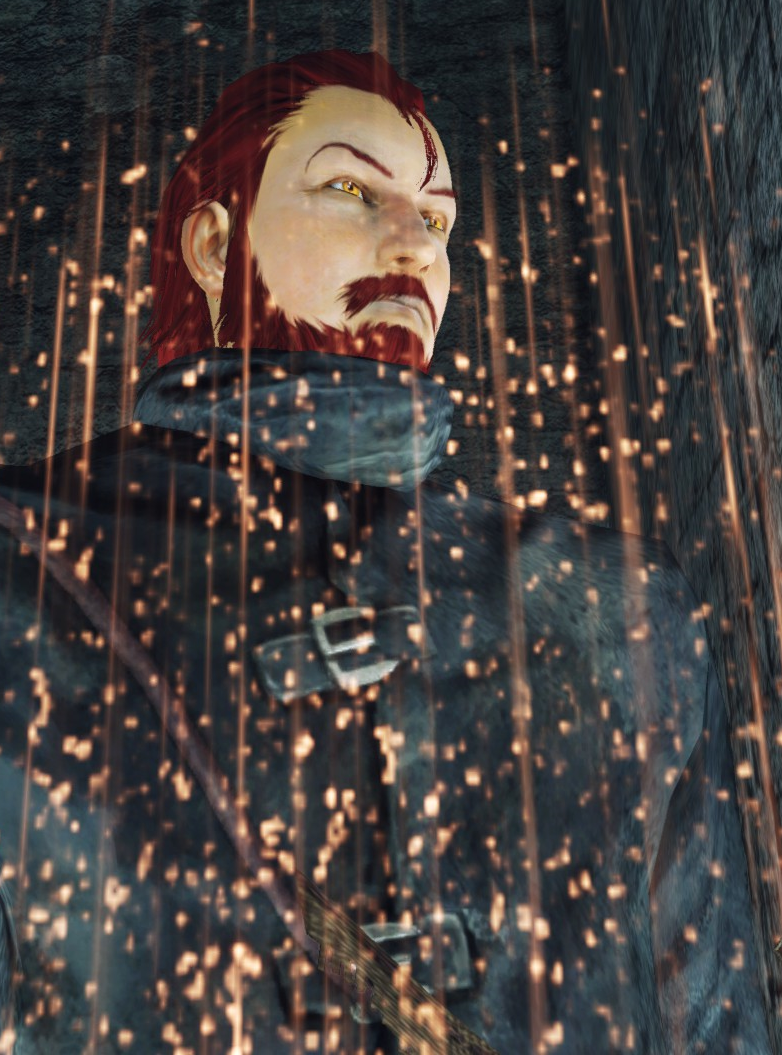
Sparkly Bert

Sparkly Bert lives up to his name, motherfucker!

In fact, Dark Souls II really has all the hallmarks of a game that was made in less time than its ancestor. It’s smaller, less creative in design, not as innovative as it should be and it doesn’t have the same weight to its history or elegance to its craftsmanship. Some of the new mechanics don’t feel like they were thought through properly, and the already problematic ones weren’t revamped when they should have been. For example, the jumping controls have been changed. They used to be absolute arse, and now they’re even worse, mapped to L3. Christ, was that thought up by a man with a tire iron lodged in his head?

However, these quibbles don’t hide the fact that it is still a superb game, and I don’t blame the creators for trying to shake up the formula a tad. Besides, none of the problems are dealbreakers, and DSII is still far superior to the dime-a-dozen schlock you’ll get most days. I’m having a blast with it, and if you have a brain in your head, you will too. Of course, any Dark Souls game will try to forcibly remove that brain, but that’s the way it goes. No loved one is truly perfect.


8.5/10
A worthy successor to the original modern classic, though a little less refined and polished in its execution. Whilst the bad alterations outweigh the good ones, there’s definitely enough going to keep it fresh and worth playing.
ANGRY BIRDS 2 REVIEW – “CHEEP, CHEAP”

Once upon a time there was a young man with silky blonde hair and the purest of hearts. He cared about all things, was always considerate of people’s feelings, and never said anything mean to anybody. He was the kindest young man you ever did meet.

And one day, he bought an amazing new device from a man named Mr. Steven Jobs, who had lots of money and a jumper with a long neck, and he worked in a shop where they didn’t allow bricks, so everything was made of glass and bits of metal. The device was called an iTelephone, and though it had only four buttons it worked like no portable telephone that the young man had ever seen.

A big part of the iTelephone was a special shop inside it called the Application Store, an amazing digital market stand that allowed you to buy special games and functions for the iTelephone to use. There were lots of different ones, including applications that let you go fishing, send pictures to your friends, and ring a cowbell.

…We were easily amused back then.

Then, after not too long, a new game appeared that the young man happened to see. It was a game called Angry Birds, and not many people had heard of it before. And this man bought Angry Birds and really enjoyed it, because it was fun and cleverly made and you got to smash things but without really hurting anybody.

And this young man was ever so happy, and he thought “This is surely the beginning of something amazing for electronic video games on the portable telephone. Perhaps we are witnessing an evolution, where games will turn into something beautiful with lowered prices, innovative concepts and interesting uses of available hardware.”

And now the man is very angry and bitter, and he drinks a lot and throws things at animals and has some unfinished business with the authorities that he’d rather not talk about, though he’s almost saved up the money for the ammunition he needs. For you see, children, things have not gotten better for mobile games. They all copy each other and keep trying to take your money even after you’ve bought it, and they use up all the memory space on your phone and don’t realise that you can’t effectively use joysticks on a touchscreen because it’s like trying to tap dance on an ice rink.

But then a few days ago Angry Birds 2 came out, and the angry man was filled with a sudden sense of hope. Maybe, he thought, this game would strive for that age-old dream, maybe it would aspire to something more than to simply turn a profit, to bring real joy without compromising on that original dream and to elevate everything that made the first game so smart.

And now that man is even angrier, and he keeps lighting matches in the corner of the room and staring at the flame, and every now and then he just makes a noise like a crow with a dry throat, and everybody is wishing he’d move because he’s been there for three days and they’re all very uncomfortable about the whole thing.

And the moral of story is: Don’t ever play Angry Birds 2. Or have hope and love and that sort of thing.

I know that was a long opening, but Jesus, was I pissed off when I saw what this game series had turned into. It was like some execs had sat around the original, and said to themselves, “Now how can we remove any sense of charm and integrity from this?”

So yes, it’s loaded with micropayments that make the game easier. Yes, there’s pointless online elements that don’t add anything. Yes, you can’t play indefinitely because you can only have five lives at a time (then just three after a recent update), and it takes half an hour for a single life to come back, so good luck using it to kill time on long journeys like you could do with the old one. Of course, if you’re willing to pay, you could always-

OH FUCK OFF, ANGRY BIRDS 2. I’m not going to keep giving you money to keep playing a game that is demonstrably worse than the other one.

Attack

He’s going to blow himself up? I guess he must have played the game.

Perhaps the most insulting aspect is how virtually nothing has been added. Isn’t that the point of sequels? To make an enriched, fuller version of the original concept? There’s hardly any of that here, just ways to gouge money from us, like they took a beloved dog and started strapping leeches to its back. You don’t want to go near it for fear of getting drained.

I actually don’t have any gripes against the free-to-play model, at least in theory. It sounds very fair, like the natural extension of the game demo concept. “Here’s a fun game for free, but you can acquire additional gameplay and cosmetics if you feel willing to throw in a couple of bucks.” Hell, if a game’s fun enough you could just donate money to the artist. After all, he’s done something cool and we want talented people to keep producing fun stuff. Quid pro quo, I scratch your back, etc, etc.

But this? This is just gross. They’ve gutted their precious prize in the name of making capital. I know, I know, it’s not like Angry Birds was a sacred cow, but those Star Wars and Rio expansions generally kept to themselves, you know? The core series had at least a little respect offered to it, when it began.

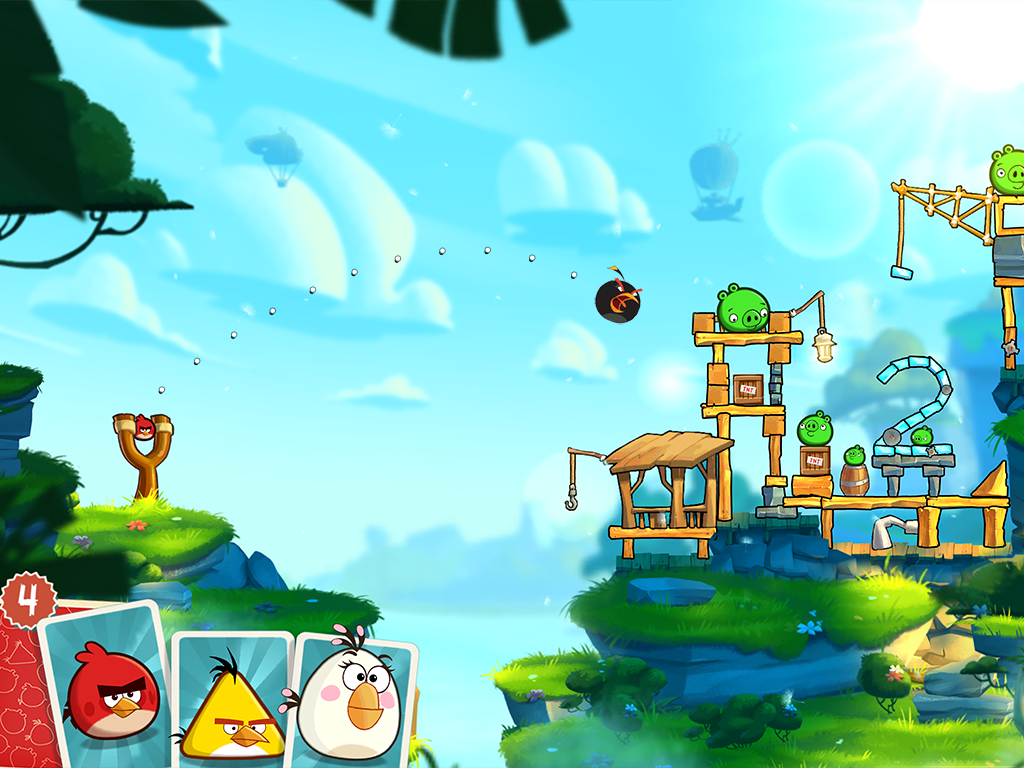
That is, until now. So what’s new? Well, there’s a new bird, easily the shittiest one available. When you hit the screen it suddenly does a loop mid-flight and smashes its face into the floor, albeit with all the force of a cat’s fur gently brushing past your arm. So not only does it have the stopping power of a water pistol, its power is to make itself less accurate, partly because the loop is so huge that it always hits something before it reaches the right trajectory, and it flies forward so quick that it’s impossible to activate it in time.

The one saving grace is that you don’t have to use Mr. Spin Cycle if you don’t want to. Now the order in which you get the birds is randomised, and you can swap around the first three as much as you like. But this in itself seems silly to me, because the obvious loss is focus and good design. There were levels in the first game that were challenging because you had to use specific birds in a specific order, and now you just get one of each thrown at you in whatever order seems most inconvenient. Not to mention that the levels are randomly generated, so you never have time to work out a strategy before it’s replaced by another one you haven’t seen before.

Ironically, the stages are easier when you’ve only unlocked two birds, because it’s guaranteed that one of the ones you want will be in the accessible line-up and the early levels are designed to accommodate for your lacking variety in ammunition. Whereas if I needed a exploding bird later on, it would always be sitting at the back of the queue where I couldn’t use it, behind barrel-roll bill, the three musketeers and some pointless ice spell.

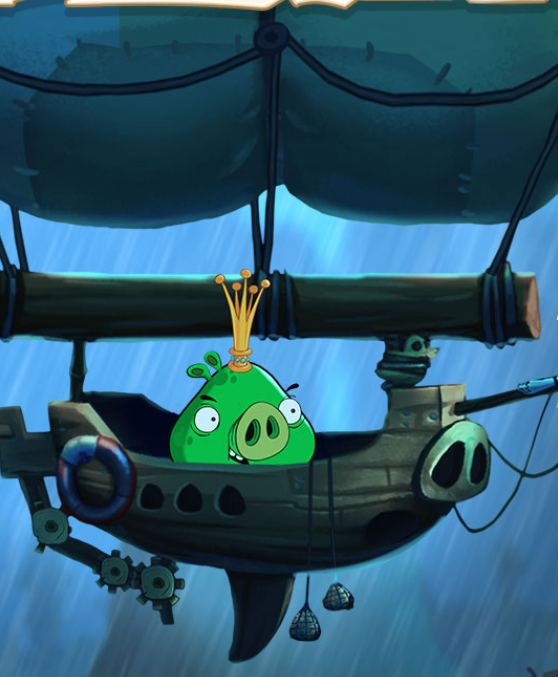
Airship

He borrowed that airship from a nearby JRPG.

Speaking of which, The spells are one of the ways in which Rovio are trying to distance you from your money. They all have different effects, such as doubling the size of the pigs, dropping a cloud of objects from the sky, or just winning the fucking level for you. That’s right, Angry Birds 2 is offering to play the game for you if you’ll just cough up the cash. You only have limited uses of spells, and once you run out there’s no way to get them back without handing over your credit card details. The problem is that whilst the game starts off easier than farting in the bath, after a while it gets annoyed and ramps up the challenge, so unless you want to be stuck on that level forever (only getting to try it three times every two hours, now that there’s a life system), you might have to cough up some cash to get past it. Sure, and why don’t I pay an intermediary to watch the film I want to see, and read that book I was interested in?

The final twist on the formula, in the same way that one twists a turkey’s neck to kill it, is boss fights. Basically, it’s just a piggie with an unreasonable amount of health, the result being that when I slam a bomb into the emerald bastard, detonate him into the atmosphere, watch him crash through three buildings and finally come to a rest on a bed of spikes, only for him to lose ten percent of his health, I do feel the need to throw my iPhone through a plate-glass window. I’ve nothing against challenge, but this is always my problem with micropayments, the games are so often structured so that you get forced into a corner, with the only way out being a door for which you need to buy a key.

There are some games I love tearing to shreds, but this isn’t one of them. The game I enjoyed is in there somewhere, but it’s buried beneath the work of cold-hearted executives who have no purpose but to scrounge children’s pocket money away from them. Maybe it feels churlish to disparage a free game, but at the end of the day I thought about how much fun I had with it, and that’s not much at all. Smashing stuff is always fun, but you could always do it a different way. Such as breaking a phone full of free-to-play games over a corporate villian’s head.


3/10
If I could get at the good stuff beneath the flabby design and horrible attempts to steal my money… I’d just have the original game and nothing more.

BIG-HEADED INDIE GAMES MADE BY BIG-HEADED DEVELOPERS

In gaming, as in all things, there is a sense of duality. This is perfectly fine and necessary, as one can only appreciate the glory of Alien: Isolation if Aliens: Colonial Marines is there to put it into context. You can’t really loath modern Sonic The Hedgehog games without knowing the superior titles they came from. It’s not really possible to feel horrified by the bloated budgets of the Triple-A industry without seeing just how much money one man can make with a few new ideas and the most basic of assets. Or, to stay within the indie theme, you can’t lose your innocence if you weren’t previously cute and cuddly with a head like a beach ball.

Context. It accounts for everything.

It’s not a particularly fresh observation that indie and low-budget games tend to gravitate towards stories that focus on charming little entities being stuck in a grim and terrifying world, with the theme always being “the ascension to adulthood,” kicking and screaming if need be. And whilst it’s not always the case, they’re often platformers. We’ll come back to that in a moment.

Bear in mind that I’m not saying that these things are bad for any reason. Limbo, The Binding Of Isaac, Bastion, all these titles are worth playing and don’t suffer for their relative proximity to being “yet another game about big-headed cuties getting the emotional shit kicked out of them.” But in the same way that I railed against the stagnation of zombies in the last article, here I think that indie gaming needs to get over this idea and move on.

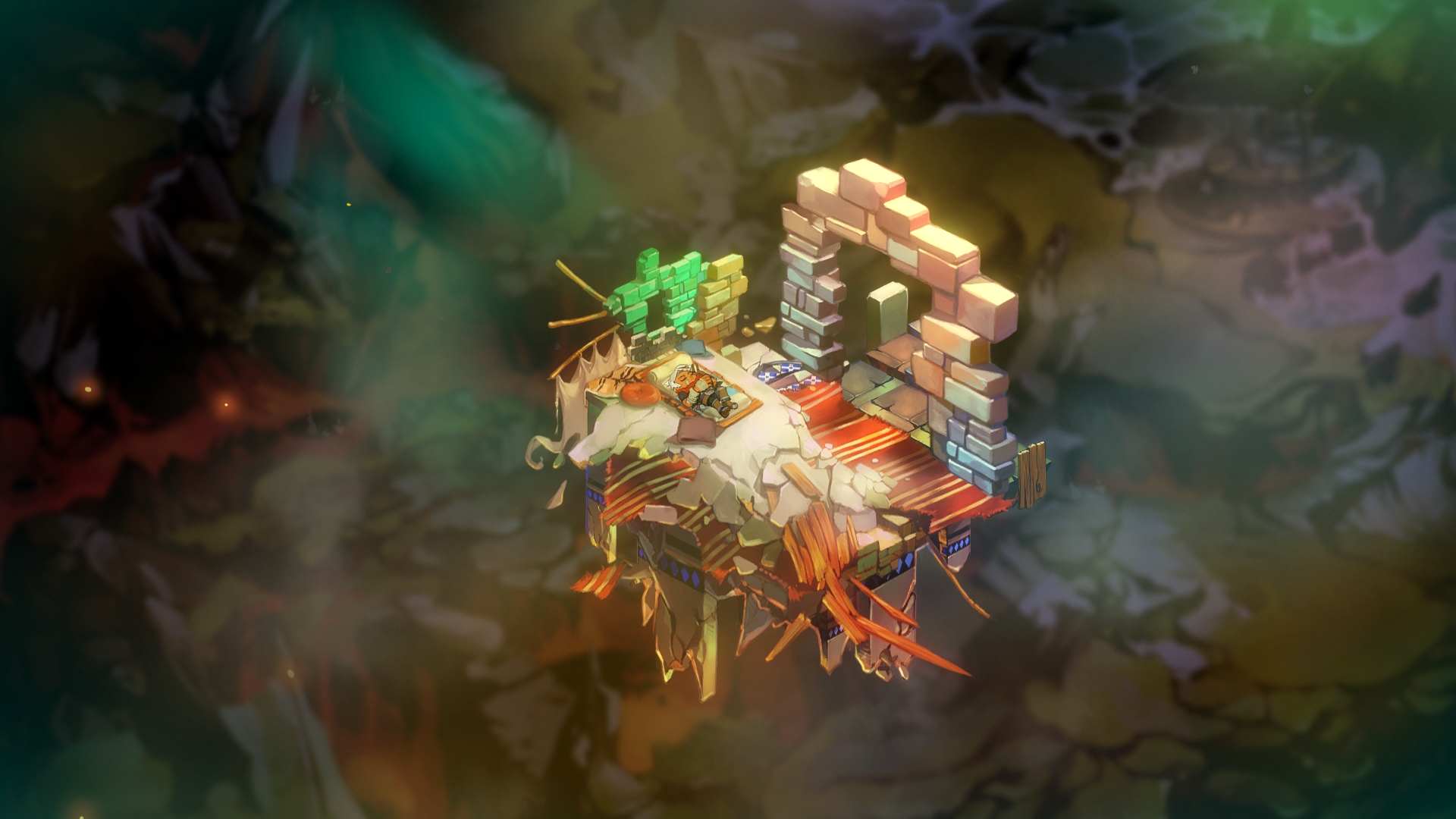
Bastion snooze

Don’t bother waking up, kid. It’s just not worth it.

Why? Well, I think a lot of developers consider it to be a lot cleverer than it actually is, when really it just betrays how little they realise the medium has grown up.

“Look at our game.” They burble, puffing out their collective chests and grinning from ear to ear. “I bet you thought games were all for children and not to be taken seriously by adults, didn’t you? Well, look at what we made. On top of being an emotionally powerful coming-of-age drama, it’s playing on your expectations and being really poignant about it, isn’t it?”

“Er, no.” We respond, looking back at several decades of intellectually sophisticated examples of the medium and wondering whether we should break it to them gently.

“Yes it is.” They insist back. “What should be a game for kids is actually all about growing up, do you get it? Do you, do you? Because we’ve all grown up, do you see? And this shows that games have grown up too, do you get it now?”

Yes, we get it. We’ve been getting it for years, the medium is now venerable enough that there are adults who have always grown up with the idea that games can be for everybody. It’s hardly even relevant anymore. You might as well tell people that they need to keep praising Caesar, or to remember to have a bunker nearby if the Soviets launch the nukes.

I think it’s why the platformer is such a go-to option when making this sort of thing. Platformers bring us back to the age of the NES and even older, when the kids would spend hours with their digital happiness box after a hard day at school, in between episodes of that new “Saved By The Bell” show and playing hacky-sack in their Jelly Shoes.

Look it up.

Anyway, it’s why it’s so much rarer to see these themes in first-person games, because they didn’t come around until the late nineties and even then it still looked pretty awful, like a series of cardboard cut-outs in a kaleidoscope. You can’t stretch that nostalgia angle if you’re utilising a medium which people don’t feel nostalgic about yet. And platformers have fallen a little out of the popular mainstream in recent years, allowing us to look back on some of them with perhaps more affection than they deserve.

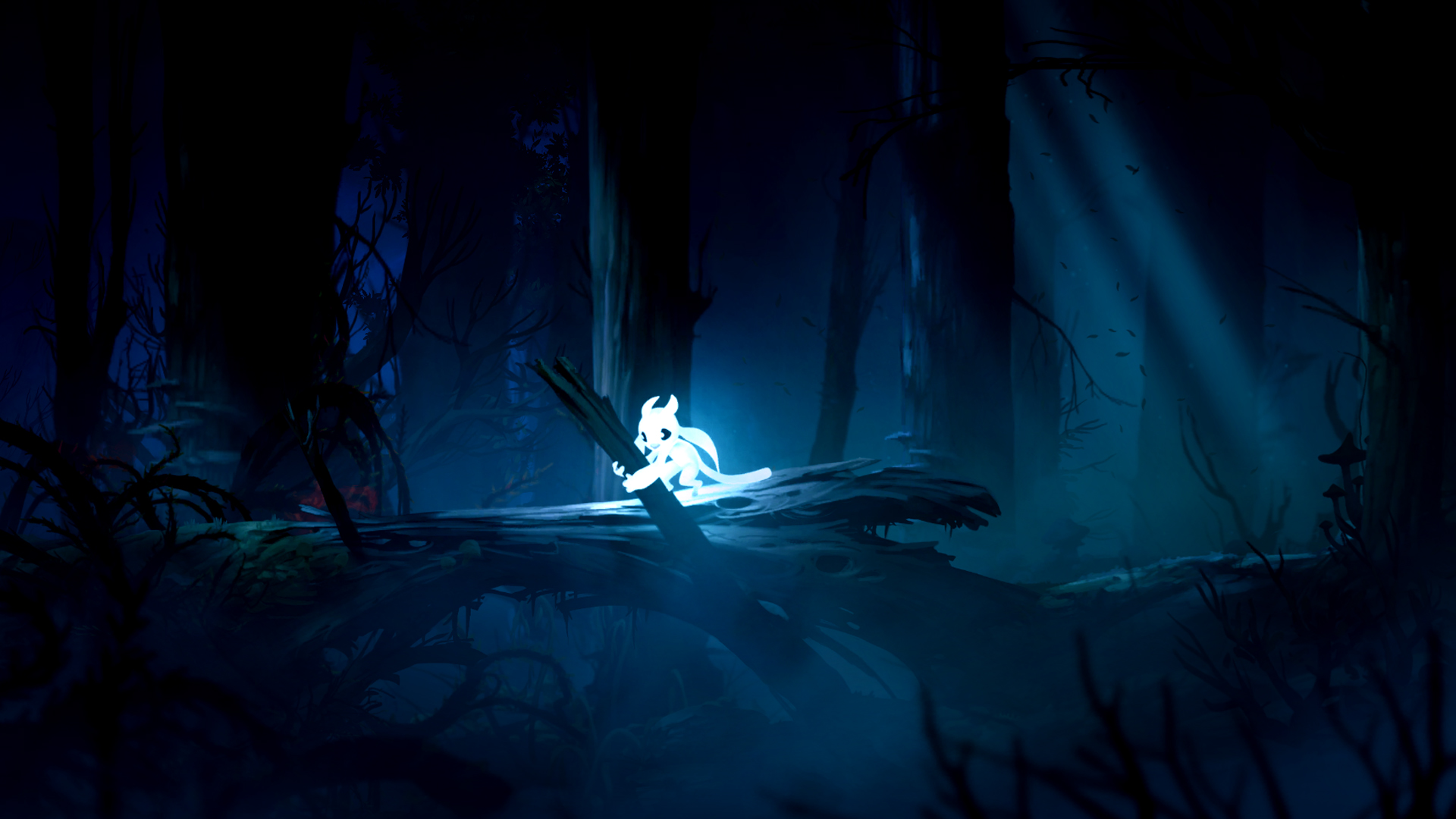
Ori

That thing hasn’t gone through a horrific, maturing experience yet! Get him!

It’s a sticky issue with indie games, because on the whole I never object to any game aspiring to have greater depth than “put bullet in meat,” but this isn’t original any more, it’s just getting old. Can you claim a game has depth when it’s aping something that’s been done a thousand times before? Can you attribute profundity to something that’s been copied from the kid at the next desk? Again, it’s the zombie problem. If you don’t have some new take on the matter, we don’t have a reason to take you seriously.

Look at the Stanley Parables, that’s how you do profundity. It’s a satirical take on video games and the relationship between player and player character. Except when it isn’t. Or when it manages to be both at the same time… Urgh, I have a headache.

Nevertheless, I invite indie developers to look at the already-existing games that feature adorable balloon-headed heroes, then look at your own versions and wonder if you’re adding anything to the genre. Maybe you are, I wouldn’t say otherwise without seeing it for myself. But most likely… Well, it’s probably been done already. Sorry if that sounds harsh, but it’s all part of growing up.

ZOMBIE PSYCHOLOGY 101

I’ve decided that I’m not going to buy any game that has zombies in without looking for some fresh take on it first. I’m bloody sick of zombies, but the little green bastards keep coming back to maintain that the thermometer of story quality is stuck firmly at room temperature, and I’ve just lost any interest.

Let’s be fair though, they’re not limited to games. The undead have shambled their way through just about every artistic medium going, and it looks like they’re here to stay, but they’re always so much more omnipresent in gaming narrative.

I think that his can be partly put down to the fact that there is something inherently cathartic about smashing corpses around. Games designers worked out the formula a while ago, and it’s only been refined since then. Unfortunately, you can only refine something so much before it can’t change any more, and that seems to be the state we’re in now. Dying Light, a game that annoyed me so much that I wrote an entire article shouting at it, teased us with a new take on managing the walking dead and turned out to be bluffing us spectacularly. Thanks for that, Techland.

The fact that “zombie apocalypse” is a tired concept is well-established, but they keep showing up regardless and I think I know why. They tick enough boxes in a variety of checklists that you can basically insert them into anything, fulfil nearly any niche. Visceral B-movie action? Done, that’s your House Of The Dead and Dead Rising games. Frantic terror and desperate fighting for survival? Left 4 Dead and Call Of Duty: Nazi Zombies steps in to help. Developed character arcs? We turn to The Walking Dead and The Last Of Us for that one.

Even when zombies aren’t the central focus, they keep shoving their decaying noses into anything that has room to spare, like the sauce from baked beans pooling around the other items in your fried breakfast. Skyrim, Fallout, Crackdown 2, Half-Life, Prototype, Minecraft, Borderlands, Red Dead Redemption, Dishonored, and Mass Effect, just to name a few. Hell, you can probably think of several games I’ve missed already. It’s unending (which is appropriate really), but it does get old. It has gotten old. So why do they keep doing it? Well, I think one of the major factors is that they relate to the player in so many different ways without us even realising it. The biggest factor, of course, is that there’s no reason not to kill them, ever.

You see, zombies do indeed look like the human beings they came from, but not quite enough to unnerve us, so there’s not usually enough humanity present in them to freak us out unless the designers intend it otherwise. That way we can blow them to bits without feeling like we’re perpetrating some sort of mass murder spree, and secretly vent some much needed frustration.

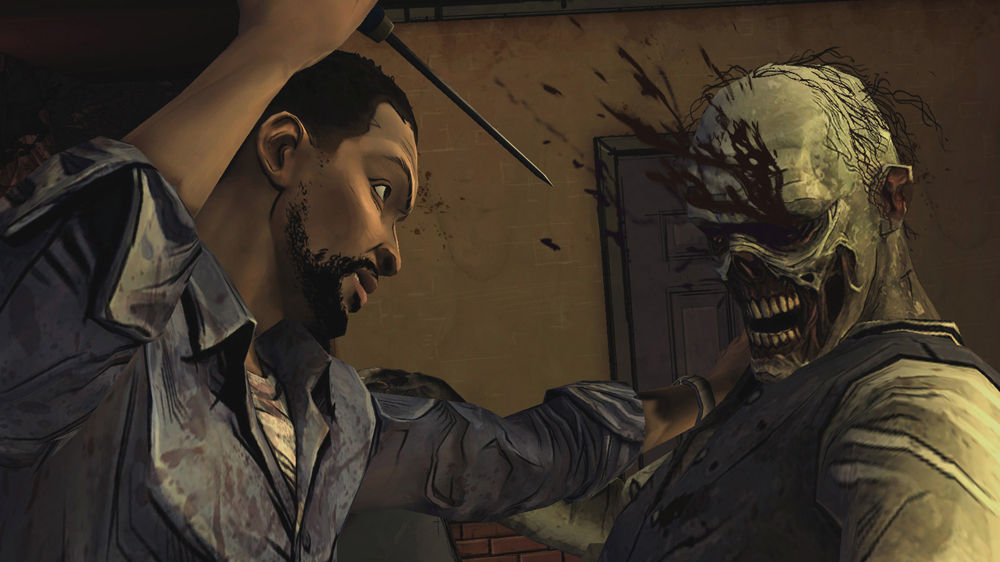
Lee kills zombie

What world is this, where watching a man kill a reanimated corpse with only the tools to hand is considered mundane?

The fact is that whilst they’re clearly inhuman monstrosities, they do look a little like people, just enough, and I suspect that a lot of surplus aggression can get worked out by beating an almost-person to death with a sledgehammer. They occupy that perfect middle-ground between man and monster. The conscious mind doesn’t see a human being, but the subconscious is delighted and is egging you on to keep thwacking that guy who suddenly looks a lot like that moron who bullied you at school… Hey, don’t judge me, it’s not creepy! He’s a zombie, it doesn’t matter if I splatter him to bits. I could turn him to red paste and it wouldn’t be any less moral than playing Cooking Mama.

Actually, it practically goes the other way. Killing the undead seems almost like a moral imperative in the vast majority of stories, what with all that mercy-killing and so on. All these games and books seem to suggest that being an undead is some horrible experience for the resurrected chap in question, so when you finally put him out of his misery with a landmine hidden in a raw steak, you’re actually doing him a solid and he’s going to high-five you in the afterlife. Not only that, but all these stumbling monsters will immediately kill anybody if they get the chance, so you’re kind of pre-emptively saving a life, right?

That’s a stroke of genius, I’ll admit that. An enemy who is so morally uncomplicated that there is no justification for not killing them, no matter who they were in a previous life. I can’t think of many classic villains who fit that need so well. Actually, I can’t think of any. Even Nazis have lederhosen-wearing family somewhere, but zombies? Fuck those chomping psychos. Go get your loudest shotgun and your rustiest chainsaw, and let’s make the world a better place.

Greene the mean machine

Those of you with a nervous disposition may want to look away now…

Which brings us to combat. It seems to be a well-established fact that the risen dead are made by the lowest bidder, hence several exploitable design flaws. For example, the cranium. A zombie does not get a fractured skull, or a cut on the temple, or even a broken nose. No, the second any impact touches upon a zombie’s head, then BOOM! The whole thing explodes like some enormous pimple, showering those nearby with blood and brains, but the kind that will wash off before the next scene, so that’s alright. Then what’s left is a severed neck stump spraying a pathetic jet of blood, before the body comically topples over and we get fifty experience points.

There’s something guiltily satisfying about this, no matter what the context. It’s the absolute embodiment of human destruction to obliterate someone from the shoulders up. After all, the head is perhaps the part of the body we feel the most instinctive need to defend. When we think we’re about to get hit, we raise our hands to cover the face. For that reason we feel that destroying another person’s head is something mighty and cathartic. It’s very final, very definite. If something got up without a cranium we’d feel it was cheating somehow. So when we crush a zombie’s skull, we feel like Conan The Barbarian!

Not only does the method feel pretty good, but zombies tend to be designed to be individually easy to beat, and it’s only in groups that they start getting dangerous. This means that you can normally hack your way through them like the Grim Reaper when he’s behind schedule, and again it makes you feel like a badass. Even if you lose and get dragged down beneath a thousand grasping hands, you can look back on the mountain of bodies you left in your wake and still feel smug despite your failure.

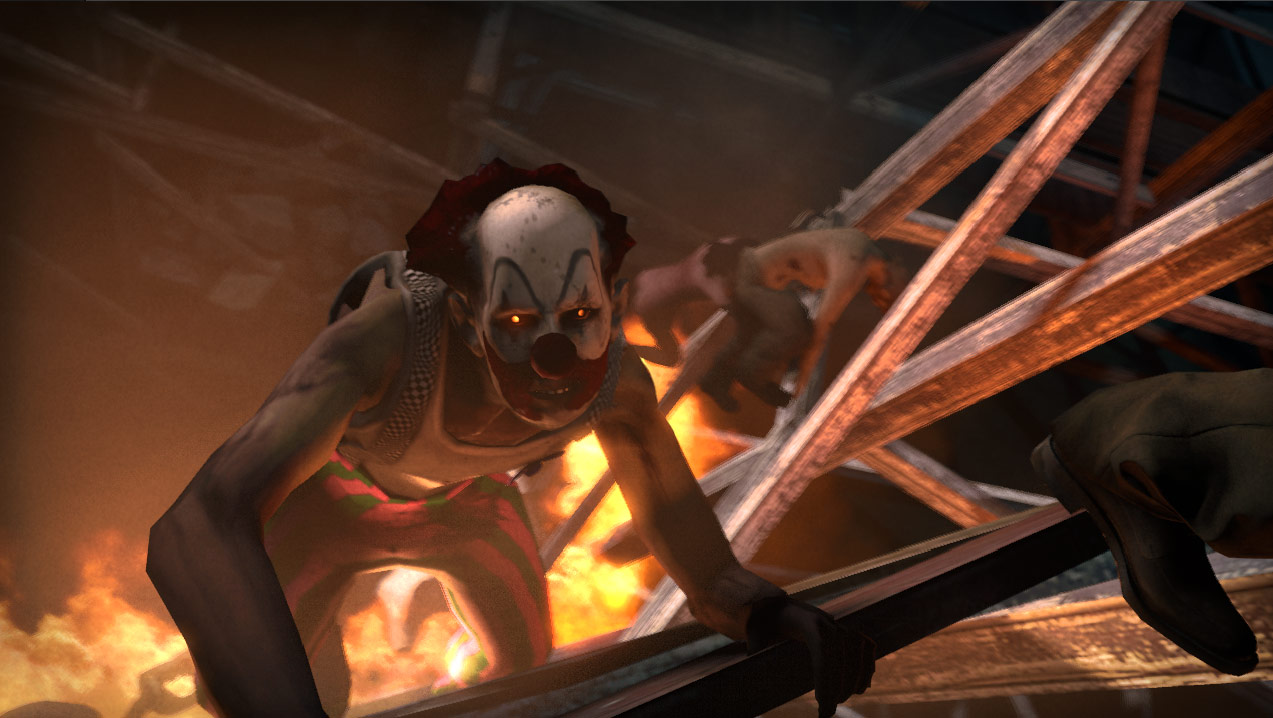
Zombie clown

Aagh! I hate heights!

Hell, you can feel smug anyway. Everybody gets a kick out of feeling like they’ve outsmarted something else, we like to feel prideful about our own intelligence. Something as simple as catching a fly with a newspaper makes us go “Ha!” in way that we really don’t deserve. It’s the same principle with the undead. No matter who you are, however stupid you might feel, you can look at a zombie, something that is matched in nastiness only by its own idiocy, and feel comparatively like a king amongst men. Here’s an enemy you can always outsmart, always outmanoeuvre, always come out on top if you just think clearly. That’s kind of empowering, even if it is for the rather awkward reason that that combined intelligence of the enemy couldn’t outsmart the crowbar you’re hitting them with.

Of course, the other reason that zombies are so popular amongst creative teams is that the stories almost write themselves. You know the drill: Mysterious disease, areas quarantined by the army, small band of plucky but worried heroes trapped somewhere amongst the chaos, and suddenly we’re on a roll. Here’s the bit where someone you care about gets infected and you have to kill them, here’s the bit where you’re in danger from the military bombing the infected zones, here’s the bit where the heroes have a bit of infighting because they’re stressed out, so on and so on.

The broad applicability of the zombie template was proven with Red Dead Redemption: Undead Nightmare, Yakuza: Dead Souls and Call Of Duty: Nazi Zombies, three games series that had nothing to do with the undead until some enterprising young go-getter realised that you could just sprinkle some corpses over the original map, sell it for twenty quid and knock off for lunch.

But that just shows how little impact zombies have, doesn’t it? Tap water can go with any meal, but only because there isn’t any flavour. The Walking Dead is probably the game that did zombies best by just forgetting they were there for most of it. The undead in that game could have been completely interchangeable with any other threat, the point was that this was a character study of people in a difficult situation. Whereas games that orbit around zombies themselves get boring within ten minutes, because there’s nowhere left for them to go.

I think it’s fascinating to see just how homogenised games have become, how this single concept keeps coming up without anybody working on it thinking how tired it is. In the early nineties you could have practically any idea and it would get greenlit. Look at the Mario series. Yeah, Mario seems dull now, but originally somebody decided to make a game about an Italian plumber riding a dinosaur in a psychedelic land, throwing fireballs at giant turtles to save a princess of mushroom people from the largest turtle of all. It’s hardly predictable, is it? These days a game is considered dangerously experimental if the angry, white-skinned hero is wearing an odd hat.

It should be remembered that there’s nothing fundamentally wrong with zombies as a concept, but you can have too much of a good thing. What we need is for some other pop culture fad to take its place for a while, like pirates or ninjas. Ooh, or what about cowboys? It’s been too long since the last good wild west game, i.e., anything more than five minutes.

Anyway, Tales From The Borderlands: Episode 4 just came out, so I’m going to go and try that. And if I see a single undead minion or stumbling corpse, I might just bite someone.

THE REVOLUTION EVOLUTION

Crikey O’ Riley, it’s been a while. Nine days, isn’t it? More? Kind of puts those first few weeks to shame, when I was deliriously pumping out two articles a day and hardly leaving my desk, knowing that I’d just feel the need to start hammering on keyboards again like a lunatic pianist who’s off his meds.

In my defence, there were a few justifications. Internet was down, I’ve been doing some other jobs, and right now I’m on holiday in sunny Malibu. Guess a good work ethic goes out the window when you start noticing bikini girls and colourful drinks with umbrellas in them… But then given the choice I know which I’d rather have. Admittedly, nearly everybody here is so shallow they might as well be a piece of paper, but then that’s all part of the fun. Not to mention that there’s something endearingly cute about a country that struggles so much with ideas that everybody else has gotten over, like giving equal rights to gay people and not arming everybody within its borders. Of course, there’s a leeway to how much goodwill that offers it, and I’m not happy with either the quality of the TV or the way that all the bread tastes really sugary. Have that sorted out by the time I get back, yeah? Ta.

There is one other reason I’ve been late with this article, and it’s because I’ve been playing Deus Ex: Human Revolution – Director’s Cut. I admit, I hadn’t played the series before, but I found myself rather enjoying Human Revolution as I chugged through it, and I know that the sequel, Mankind Divided, is coming out soon, so what better time to be ready for that?

Full disclosure: I only finished it ten minutes ago and I like it, but it keeps bugging me at the same time, like having sex in the shower when there’s soap in your eyes. This is good, but we could have taken obvious steps for it to be a lot better, you know what I mean?

Of course, this is mostly down to ambition. Deus Ex as a series has famously aimed higher than most other games around and has usually been pretty successful. The first one was a landmark in PC gaming that embodied the modern RPG, where every skill you learn could contribute to every mission. You could gun your way through the enemy, sneak past them, hack devices to make turrets blow them to bits, etc.

Adam's Card

I’ll be fine as long as I have my Topshop loyalty card…

That’s a very cool feature and was pretty damn impressive for the time, but Human Revolution keeps forgetting what a good idea that was whenever it comes to boss fights. The game had let me sneak around hacking things for the whole campaign up until then, in fact it’s possible to complete it without killing a single person the whole way through.

Except, as mentioned, for bosses. Alarm bells started when the first boss, a big brute with an LMG and grenades out the arse spawned three feet in front of me with nothing between us and decided to turn my body into a Jackson Pollock painting. Considering I was holding a little stun gun for my non-lethal approach, it could definitely be said that this was not a good thing. Quick-saving in situations like that isn’t just smart, it’s necessary, and to make it worse I’m still not sure why chunky wanted my brains splattered across every wall.

Actually, that’s another issue – the story. Whilst I genuinely like the world building that Human Revolving Door has going for it, the moment-to-moment story beats can seem a bit weird or labyrinthine. The aforementioned boss fights seemed to be pulled from the aether, and the plot is a tangle of various factions, corporations and allegiances all going at each other like the Borgias in an eBay bidding war.

Of course, being confusing is one of those problems that is only ever a problem once, and there’s a lot of story elements I like. The characters are nicely well-rounded and rarely fall into binary good/bad dynamics, adding a tangible sense of moral complexity to a lot of what goes on, and I found myself getting jolly attached to some of them.

But what about the specifics? You play as Adam Jensen in the year 2027, the head of security in a major body augmentation corporation named Sarif Industries. When a mysterious attack on the labs kills his sexy scientist wife, leaves the company in a dangerous position and reduces Adam to a small pile of burnt meat with his bearded head resting on top, Sarif decides to go all Robocop and rebuilds Adam with so much tech in his body that he can probably fire electricity from his nipples. They then spit him back into the world and tell him to find out who caused the attack, or else he won’t get his complimentary can of WD-40.

2015-08-08_00014

What? Is there something on my face?

A small quibble here – the game sells itself on saying that any option is possible and it is quite clearly lying. Go stealth or go home should be the tagline, as for all his mechanical parts Adam still gets reduced to goo and scrap metal whenever he gets in a firefight. Thus it usually comes down to creeping around smacking enemies when nobody’s looking and picking them off with a tranquilliser gun, before diving for cover when you get discovered and hoping you can creep away from the ensuing gun battle or blindfire your way to victory.

Mechanically this all works pretty well, even if non-lethal ammo is harder to find than pieces of the true cross, and more pathways and options appear as you level and acquire cyborg superpowers. The areas are large and non-linear, meaning that you get rewarded for exploration, but there are a couple of tweaks that I’d make for the next game, things that kept bugging me despite my best efforts.

Firstly, there needs to be some non-lethal weapon that you can actually use in a straight shootout, because once you get spotted you basically either have to try to sneak away or swap out to old-fashioned bullets and explosives, because the piddly little taser and sleeper darts are horrible against anything that knows you’re there. I was doing the non-aggressive pacifist run and usually just found myself reloading an old save whenever I got noticed, because I was backed into a corner and the only way out was either to start blowing open heads or making the impossible sprint to safety, and I was buggered if I was going to compromise after more than five hours in. The only time I swapped out my Nerf guns for something with actual stopping power was when an ally was trapped by two dozen enemies and I had only limited time to save my friend from joining the dodo in the history books.

Another thing that annoys me is Jensen himself. Adam has a voice like a gravel driveway, wears a futuristic Shadowrun-esque coat and even has a pair of shades embedded in his face, so it’s hard not to think that you’re looking at a character design that had one or two teenage boys involved. He’s also got Satan’s beard, more artificial body parts than a mannequin repair shop and can use any weapon so well that Hawkeye gets jealous. He’s such a bundle of generic clichés that I can’t take the growly twonk seriously.

2015-08-10_00002

Everybody wait until she leaves the room before you start laughing.

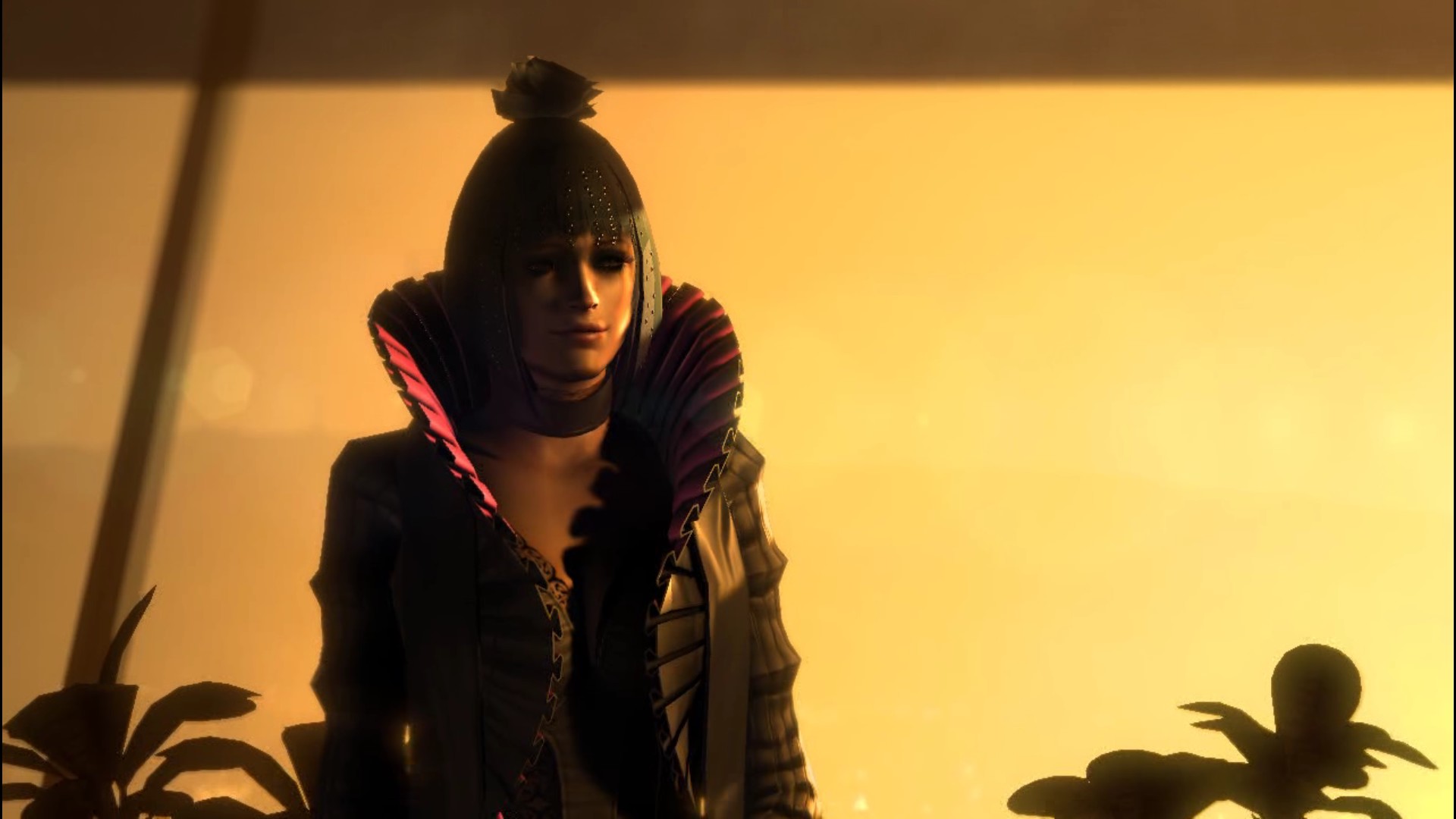
That said, Adam’s visual design is the only one that really ticks me off and there’s a lot of aspects I like. It seems that fashion his moved on to a sort of hybrid of modern suits and Elizabethan finery with elements of classic cyberpunk added in, and this means that the simple act of looking at half the characters is fascinating.

The other aspect that is both a positive and a negative is Deus Ex’s love of choice. I made mention of rescuing an ally earlier, one of the more organic moral quandaries provided. She was stuck somewhere with enough military might to invade Poland bearing down on her location, the implication being that this is an absurd threat that will certainly kill her if you don’t fly in to help. However, they’ll probably kill you as well, so you could use the diversion to sneak away to safety. After all, what kind of madman/hero would face such surmountable odds?

This madman, motherfucker, and I’m doing it through the awesome power of savescumming. Oh, stop judging me. This is always my problem with choices like this, I get too fond of the characters and can’t bear to let them die, but I’m not holding this against the Deus Ex. It’s a credit to their writing that I felt so strongly about the fate of this person, so top marks there.

No, what annoyed me were the choices that weren’t so clearly signposted. The strongest example of this was the very first mission, where I had to go through a base of bad guys in order to take out their boss and rescue a bunch of hostages. But the hostages weren’t displayed on the map, and the patrolling guards with heavy ordinance meant that I didn’t feel like rambling around too much. I figured I’d find them as I went, but that wasn’t the case, and suddenly I was trapped in the concluding cutscene with everybody yelling at me for not getting them out in time. I was trying to, you bastards! It’s not my fault they were being kept in some broom cupboard in the next building over!

On top of which, the ending is an absolute joke. Hit the fast-forward button and skip this paragraph if you don’t want spoilers, you know how it goes, but this is possibly one of the biggest sins that choice-based gaming commits and I want to rail on it for a while. See, when I make a choice, what I want to see is some payoff, something to establish that what I did actually has some weight, but the ending to DE:HR doesn’t have that at all. After killing yet another disappointing boss and getting hustled along a corridor, you end up at a computer with four big buttons that each lead to a different ending. Press one of them, and you’ll get a short movie made of stock footage, with Jensen rasping about why he picked it before getting dumped at the end credits with nary a heartbeat missed, the overall message being… Was that it?

Actually, that seems like a choice statement to summon up the whole game. Remember that I do like Human Revolution, but it makes so many rookie mistakes that the good parts risk getting lost amongst the nonsense, some of which are so frustratingly obvious that you just want to bang your head on the wall and shout at it to think properly for five minutes.

But how could Mankind Divided pick up on this? For a start, I think it should go properly open-world in the style of Skyrim, dropping loading screens off the back of the truck and sticking to one huge sandbox that becomes easier to traverse as you get more robo-powers.

Actually, that would be another thing I’d tweak, making the abilities more fun and engaging to use. Some of them, like the ability to smash through walls and jump like a startled cricket are enormously fun and open up huge parts of the map, but others just seem boring or even pointless. Cancel out the flash from flashbangs going off in your face? I only got flashed once and I just hid behind the wall slamming the takedown button in case anybody came close, I was fine. Why the hell would I pick that over the ability to turn invisible or shoot bombs out of my arms?

2015-08-08_00013

Hey, you’re really pretty… You know, maybe I don’t need to save my wife so urgently. I’m sure she’s fine, wherever she is, right?

The Mankind Evolved trailer has shown Adam using a variety of cool powers and I hope they’re the norm when I start to level up, rather than the croutons in an otherwise bland salad. He shoots lasers and turns indestructible, but if they’re too contextual and not as cathartic is possible, I’ll be disappointed.

Honestly though, I don’t think we need to worry too much. By all accounts, the Director’s Cut that was made took a lot of the original criticisms and went a long way to fixing them, so the developers have proven that they know what they’re doing when they listen to the public. All they need to do now is give Adam a Lemsip and we’re golden.

HALF-LIFE 3 CONFIRMED

No, not really, but everybody has to have a go on that joke, don’t they? Half-Life 2 was released eleven years ago now, and the second episode of that same game made its escape in 2007. So if we’re feeling charitable, and I’m not, it’s been eight bloody years since any meaningful movement. Not exactly rushed, is it? The Sistine Chapel ceiling took only six years, and Michelangelo was one guy with a ladder. Whereas Valve has considerably more manpower and enough money to pay for a whole fleet of staircars, so what’s the problem?

For all my joking in the last article, the reason given by Gabe Newell to the Washington Post last year seemed to be that Half-Life 3 is not what the public really wants, and whilst I find this surprising to hear, I admit that he is the expert and that he has been right about this sort of thing before.

See, Valve always built its success not by following trends, but by working to predict them and having games and products ready for when they exploded. Both Half-Life games emerged as a response to the growing interest in technical realism, with revolutionary physics engines and facial animation to capitalise on those desires. Team Fortress 2 was out just before the online multiplayer craze started and was waiting gleefully for all those who wanted to try it. Steam came up just when it was needed, as was DOTA 2 and Left 4 Dead. Now, with the emerging interest in VR and more immersive and convenient gaming, Valve have got the Vive, the Steam Link and its Controller all ready to hit the shelves before the year is out. The Vive is even beating the consumer version of the Oculus to the shelves, something that I doubt will be an insignificant blow to the Oculus name, especially if it can get the price low enough.

Grigori

For a while, this was all anybody at Valve would see when they were looking out of the window. Those fans were getting pretty impatient, after all.

So Valve tend to know what they’re talking about, but we don’t have to like it. I myself am not one of the naysayers who keep talking about how impossible to justify HL3 would be and how the hype is too high, because what made the other two games so good wasn’t some indefinable quality, some mystic blessing from the fates. It was a commitment to good pacing, an emphasis on character development and some interesting twists on the standard shooting mechanics, i.e., the Gravity Gun.

See? It wasn’t that a piece of the true cross got lodged in the designer’s brain when he wrote this, it was just good writing and imagination, and it’s not like Valve’s quality has dropped recently. The last three games they made were Portal 2, CS:GO and DOTA 2. Regardless of what you think of them, they do what they want to do very, very well. So no, I don’t think Gordon Freeman’s return would be destined to disappoint, it could certainly be achieved with success.

But what would it take to get it released, not including hostage-taking? I suspect there are several scenarios that would inspire Half-Life 3 to get bubbling, but none of them seem to be in the immediate future by my estimations. Let’s take a gander and work out our odds.

A VALVE CONSOLE

This is the one that would almost definitely get it made. If Valve made a proper console with the aim of competing with Microsoft, Sony and Nintendo, a launch line-up consisting of “The Orange Box 2,” (ironically one filled with the third instalments in their franchises) would sell like hot cakes wrapped in pages from Angelina Jolie’s private diary.

Half-Life 3, Portal 3, Team Fortress 3, yes please sir, may I have another? Maybe add in DOTA 3, L4D3, some fresh IP and a new Counterstrike to get it rolling, and I think they’d be off to a flying start, no matter which way the market was leaning at the time. The sheer pedigree would be enough to make them a success, and I think if we ever see Valve move firmly to the living room then our chance of fighting the Combine will dramatically increase.

FLAGGING PROFITS

The most implausible scenario to be sure. If Steam somehow starts to lose people or DOTA 2 doesn’t rake in half a billion dollars every week, it would make sense for Valve to draw their trump card and have the internet lose its mind when they announce it at E3. It’s unlikely that it would ever come to that, but it must give them a nice sense of security.

That said, I do wonder if Valve are holding onto it for that reason. Lots of developers seem to be holding “In The Event Of Emergency” ideas under their belts, the kind that are guaranteed to sell and that they want to keep safe for a rainy day. Square Enix bafflingly shot their wad early with the Final Fantasy 7 remake, but there are others I suspect are being kept close to the chest. When Call Of Duty starts to dip, we’ll see a remake of the first two Modern Warfare games, I’m sure. If Ubisoft feels the noose around its neck, it’ll wipe the dust off Assassin’s Creed 2 and set it loose again with better graphics. If Pokemon sales plummet, it’ll move to the mobile market to save itself, and so on. Safe, dependable ideas that would allow them all to print money en masse.

I wonder if Half-Life 3 has the same thought behind it, being kept safe as some sort of back-up plan. What an awkward situation. Now I want Valve, a company I like and respect, to start failing. Sorry about that, Mr. Newell, but you forced me into this corner.

REPURCHASE BY ANOTHER COMPANY

Playing the damn long game on this one, but if none of the other situations come across then I can guarantee that sooner or later this will happen. No franchise stays dead forever these days, no game fades into the background with dignity. What with remake fever and the nostalgia trip that is Kickstarter, I think it would be harder to keep a game off the shelves than to get it brought back.

Vortigaunt Computer

This isn’t from the game, this is just what happened to the progress for Half-Life 3. It was so unbelievably good that aliens popped in from the next dimension along and nicked it.

Valve will definitely keep a firm grip on the Half-Life license, but one day they’ll break. It won’t be bringing them money any more, they won’t need it, some other company will come along and make them an offer that they can’t bear to refuse, and suddenly – ding, ding! The race is back on!

That might not be a good thing, though. Valve are not the best developers ever – probably – but they’re certainly in the upper echelons and the last thing I’d want to see is EA or Activision get their leathery mitts on Gordon Freeman and his crowbar. It’s kind of a chilling thought, like imagining Al Qaeda stealing the Parthenon, or The Hitchhiker’s Guide To The Galaxy having a modern sequel written – Oh, wait.


I don’t think that there’s going to be enough of an outcry for Half-Life 3 to inspire its creation, at least not on its own. There needs to be some kind of trigger, something to push it forward. People want it but they don’t need it, we’ve kind of committed ourselves to its non-existence at this point. But that’s not to say that people wouldn’t sit up if it was announced, it’s not to say it wouldn’t sell warehouses of games in the first thirty seconds.

But Half-Life soon, as in the next three years? I’m not saying it can’t happen… But I’d be surprised. Shame, really. In a time where the Order: 1886 and Arkham Knight for the PC can plague us like a load of scabby and deceitful tyrants, it would be nice to see Valve swing in like Zorro and do what they did all those years ago – raise the motherfucking bar.

Wait a moment… 1886? If you add those numbers together you get 23, and then if you look at how many years it’s been, then –

Oh, forget it.

THE TRUTH (50TH ARTICLE ANNIVERSARY)

The following is intended as a joke. Joel VS Games intends no offence to anybody involved. It regularly intends offence to others, but not to anybody in this article. It makes for a nice change, I’ll tell you that.


I don’t know if this will ever be read. I hope it will. There are things happening here, things that need to be known, and we don’t know how to leave. When we look out of the windows, we see only vast expanses of desert, and none of us have seen anything else for the last five years. Bill Evans struck out two months ago with as much water as he could carry, telling us that he’d come back, that he’d get help for the rest of us.

But like I said, that was two months ago.

While I don’t know where in the world we are, I do know that this place is called Facility 17, and referred to by those kept inside it as “The Offices.” A grey complex of heartless concrete buildings, arranged in a disordered cluster amongst the sands. The strange thing is that everybody thinks the real offices are in America somewhere… Washington state, I think? The name Bellevue keeps coming back to me… I’m sorry. It’s hard to remember, it’s been a very long time since I was part of civilisation.

Facility 17 exists in service of The Project. It was made for that single purpose, made for that function. It holds five thousand people within its walls, some of the greatest technology ever made, vast databases of information. Everybody here understands how important it is. We know that when it is done, when the Project is shown to the world the next age of humanity will dawn and that everything would change. Empires would rise, culture would become unrecognisable, our very souls would ascend into something greater.

And two days ago, it was finished.

We couldn’t believe it. We ran every test we could. We checked and double-checked our research, we submitted it to every exam we could think of. They all came clean. It really was what we thought, terrible and awe-inspiring and fascinating all at once. Even those who weren’t aware of it being there still felt a chill as they entered the room, and none of us could pick it up for long without feeling dizzy and light-headed. It was a humbling thing to hold the future in your hands.

But we knew what we had to do. The procedure had been drilled into us from the very beginning, and the motions came smoothly and naturally. As one, the top five workers of which I was one, all drew our keys and went to the main computer, a vast tangle of microchips and screens that thrummed with energy. In the centre of the console were five locks, arranged in a star shape, with a button under glass at their centre. We twisted our keys as one, all feeling the same fear and anticipation. Alarms started blaring, lights started flashing. The rest of the work force held each other close. The glass barrier segmented into four parts, which sank seamlessly into the panel, leaving the button unprotected. The others looked at me. I knew what my duty was.

I pressed the button, sweat running down my forehead, and something rose out of the console. A small phone, albeit one with no buttons or numbers. It didn’t matter. There was only one place it could call.

My hand trembling, but my voice steady, I raised the receiver and spoke into it, staring straight ahead.

“Yes, this is Jeffrey Miller from Research and Development. I need to speak to the CEO. The project is finished.”

There was no response, but at the front of the room the elevator, which never moved at all, silently sprung to life, and the doors opened expectantly like the maw of some great monster. I and the other four workers silently looked at each other, not knowing what to expect, but I solemnly took the finished project in my hands and went to enter with the rest of them.

As the doors closed behind us, we could see the rest of the team saluting us, tears in their eyes.

The doors sealed shut, completely airtight, and the lift began to ascend to the top floor, the offices of the CEO. I am aware that the man has managed to maintain a sympathetic appearance in the outside world. He must have more spin doctors than hot dinners.

At any rate, we could feel the tension rising in that steel box. Sweat was building on my palms where I held the project tightly, and yet this building in the middle of the desert somehow seemed to be getting colder as we ascended. My colleagues were staring up at the ceiling or at their shoes. Several of them were praying quietly.

It took several minutes for us to reach the top, and as the doors opened we stepped out into a gorgeous waiting room, with a set of massive oak doors ahead of us. To the left of them was a desk with a receptionist behind it.

She was huge, at least seven feet tall and still proportionately broad even for her size. Even sitting in her chair she was at eye level with all of us, and as she shifted it gave a mournful creak of protest. Her face was a mass of scars sat upon a broad, scowling mug with a cleft chin and a broken nose. Her hair was brown, tied into a tight bun at the back, and she wore a tight floral dress that bulged against her muscles and wasn’t quite low enough on her forearm to hide the KGB tattoo. As we approached her, she rubbed her chin and glared suspiciously at us, and we could all hear the scritch, scritch of facial hair against her calloused palms.

“Da?”

We looked at each other, nervously, and I spoke quickly before she might consider us rude or just attack us out of pure aggression. “We, uh, we have an appointment? About the project?”

Her eyes narrowed, and she picked up a phone on the desk and tucked it under one ear. “You wait, stay quiet.” She growled as she typed in a number. We all nodded like kindergarten pupils. After a moment, she spoke into the mouthpiece a stream of Russian dialect.

“Yest’ tri idioty zdes’. Oni govoryat, chto oni imeyut naznacheniye, chto-to delat’s proyektom. Vy khotite, chtoby ya s nimi borot’sya?” There was pause, then she gave a booming laugh and a predatorial smile, exposing three gold teeth. We looked at each other. This was not a good sign.

“Ponyal. Ya dam vam spravit’sya s nimi. Vsya khvala klapan.” She put the phone down, and smirked at us. “You go in.” She rumbled, and pressed a button under the desk. From the massive oak doors there was a clunk of a bolt being shot back and we approached it like rabbits approaching a foxhole. It might have been what we had to do, but it would never be what we wanted to do.

The doors were so heavy, it took all of us to push them open and they closed again with a mighty rumble when we let them go, leaving us trapped in the main office.

It was everything you’d expect. A cavernous, rectangular room with bookshelves on one side split by a roaring fireplace, and a massive fish tank in the opposite wall, in which several sharks swam in lazy circles. There was a window at the far end of the room, from which the whole of Facility 17 was visible beneath us. The walls themselves were made of varnished wood, and the floor was covered in a thick burgundy carpet. Beneath the window, facing us, was a desk with a seat behind it. The desk itself was the epitome of neatness. A single computer, with the mouse at a perfect parallel to the keyboard. A single stack of precise papers in one corner, five identical pens on the desk. Again, they were all parallel to each other, straight to the degree. A phone was there too, the same make as the one in the office, and a crooked table lamp hunched over it like a vulture.

There was a high-backed leather office chair behind the desk, turned away from us, but we could feel the presence of the person upon it. As we approached, there was a growl from the shadows in the corner of the room. Something with long claws and yellow eyes watched us approach.

“Excuse me, sir.” My voice was shaky.

There was no response from the chair.

“We, uh… We have the project, sir. It’s finished.”

Still nothing. The sharks were still circling, but now closer to the glass, their soulless eyes watching us without emotion. The thing in the corner made a noise that sounded like sniggering.

“If you like, we could leave it and come back later.” I knew how desperate I sounded, but I didn’t care. I just wanted to leave.

There was a pause before we heard the response, as though the listener was considering every syllable in our dialogue. When he did speak, it was in a quiet, low tone, almost a murmur.

“What does it say on my desk?”

“I’m sorry?” I was unbalanced by the question, I’d been preparing myself for enquiries on the project, not this strange segue. Especially when you took into account that there wasn’t a…

I recoiled slightly. There was suddenly a nameplate at the front of the desk, perfectly centred and facing us. Lord knows where it had come from. It hadn’t been there a moment before, but now it was just calmly sitting there, as though it had always been.

“I-I don’t…” I stammered. The creature in the corner was laughing again.

The voice interrupted me, cutting through my words with smooth precision. “What does it say?” He repeated softly.

I looked at it again, resisting the urge to wipe sweat out of my eyes. There was no name, only three letters. “It says C.E.O, sir.”

Suddenly one of the men standing behind me, a balding man named Walters, burst out in frustration and misery. “For god’s sake,” He cried, “What does this have to do with-”

There was a click, and the floor beneath him opened up. He dropped into the trapdoor without a word, and for a second I could see the shock in his eyes, the utter realisation of what was coming. He vanished, there was a brief scream, and the hatch smoothly closed itself again. It was now indistinguishable from the rest of the carpeted floor, and we all suddenly pulled away, feeling scared and insecure about our relationship with gravity.

There had been no movement from the chair, no press of a button or throw of a lever. But now the voice spoke out again, still calm and in control, but stronger than it was before. “It says C.E.O.” It rumbled ominously. “To be the C.E.O is to be in control, wouldn’t you say?”

Cue frantic nodding and clucking of agreement. We weren’t going to over-analyse what he was saying, he could’ve told us that we were made of aluminium and tennis balls and we would’ve smiled and gone along with it.

“And to be in control is to have people follow your orders.” It continued. “That is the system that has kept mankind going. That is what is necessary.” It lowered in tone slightly, thrumming with suppressed hunger. “And speaking of necessary… Let me see the project, please.”

“Yes, sir.” My voice was a hollow whisper. As if in a dream, I walked forward and placed it on his desk and as I did so the chair rotated to face me. For a moment I met the stare of the man sitting there.

Nobody could hold their gaze to those cold eyes. The sharks looked friendly by comparison, and I looked away, stepping back into the group.

The project was a large, open topped box made of beautifully varnished mahogany, and inside lay a velvet cushion of the richest scarlet, soft as a cloud and without a single crease, stain or scuff mark. Lying on top of that was an orange binder, filled with neatly pressed paper. Among the “top secret” and “for approved eyes only” stamps littering the cover were five simple words. Or rather, four words and a number bisecting them.


HALF-LIFE 3 DESIGN DOCUMENT


I looked up, my voice trembling. “Mr Newell.” I said hoarsely. “After all these years, it is done. The project is complete.”

“I will decide that, Miller.” He said sharply, but his eyes were flicking over the folder, absorbing it. With a watchmaker’s care he lifted the folder from the cushion and laid it carefully on the desk, studying it for a moment before he opened it and started to read, peering over the intricate matrix of words, pictures and graphs.

The group bustled nervously about, trying to get a read on his expression and working out if we should make a break for the door. Our deductions didn’t come to much. He was completely inscrutable, a perfect poker face, adding a layer of uncertain confusion to the already prominent terror.

But then we were shocked by something even more unlikely. He didn’t look up at us, but he spoke again, and his voice was was tinged with… Satisfaction? Contentment?

“This is… Quite good.” The last two words seemed forced, but we lit up as a group. We’d take what we could get. “Really, sir? You mean it?”

“I do. I definitely can’t say it was rushed,” he added in a dry tone, “But it does seem to be of a high enough quality that I think we could-”

He stopped suddenly. If there had been any look of positivity in his features, it vanished from them in a moment.

“What’s this?” He whispered. It was almost inaudible.

My own delight faded. “I’m sorry, sir?”

“What… Is… THIS?!”

The last word was a booming roar that made us all draw back in terror. Even the sharks moved to the other side of the tank and the yellow-eyed thing in the corner withdrew further into the shadow, no longer laughing. Nobody was laughing any more.

He lent forward and laid both his hands flat on the desk, looking up at us through eyes tinted with cold anger. “Perhaps one of you,” he hissed, “Could be so good as to explain this to me?!”

He picked up the folder and slammed it in front of us, one finger pointing accusingly at a paragraph halfway down the page. At the sound of the impact half the group came close to fainting, but the fight-or-flight adrenaline won out in the end and kept us all standing, albeit with a fair amount of facial twitches and damp trousers. We moved forward as one, all trying to stand at the back simultaneously and looked down worriedly at the offending section.

Mr. Newell’s hand shot out across the desk and grabbed Irving, the man next to me, by the collar, pulling him close, inches from his own face.

“Read it.” Mr. Newell rasped, and thrust the frightened man back before turning to stand with his back to us, looking out of the window with his hands held behind his back.

Irving made a whimpering noise and looked at us, pleading with his eyes, but there was nothing we could do. I nodded slightly. Our best hope at this point was to appease him, to placate him. Go along with it, I urged him silently. Remember what happened to Walters.

Nodding back and wiping the sweat off his brow, Irving lent over the paper and cleared his throat. It sounded dry as a bone.

“Having made his daring escape from the Aperture vessel Borealis, Gordon Freeman uses the newly discovered technology to upgrade the Gravity Gun, allowing it’s design to incorporate a new feature that enables the player to-”

“Stop.” Mr. Newell did not turn back to face us, but the hands behind his back clenched into tight fists. “Read the bit about the Gravity Gun again.”

Irving nodded weakly. His voice was now no more than a terrified wheeze. “Gordon Freeman uses the newly discovered technology first to upgrade the Gravity Gun, allowing it’s design to-”

“‘IT’S DESIGN?'” Newell span round to face us, slamming a fist onto the desk and bellowing at us in a vicious rage. Irving actually fell back onto the floor in his terror to get away, only to remember that he was no safer there and leaping awkwardly to his feet.

“Sir, what is the matter?” I almost begged him. “I don’t see what’s the problem!”

“You fools.” He spat with venom. “You bring me this, this thing and you dare to suggest that it might be sufficient? We’re not some two-bit indie company, we are Valve. Don’t think to insult me with this garbage.”

“Sir, I still don’t see what’s so-”

“THERE IS A MISUSED APOSTROPHE!”

The statement fell upon us like the sword of Damocles, and echoed around the room as we stared at him. A vein was throbbing in his temple, and suddenly he looked very tall. Very tall and very big.

“Surely not.” I said hoarsely.

“Oh yes.” He snarled at us. “Indeed there is.”

I looked down, and of course I saw it. How could I not? It was so obvious, so glaringly clear that it might as well have had a page all to itself. And yet we’d missed it. And now our mistake was coming back to haunt us.

I tried to speak, but Mr. Newell beat me to it. “Don’t you people understand?” He said in a voice flooded with pure hatred. “We have made two of the finest titles ever to hit the market, critical and commercial lightning, and we have made Portal, Team Fortress, DOTA 2 and Counterstrike. We have the greatest distribution system for PC gaming every created. We have lead the way in this medium since 1999 and we have never stumbled. AND I WILL NOT SEE US STUMBLE NOW!”

He sat back into his chair, his head bowed low and glowering at us from beneath his eyebrows. For a long time he said nothing, but then he spoke with no emotion at all. “We will destroy it.” He said quietly. “Start again, from the beginning. I want to see nothing reused, do you hear me? This is tainted, it is insufficient. No recycled concepts. Retry, from page one.”

There was a moan of horror from the group. “Sir, not again!” I wailed, begging explicitly now. “That’s the fifth time you’ve made us restart this project!”

“Well,” he thundered back, “Perhaps if you didn’t keep submitting this trash then I wouldn’t have to keep putting it in the fire where it belongs. First it was run-on sentences, then the Comic Sans font, then you used that paper with the watermark on it. Failures, every time! This will be gotten rid of, it is the only way to purge ourselves of its inadequacy.”

And with that, he took it to the fireplace and threw it onto the flames. Within seconds it had merged with the inferno, and we watched it burn with the eyes of the truly damned.

“Go back to the Offices.” He said brusquely, sitting back down at his desk. Suddenly he was all business again. “Perhaps next time you can make something that is more acceptable.”

We trudged out of his headquarters, not even bothering to fight him on this. We knew it would make no difference, but as we left, we heard him speak again.

“Better late than never, people. Perhaps someday you’ll all work that out.”

Then there was a pause, and a decisive tone arose within him.

“Actually, Irving can stay. I want to talk to him.”

The poor man froze, but summoned all his courage and walked back to Mr. Newell. As the door closed behind us, we heard the boss say one final sentence. “What do you know about making hats for Team Fortress 2?”

We never saw him again.


Thank you to everybody for your support! I never expected people to enjoy this site as much as they do, and I’ll be sure to keep bringing you more articles in the future. Thanks again!

ZELDA’S PROBLEM? WE CAN LINK IT TO THE TRINKETS

So, I finally got around to completing The Legend Of Zelda: Ocarina Of Time, and once again I’ve shown how dated I am when it comes to the medium I love. Don’t get me wrong, I never had an aversion to playing it, but I didn’t have the right console when it hit the shelves and couldn’t scrape together the pocket money (or the parental pity) to get it.

So I had to wait until the 3DS got released, and then wait another few years just to be on the safe side. You don’t want to rush this sort of thing, after all. Actually, it might just have been because I had to undergo the severe bone readjustment surgery that’s necessary to use a 3DS for more than half an hour, at least without your hands feeling like they’re turning into shapes that would give Picasso a migraine.

But I find Ocarina Of Time an interesting point of discussion. Obviously it’s a well-made game and a fundamental piece of video game history, but it’s not perfect, not by a long shot. The targeting system is rubbish, a few of the puzzles are just completely illogical and the forced stealth sections in Hyrule Castle and the Thieves’ Hideout made me want to drive nails into my eyes, and myself into a river.

It’s probably safe to put this down to teething problems. Ocarina Of Time didn’t have much to learn from and it certainly got a lot of things right. I particularly liked the Spirit Temple and the character you meet there, and the graphical style in general was an endearing mix of cartoon exaggeration, Japanese manga-aesthetics and polygonal crafting, not to mention a nicely organic bag of side-quests to perform at your leisure.

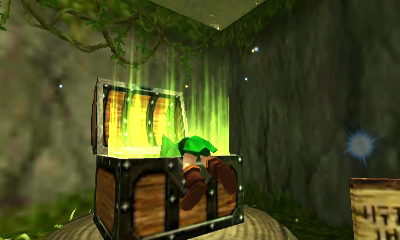
Link and ocarina

Thanks, I guess, but I really wanted an electric guitar, or at least a bug-zapper for the fairy.

That said, there’s one aspect that really bugs me, one that many games still adopt today and can be seen in nearly all forms of story-telling to some degree or another: The dependence on mystical mcguffins in place of anything the reader can actually understand.

There are many games that do this, but Ocarina Of Time was one of the biggest offenders I’ve seen in a long time, filling its plot with confusing ideas and concepts in the hope that the glamour of them would distract from how utterly baffling they were.

To start with you’ve got three goddesses who create Hyrule, representing power, wisdom and courage. Then they piss off again, but leave behind the Triforce for no explained reason, which is a sort of supremely powerful artefact which embodies those three qualities, but also grants wishes if you’re lucky or possibly it doesn’t if you’re not. Except that they didn’t leave it in Hyrule, they dumped it in the Sacred Realm, so we’re not sure how everybody knows about it, but the monarchy are using it as their coat-of-arms just to confuse everyone. Then there’s three grand fairies for some reason, who are colour-coded in the same way as the goddesses but never mention any link to them, so I guess that’s just to confuse us again, and the Master Sword shows up as a sort of pointy time machine and we’re not sure how it got here but just run with it, and you’re the chosen hero, though it never says who you’re chosen by and why somebody else can’t have a go at sorting stuff out, and the Ocarina Of Time is a magic doodad that’s been passed down the generations of the Royal family for some unexplained purpose, but you can only use it when you’ve collected three gems from several temples, and one of them is given to you by the Deku Tree who happens to be a god but obviously isn’t, because we saw the goddesses before and he looks like something else, and then he comes back as a new tree when he dies except that he hasn’t died, because now he’s a new thing entirely but forget all that, and there are six sages in the Sacred Realm but also in our world, all of whom have some power that we’re not sure about, and they each give you a medallion that’s super awesome though does nothing, but fuck it, you needed them anyway to proceed, and there’s really a secret seventh sage who leads them and creates arrows out of light which you needed all along but wasn’t even mentioned up until the very end, and the villain is the embodiment of evil called Ganondorf and it turns out that he can’t take the whole Triforce because it splits up as a sort of burglar alarm function but with a consolation prize, so he’s only got a third of it and the other two pieces have become a couple of really rubbish tattoos on the back of your hand that don’t do much, and he’s a sore loser who turns into a pig with a shorter name when you beat him and then he goes to some dark realm that was presumably just hanging around waiting to be useful and HOLY CHRIST, WHEN DOES THIS END?

You know, I would’ve put a spoiler warning at the beginning of all that, but I’m not sure I needed to, the whole thing’s completely impenetrable. The moment-to-moment character dynamics in the game are fine and enjoyable in a kids’-cartoon kind of way, but it’s broken up with this confusing mess of mythos and I found myself tuning out whenever these ideas were mentioned, what with Zelda babbling on about nothing particularly interesting for the thirtieth time that day. Mind you, I have to say that Link represented my feelings perfectly as he just stared at her vacantly, like a lobotomy patient in a dentist’s waiting room.

Actually, that’s worth mentioning as a side note – if you’re going to make Link a silent protagonist that’s all fine and dandy, but there’s a limit to how much you can emotionally involve him in the story if you do. Spoiler warning here, I suppose, but if you didn’t guess how this tale ended you might just have the brain of a whelk rattling in your skull. At the end of the game the last thing we see is Zelda and Link united, and Zelda’s face breaks into a happy smile to see her friend return. But Link? He keeps that same face that he’s had the whole game – that of a person who is so filled with drugs that he might just make it to the Sacred Realm under his own steam. I’ve seen a floor lamp display more feeling, and it was fairly weird to see that face, in what was obviously meant to be a romantic scene. Zelda would’ve gotten more reciprocated love out of Epona and a less statuesque face from a goron.

Link and treasure

Christ, more of this junk? I’m dragging half the contents of Hyrule around with me already.

But that’s a digression – the point is that Ocarina Of Time and many other games see the mystic and the inexplicable as a means to progress the story, when as a matter of fact they don’t help, they only overcomplicate and seem overly convenient. The game could have dropped the goddesses, the medallions, the light arrows, the great fairies, the Ocarina itself and it wouldn’t have hurt it, only have made it more streamlined. There’s a huge cutscene at the beginning explaining just what the Triforce is. It lasts for ages and I just ended up more confused than I had before. Maybe the intent was world-building, but there’s a difference between essential lore and needless extremities.

I suspect that the writers were trying to make one of these mcguffins the core of the story, the epicentre around which everything spins, in the same way that Borderlands was centred around the mystical Vault, KOTOR orbited round the Star Forge and Fallout: New Vegas was built on the secret of the Platinum Chip. But when you have dozens of objects all being given equal attention, they just start pulling the story to pieces as they each try to become the true centre of gravity.

Think about it. Out of all these ill-defined objects, which one is the proper one, the real heart of the game? Is it the Triforce, ostensibly the reward and that which can save the kingdom? Not really, no. You never see it properly formed and it’s only referred to by other people. Is it the Ocarina after which the story is named? Nope, that only serves to open up the Temple Of Time, and after that point it’s basically forgotten about and interchangeable with the ocarina you had before. Or what about the Master Sword, the object that allows you to travel between time zones? Possibly, but you only have it for half the game and there’s a better weapon you can get in a side-quest. Its not even the tool you need to beat the boss, that’s the light arrows we mentioned earlier.

This lack of focus really does damage the story and detracts from the truly good bits. It’s not a deal-breaker, but it’s still something that reduces the game and could’ve been done a lot better. Trying to fit all those whatsits into one story is like trying to fit Tingle into that green jumpsuit, and ends up about as pretty.

STAGNATION IN MY SOULS

Dark Souls III! Dark Souls III! The third one, it’s coming out next year! Dark Souls was a phenomenal game, Dark Souls II wasn’t as good, but still of high quality, and Bloodborne, by all accounts, was excellent. Not that I’d know, dammit. And yet there’s something that makes me very nervous about this new game. Maybe it’s just that their trademark tone of dead-eyed misery is beginning to rub off on me, but in all honesty, I don’t want another one. At least not yet, not so soon. Why? Well, this is an annual system that’s beginning to look rather rushed.

When Dark Souls III comes out, it’ll have been three successive years of “That game that From Software makes.” It’s always a good game, but it’s only tweaks to a provably good formula and all has the same core mechanics and stylistic choices. 2014 shows us DSII, 2015 produces Bloodborne, 2016 will return to DSIII. But this worries me, and also seems like a dangerous tactic.

There’s something peculiar about the Dark Souls games, because although I love them, they’re something I have to work my way up to, in the same way that one works themselves up to a marathon, or a space walk, or a sexual act done adjacent to a sleeping Komodo dragon. This could be very rewarding, but there’s definitely going to have to be some work put in, and it’s not without the risk of catastrophic failure.

Shiny

Look out! He’s got a giant penny and he’s using a trampoline!

I felt pretty exhausted after completing the first game. That’s not a bad thing, it’s the right effect for what it was and is a testament to the celebrated challenge of the series. But I found I didn’t want to play Dark Souls II for a while, I needed a rest. I started playing Pokemon, Just Cause 2, Mario, games which allowed for easy, lazy gameplay. I know it’s not just me who feels like that, I’ve heard others mention it too. Dark Souls was a fight, which is pretty cool. But nobody wants a fight every five minutes, sometimes you need a cup of tea and a biscuit instead.

But From Software don’t seem to recognise this. Admittedly, they don’t have much competition for this style of gameplay. Their only challenge recently was Lords Of The Fallen and well, we saw how that went. It was like a small sparrow pecking at the heels of a lion, furiously shouting “Come at me, bro!” And of course it went about as well as you’d expect.

But the Souls games are perhaps one of the easiest kinds of game to oversaturate the market with. Look at Guitar Hero – one year Activision released ten of the buggers, and the next year it was axed. People had enough, and Guitar Hero is comparatively easygoing and accessible. For something as brutally and wonderfully obnoxious as Dark Souls, it won’t take long before people start to turn it down. You can have too much of a good thing.

I also worry about a drop in quality, and again we can look at Activision, this time with the Call Of Duty franchise. It might have had early gems like the first Modern Warfare game, but what do we get now? The moronic game that was COD: Ghosts and then Advanced Warfare, the only title to make jetpacks boring. This is what you get when you’re producing too fast to think about what it is that’s being released, unimaginative tripe of the most disinterested kind. “Yeah, I’m here,” Ghosts yawned as it wandering into the public eye, scratching its arse and swigging from a foul-smelling can. “What of it?”

The other reason I feel concerned is that Dark Souls should be more special, more unique. The first one was a startling revelation that took the public by storm and accrued a devoted fanbase that was already brewing from the earlier experiment Demon’s Souls. The second one was a slightly less polished, but nonetheless perfectly adequate creation. Bloodborne hammered home the idea that there’s a real theme going on here, that From Software have found their comfort zone. And now, suddenly, it’s routine. Even the eternal majesty of the Aurora Borealis gets old if you see it every time you open your windows, and at least the Northern Nights don’t shout “think fast!” and try to bash you over the head with a bit of wood when you’re not expecting it.

It seems to me that the developers have got a taste of success, and are really reluctant to let go. I hope they do. Sure, finish Dark Souls III. It’ll probably be genuinely good, something worth playing like the others. And then do what’s best, and stop making them. Not for ever, let’s say for… Five years? Ooh, how about some new IP? It shouldn’t be hard, you’ve proven that you’re a creative lot. Make something else, some new set of mechanics and a new story, because we can all see that there’s genuine genius hiding out there. And then, in 2021, make Dark Souls IV. It’ll be awesome and engaging and ruthless, like all the Souls games, but it’ll also be fresh, for the first time since the original. That’s worth the wait.