SHOULD WE BE READY TO CRASH AGAIN?

Alright, kiddos, today we take a history lesson back to the forgotten times when food was neon, big hair was a big thing, and dinosaurs roamed the Earth, except they changed their names to Stallone and Schwarzenegger, so as to go unnoticed and sneak into positions of political and commercial power without anybody complaining.

Yes, it’s the eighties, that time we’d all rather forget about. Quite frankly, I never understood the appeal of that era. Alright, there were a few songs I’m slightly embarrassed to admit I like, but what about the thirties? Flappers, stylish suits and some great swing music, not to mention the Wizard Of Oz and the Empire State Building.

I guess I’m reluctant to think back to the eighties because I’m a gamer, and video games and the eighties go together like heavy drinking and an on-call heart surgeon. Except that whilst a botched operation only makes the patient’s nose buzz, at least according to what I’ve heard about it, gaming in the Reagan years was nothing short of lethal.

You see, in 1983 there came to be the infamous Video Game Crash, an absolute implosion of the industry that almost wiped gaming out of the public’s hands altogether. It hit Atari worst, probably rightly so, and there are certain games that we point at accusingly when the subject comes up (more on that later), but everybody who made consoles, or just made games for them, felt the noose around their necks.

But today it seems to be considered kind of cool to expect another imminent crash. I study games design at university, and everybody on my course always nods sagely like some cut-rate fortune-teller (so just a fortune-teller, then) when the subject of 1983 gaming comes up. Apparently history is due to repeat itself. Well, everybody seems to hope that it will, in the style of some biblical flood that sweeps away companies like EA and Ubisoft whilst leaving all the nice indie designers alone.

Are they mad? You’re all studying how to design games, you berks. If the coin comes up tails again we’re all out of a job, and besides, do you really think the big corporations will somehow die before the little ones do? The tiny companies are going to be the first to sink beneath the water, with their stumpy legs and low brand recognition. It’ll be worse this time round.

But let’s not get ahead of ourselves. We need to know if this event is coming back round at any time soon, and to do that we have to look at the old problems of the market. Time for an eighties-style montage.

ACTIVISION AND THE THIRD-PARTY PROBLEM

Back in the era when Return Of The Jedi was new, part of the problem for games designers was that their corporate masters, Atari in particular, basically considered them to be expendable lackeys. They weren’t credited for their games of course, why the hell would they credit the people that made the product? They also weren’t paid royalties for the games that they helped create, so we have the slightly surreal idea that they could make an amazing hit bought by everybody and their dog, and were still considered lucky to scrape a living salary for one. It would be like Leonardo DiCaprio being paid ten quid an hour whilst filming Titanic.

Of course, many designers decided that this wasn’t good enough, and started to split off from the major companies to form their own third-party studios, the first of which was Activision. After a while there were about a billion third-party developers, so all’s good, right? Lots of companies means lots of nice games being made, and those Atari meanies get what’s coming to them.

Activision

I feel like ominous music should be playing. Is that just me? It can’t just be me, right?

Well, no. There was never any shortage of developers for Atari and their ilk to scoop up, but the consequence of many more companies, all making games for consoles without needing their permission, was inexperienced developers producing terrible games. Without the guiding hand of the major publishers, staggering out releases and demanding a certain level of quality, dreadful games started being pumped out into the marketplace like sewage into a lake. Damn, we were so close. I guess people just don’t deserve freedom.

THE SATURATION OF THE MARKET
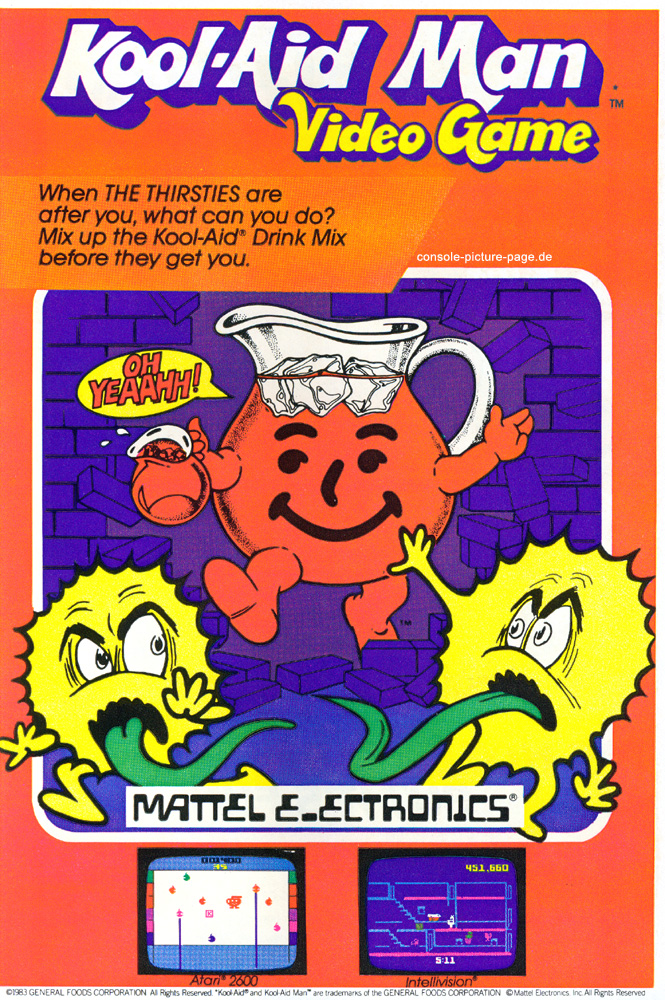
KOOL AID

Do you see this?! Do you?! This is why nobody likes the eighties anymore!

Try going onto the Android app store. Then, when your head has finished spinning and you’ve played some of its very terrible releases, you might get an idea of what the problem was back then. With the glut of crappy games being spat out into the market, many of which were commissions from businesses who wanted a certain product sold (The Kool-Aid game, anyone?), suddenly the market was flooded with derivative, awful games that were indistinguishable from the very few good ones. People lost trust in the quality of the industry and only bought those games that they felt they could be sure about, badly wounding the marketplace and causing profits to plunge.

Of course, it wasn’t just games that were flooding the market. In an age where there are essentially three entities making consoles – Microsoft, Sony and Nintendo – it might seem strange to think that there were so many black rectangles on the shelves back then, that we might have been inside a shop for Monoliths, but there really were. At the time of the crash there were almost a dozen different consoles on the market. Some were updated versions of old ones, but they were all functionally different and none could play any of the same games as they others. This meant that when a game was released, even if you were interested in it, you only had a one-in-twelve chance of it being compatible for the ugly cuboid you happened to have. That said, there was a smarter choice, and before long people knew it.

THE ADVANCEMENT OF THE PC

PC

… Well, I’m sure it seemed better back then.

As it is today, so it shall forever be. Yes, the PC was the preferable alternative to a console. The home computer was the up and coming thing back in the eighties, and because those interested in gaming tend to have an interest in modern technology, it meant that the people who were buying games didn’t always need a console, not when they had a PC at home.

Not to mention that the computers at the time were more powerful and had more memory than any of the leading consoles, meaning that all of the more sophisticated games ended up in your study, and not in your living room. And of course, your console only plays games. Your computer could do ANYTHING. Well, anything that could fit on a floppy disk, but people thought it was the best thing ever. It just didn’t make sense for the public to buy something less practical, less powerful, and less useful. It didn’t take long before they’d all worked this out, and the consequences were nasty for those caught in the flak.

The console manufacturers just couldn’t keep up. For a while they had an edge, being the cheaper option, but when computers started dropping in price to outsell each other, the real casualty was the Atari line-up and its band of brothers.

CONSOLES THAT WEREN’T MEANT TO MAKE MONEY

It’s a business plan that still exists with consoles today. Make a product, and hope the thing can make its money back from related merchandise, i.e. the games it plays. Loss leaders, eh? I don’t see anything that could go wrong here.

Atari were doing the same thing back in the day, making consoles that they knew wouldn’t profit and planning to make their real money through the games that they released on them. Maybe the Atari 2600 won’t do great, but if we sell enough copies of Combat, we can make our way out of the red and finally all get paid. Sound good?

Sounds idiotic, actually. Without restricting third-party support, not to mention the issue of games being for other consoles, the flood of derivative titles meant that somebody could pinch your idea and do it better. Not only that, but they could be cheeky enough to do it on your own platform. Atari were forced to witness other developers making games for their own consoles, undermining their profits and stopping any chance of this strategy coming up as rosy as they’d hoped. And with the public unable to tell any of these similar games apart, none of them made much money in the end, what with a roughly equal distribution of success that satisfied nobody.

Of course, some games didn’t deserve even that much success.
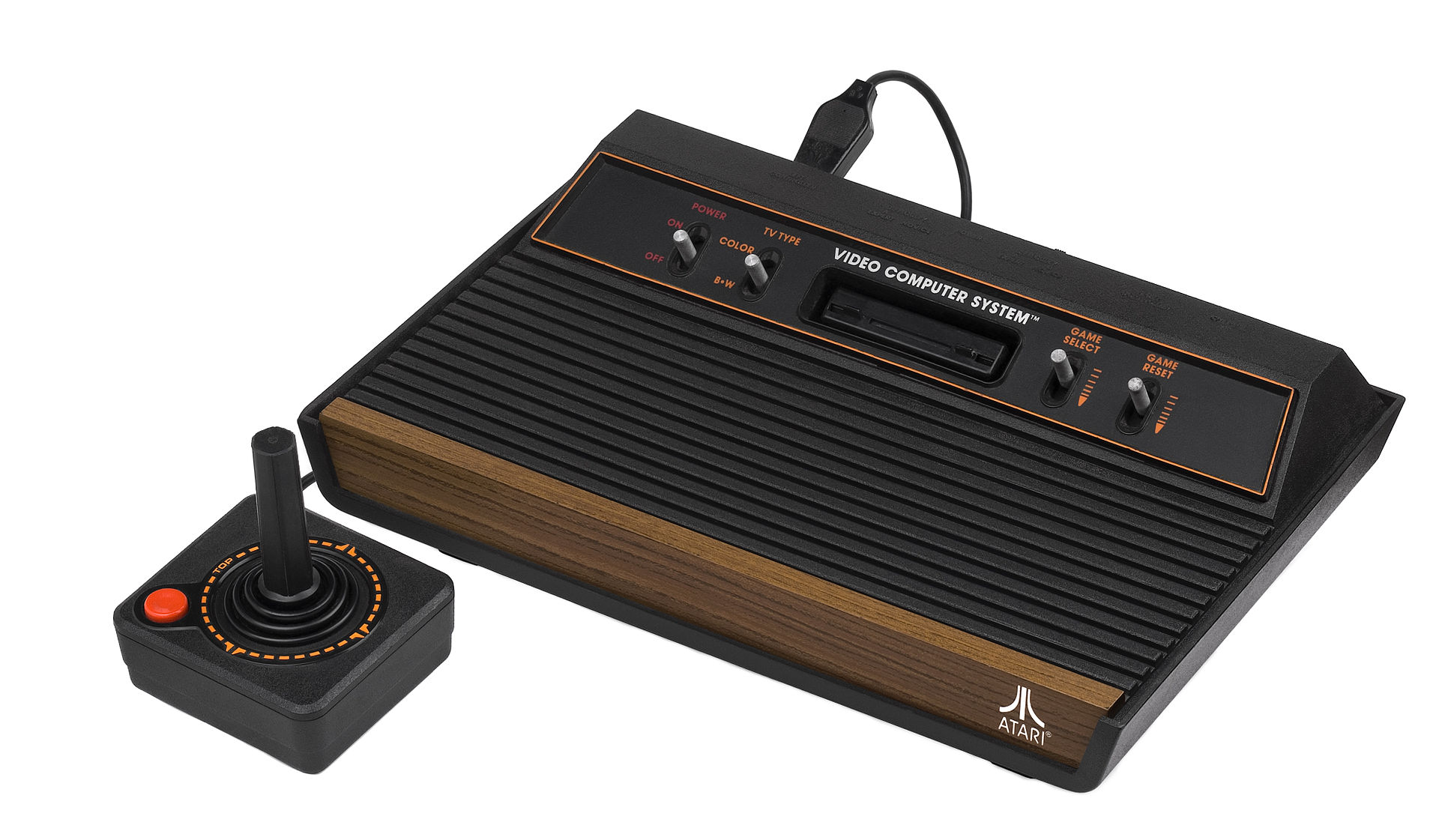
Atari

Aagh! It’s come back! Kill it! Kill it!

THOSE THAT FAILED

What, you thought I’d get through the whole article without mentioning these two scoundrels? No such luck, I’m afraid. Yes, it’s E.T. and Pac-Man, the two that couldn’t live up. We’ll deal with these one at a time, so I don’t feel like mashing a spike into my brain, and we’ll start with the slightly less offensive of the two.

To my mind Pac-Man is a greatly overrated game, even at the best of times. Yes, it’s an integral part of gaming history, but there are older games that have aged better. Tetris, for example. So I was slightly gleeful when I found out that the stupid yellow circle had let the public down with its movement to the Atari 2600 in 1982.

I don’t know what they thought would happen. The game was visibly worse than the arcade version which it was based on, but this was pretty much to be expected. The development was done by a single man, pressured by both the public and Atari for a really good port, and of course he could never deliver on his own. Whilst the game sold well, it was mostly from pre-orders and the first few day of sales, before anybody knew what they were paying hard-earned cash for.

And it worked as well then as it does now. When they saw the mess they had put into their consoles, excitement turned to disgust, and people were understandably upset. See, this is the danger of pre-ordering. You’ve essentially paid money for a product that doesn’t exist yet and is under no obligation to be good now that it’s made the cash already. How did you think this was going to go?

Pac-Man made its money, but the impact on the public was bad. The scales started to fall from their eyes and they began to see the quality of games for what they really were. They only needed one more push…

… And in Christmas, 1982, it came. E.T. The Video Game, for the Atari 2600. Order now and get your own statue of Icarus thrown in, screaming as he plummets towards the Earth.

E.T. has achieved some weird cult status just by its sheer, dribbling awfulness, and yes, I’ve tried it. You can find it online without too much difficulty, and I wanted to know more about the game that is commonly referred to by those who remember this catastrophe as “The Worst Game Ever.”

ET

No jokes here. Seriously, nothing. I don’t want to make jokes after playing this fucking game for twenty minutes.

Well, after playing it for a while, I can safely say that if E.T. isn’t the worst game ever, it’s making a pretty good try for it. Watching an ugly crooked sprite bleep his way from frame to frame, falling in every pit just because it looked at him funny, and watching a timer count down to your death with no way to speed it up enough, the whole thing is just staggeringly awful, even for its time. By the even harsher standards of today, it comes somewhere between Malaria and Michael Bay movies.

But then, in retrospect it almost seemed like this game’s destiny. Right from the beginning it was going to have huge difficulty getting anywhere near profit. Atari spent about twenty million just to get the film rights, and were desperate to have it out for Christmas, whilst the film’s popularity was still high and the market would be just right.

But in order to make enough copies, the programming had to be done by September, and they’d only gotten the green light to start designing in the last week of July. With just over a month to make a bestseller, a small team got to work and diligently went about screwing everything up, including rejecting ideas by Spielberg himself, who saw the hideous monstrosity they’d made and suggested that they make something very different instead. Sorry, Steve. You might be thought of as clever, with your celebrated understanding of pop culture and having made the very inspiration for the game we’re working on, but we think we’re onto something with this repeated pit-falling lark.

The true irony is that Atari weren’t just walking towards failure – they were throwing coal in the engine and going as fast as they could. They advertised E.T. more than Catholicism advertises misery, and the result was that the public were chomping at the bit to get this exciting game when the Holiday season rolled around.

Only when they finally did chomp, they immediately spat it back out, and Atari was horrified to realise that having made four million copies of this freak show, three and half million had been unsold or sent back. These unwanted copies were promptly buried in a New Mexico dump, with a few Atari consoles added for good measure, in a manner that is staggeringly reminiscent of a sacrificial offering.

The end result of all this was to help finish what Pac-Man and other failures had started: The realisation that most games being sold on the market were embarrassingly awful. The crash wasn’t the sole fault of E.T., but it certainly was one of the worst offenders.

The financial fallout hit Atari hardest and came close to finishing it off, and the dying star that was the industry became a black hole that started to suck everybody into it. Damn, I guess I can no longer consider the Xenomorph to be the scariest alien lifeform. E.T. is the only one who ever actually helped destroyed an industry, the long-necked little bastard.

EPILOGUE

So what does this mean today? Are we due a second crash? Can a stable games market only be a fleeting dream?

Well, I don’t think we’ve got problems, at least not within the next five years. The market isn’t saturated on consoles for certain, so that isn’t an issue by any means. There are major games that disappoint, yes, but the wider spread and variation in the industry, not to mention how easy it is to find specific kinds of games with the help of the internet (you’re welcome) means that people can find something that suits them without too much difficulty.

Not to mention that the big companies are now nothing short of suspicious when it comes to third-party support. You don’t do anything without their permission, bucko. They’re the Godfathers of gaming. Previously it was the fault of the unrestricted, unsupervised production of games and the disinterest in the wider market. They were the major causes of the last crash, the ones that ruined everything and the big corporations have put a lid on it now, for better or worse.

There’s other factors that are different. A great deal of the old crash was due to the failure of arcade machines, and gaming on the computer never died at all. So the PC master race can relax, because history shows us that their babies can endure anything.

Anyway, time to go throw a brick through Atari’s window. I feel they’ve earned it.
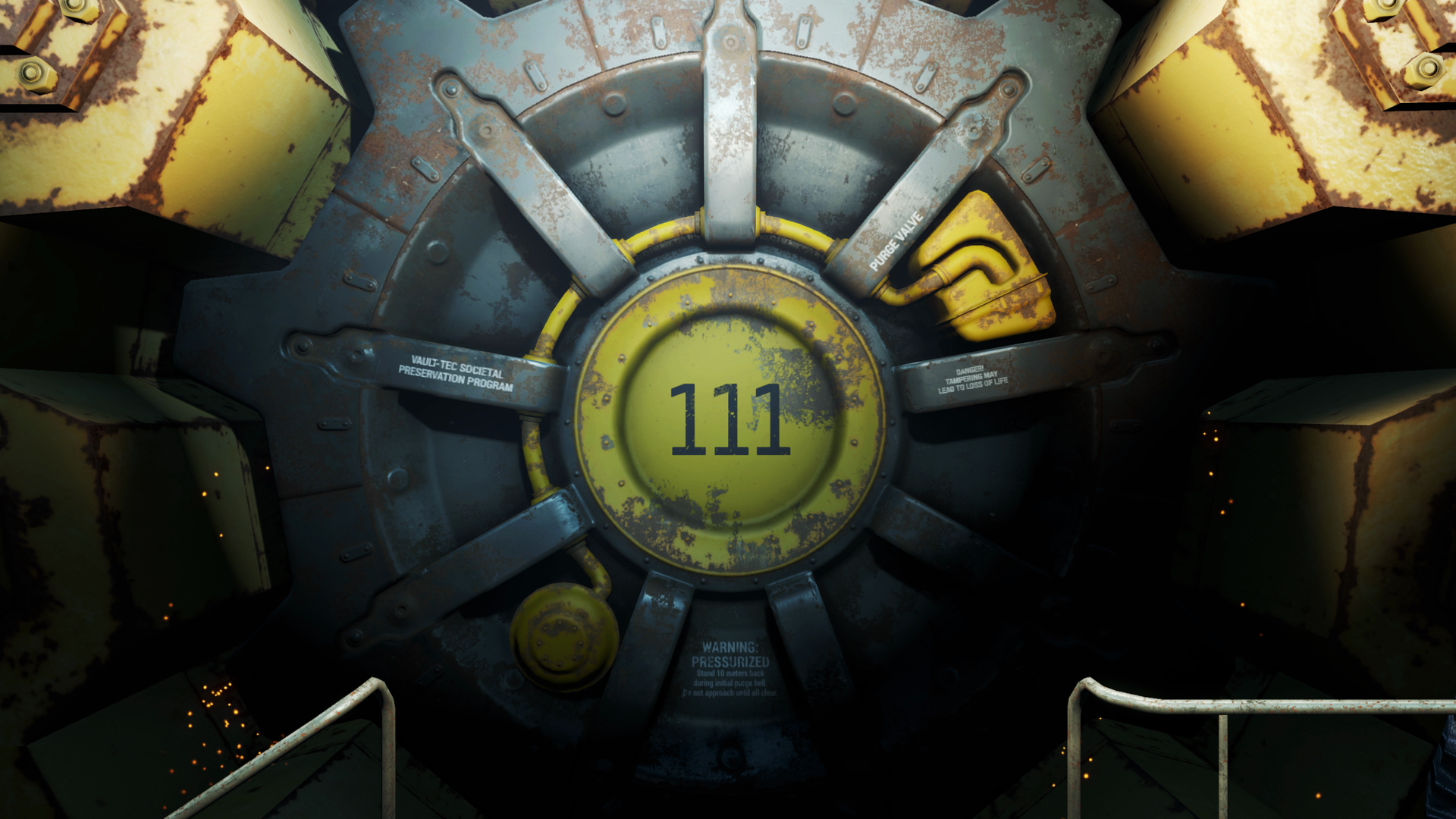
SORRY, BETHESDA – WE CAN’T SEE THE VISION FOR THE GRAPHICS

Oh dear, this isn’t Bethesda’s week, is it? Fallout 4, perhaps one of the most anticipated titles since Skyrim, is announced to the world at large with a big, flashy trailer. Except that whilst it was big, it wasn’t that flashy. The public, it seems, aren’t too enthused about the graphics.

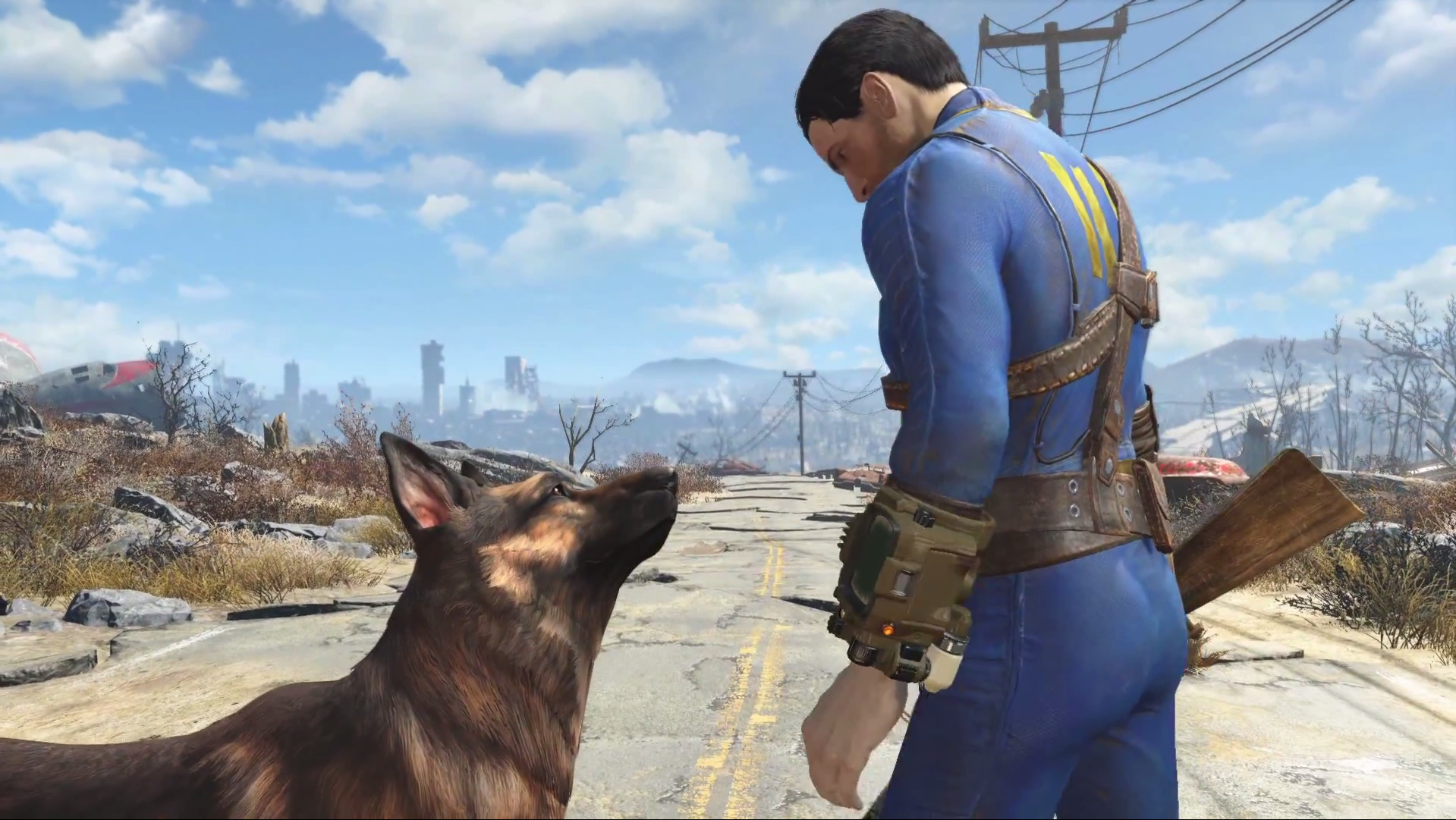
And yes, I’ll admit it. Games these days can and do look better in terms of aesthetic realism. The dog that bounces around the trailer as a focal point is probably the most noticeable flaw. It moves well, mostly, and has the right kind of behavioural animation, but it looks kind of flat. The fur that doesn’t look like fur, the slightly angular body shape, the way its feet don’t quite seem to touch the ground with any impact, it all makes it look a bit like a robot – a really well-made robot, mind you – that had an Alsatian painted over the top of its chassis.

What else? Well, the humans have Lego hair, we see a couple of people with an identical running animation (one that looks a little floaty, like in the previous game), the ghouls in the supermarket somehow push against big metal trolleys with no resistance, and people’s faces seem to have that slightly glassy, mannequin look that’s almost a Bethesda trademark at this point. No, it’s not the best graphics I’ve seen in a major video game, not by a long shot.

And yet, I don’t really care. Because it looked gorgeous.

III

The outside world’s not in HD? Guess we’re staying underground, then.

This is probably what I was most excited about from the trailer, because the series really seems to have gotten some colour back into its cheeks. Everything, from the contrasting blue cot in the faded bedroom, to the bright, toybox spectrum of the pre-war streets, to the beautiful cinematic shot of the neo-noir city, it all shone with visual personality.

I really liked Fallout 3 and New Vegas, but I did tire of greys, greens and browns. I know that this world is meant to look scarred and sickly, but there’s a difference between faded colours and no colours at all. So Fallout 4 splattering itself with all the best members of the rainbow is a plus in my book.

Not to mention the visual design, something that stays with us long after we’ve forgotten about the graphics. The sweeping shot of the huge pirate ship, the mighty doom-Zeppelin floating in the thunderstorm, the prowling deathclaw in the radioactive mist, they all point to ideas that aren’t just realistic, they look good. Old concepts like the Protectrons have gotten some life into them visually, with the glint of a red LED eye shining within their circuitry, or the hanging suit of DIY power armour, a massive network of hydraulics and gears solemnly draped from its supports. Even the blue Vault-tec jumpsuits look more blue. The whole thing seems delighted to see you, and that’s pretty cool.

I know, the images could be better, could be clearer. They still might be – remember, this is a trailer, not a finished product – but yes, it would be nice if they were as svelte as other games, Perhaps it’s a little disappointing that a game with this kind of pedigree and expectation behind it couldn’t manage graphically what titles with smaller budgets can do, but I still can’t bring myself to be all hot and bothered over it. You could record an orchestra doing Beethoven on your phone, and yeah, it might be little grainier than intended. But it’s still Beethoven. It’s still excellent at its core.

C3PO

Here I am, brain the size of a planet…

Perhaps I’m just bitter because an excellent game series has just been announced to have a fresh new game incoming, and all anybody can talk about is the aspect to games that engages me the least. Nobody’s talking about what might be contained in Vault 111, or whether we get to use vehicles for the first time, or if we might see a user interface that doesn’t make me want to gouge my eyes out. I can’t help but notice the ugly cube of a Pip-Boy lashed to the protagonist’s arm. If he has any sense at all, he’ll drop it for an iPhone the first chance he gets.

IT’S NOT HOW LONG IT IS, IT’S WHAT YOU DO WITH IT THAT COUNTS

Time taken to complete a playthrough of the Stanley Parable? About five minutes. Time taken to complete Alien: Isolation? About thirteen hours. Time taken to beat Bravely Default on the 3DS? I’m fifty-five hours in, and there’s no end in sight.

The bloody thing moves like a snail on valium, and it keeps doing that thing from the third Lord Of The Rings film where you think it’s over – and surprise! We’re going to keep this crap rolling like we’ve locked it in a hamster ball.

Except that The Return Of The King started doing that stop-start nonsense in the last twenty minutes of the film. Bravely Default started doing it about a third of the way through the game. At least, a third of the way through MY game. For all I know, there’s another fifty-five hours left in it to torment me with. And that, I won’t allow. Those whinging, stereotypical anime brats have taken up too much of my lifetime already. I don’t want my pre-death flashback to be mainly of kids with stupid haircuts in turn-based combat.

You can’t say I didn’t try, and I’ll give it this, I had high hopes at the start. There were some bits of intrigue, some good turn-based mechanics, and I found myself growing slightly fond of one of the protagonists, a suave lady’s man who annoyed everybody else constantly. I wonder why I found him so relatable?

But then the whole thing started to wilt. Without the life energy of new mechanics added in, the game became dull. The story tried to stretch like a pair of tights, but only overreached itself and started laddering badly. Not to mention I found a combat set-up that was basically as good as it got, dealing huge amounts of damage whilst keeping my party at full health, so battling just became a chore.

The berks

Here’s to you, Bravely Default protagonists. By which I mean, here’s a grenade that I am going to forcibly feed to you.

Even the character who’d I’d come to think of as “the manga musketeer” just became repetitive and disengaging, joining his friends and world in the part of my brain marked “Not worth my time,” where they can now all join modern music, League Of Legends and regular exercise.

It was the story aspect that truly killed it for me. I knew I’d seen this game before when I bought it from Amazon last year, only I couldn’t place it. Now I know where it was. It was on trail for breaking the rules of the Geneva convention.

I couldn’t believe the gall of this damn game. I went through the story to save this little pixelly world, which took about twenty-five hours. OK, Bravely Default, I’m done. A vaguely decent game with a more than suitable story length. “Oh, you’re not done,” chortles Bravely Default back at me. “You’ve been sent back in time to before you saved the world! Now it needs saving ALL over again!”

Bloody hell. Alright, after another whole day of gameplay, I’ve rescued this rather tiresome little kingdom from damnation twice. Can I go now? “Nuh-uh,” squeals the game, slapping itself on the thighs with glee. “You’ve now been teleported to a parallel universe where the identical kingdom is also in need of saving! In the exact same way, with the exact same characters! So why don’t you settle down and we’ll start mmpph mmmph mmph mmmph.”

Oh sorry, Bravely Default. I seem to have closed the 3DS on you. And then dropped it into a hole a mile deep, before also throwing in two dozen lions and a nuclear bomb that’s on fire.

I think I can safely say this – Bravely Default is TOO LONG. Like a guest at your house at three in the morning after a dinner party, the fucker refuses to leave, raiding your fridge for snacks and asking you if you want to play Scrabble. And you just wish he’d call a taxi and go, so you can finally head upstairs and start apologising to your wife for having invited the idiot round.

But it’s a little strange to think this. Surely a long story is a good thing? Value for money, right? We all remember those embarrassingly short games that came a little late to the party, had a disinterested sniff at the wine and played on their phones for twenty minutes before sneaking out. That’s worse, isn’t it?

Well, no. They’re both equally suicidal in their own way. Bravely Default had just enough interesting ideas for a ten hour game, maybe fifteen at a push, yet it was lobbying to be a game that could be played for a straight week. And if it had been ten hours long, I might have been impressed at how condensed and well-paced it was.

But it wasn’t ten hours, or fifteen. I’ve just looked at a poll online, and it states that anybody who wants to do the main game and side missions (which all have utterly essential plot info within them, so I don’t know why they’re made optional) will be tapping at their tiny little screens for about seventy-five hours, possibly as long as a hundred. One person stated that it had taken him one hundred and seventy hours to get the whole game over and done with.

No, no, no, no, NO. That is too much. I know Square Enix games have a history of dragging their feet like they’re trying to make their shoes catch fire, but this is absurd. And remember, there’s only a single set of combat mechanics in this game, aside from some dopey village-building gimmick that’s over and done with before you’re done saving the world for the first time.

But is there such a thing as a story mode that is too long? Well, I don’t think so, at least in principle. That said, I do become very suspicious of games that sell themselves on having a story that never ends, because there’s two ways it can go. Either it’s a complex epic with a diverse narrative and crammed so full of interesting ideas that they had to make it last a week to fit them all in, or it’s just padded and drawn out to try to fill space.

I’ll be honest, anything that claims to last more than forty hours starts ringing alarm bells. Does anybody believe that there’s truly enough in those games? Don’t get me wrong, titles like Skyrim can last a lot longer within the same save file, but the core story, the one about dragons, do you really want it lasting for that much time? Aside from anything else, you’re going to be struggling to recall the beginning by the half-way point.

It’s hard to think of exact formulas for this sort of thing. Different games pace themselves at varying speeds, dynamic characters can alleviate a slow story and if gameplay is fun enough then I might let a dreary plot slip under the radar.

Maybe. If it’s lucky. And I’m feeling kind.

But my personal philosophy is this – if the narrative I’m playing has not changed in some intrinsic way by the end of each hour, it’s moving too slow. Whether it be a new angle on a character, the death of another, a wildcard element throwing us off balance, or somebody inevitably betraying us, it should be a key development that should help the story move at a decent pace.

Ds 2

I know how he must feel, trapped in a terrible limbo between life and death. His game made me feel the same way.

One of the more recent offenders in this regard was Darksiders II. I’ll be frank, this game was making an uphill struggle from the start with its story, partly because it just seemed to throw in vaguely-Christian mythology whenever it didn’t know what to do next, but also because this story had one idea that never, ever changed. You have to go and resurrect the population of Earth, killed in the last game when somebody with a bad dress sense got over-excited and started Armageddon before everybody was ready. Alright, who am I playing as in part two? Somebody who doesn’t look like a a rejected Warhammer character design? No, you’re playing as Death, actually.

Well, disregarding how strange it is that I can be killed in combat whilst playing as the Grim Reaper, don’t you have anything else to bring to the table? Within five hours of starting, I’d forgotten the central goal that I was meant to be fulfilling, though bizarrely it hadn’t changed a single iota. You want to resurrect Earth? Well, you need to get to the Keeper Of Secrets (no, I have no idea who that is) to find out how to do that. He tells you to go to the Tree Of Life (don’t ask). However, the Tree is in the land of The Makers (nope) and is being sealed off by Corruption (because of course it is), and also some berk keeps trying to stop you because he is one of the slaughtered Nephilim (fast-forward) and sends you to the Land of the Dead (not sure how) to find the Well Of Souls (Jesus Christ).

All this rigmarole took five hours, and by the end I was slumped horizontally in my chair, wondering if the thirty-foot drop out the window would kill me.

I think I was about a quarter of the way through the game.

What’s that line from Macbeth? “It is a tale told by an idiot, full of sound and fury, signifying nothing.” God, it could’ve been written about Darksiders II. AND Bravely Default.

The sad thing is, it’s the well-paced stories that we wish could keep going, because they’re so addictive. But all the longer tales keep going because only the writer doesn’t want it to end. Everybody else is glaring at him and wondering if they could pull the plug on his PC without him noticing that they did it. Remember, a cut-throat editor is just as important as a good writer.

I’m particularly suspicious of fantasy games in this regard. I don’t think it’s a coincidence that the two offenders named above are of that genre, and there’s others I could point the finger at. If you wrote down all the dialogue (not the plot itself, just the spoken stuff) in Dragon Age: Origins, it would apparently come down to about nine books. The Witcher, a game that I’m trying to work up the energy to try again, is rumoured to have eighty hours under its big renaissance belt. Tell me, you two, are you that long because you have a story that couldn’t be crammed into the standard fifteen hour length? Or are you just drawn out beyond belief? If The Witcher is as long as it says, then according to my theory it needs to have, at minimum, eighty separate events that shake the plot to its core and engage the interest of the player.

I’m not saying it doesn’t have that. But somehow I doubt it.

Hand J

What do you mean, you’re getting tired of shooting at bandits for the fiftieth time that day? Jeez, aren’t you fussy?

Or what about Borderlands: The Pre-Sequel? Don’t get me wrong, I like the Borderlands series. I like the anarchic, punky, nonsensical style, touched lightly by the influence of classic westerns and the Mad Max films. I like the way it doesn’t take itself too seriously, how the characters push right through their own archetypes to become self-parodies who are, at the same time, pretty cool and likeable. With the exception of the kid Pickle, naturally. That loathsome little sprout can go fall into a thresher’s nest.

But The Pre-Sequel was just annoying at times, because it had the same problem as Darksiders II. The issue was that the plot had found a nice, comfortable place to sit, and it wasn’t going anywhere without a winch, a mile of rope and fifty strong men. Right from the beginning, your goal is to take back a space station from an invading military force, but for about three-quarters of the game all you do is make dull preparations for that task. Go here to talk to a contact, then here to shut down a signal jammer, go there and steal an AI and then, when you’re done, we’ll go and clear out a disused robot factory. Even the missions themselves seemed a little dull for a Borderlands game, which always prided itself on lunacy and surrealism. What happened to the quests where I had to play through a Dungeons and Dragons game, or raise an ugly, little alien dog from infancy to adulthood?

I remember saying to a friend, whilst playing The Pre-Sequel for the first time, that I didn’t think that this campaign was going to be as long as the previous game. There just didn’t seem to be enough meat in the story to make it that length. And it turns out that I was right! Only Borderlands didn’t want to admit it, and diluted itself so much that a lot of the flavour was lost. Even the rather uninspired missions above are spread too wide, jammed full of monsters and one-note bandits to pad them out.

Look at games like Portal, or Bioshock, or the Walking Dead. Games that were just as long as they needed to be. And they all take vastly different amounts of times to complete, but they’re all fine, because they have just enough substance to be well-distributed amongst their relative lengths. I have much greater respect for any short, good narrative than I do for anything that drags its heels like the lethargic creations mentioned in this article. Or, as they would put it:

“Surely it’s conceivably better, certainly within the boundaries of human imagination, or at the very least a more admirable ideal, at least to the extent where our wider cultural integrity might be thought of as the judge, to consider the possibility that when a particular plot, or character arc, or perhaps just more generally a narrative, of the interactive medium that we widely refer to as video games, might be thought of as especially well-crafted when due consideration is paid to the relevant factors of pacing within the anticipated timeline of the aforementioned narrative, so that the two aspects might not be contrarily opposed and inherently be damaging to the structure of the contextual plot that the hypothetical game might contain.”

Bastards.

THERE IS NO GREY AREA TO MORAL CHOICE SYSTEMS

I’m very happy to say that my many years of evil deeds, malevolent decisions and shooting at orphans has paid off. Yes, after years of sowing more evil than a farmer possessed by Satan, yesterday it all came to fruition when I woke up, looked down at my clawed hands and realised I could now shoot hellfire out of my palms at will. Hooray for the forces of darkness!

But don’t get me wrong. I didn’t want to do all those evil things because I wanted to. I never would’ve been motivated to do any of it, if not for that fiery superpower as a reward. And all a lifetime of good deeds would do is give me the ability to heal people with soft-scented lullabies. No thanks, I’m specked into ranged damage, not a white mage build.

Play video games long enough, and you’ll get this sort of thing coming up, usually in Role-Playing Games. Imagine a villager wants you to persuade a merchant to lower his prices. You’re most likely to get three options regarding how you want to do this. The good choice would be to give him some of your own money to supplement his lost earnings, and respectfully decline any fee from the villager. The neutral would be to diplomatically convince him and to claim your agreed-upon cash prize afterwards. And the evil would be to intimidate the merchant, steal his stock to drive him out of town, before going back to the villager and claiming both his yearly salary and his daughter for a reward.

The more I play games, the more I find this kind of thing aggravating me. Don’t get me wrong, there’s no problem with putting the player in ethically complex situations. I love games like Telltale’s: The Walking Dead and Spec Ops: The Line for viewing morality as something more than a binary switch. These games put you in various situations where there were no easy outs, and that in itself was interesting. The one that always sticks with me is the choice in The Walking Dead where you come across a man with his leg stuck in a bear trap, and enough zombies to occupy a Romero-themed marathon making straight for him. You could leave him, and make an easy escape, or try to bring him with you. Of course, there’s only one way to get him out of the trap, and it involves that fire axe you’re holding. How brave are the two of you feeling?

On the third swing I heard his tibia snap, and to this day I can’t eat a breadstick without feeling slightly ill at the noise. But at least this game understood that there was a choice to be made here, because the kind of choice we saw above, re. villager and merchant, makes no sense, and yet it’s so often allowed to go uncriticised.

latest

Above we see a Hobbe. This is about as complex as a Fable character gets.

I first noticed this when playing the old Fable games. I’ll be honest, if any series could get away with binary, black and white morality, it’s Fable. The campy heightened reality, mixed with an Arthurian knight aesthetic seen through the filter of Monty Python and the Holy Grail – well, it did seem tonally consistent when enough angelic decisions caused your character to sprout a halo, or enough wicked actions caused him to start growing a fine pair of horns. Classic fantasy and “Ye Olde Tales Of Knighthood” rarely have any moral complexity to them, they’re simple, unapologetic “Hero and Villain” stories. Alright, fair enough, but it still made the experience worse, and I’ll tell you why.

First of all, I never felt any affection for my character, or any of the other dopey-looking mannequins that wandered around Albion (with the exception of Reaver, because Stephen Fry improves everything he touches, like a Cambridge-educated Midas). First of all, the black and white nature of the world made everyone seem pretty bland and uninteresting. This person is good. This person is bad. This person is neutral.

This was at its worst for the hero you play as, for whom I cared nothing for at all. Even with a good/evil choice, so few of the options made sense at all, and you can’t relate to something you don’t understand. Do I want to kill my companion for a few measly coppers that ultimately don’t do much? Not really, no. Do I want to donate all my time and effort to an evil or good religion, when I know nothing about either and know it’s just an easy way to tweak my alignment? Sounds kinda dull, truth be told. Do I want to slaughter my sister for a legendary sword, even though I’ve just defeated the final boss and I don’t need it for anything now? I think I’ll pass, thanks.

Some of this is down to the impressive lack of impact that any of Fable’s characters had on me, but the other problem is down to the fact that your morality effects gameplay and statistics, and that is ALL wrong.

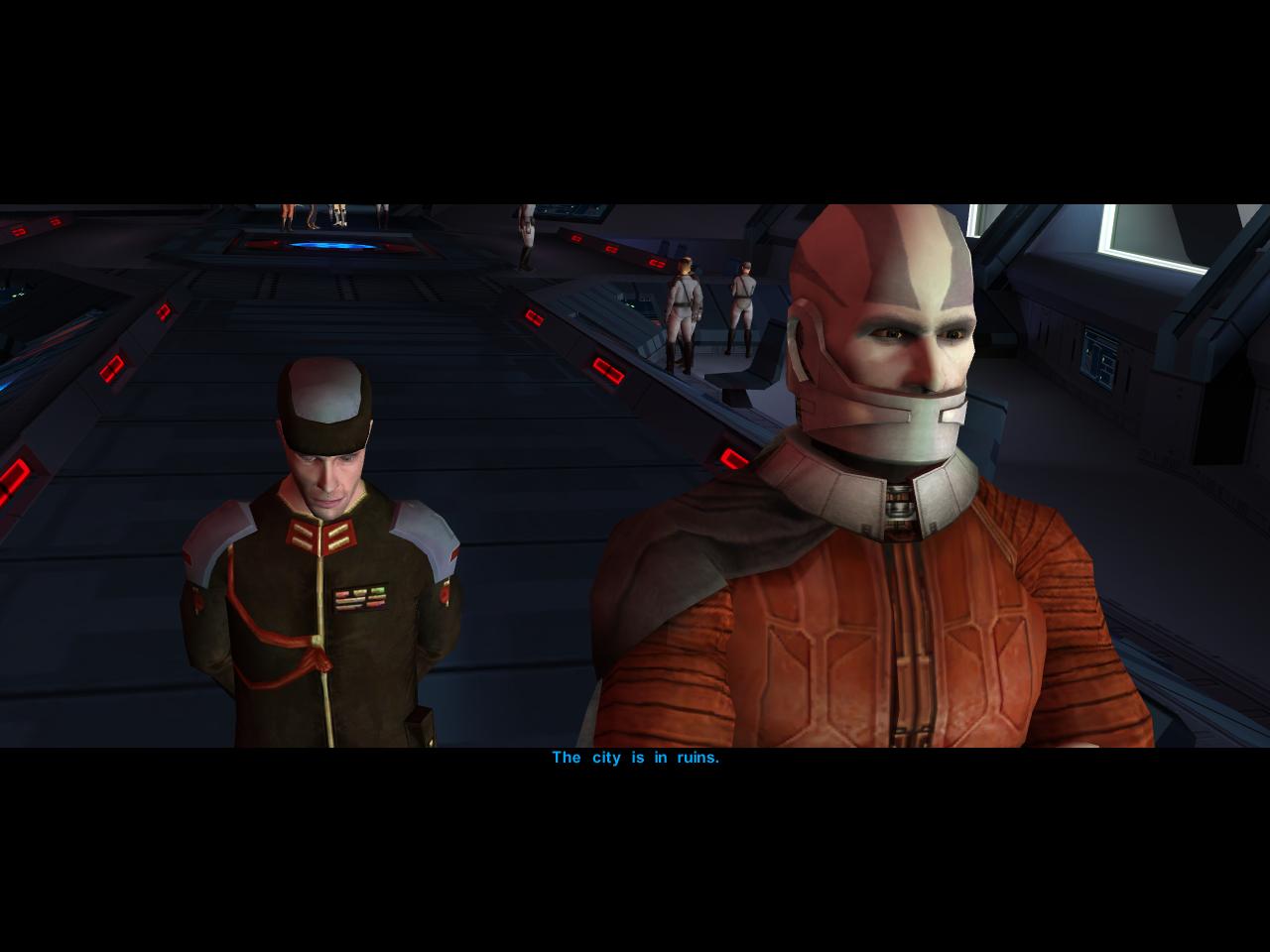
For this example we need to go back to an almost equally old game, the rightly-celebrated Star Wars: Knights Of The Old Republic. KOTOR was famous for writing a story with a morally-grey cast and plot. Characters have conflicting motivations and are often doubtful about their actions, making them well developed. They have engaging arcs that change with the story, partly dependent on your actions, which is always a plus.

Even the Jedi/Sith clash is presented a little murkier, with the former being shown sometimes to be antiquated and overly pious, and the latter getting a more nuanced view regarding their desire for perfection and a Darwinian approach to their hierarchy. We even crash one of their Universities at one point, under the guise of a student. The duality of the whole thing is an idea that makes sense to me. After all, the Star Wars movies always blathered on about “the balance of the force,” but it was a little hard to take seriously when it would then immediately turn around and give two fingers to every Sith in the vicinity, all of whom are shown to be so evil that they couldn’t go to a PTA meeting without first disintegrating Mrs. Mulberry two seats down.

swkotor-darth-malak

Darth Malak wasn’t actually evil. He just wanted to max out his force lightning, and thought this was the most efficient way to do it.

But the constant irritation throughout the entire experience was this – KOTOR has a binary moral choice system, and it made me want to tear my hair out. Not only that, but as you do good or bad actions, you gain “light side points” and “dark side points” respectively, and you get some pretty major upgrades when you get to the highest of each. Sure, you get all the powers regardless of alignment, but without the light points or dark points backing them up, they’re embarrassingly ineffective.

God, it made it annoying. Hearing a character speak with consideration, with detail and complexity, before looking at me and asking my opinion was a fascinating thing to go through. You really do have the power to change their lives dramatically, and you don’t always know if it’s for the better, which makes it all the more interesting. The high point of this was when a Jedi turned to me, torn between her loyalty to the Force and her unbearable passion for another. Should she give up love for honour, or were the Jedi asking too much from a woman who’d already endured so much in their name?

I bristled immediately, wanting to tell her to pursue this feeling in her heart. The combination of a romantic nature and a deep-seated dislike of organised religion awoke in me, and I was about to tell her to throw her arms around her beloved and live happily ever after, when suddenly, a thought occurred.

Do you want to risk those light side points by arguing against the Jedi order? You’re so very close to that healing power maximum you’ve been trying for…

Damn it!

This was not right, not OK. Games like this emphasise choice within the story, are focused on your actions depending on what you want, but this mechanic was being an absolute pig and getting in the way. Suddenly I came over all mercenary, and had to fight an urge to tell her to go and say seven “Hail Jabbas,” or whatever the Jedi equivalent of confession is.

Perhaps this was the intention – after all, one of the principle themes of KOTOR is temptation and the dangers of being weak-willed, but I doubt it. You still get rewards for becoming completely evil as well, powers that are just as effective as the angelic ones, and whilst being a bastard does effect the story, it doesn’t make it shorter or penalise you for it. Hell, you might as well go for all of one or the other, because there’s no reward for being in the middle. When you’re neutral to both sides, the powers that are specific to both are suddenly useless in an equal degree! Hooray! Who needs chocolate or strawberry when you have nice, safe vanilla? Bleagh.

Of course, the final nail in the coffin for moral choice systems is how it can essentially hold the story hostage. For this we need to leap forward a bit in time to 2012, and to Dishonored, a reasonably good stealth game made by Arkane Studios. It’s a kind of gothicky, steampunkey, dark and grim affair in which you sneak around with a set of magic powers and a sword, slicing people up and teleporting away afterwards. Ok, that’s an apple I’m happy to eat, but I think you have some rather large worms in there too.

dishonored

I am Corvo Attano, the greatest assassin in Dunwall. How do I manage to be so light on my feet? Well, I’m not weighed down by anything heavy, like a personality or interesting character traits.

Dishonored did its best to hide its moral choice system, but what it basically came down to was how many people you had to kill as you went through the game. The state of the city, as well as the ending, changed as you either went around slaughtering people like the offspring of Jack The Ripper and Freddy Krueger, or cuddled them to sleep with soothing song and the occasional neck-squeeze. And the second I knew this was the case, I tried to avoid killing people, because I knew that every time a guard got a crossbow bolt in the eye,the game would be tutting and making a little note on its clipboard. Come on, I didn’t want the thing to give me the fail grade at the end.

See, I happen to know that myself and quite a few other people dislike being given the “evil ending” in a video game. It always feels like a non-standard game over, you know what I mean? Being told that your entire experience with a game added up only to darkness and misery within the little digital world, it all feels a bit cheap, a bit anticlimactic, a bit – well, like failure. But killing people, the very thing that Dishonored sold itself on, is suddenly frowned upon when you start playing. The additional survival mode it had (cheekily released as DLC) showed how fun it was to take the restraints off, and without consequences too. But the main game wouldn’t tolerate it, much to the audience’s disappointment.

So that was frustrating. But the other casualty of the game’s moral choice system was the protagonist’s personality, probably one of the most common fatalities we see from these mechanics. The story has to stretch – there’s no other word for it – to accommodate both potential concepts of hero/villain Corvo Attano. It has to allow for the sweet and saintly Corvo, who never hurt a fly as he went through the game, but it also has to compensate for the version in which he drew his sword in one hand, a pistol in the other, rammed a grenade up his arse, and ran screaming into battle cutting down everything he saw. The end result of this is that the protagonist ended up having no character whatsoever, because any inclination either way runs the risk of contradicting one of these two possibilities.

Some say that the silent protagonist, the voiceless man with no obvious traits is a good thing, something that allows us to project ourselves onto the character. And I can see that it’s true with examples like Link, or the real classic, Gordon Freeman. But it’s different this time. Freeman had no option but to do the actions necessary for survival in Half-Life, allowing us to still put our opinions upon him. Yes, he’s killing aliens every time, but maybe he gets a wonderful rush from the fighting, or maybe he’s terrified and wants only to escape. It’s all down to our perception of him. Perhaps when he’s done stamping on headcrabs for the day, he goes and brags about it at the nearest bar and tries to pick up chicks with his crowbar-waving skills. It’s all up to us.

But it doesn’t apply in the case of Dishonored, which had a strong focus on a linear plot pushed by the implied desires of Corvo himself. He might not say what he wants, but the fact that he always willingly goes along with the instructions means that he must want this to happen, otherwise we’d be getting a variety of choices. Not to mention the fact that he has an established history and relationship with characters, just to finish off any point there would have been to making him a silent protagonist. So he IS a character, but has been essentially hobbled by this choice given to us.

Basically, the point is this: Morality in games is a good thing. Even a simplistic “forces of good against the wicked rise of evil” legend is fair enough. Many great stories and classic myths have had such an angle, and we love them for it. That said, I still think there’s a need for a more complex view of ethics within games – we still coo over titles that focus on both sides of an argument a little more than they deserve, simply for being more detailed than a bloody chessboard – but it’s OK, we can still keep the heroes and villains ideal, as long as we COMPLETELY purge this sort of thing from any and all mechanics.

Bigby punch!

Ah, now here’s a game about Fables that understands morality. You could learn something here, Mister Molyneux.

Choice is fine, but it’s no choice when we already know the answer before we’re asked the question. Right at the beginning of KOTOR, I knew that I was going to pick all the heroic options, because that’s how you get the cool powers. As I was let loose in Dishonored, I understood that to be a killer was to be a failure, regardless of how I wanted to play it. And in Fable, it dawned on me immediately that nearly everyone I met was going to be less interesting than a piece of dry bread in a lecture on mathematics.

Well, that’s about all I have to say on that – Oh, bugger. I just made a huge mistake and put some money in a charity pot, so there goes my hellfire ability. Guess I need to make a baby cry before I can get it back, so I’ll be gone for a while.

GTA ONLINE – MISERY LOVES COMPANY

Those who read my Team Fortress 2 article might remember that I was less than complementary about the communities of other online games. One that was name-dropped was Grand Theft Auto V, or to give its specific name, GTA Online. I don’t know why they didn’t just put that as the title of the whole game, as the vast majority of players skipped past all that wordy plot-stuff and went straight to the servers, whereupon they could scream abuse at each other on their own instead of having it done for them by the protagonists in cutscenes.

I played a fair bit of GTA Online and came out less than enthused. Let’s not mince words, I usually came out angry enough to bite a hole in my desk. I kept going back, though. I kept trying to find that special something I had apparently missed, that secret ingredient that managed to get it those absurdly high reviews. Did the game spit out chocolates for everybody else? Were they being put into servers with courteous English lords? I don’t understand it. Or rather, I didn’t understand it, until something happened.

GTA5 02-06-2015 22-55-57-575

I desperately chug whiskey to avoid talking to the person who invited me over. You can’t say that this game isn’t realistic.

Last night I played the game with a couple of friends, and we had a whale of a time. A truly hilarious experience. It started with driving through the streets of Los Santos in an ATV with a turret on top, later moved onto driving a family sedan up a mountain, then we went swimming down river rapids and got smashed to pieces on the rocks, before finally discovering a military base and spending three hours trying to get past all the angry men in tanks, in order to steal a fighter jet each.

That last bit was especially good. The base had a high fence around it, you see, so the only way in was to drive off a cliff on one side and try to jump the fence, like a cross between the A-Team and the Dukes Of Hazzard. And then, of course, it came to giving tanks the old run-around and trying to find a Harrier that hadn’t been blitzed in the previous attempt. Great fun, even when frustration got the better of us and we started shooting each other with flare guns like we were auditioning for the Fantastic Four.

So why was I having such a miserable time before? It might just be down to playing with friends. After all, anything is better when experienced through the filter of camaraderie, but I’m not so sure. I’ve played games with friends before and yes, it’s nearly always fun, but still, some games work better with more than one people. They suit it better, you know what I mean? The Left 4 Dead series is a good example of this. It has a lot of mechanics that depend on having people help you out, such as shoving zombies off you when you’re tackled to the ground, or reviving other players when they’ve been killed.

GTA5 02-06-2015 22-58-41-513

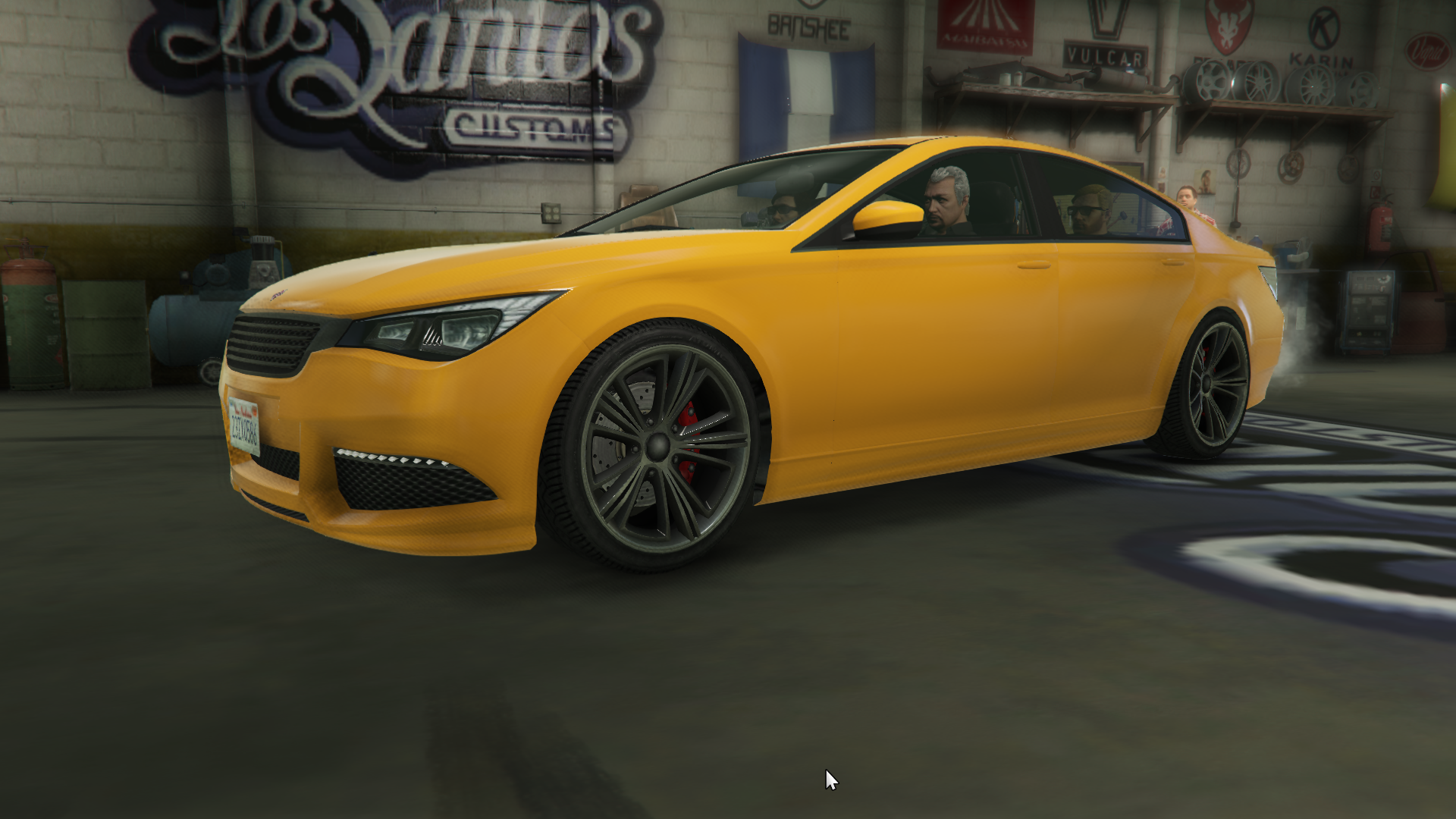
Yeah, Massimo, it’s a cool car and all, but why do I have to sit in the back?

But this isn’t the same thing as Left 4 Dead, not quite. There wasn’t as much collaboration between us in GTA Online – yes, we were working together to get planes, but we kept turning on each other out of sheer excitement and for the occasional profit. At one point an NPC put a bounty on me when I nicked his car, so one of my colleagues promptly turned around and bashed my head in with the butt of his shotgun. I think we can safely say that this wasn’t one of those “All for one” deals.

But actually, I think the key lies somewhere else, in a manner with which we can all identify. I remember going to a playground with my mates as a child, at least between eye-destroying sessions with my true best friend, Game Boy. It was always great fun, chasing each other up the climbing frames, powering down the slide, seeing how far we could launch off the swings without breaking anything. Good times.

But being at the playground on your own sucks, even as a kid. It becomes repetitive, there’s less adrenaline to the whole thing, and without everybody yelling it’s harder to ignore Father Milton watching from the bushes a little way off.

It’s difficult to explain why this is the case, or at least to that extent. It can’t just be that friends are fun, because whenever we had nothing to do, we’d just lie about grumbling and kicking the wall. And it’s not the playground on its own, because otherwise I wouldn’t be leaving within five minutes and desperately trying to avoid eye contact with the man of God.

GTA5 02-06-2015 23-04-24-640

It’s like every family car ride I’ve ever been on. Except with slightly less shouting and gunfire.

To me it’s all down to a loose framework with which we can enjoy ourselves. GTA Online struggles when it tries to fill the gaps, it struggles when it tries to take control from us. It’s why the Heists are usually annoyingly linear. I’m not here to play a rail shooter, I want to do whatever I want.

And with the tools in place, the game can allow for quite a lot. That military base might have been designed with the idea of pilfering planes in mind, it might not have. But it would have been a lot more dull if we had to break in a single way, do it the same way each time. The satisfaction was us filling the spaces with our own ideas. The bickering over vehicles, the consideration of different entry points, feeling rather smug when you manage to get a jet before the others do.

When GTA Online puts me on a leash and gives me specific instructions, I feel bored. But when it leaves me in the open world with my imagination and a bunch of friends to torment, that makes me happy, because suddenly the possibilities are limitless. Of course, you can’t get that experience with strangers, which is why it suffers so much when you’re playing solo.

You could almost think of GTA as an unstable mass of chemicals, but it needs a trigger. Something very specific to set it off. And that something is a close friend or two, friends who you feel like indiscriminately killing for a few hours. Forget the heists, forget the rigidly defined missions. I didn’t come to a huge sandbox to pick up an instruction manual. No, I came here to cover my car with C4 and drive straight at my mates, pretending I’m a bob-bomb on steroids. And no elaborate tangle of disjointed missions and planned robberies can make me forget that real pleasure that comes from rolling a grenade to your friend’s feet, and watching the remains of him fall from the sky like chunky rain.

It’s just my way of saying “I love you.”

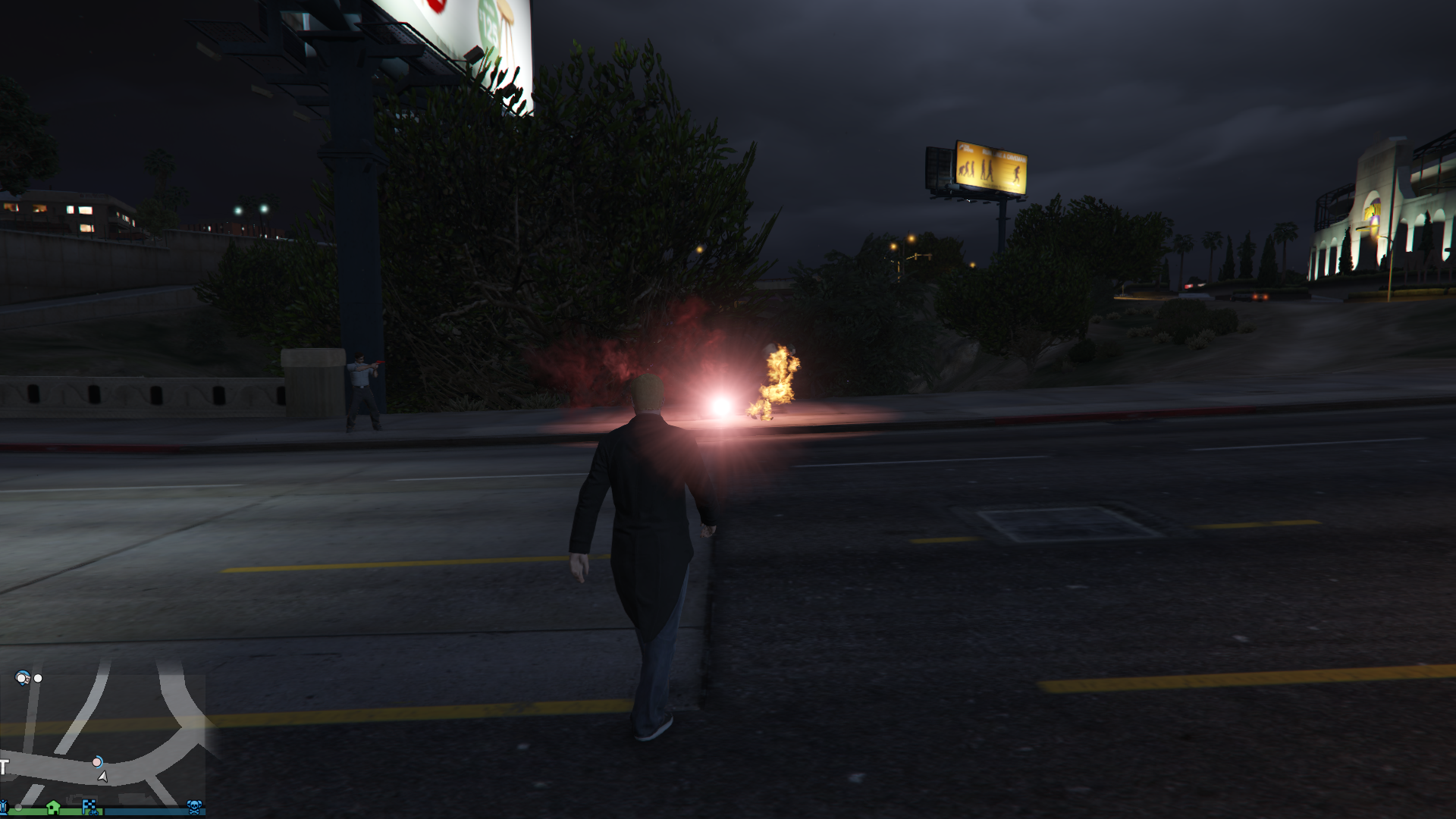
GTA5 03-06-2015 00-17-54-369

Explain that again, Phil? You used a flare gun in self-defence? Yeah, whatever. Seems legit.

FALLOUT 4 – LET’S GET SENSIBLE

So Fallout 4 got announced today after a “mysterious” online countdown, and everybody on the internet either cried, fainted, or stained their underwear en masse.

Not that there’s anything wrong with that. I’ve been super-hyped about games before, most people have. Not to mention that the Fallout Series has a proud lineage of some genuinely excellent games, as well as one of the most charismatic interpretations of a nuclear wasteland I’ve ever seen, a sentence I never thought I’d say. Bethesda are pretty good at delivering high quality games, and sandbox has always been their bread and butter, so yeah – this one’s probably worth getting a little excited over.

Fallout 4 trenchcoat

Tex Murphy? What are you doing here?

No, what I want to talk about is the way it was announced and the events leading up to it. I realise that this is the second article this week about ad campaigns, but I felt rather startled by the relative clarity of Fallout 4’s announcement. It was all very smooth, very clear, it all just made sense, whilst keeping us in the dark just enough to make us curious. It wasn’t only me who thought this – a friend of mine, the biggest Fallout fan I know, agreed with this too. The whole thing just ran like watery clockwork.

That said, I guess they didn’t want to make people too suspicious or to act too coy about it all, because there’s some rather raw history there. There was a rather famous hoax a couple of years ago, when somebody made a false site themed with nuclear imagery, also utilising a countdown, but this one went for two weeks before the lie was revealed. Everybody got really excited about it then, too, and of course got very, very angry when they found out the truth. Meanwhile, I had my fist in my mouth and was trying desperately not to laugh.

I know, people got upset by it, but a buddy of mine got upset when he was hit in the head by a Frisbee, and I laughed at that too.

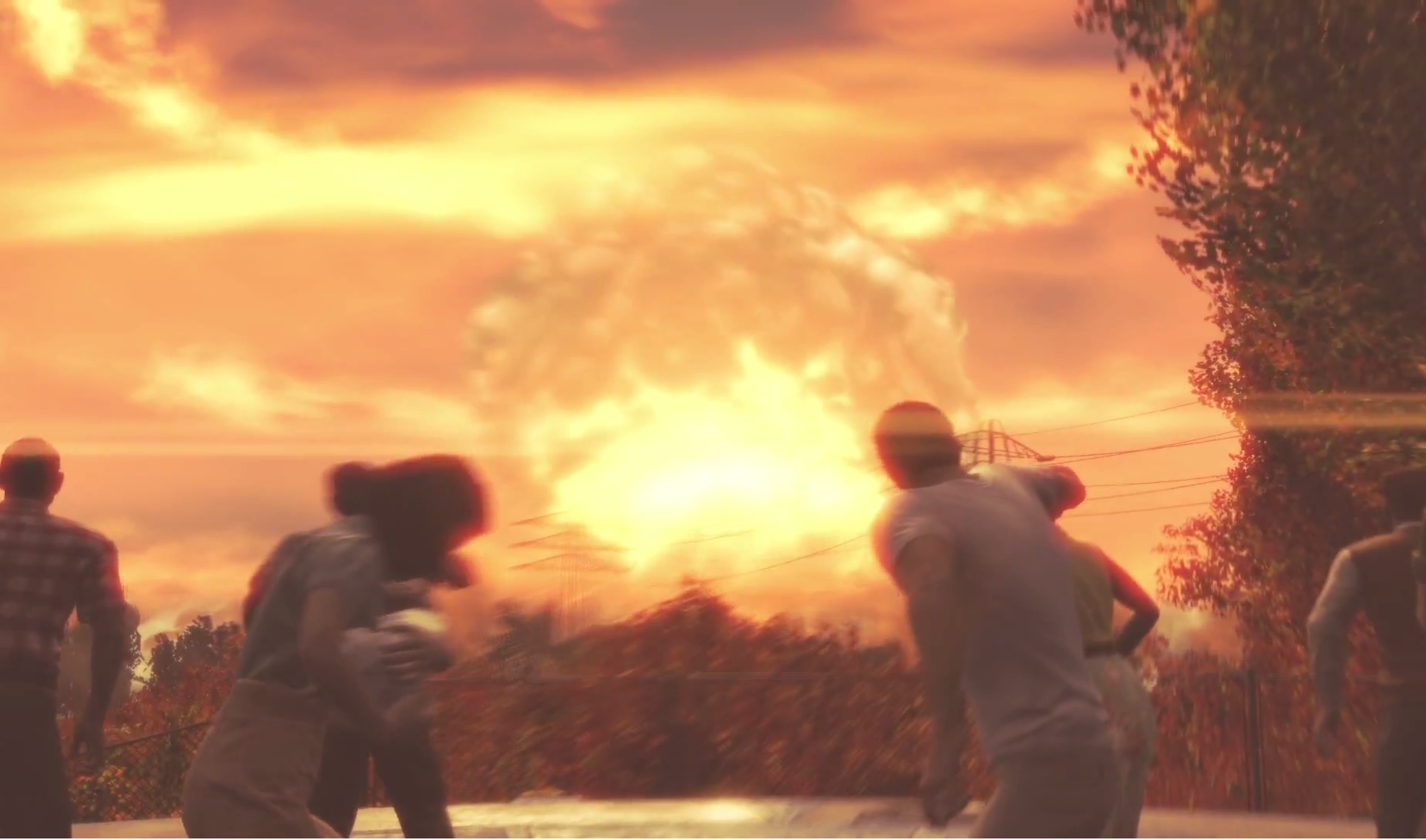
Fallout 4 explosion

H- Honey? Did… Did you happen to leave the gas on?

But I rather admire Bethesda’s methodology here. They start with the mysterious countdown, except everybody knows it’s not THAT mysterious, so no chance of people’s imagination running away with them. On top of which, it only went for 24 hours, so that should stop any of the more extreme conspiracy theories about it being Nuclear Skyrim or Half-Life 3 getting any traction in the short time period. Of course, the countdown, though brief, did last long enough to get everybody who was on the lookout for such an event aware of it. Gold star there.

The trailer? Well, it’s pretty good. It shows the pre-war aspect of the Fallout universe, something we’ve never seen in much detail. It shows epic pirate ships, an updated version of the old deathclaws, and what looks like the killer Zeppelin from the end of Alan Moore’s “The League Of Extraordinary Gentlemen.” Enough to remind us of the stuff we love, mixed in with enough mystery to awake our curiosity, the most powerful urge we have. Now I WANT to know more, it’s the same as the XCOM 2 trailer we saw on Monday. There’s a lot of footage that looks like it’s from the game, though no gameplay itself, sadly. Except that at the same moment it was released Bethesda chirped that we get to see gameplay at E3 later on. Fair enough, now I know where to go for that info if I want it. Gold star again.

It may sound like all this is fairly normal or self-explanatory, but games are so often the subject of bizarre or damaging ad campaigns. Whether it’s Aliens: Colonial Marines lying to the public outright, or Ubisoft refusing to contextualize the cover of Far Cry 4 in order to stop it from looking racist (which it wasn’t in the end, but I wish we knew that), a lot of publishers will do weird things to advertise their games. It’s simply not true that all publicity is good publicity, at least not for games. So why do publishers indulge bizarre methods when it comes to getting the brand out there?

They get especially odd when it comes to leaked information. If a bit of gameplay info gets out onto the internet without clearance, the first thing everybody does is look to the developers, one eyebrow raised. Yes or no? True or false? And remember that if they say nothing, we’ll probably believe it anyway.

Fallout 4 Dog

Let’s not get too affectionate, Gromit. I may have to eat you before this adventure is over.

But they always go quiet, always go still. Like a crocodile lying at the bottom of a river, they’re waiting for the perfect moment to strike. Except that whilst they’re waiting, a lion has already killed the prey by the riverbank, and is starting to drag it off to eat. But still that crocodile just lies there, determined to come out when he’s ready, regardless of how badly he’s ballsed up his strategy or how much the world has altered in ways not to his advantage.

You see, I suspect that the publishers always have a Plan. A big, proper Plan. The kind with charts and folders and the like. You know the kind I mean, it would probably go something like this:

  • Month one: make suggestive noises in an interview, but don’t commit to anything.
  • Month two: surprise everybody at a convention with gameplay.
  • Month three: Lie through your teeth, because anything will fly with enough hot air beneath it.
  • Month four: Rent forklift truck to carry our pre-order money back to the office.

And whether out of pride, terror, stubborness, or just plain idiocy, they can never deviate from that Plan. Even when it’s in their best interests to give it up and just do something much more sensible, they never do. Too much investment, perhaps, or they just can’t work out how to react to events that fast. That’s why a rough plan, or one that is very simple, is much more beneficial. It’s less of a house of cards, less dependant on everything else. That’s why Fallout knows what it’s doing in this regard. Keep it simple, keep it memorable, keep it short. A+.

Now to remind myself of the series properly. Except for Little Lamplight, of course. That sequence can go suck on the business end of a MIRV.

THIS CLOWN’S DEATH IS NO JOKE

THIS ARTICLE CONTAINS SPOILER FOR BATMAN: ARKHAM CITY. JUST A HEADS UP.

Alright, so this one is probably one of few articles where I might actually know what I’m talking about. You see, I’ve always been a comic book geek. I don’t own back catalogues of every issue of Bacon Man, or Mr. Asbestos, or even, god forbid, Squirrel Girl, but I do know a fair bit more than the average punter and have an interest to match. Admittedly, I don’t have a very wide perspective on the industry – my usual tactic is to find one series that suddenly means absolutely everything to me, and read it until my I can no longer think, at least not without a white cloud filled with text appearing above my head.

For this reason, I never really understood Batman in the depth that I’d like to. The absurd amount of history I’d have to catch up with, as well as the prohibitive cost of such an experiment – well, it was generally all enough to keep me too intimidated to approach the series. Kind of appropriate, really.

But I have read a few examples of this ancient franchise, and the one that always sticks with me is the Killing Joke. I won’t spoil much for those who haven’t read it (who really, really, REALLY, should, by the way), but it’s basically about the Joker, and what sticks with me is what Batman tells him at the very beginning, the statement from which the whole story stems – the fact that one day, one of them is going to kill the other. They can both see it coming, in the same way that people falling off cliffs can see the ground coming towards them. Big, lethal, unavoidable. Only a matter of time.

And I think Batman was right. Whilst I don’t believe that the comics industry would ever let the Clown Prince Of Crime die (it’s been tried, and they keep fighting it), we could all see that no matter how this went, it would end in blood.

And in the 2012 game: Batman: Arkham City, it did end that way. The Joker died. THE Joker. Not a copy, not a clone, not a disguise or another character or a parallel universe version, or any of that other nonsense that the comics industry likes to pull. He was killed outright, poisoning himself through a combination of foolishness, ambition and failing to trust Batman to do the right thing. You can’t say it wasn’t fitting.

Joker

RIP, Joker. You’re killing angels in Heaven, now.

People were rightly sceptical, usually because games that are adapting or drawing from some larger franchise are always scared of upsetting the status quo. Theories went around, speculating on how “Mister J” pulled off his greatest practical joke ever, faking his own death right before Batman’s eyes. But months went by, DLC was released, and he didn’t come back. In the end, Rocksteady Studios confirmed it – he’s gone. He’s not coming back, he’s not going to be in Arkham Knight.

Perhaps this is all smoke and mirrors to hide the fact that he WILL return triumphant in the final game, which is coming out in less than a month. Maybe it will all come full circle, but it doesn’t have to. The game looks good, it can survive without him in it, if they do it right, but that’s the point. I have a nasty suspicion that my feelings about the Joker’s death at the end of this series aren’t going to be “What a bold direction,” or “Such fascinating implications.” I suspect I’m going to be thinking one thing only.

“…Was that it?”

Killing the Joker is not forbidden ground, but it is at the very least sacred, so show it some bloody respect. Remember that this is not just some villain who happened to be in the first game. This is a figure who has become so infamous in our culture that he has risen to the level of minor deity. And what was he in his own fictitious world? Insanity given form. If the Grim Reaper is the manifestation of death, then the Joker has ascended to become the manifestation of madness, the true embodiment of it.

It’s a hell of an achievement. Removing such an icon from the world should have consequences, it should feel important, you know what I mean? This wasn’t just a man that died, it was The Joker.

But Arkham City ended too fast to really appreciate that. We don’t see the impact that such a loss has except for a brief bit of DLC about Harley going nuts, and Arkham Origins was just footling around until this next game, the important one, was finished.

But Rocksteady have been so vigorous in their denial that he’s returning, not to mention the fact that he’s gone unmentioned in the advertising campaign for so long, that I can’t help but feel uneasy. Have they forgotten about him? Are there only going to be token references to him before he’s swept under the rug to be replaced by less interesting characters like the Mad Hatter and Catwoman?

Mad Hatter

No. No! It’s… It’s… IT’S A MUCH LESS INTERESTING VILLAIN! AAAAAGH!

I’m starting to feel that this is the case, and it feels wrong. Joker is a fascinating figure, the strangely intimate relationship he has with Batman is worth exploring on its own. His death? Well, that’s worthy of its own franchise, but it’s not going to get that much space. It’s got to share now. And the other villains don’t seem very willing to make much room for it.

Don’t get me wrong, I’m not some mournful fanboy whining for my favourite characters to come back. I wouldn’t have been bothered if the Joker had just been put back in the Asylum for Arkham Knight, in order to give the other villains time to shine. But they KILLED him. The writer in me feels the need to rebel at how ignored such a fascinating concept is appearing to be. Maybe the final game will do the event justice, but I’m not feeling confident about it.

Demolishing a beautiful building can be acceptable, if you plan to build something better where it stood. It’s risky, but admirable when it comes to intentions. But don’t kick down a palace in order to build a block of tenement flats. And more importantly, just to keep this rather endless metaphor going, don’t forget the foundations you’ve built on.

Preg test

I’m still annoyed that nothing happened, but it’s probably in the hypothetical child’s favour. Who’s his godfather going to be, Killer Croc?

It won’t be the first time Rocksteady have pulled this rubbish. The worst example was what I can only think of as “the pregnancy scare” in the second game. It might’ve been an even more interesting plot device than the Joker’s death itself. It was simple, subtle, clever. As we walk through the hideout shared by the Joker and Harley Quinn, in the corner of one room is a used pregnancy test.

It’s reading positive.

My mind boggled at that. It was such a simple idea, brimming with promise. The Joker, a father? What would he be like in those circumstances? What would the child be like? If Harley Quinn had to choose between them, what would she do? Could Batman ever trust the child when it grew up?

I can almost hear somebody yelling “spoilers,” so let me stop you right there – it’s not a spoiler. At some point after the game, I can only assume that the writers panicked, decided they had bitten off more than they could chew, and hastily tried to fill in the hole they had dug for themselves. In the DLC that takes place several months later, we see the room again, and this time it’s full of pregnancy tests, all reading negative, and the box they come in now has a footnote we hadn’t seen before, stating that you might get the occasional false result and it’s best to be sure.

That sounds smart to me. You know, being certain before you commit to anything. You wouldn’t want to feel really excited and hopeful about something that wasn’t really happening, would you? Because that would be rubbish.

WHAT ARE WE WILLING TO PUT UP WITH?

OK, so full disclosure: I haven’t played the Witcher 3. I don’t want to play the Witcher 3. I tried playing the first game in that series, and the combination of a slow story, aggressive interface, and what I can only think of as startlingly boring combat drove me away within hours. Perhaps the second and third games are better, but everybody who recommends them to me has also been a fan of the snooze-fest that was Witcher uno, so I don’t quite trust them enough yet.

But what caught my eye was a bit of news going around – World War Witcher 3 has been given a massive patch to sort out what apparently is a huge amount of bugs, glitches, and general fuck-ups in its code, the kind not seen outside of the genetic structure of the Lannister family.

Witcher Bird

FLY UP, YOU STUPID BIRD. HE’S ON A HORSE, NOT A POD RACER.

But that can’t be right. Last time I saw Metacritic, “Glitcher 3” (snarf, snarf) was getting nines and tens across the board, people were getting in line just to kiss its feet like it was some disinterested saint. Surely a game as hostile to being played as this one can’t be doing so well?

Alright, let’s consider a game I DO know, and can refer to with confidence: Batman: Arkham Origins. I bought that game on release, I loved its predecessors, I was really excited to start punching badly-dressed villains again. I dragged it into Steam like a fisherman dragging some humongous trout onto the riverbank, only to cut it open and realise that this trout had quite a few parasites going.

Let’s be frank, the game was absolutely toxic. It faulted and crashed with clockwork regularity, the frame rate dropped like a cartoon anvil, one bug stopped me completing a side mission altogether, and of course there were clipping issues and all of the other things you can expect from a game that has hasn’t so much been crafted, as it has been coughed up.

In actual fact, that game itself was alright. Not amazing, just vaguely OK. But I don’t remember thinking that at the time. I only remember shouting with rage at a game that had just conned me out of forty pounds. Another reason never to pre-order anything ever, I thought, and don’t think I’m not going to write an article on pre-orders at some point too.

The terrible glitches weren’t even at their worst for me. A friend of mine got three-quarters of the way through the game, at which point it had some sort of panicky stroke and corrupted all his save data, forcing him to begin anew. Then it set his Xbox on fire and attacked his granny with a knife, just to hammer the point home.

Joker

You might think that you’re evil, Joker, but have you seen the quality that this game was released in? That’s much worse than murder and theft.

But it didn’t hammer the point home. Nobody remembers the glitches anymore, not really. Nobody brings them up when you talk about Arkham Origins, not unless you remind them. But this seems bizarre to me – how on earth did they truly get away with this? Sending out something of this meagre quality, not to mention a title from such a prestigious series as the Arkham games, it’s inexcusable. It should have clung to their reputation like a permanent bloody stain, not a slight bit of dust for them to brush off at their convenience. It took about a month for Origins to finally get patched to the quality where it could be played, and quite a lot longer after that for it to be properly clean.

And Witcher 3 is apparently just as bad. The site I saw the news of the patch on was followed by a comment section longer than À La Recherche Du Temps Perdu, all of which was messages from players, rightly complaining about the problems they’d been having, some of which sounded pretty game-breaking.

But something tells me that in the long term, nobody will remember these glitches. The Witcher 3 will just deal with them when it feels like it, and the gaming public will just smile and thank CD Projekt Red for being so nice as to sort out its broken title that we paid money for. How generous of them, how thoughtful, when what actually should be happening is that they should get on their hands and knees and apologise, hoping and praying that the public is generous enough to buy whatever DLC and later titles they make.

The surreal thing is that this attitude is limited to games. Imagine if a film was released where the scenes were in the wrong order, or a book was sold that had a dozen pages where the ink had run and made it illegible. Neither would sell a single copy, the people responsible would be fired in a heartbeat. At the very least there would have to be some sort of show of apology. Because that ISN’T acceptable, not at that level. Releasing a broken or ineffectual product is a cheat, it’s a lie. It shouldn’t happen and there is no excuse, bar corporate sabotage by a rival company. They’re not doing you a favour by patching it, they’re trying to pull their career and reputation out of a nose dive.

At least, that would be the case in other media. But there’s something unhealthily submissive about gaming culture. We sit plaintively, hoping for any scraps that the big businesses might throw us, forgetting that we aren’t dependant on them. They’re dependant on us, and it’s about time we reminded them of it, because when they sell you something that malfunctions like Apollo 13 in the hands of a technophobe, they deserve to be called out on it. They don’t respect you enough to give you a working form of the product. And don’t kid yourself, they didn’t miss the fact that it’s filled with glitches. They built the thing, they knew what was coming out.

ASU

I prefer the using the road, myself. Or are you scared you’re going to clip straight through it?

So the next time a game is released that’s buggy and sickly and doesn’t want to be played, show it the same feeling – don’t play it. If it’s buggy, don’t buy it. Wait until it’s been patched, wait until it actually works, because that will make the publishers sweat like nothing else in the world. First-week sales mean everything to them, so if you hear that it’s faulty, just wait seven days. If everybody did that, there wouldn’t be any more of this shameful behaviour.

Look at Assassin’s Creed: Unity. That game might have been dreadful, but I kind of like it now, just because it brought us all together against a common enemy. It showed what happens when the industry tries to push too far – it gets pushed right back, by something far stronger than it could ever hope to be. Ubisoft gave in when it realised it couldn’t get away with the unbelievably bad quality of Unity, and had to jump through about fifty hoops just to placate the audience. And even then, the game will be remembered as “the broken one in the series.”

So that’s my advice. Do now what you did then if you see some bug-ridden game. Ignore it. And if you bought it without knowing what it was like, don’t let the developers forget it. Demand your money back, get on their case, threaten to boycott later titles. Because if you wait for bugs to leave, they’ll just start multiplying. But if you stamp on them now, and stamp hard, they’ll think twice before they come back.

DARK SOULS – A LESSON IN TENACITY THAT NOBODY WANTED

You know when you see somebody treated horribly by their spouse or loved one over and over, and yet you can never quite persuade them to leave the abusive bastard? Well, I have new sympathy for that mindset. You see, I just completed the first Dark Souls, having died so often that I could have made a bridge out of all my old corpses, straight over all the enemies and right to the final boss.

This is normal. This is Dark Souls, it’s what it’s famous for. Christ, the tagline for the game was “You will die,” so I don’t have the right to complain about it being hard. It was warning me about its cruelty before I picked it up, and everybody who played it was telling me that it wasn’t joking around. The number of hours I spent banging my head against the Taurus Demon boss fight, I can safely say that the game was happy to abuse you, like you were a punching bag and Dark Souls was a boxer, one with anger management issues and a stepfather made of padded leather.

But actually, I like that it was difficult. It was an intrinsic part of the game, it contributed to the atmosphere of futility and the integral sense of danger being around every corner, making you feel like something very small and insignificant. Beating the enormous bosses was always tough, but very rewarding when you did, and rarely felt implausible because of the fact that you’d been doing it so much that sooner or later the laws of probability had to be on your side and you’d manage to win through sheer luck.

I’m almost a little disappointed though, because the legendary difficulty of Dark Souls is all that anybody remembers of it, or at least the topic that everybody keeps going back to.

“By the way, I just got to the Four Kings.”

“I remember that. Boy, that was a hard fight.”

“Yeah. I haven’t had this much trouble since the Iron Golem.”

“Ah, now that was a hard one.”

“Yeah, really hard. Not as hard as Quelaag though.”

“Oh, THAT was hard.”

And so on, infinitum. Barely seems worth the effort.

In fact, Dark Souls was a fantastic achievement of gaming that stands firmly in my top ten games, and practically hit the mark on everything it tried to do. For one thing, the level design was varied and interesting, creating vast labyrinths within the world that featured massive castles, verdant forests, terrifying catacombs, and one of the most visually striking cities I’ve seen in a game, that of the beautifully sculpted Anor Londo, which looked like something that would’ve been created if Michaelangelo had been given celestial power and a continent of marble.

Anor Londo

Anor Londo, twinned With Berkely-On-Sea

All this beauty concealed detailed, non-linear mazes that took the “metroidvania” style and ran with it until its feet caught fire, prevented from being dull and boring by huge amounts of aesthetic variation. Hell, there’s a reason that people leave signs everywhere saying “Gorgeous view.” They’re usually right, and I can only assume that my little undead avatar doesn’t have a camera phone, because otherwise he’d be snapchatting the scenery for hours.

There’s other ways in which the game shines. The story is probably my favourite aspect, because it would be hard to think of another medium besides video games that would bring it across so well. You see, Dark Souls has only one proper cinematic, right at the beginning, featuring gods, monsters, heroes, and even a naked dragon, all fighting each other over the title rights to the next big civilisation. Suddenly the game leaps forward several zillion years to the point where the empire they were all so desperate to lay dibs on is already ending, and those deities that built it have all died or gone absolutely bananas.

In fact, the whole universe seems to be ending, and not for any reason we can do something about – its just aged beyond the point where it can sustain itself. It’s entropy, it’s the final bit of juice in the battery dying out, and this heavy, terrible sense of emptiness and loss fits the game perfectly. I don’t mind that it’s depressing, it’s still a powerful message and tone that I love experiencing.

Sif

God, that’s a dangerous looking mutt, but at least it doesn’t know how to use that big swoAARGH!

Meanwhile, every character you saw in that opening cinematic (and about a thousand more besides) has had a long and interesting history during that period, and now you can go and discover it all. Or not. The level of involvement and immersion is completely up to you. There is a reason why there’s an enormous tree in the middle of Hell, but you don’t have to find out if you’re not fussed, they’re cool with it. There is an explanation that tells you why a woman with a spider instead of a pair of legs was hanging out beneath Blighttown, but you don’t have to care, you can just grab your halberd and go mad while she vomits lava like the Human Torch with a stomach bug.

This method of story telling really made sense to me – nobody cares about you here, nobody’s around to do so, and anyway, the joy is in the discovery and guesswork, running through your own little conspiracy theories of how and why it all tied together. It would have felt too easy to have Lord Cliffnote of the Explan Nation show up halfway in and take you carefully through a clear timeline of events. Instead, Dark Souls just sprinkled little jigsaw pieces of info all around the world, and told you that you can grab them if you want or leave them behind, no biggie either way.

Quelaag

Get me a double-D bra and a can of bug spray – I’m sending this bitch back to where she came from.

And the combat mechanics? Well, they were varied, suitably tricky, had a good core system based around stamina management and supported most playstyles. It could have used some minor balancing – I picked up a special halberd about a third of the way into the game and never needed anything else, because all other weapons were slower or weaker, and faithful Stabsy could hit somebody in the next postcode with a single thrust. But other than that the combat worked well and the enemies distributed between each bonfire checkpoint felt tough but fair, a statement that could’ve also been the game’s tagline.

Dark Souls even managed to do online elements without compromising the lonely, isolated feeling. The mechanic by which players can leave notes on the ground for others only highlighted how alone you were, not to mention watching the misty ghost of some other player in a different game die horribly, in a way you could never prevent. Even assisting other players or invading to kill them still somehow feels empty and sparse, most likely because they still look faded and ethereal, and you can’t communicate with a headset, only with pre-made gestures.

In fact, the Dark Souls community seems weirdly courteous when it comes to interaction. Do you know what the last guy to invade me did before attacking? He bowed. Seriously! I couldn’t believe it! I almost expected him to slap me across the face with a glove and demand me to choose a time and weapon! I can’t imagine a Call Of Duty or GTA V player doing that, most likely because half the audiences of those games tend to be so young that they have to shout insults from the comfort of their mother’s womb. Perhaps that’s part of the good design of Dark Souls – the gameplay has frightened off those who weren’t committed, and tamed those who stayed into good behaviour. Kudos to you, From Software.

But actually, I’ve stumbled onto the problem – people WERE frightened off. You see, the really great pieces of art need to be known, need to be witnessed. We understand this on some very fundamental level, we know that the really phenomenal creations were made to elevate us and the culture they’re part of. The Mona Lisa hangs in a public place, and people would rebel if it were anywhere else. The British museum and the National Gallery are free and open to all who wish to see the masterpieces within them. Well, unless you come from the places where the British Museum stole the artefacts from. Then you have to pay for a plane ticket, but I’m sure you get my point.

Don’t get me wrong, it’s not like I’m saying that Dark Souls should be given away for free. If any company deserves the money to make games as humbling as this one, it should be From Software. But this is the nub of the matter – Dark Souls was so aggressive, it hurt itself in the process.

I can demonstrate what I mean, and to do so I have a challenge to those of you who have played and loved the game as much as I do. You’ve undoubtedly recommended it to your friends, because this is a story that needs to be told. Now, be honest here – did you encounter resistance? I bet you did, at least once. I know of several people who stated that they would’ve been interested if it weren’t for the crippling difficulty, and that’s what frustrates the hell out of me, more than any Bell Gargoyle ever could.

Mouth Dragon

For something that’s all mouth, it really wasn’t into diplomacy.

Dark Souls needed one of two things – either an easier entry to the game, or a difficulty setting at the beginning. Leave the vicious gameplay that we know and love alone, but either make it optional, or try to build up to it. I was almost turned off by the beginning when I first tentatively stepped in, and I know of others who were too, because the difficulty curve practically bends right back round to bite your arse before you’ve left the first area, and people just aren’t used to it. Maybe twenty years ago you could have gotten away with it, but not any more.

And it’s a shame, because the game is at its best later on, when the world opens up like a blooming flower and there are more paths and secrets and challenges than an entire season of The Crystal Maze.

It’s almost ironic, because the game tends to become easier as you progress. Don’t get me wrong, the bosses only get bigger and angrier and covered in more fire as you get further in, but improvements in gear and constant practice make for much easier gameplay. I had more trouble with the first couple of bosses than with the rest of the game combined, because you’re basically working with a butter knife and a plank of wood strapped to your arm, whilst a thirty-foot Mr. Blobby or Godzilla’s Minotaur cousin both sharpen their axes and wait for you to arrive. Sure, the last boss is a lightning super-god who could kill a man with a well-aimed movement of his eyebrow, but you’ve had time to comb the world before that point and you’ve acquired enough magic loot and levels to get your own, equally tough eyebrows with which you can take him on as an equal.

But I digress. The point was that Dark Souls was a game that wasn’t just good – it was genuinely amazing, something new and fresh in every aspect it presented. A new form of story-telling, a new take on multiplayer, a new angle on classic fantasy, and even a new direction when it came to something as basic as gameplay difficulty. Think back to the most recent triple-A games you played. I suspect they were pretty easy. I suspect you had regenerating health, that you often had NPCs with you, that failure meant only a brief penalty, if there was one at all. I didn’t realise how much I missed a game that was willing to challenge me, truly goad me into a tooth-and-nail fight where we both had to give it our all if we wanted to succeed.

And bloody hell, it felt good. Hammering against that final boss, I could feel my teeth gritting, my hands gripping the controller ever tighter, and even my eyes beginning to ache, as I focused so hard on the attack patterns of my foe that if I had been staring any harder my eyeballs would have pushed my glasses off my nose. When I finally won, I actually wooped out loud! I’m one of the most jaded people imaginable, but I felt like my triumph over Dark Souls was an actual victory, something very rare in video games these days. And it is a victory, for me, for those who have played it, and for those who have loved it. But more people need to love it, it deserves that kind of status. That’s why the difficulty options needed tweaking just a little bit…

Gwyn

Should somebody tell grandpa that his beard’s caught fire? No? Ah, we’ll leave it then.

I’m not saying that designers should cater for every whim, homogenise every game to the point where they’re barely distinguishable from each other, because that’s how we end up with brown military shooters being sold every Christmas. But this is something that people need to experience, and I don’t think those tiny, but oh-so-important changes would have crippled the game. Hell, wouldn’t a basic difficulty option have been fine? To leave the original experience with all its glorious teeth, and to make an entry-level playthrough to hook those who were more cautious, or who weren’t convinced quite yet?

Some might say I’m asking for too much, or that these alterations would irrecoverably alter the game for the worse, but I don’t think so. Could you really say that adjusting the stats on the Asylum Demon would have poisoned everything beyond then? I can’t see it being the case, quite honestly.

Anyway, time to throw myself into Dark Souls 2. After all, we have to get our kicks somehow. I get mine from saving stamina, halberding horrors and praising the sun like a boss. God bless you, From Software. If only I could be so grossly incandescent.

THE ART OF COMMERCIAL WAR

Oh my god oh my god oh my god! A trailer was just released for XCOM 2! I’m so excited! I feel like a little girl about to meet some handsome boy band! Oh, I must be sure to sniff its hair and steal its sweatband.

But hold on, something is strange. Something feels… Different. I haven’t felt like this about a trailer for a while, but why is that? Let’s reverse-engineer this delight and compare it to something else I saw a trailer for recently: Star Wars: Battlefront.

Quite frankly, I didn’t feel fussed at all when I watched that one. Just kind of unimpressed, and a little bit annoyed. But that doesn’t seem right, surely? I have great nostalgia and love for both the Battlefront and XCOM games, I’ve sunk many hours into both, probably more into Battlefront, actually. So why now do I feel the need to stand on one side so firmly? And no, it’s not because Battlefront is made by EA. The game hasn’t been released yet, and if it’s good then people should buy it, because that’s what promotes good things and keeps people making them. If it’s a micro-payment littered pile of garbage, then I’m not interested, and yes, people should leave it on the shelf.

But I digress.

I think one of the reasons that SWB left me so limp (metaphorically speaking) was that there actually wasn’t anything new in there. No new angle on Star Wars as a concept, nothing to suggest any progression.

Desktop 01-06-2015 17-54-00-57

“Look, I’m sorry, but I don’t kiss on the first date.”

It really is the same old thing. Rebels fight in bulky green outfits and all speak in broad American accents. The Empire is English-exclusive, and uses strangely-designed vehicles built by the lowest bidder. I’ll be honest, I’ve seen it all before, and then, just to give you no credit, Darth Vader and Boba Fett pop out of nowhere and for no reason, except to make all the fanboys swoon like women from a nineteenth-century romance novel. But where’s the twist? Where’s the movement forward? For a series based around travel across the galaxy, Star Wars really doesn’t want to go anywhere.

XCOM, on the other hand, gives us nothing but questions. The whole world appears to have changed since the last game, which was essentially the world we live in now, albeit subjected to the occasional alien invasion. But now we seem to be living with the bug-eyed monsters from Mars. In fact, the little sods seem to be in charge! I spent a lot of time trying to beat them back, I’m rather miffed about how easily they got in. Honestly, you leave for ten minutes and everybody just gives up.

Desktop 01-06-2015 17-47-19-177

What you can’t see is the bumper sticker on the back that says “My other car is also a Porsche.”

I like the tone of the trailer as well. There’s a touch of Blade Runner and 1984 to the whole thing, with aliens stopping humans in the street for random tests, and massive TV screens smilingly telling us to do what our new overlords ask, with no pause to think for ourselves. THAT’S intriguing. That makes me want to play, to find out what happened. They’ve sparked my curiosity now. Not only that, but there’s new sorts of aliens to feast our eyes on. We see the Ethereals from the first game, making some strange messiah-pose on a billboard, but we also see a snakey-looking thing that wasn’t around before, power-armour soldiers who are unnervingly faceless, and what appears to be a big brother to the classic sectoid enemies. In fact, let’s be honest, that thing is absolutely terrifying. I think I’d rather be trapped in a room with a rampant muton beserker than left for a minute with one of those.

Scared isn’t bored, though. And I’m not bored, I’m fascinated. This world is one I want to explore, to find out about. I want to leap on board the giant XCOM helicarrier they showed us at the end, I want to pilot that angry little taser drone that zapped one of the bad guys, and most of all I want to give those aliens another good hiding. This has all made me ready for round 2.

Desktop 01-06-2015 17-54-21-701

What do we think? Good news or bad news?

But Star Wars? Well, there’s a saying that fits. Been there, done that. The game might still be good, but the trailer didn’t get me excited for anything, I’ve done it all before. EA aren’t offering any new ideas, they’ve just put the old ones in a different game. And be honest with yourself, even though the trailer was made with the game’s engine, do you really think you’re looking at what the game is actually going to be like? I doubt it, because if the gameplay was that amazing… Well, they’d have shown us gameplay, not a movie wearing the skin of a video game.

Remember, neither of these evaluations are evaluations of the final product. Battlefront might be awesome, XCOM might be a load of old arse. But it doesn’t look like that here. XCOM is intriguing me, being rather coquettish and winking from behind its paper fan. Star Wars, on the other hand, has basically walked into the middle of the room and thrown off its dress, showing me everything it has, warts and all. And I don’t want warts. Yes, XCOM might have warts in the end, but it’s done a masterful job of hiding them, and I don’t think it only wants to do the missionary position, Star Wars. You could learn a thing or two here.

(Joel Franey would like to make it very clear that he has never paid for physical affection, except in the strictest sense of karmatic justice. He’d also like to make it very clear that women with warts aren’t necessarily doomed to loneliness and may still find love with another. Just not with him.)

I intended to release a longer piece on Dark Souls today, but this trailer came out a couple of hours ago and I thought was worth writing about whilst we remembered it. Expect Dark Souls soon.

YOU CAN WATCH THE XCOM TRAILER HERE, AND THE STAR WARS TRAILER HERE.